Culinary Advisor
A cooking platform built around craft, culture, and the stories behind what we eat.
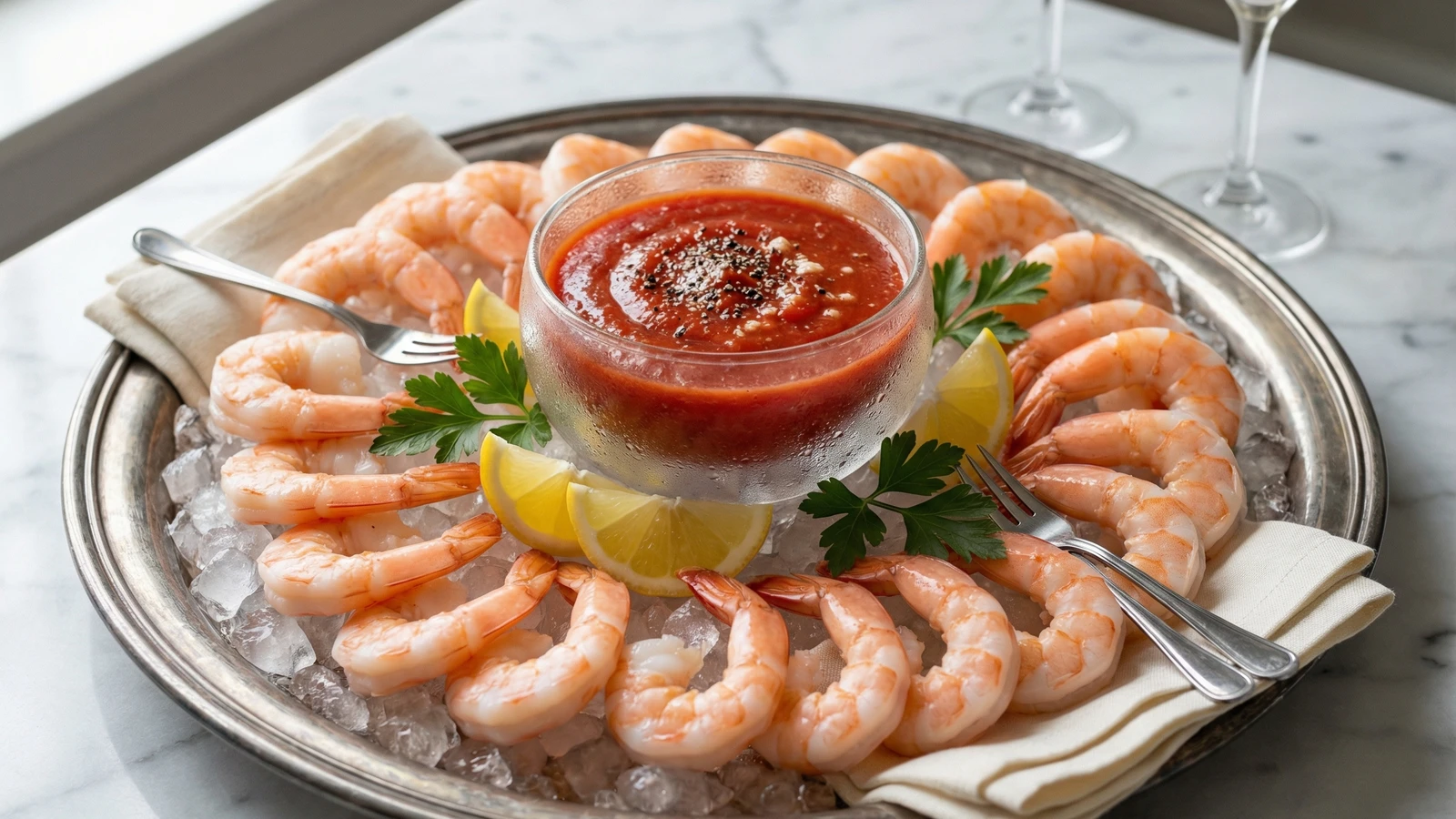
Classic Shrimp Cocktail
Created by
Plump, perfectly poached shrimp chilled to icy perfection, served with a horseradish-spiked cocktail sauce that clears the sinuses and awakens the appetite. This is the appetizer that announces the party has officially begun.
Shrimp cocktail has graced American tables since the late 1800s, when oyster bars in New York and San Francisco first started serving chilled shellfish with spiced tomato sauce. By the 1950s, it had become the definitive symbol of celebration, appearing at every wedding reception, holiday gathering, and dinner party worth attending. There's a reason it endures. Done properly, it's perfect.
The tragedy is how often it's done improperly. Rubbery, overcooked shrimp from the supermarket deli case, paired with sauce from a jar that tastes of nothing but sweetness. This is not that. This is shrimp poached gently in an aromatic court-bouillon, shocked immediately in ice water to preserve their tender snap. This is sauce made fresh, with real horseradish that makes your eyes water and enough lemon to balance the ketchup's sweetness.
I've served this at gatherings of eight and gatherings of eighty. The technique scales beautifully. More importantly, every component improves when made ahead, which means you can greet your guests with a drink in hand rather than standing over the stove. That's how celebrations should work.
The shrimp themselves do the heavy lifting. Buy the best you can find, the largest you can afford, and treat them with the respect they deserve. Everything else follows.
The technique, the tradition, and the story behind every dish.
Discover Culinary AdvisorIngredients
extra-large shrimp (16-20 count), shell-on
Quantity
2 pounds
water
Quantity
8 cups
dry white wine
Quantity
1 cup
lemons
Quantity
2
halved
black peppercorns
Quantity
1 tablespoon
bay leaves
Quantity
2
kosher salt
Quantity
1 tablespoon
fresh thyme
Quantity
4 sprigs
small onion
Quantity
1
quartered
ketchup
Quantity
1 cup
prepared horseradish, drained
Quantity
2 tablespoons
fresh lemon juice
Quantity
1 tablespoon
Worcestershire sauce
Quantity
1 teaspoon
hot sauce
Quantity
1/2 teaspoon
celery salt
Quantity
1/4 teaspoon
freshly ground black pepper
Quantity
to taste
lemon wedges (optional)
Quantity
for serving
fresh parsley (optional)
Quantity
for garnish
| Ingredient | Quantity |
|---|---|
| extra-large shrimp (16-20 count), shell-on | 2 pounds |
| water | 8 cups |
| dry white wine | 1 cup |
| lemonshalved | 2 |
| black peppercorns | 1 tablespoon |
| bay leaves | 2 |
| kosher salt | 1 tablespoon |
| fresh thyme | 4 sprigs |
| small onionquartered | 1 |
| ketchup | 1 cup |
| prepared horseradish, drained | 2 tablespoons |
| fresh lemon juice | 1 tablespoon |
| Worcestershire sauce | 1 teaspoon |
| hot sauce | 1/2 teaspoon |
| celery salt | 1/4 teaspoon |
| freshly ground black pepper | to taste |
| lemon wedges (optional) | for serving |
| fresh parsley (optional) | for garnish |
Equipment Needed
- •Large stockpot (6-quart or larger)
- •Slotted spoon or spider strainer
- •Large bowl for ice bath
- •Small paring knife for deveining
- •Chilled serving platter or individual cocktail glasses
Instructions
- 1
Build the court-bouillon
Combine the water, wine, halved lemons (squeeze them as you add them), peppercorns, bay leaves, salt, thyme, and onion in a large pot. Bring to a boil over high heat, then reduce to a simmer and cook for 10 minutes. This aromatic bath will perfume your shrimp with flavor that plain salted water cannot achieve. The kitchen should smell briny and inviting, like a seaside afternoon.
Don't skip the wine. Its acidity helps firm the shrimp proteins while adding subtle depth. If you prefer, substitute 2 tablespoons white wine vinegar. - 2
Prepare the ice bath
While the court-bouillon simmers, fill a large bowl with ice and cold water. This is not optional. The moment your shrimp are cooked, they must stop cooking. A proper ice bath halts the carryover heat that turns tender shrimp into rubber bands. Use more ice than you think you need.
- 3
Poach the shrimp
Add the shrimp to the simmering court-bouillon, shells and all. Stir once to distribute them evenly. Watch carefully. The shrimp will turn from gray to pink in about 2 to 3 minutes. When they're uniformly pink and just curled into a loose C shape (not a tight circle), they're done. A tight curl means overcooked. Remove them immediately with a slotted spoon or spider.
Cooking shrimp in their shells protects the delicate flesh and adds flavor. The shells come off easily once chilled. - 4
Shock and chill
Transfer the shrimp directly into the ice bath. Let them sit for 5 full minutes, stirring occasionally to ensure even chilling. They should be cold throughout. Drain well and transfer to a rimmed baking sheet lined with paper towels. Pat dry. Wet shrimp dilute your sauce and look sloppy on the platter.
- 5
Peel and devein
Working with one shrimp at a time, peel away the shell starting from the underside. Leave the tail segment attached for easy handling and elegant presentation. Using a small paring knife, make a shallow cut along the curved back and remove the dark vein. Rinse briefly under cold water and pat dry again. This takes patience. Put on some music.
- 6
Make the cocktail sauce
In a medium bowl, combine the ketchup, horseradish, lemon juice, Worcestershire sauce, hot sauce, and celery salt. Whisk until smooth. Taste it. The sauce should have bright acidity, a horseradish kick that hits the back of your nose, and enough heat to keep things interesting. Adjust the horseradish and lemon to your preference. Some like it fiery. I like it fiery.
Fresh horseradish root, grated fine, delivers more punch than the prepared kind. If you can find it, use half the amount and work quickly. It loses potency as it sits. - 7
Chill everything thoroughly
Cover the shrimp and refrigerate for at least 1 hour or up to 24 hours. Transfer the cocktail sauce to a serving bowl, cover, and refrigerate as well. Cold is essential here. Room temperature shrimp cocktail is a food safety concern and a textural disappointment. The sauce should be thick enough to cling without dripping.
- 8
Arrange and serve
When ready to serve, arrange the shrimp around the rim of a large chilled platter or individual martini glasses filled with crushed ice. Nestle the cocktail sauce in the center or alongside. Garnish with lemon wedges and fresh parsley. The presentation should be abundant and inviting, a tower of pink and white that says celebration before anyone takes a bite.
Chef Tips
- •Buy shell-on shrimp whenever possible. Pre-peeled shrimp lose moisture and flavor during processing. The extra work is worth every second.
- •Count size matters more than weight labels, which vary by store. For cocktail service, 16-20 count (meaning 16 to 20 shrimp per pound) provides the most impressive presentation. Larger shrimp cost more but make a statement.
- •Save those shrimp shells. Frozen in a zip-lock bag, they'll keep for months and make exceptional stock for bisques and risottos. Nothing goes to waste.
- •For large parties, calculate 5 to 6 shrimp per person as an appetizer, more if it's the star attraction. People underestimate how quickly shrimp disappear.
- •A chilled Muscadet, dry Riesling, or crisp Champagne pairs beautifully with shrimp cocktail. The wine's acidity mirrors the sauce's brightness.
Advance Preparation
- •Poached and peeled shrimp can be refrigerated in an airtight container for up to 24 hours. They actually improve slightly as the court-bouillon flavor penetrates deeper.
- •Cocktail sauce benefits from at least 4 hours of refrigeration, allowing the flavors to marry. It keeps beautifully for up to 1 week.
- •For New Year's Eve or other large gatherings, poach the shrimp the morning of or even the day before. This frees you entirely from kitchen duty when guests arrive.
- •Pre-chill your serving platter or glasses in the freezer for 30 minutes before arranging. The extra cold keeps everything at proper temperature longer.
Frequently Asked Questions
Nutrition Information
1 serving (about 105g)
Where cooking meets culture.
Culinary mentorship, cultural storytelling, and the editorial depth that makes cooking meaningful.
Explore Culinary Advisor