Culinary Advisor
A cooking platform built around craft, culture, and the stories behind what we eat.
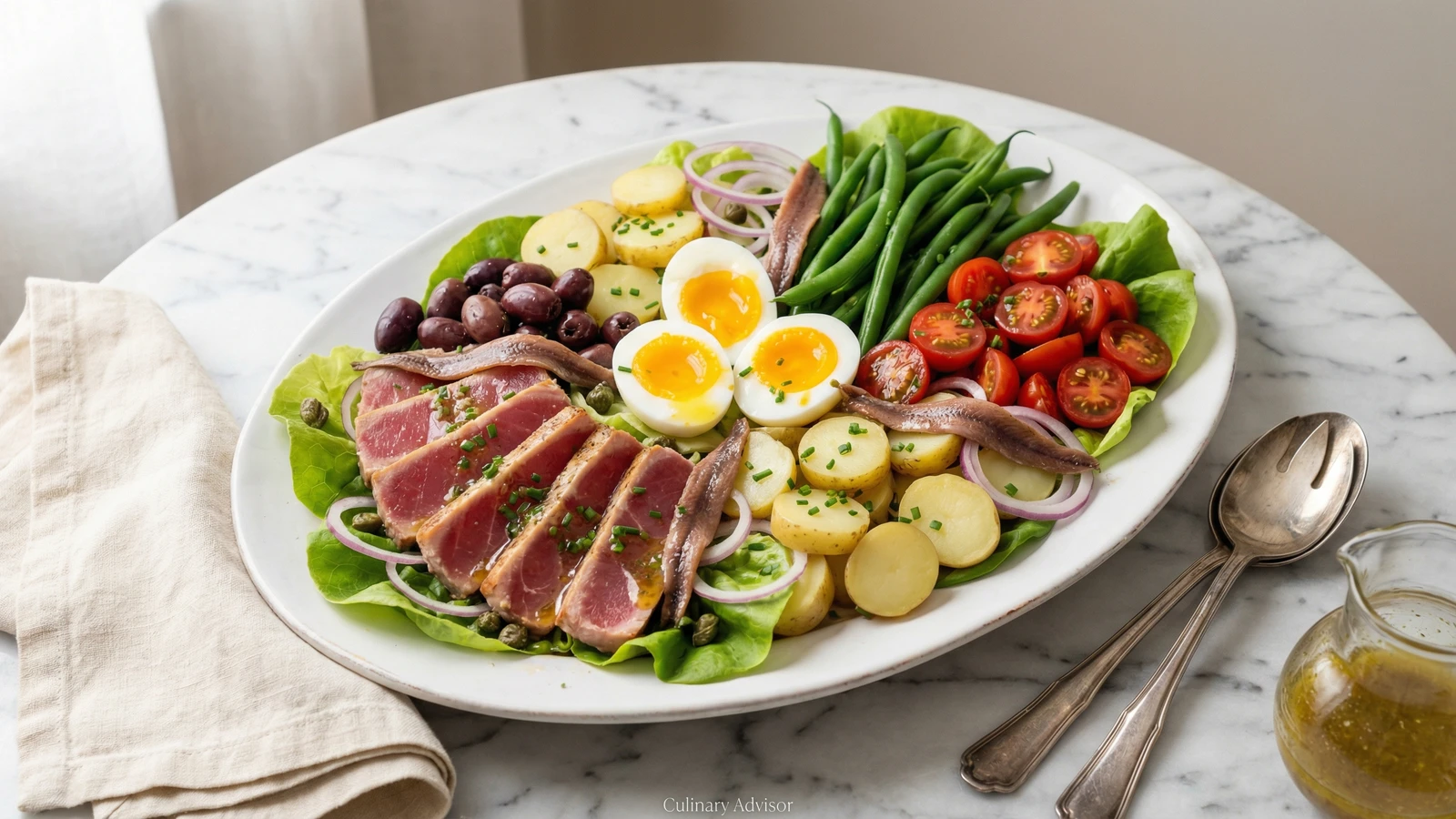
Classic Salade Niçoise
Created by
The definitive Riviera masterpiece: ruby-seared tuna, jammy eggs, crisp beans, and creamy potatoes arranged over tender butter lettuce, unified by a Dijon vinaigrette so properly emulsified it clings like silk to every component.
The fishermen of Nice created this salad with whatever the morning catch and garden provided. Purists will tell you it should contain no cooked vegetables at all, just raw peppers, tomatoes, and the briny gifts of the Mediterranean. I respect tradition, but I prefer the version that conquered French bistros and American restaurants alike: blanched green beans, tender potatoes, and seared tuna replacing the original canned.
This is a composed salad, which means you arrange each component separately rather than tossing everything together. The technique matters. Each element maintains its integrity while sharing space with its neighbors. Your guests choose their own combinations with every bite. One forkful brings tuna with olive and egg. The next delivers potato with anchovy and bean.
The vinaigrette is the soul of this dish. A proper French vinaigrette is an emulsion, not oil floating on vinegar. The Dijon mustard contains proteins that grab oil droplets and suspend them throughout the acidic base. When made correctly, it coats rather than puddles. It clings to a bean without sliding off. Master this technique and you'll never buy bottled dressing again.
I've served this salad at dinner parties for fifty years. It never fails to impress, yet requires no last-minute cooking. The components wait patiently while you greet guests, then come together in five minutes of composed artistry.
The technique, the tradition, and the story behind every dish.
Discover Culinary AdvisorIngredients
haricots verts or slim green beans
Quantity
1 pound
trimmed
small waxy potatoes
Quantity
1 pound
fingerling or new potatoes
large eggs
Quantity
4
sushi-grade tuna steaks
Quantity
1 pound
about 1 inch thick
extra-virgin olive oil (for searing)
Quantity
2 tablespoons
kosher salt
Quantity
to taste
black pepper
Quantity
to taste
freshly cracked
butter lettuce
Quantity
2 heads
leaves separated and washed
cherry tomatoes
Quantity
1 pint
halved
Niçoise olives
Quantity
1/2 cup
capers
Quantity
1/4 cup
drained
anchovy fillets
Quantity
4
oil-packed
red onion
Quantity
1/4
sliced paper-thin
fresh chives
Quantity
2 tablespoons
minced
red wine vinegar
Quantity
1/4 cup
Dijon mustard
Quantity
1 tablespoon
shallot
Quantity
1 small
minced
garlic clove
Quantity
1
minced to a paste
extra-virgin olive oil (for vinaigrette)
Quantity
3/4 cup
fresh thyme leaves
Quantity
1 teaspoon
fine sea salt
Quantity
1/2 teaspoon
black pepper (for vinaigrette)
Quantity
1/4 teaspoon
freshly cracked
| Ingredient | Quantity |
|---|---|
| haricots verts or slim green beanstrimmed | 1 pound |
| small waxy potatoesfingerling or new potatoes | 1 pound |
| large eggs | 4 |
| sushi-grade tuna steaksabout 1 inch thick | 1 pound |
| extra-virgin olive oil (for searing) | 2 tablespoons |
| kosher salt | to taste |
| black pepperfreshly cracked | to taste |
| butter lettuceleaves separated and washed | 2 heads |
| cherry tomatoeshalved | 1 pint |
| Niçoise olives | 1/2 cup |
| capersdrained | 1/4 cup |
| anchovy filletsoil-packed | 4 |
| red onionsliced paper-thin | 1/4 |
| fresh chivesminced | 2 tablespoons |
| red wine vinegar | 1/4 cup |
| Dijon mustard | 1 tablespoon |
| shallotminced | 1 small |
| garlic cloveminced to a paste | 1 |
| extra-virgin olive oil (for vinaigrette) | 3/4 cup |
| fresh thyme leaves | 1 teaspoon |
| fine sea salt | 1/2 teaspoon |
| black pepper (for vinaigrette)freshly cracked | 1/4 teaspoon |
Equipment Needed
- •Large platter or four individual plates
- •Cast iron skillet (10-12 inch)
- •Large pot for blanching
- •Medium bowl and whisk for vinaigrette
- •Kitchen towels for drying
Instructions
- 1
Build the vinaigrette
Combine the red wine vinegar, Dijon mustard, minced shallot, garlic paste, salt, and pepper in a medium bowl. Whisk vigorously until the mustard dissolves completely. Let this mixture sit for ten minutes. The shallot will soften and the flavors will marry while the mustard's emulsifiers activate. Now add the olive oil in a thin, steady stream while whisking constantly. You'll see the mixture transform from watery to creamy and thick. This is emulsification: the mustard's proteins suspend the oil droplets throughout the vinegar, creating a unified dressing that clings rather than pools. Stir in the thyme leaves. Taste and adjust seasoning.
The stream of oil must be thin. Pour too fast and the emulsion breaks, leaving you with a greasy, separated mess. If it does break, start fresh with another teaspoon of mustard in a clean bowl and slowly whisk the broken dressing into it. - 2
Cook the potatoes
Place potatoes in a pot, cover with cold water by two inches, and add a generous tablespoon of salt. Bring to a boil over high heat, then reduce to a simmer. Cook until a knife slides through without resistance, fifteen to twenty minutes depending on size. Drain and let cool just until you can handle them, then slice into thick coins or halves. While still warm, drizzle with two tablespoons of vinaigrette and a pinch of salt. Warm potatoes absorb dressing like sponges. Cold potatoes reject it.
Waxy potatoes hold their shape after cooking. Russets will crumble. Fingerlings, new potatoes, or Yukon Golds are your friends here. - 3
Blanch the green beans
Bring a large pot of water to a rolling boil and salt it until it tastes like the sea. Prepare a large bowl of ice water. Drop the trimmed beans into the boiling water and cook until crisp-tender with brilliant green color, two to three minutes. They should snap when bent but yield to your tooth without squeaking. Immediately plunge into ice water to halt cooking. Drain thoroughly on kitchen towels. Soggy beans dilute the dressing.
True haricots verts are thinner and more tender than American green beans. Either works, but adjust cooking time accordingly. Thick beans need four to five minutes. - 4
Perfect the eggs
Lower eggs gently into boiling water using a slotted spoon. For jammy centers with set whites, cook exactly seven minutes. For fully set but creamy yolks, cook nine minutes. Transfer to ice water immediately and let cool for five minutes before peeling. The ice bath stops the cooking and contracts the egg slightly from the shell, making peeling easier. Slice each egg in half lengthwise just before composing the salad.
- 5
Sear the tuna
Pat tuna steaks completely dry with paper towels. Season generously on all sides with salt and pepper. Heat a cast iron skillet over high heat until nearly smoking. Add the two tablespoons of olive oil, swirl to coat. Lay the tuna away from you to prevent splattering. Sear without moving for sixty to ninety seconds until a deep golden crust forms. Flip and sear the second side for the same time. The interior should remain ruby red. Transfer to a cutting board and let rest for two minutes before slicing against the grain into half-inch strips.
Sushi-grade tuna is essential if you want rare centers. If your fish is not sushi-grade, cook it through. A well-done tuna salad is better than a trip to the hospital. - 6
Prepare the greens
Arrange butter lettuce leaves on a large platter or individual plates, cupping them slightly to create natural vessels for the components. Butter lettuce offers the ideal texture here: tender enough to cut with a fork, sturdy enough to hold dressing without wilting immediately. Its mild, slightly sweet flavor lets the other components shine. Toss the leaves with just two tablespoons of vinaigrette, coating lightly.
- 7
Compose the salad
This is where artistry meets appetite. Arrange the components in distinct groupings across the dressed lettuce: potatoes in one section, green beans in another, tomatoes clustered together, eggs placed yolk-up to show their golden centers. Scatter the olives and capers throughout. Lay the tuna slices across the center. Drape the anchovies over the top. Distribute the paper-thin onion rings. Each bite should offer a different combination, so keep elements identifiable rather than tossed together.
A composed salad is not a tossed salad. The beauty lies in seeing each component. Let your guests choose their own adventure with every forkful. - 8
Dress and serve
Drizzle the remaining vinaigrette over the composed salad in generous zigzags, concentrating on the beans, potatoes, and tomatoes. The tuna needs less. Scatter the minced chives over everything. Serve immediately with the remaining vinaigrette on the side. This salad waits for no one. The moment the dressing hits the lettuce, the clock starts. Within fifteen minutes, you have a salad. Within thirty, you have soggy disappointment.
Chef Tips
- •Oil-packed anchovies from Spain or Italy have superior flavor to the salt-packed variety for this application. Rinse salt-packed anchovies and pat dry if that's what you have.
- •Niçoise olives are small, brownish-black, and briny. Kalamatas work in a pinch, but their flavor is more aggressive. Never use canned black olives. They taste like nothing.
- •The vinaigrette improves after resting. Make it the morning of your dinner party and let the shallot mellow. Re-whisk vigorously before using, as it may separate slightly.
- •For a dinner party, sear the tuna just before guests arrive and let it rest at room temperature. It's best within thirty minutes of cooking, neither hot nor refrigerator-cold.
Advance Preparation
- •Vinaigrette can be made up to five days ahead and refrigerated. Bring to room temperature and re-whisk before using.
- •Potatoes can be cooked, dressed, and refrigerated up to one day ahead. Bring to room temperature before serving.
- •Green beans can be blanched and dried up to one day ahead, stored in a sealed container lined with paper towels.
- •Eggs can be boiled up to three days ahead, stored unpeeled in the refrigerator. Peel and slice just before serving.
- •The tuna must be seared fresh. There is no acceptable make-ahead method for rare tuna.
- •This salad cannot be fully composed ahead. The dressed components become soggy within thirty minutes. Prepare elements, then compose immediately before serving.
Frequently Asked Questions
Nutrition Information
1 serving (about 680g)
Where cooking meets culture.
Culinary mentorship, cultural storytelling, and the editorial depth that makes cooking meaningful.
Explore Culinary Advisor