Culinary Advisor
A cooking platform built around craft, culture, and the stories behind what we eat.
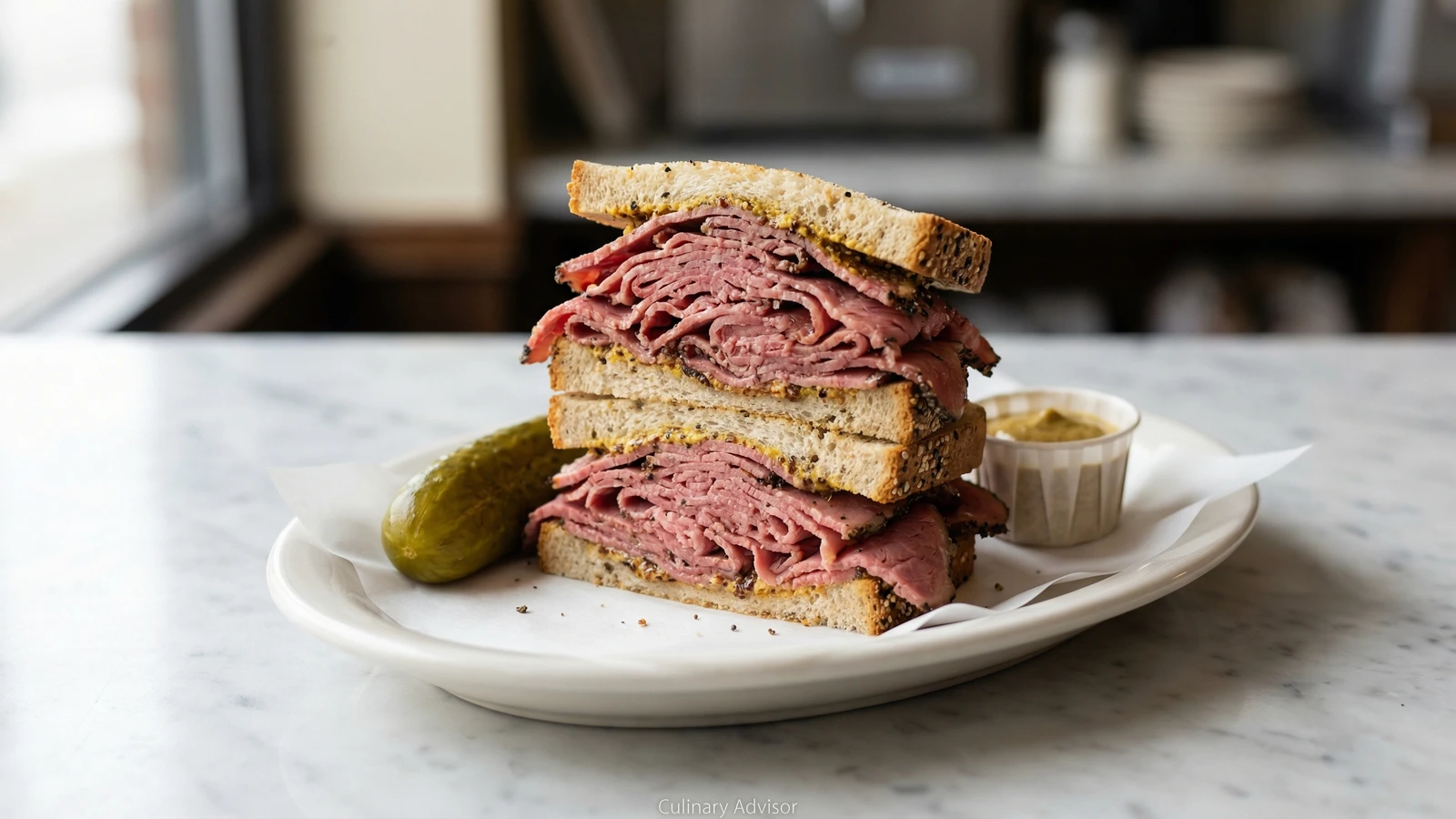
Classic Pastrami on Rye
Created by
A towering stack of peppery, garlicky pastrami on honest seeded rye, slathered with spicy brown mustard and served with a crisp dill pickle. This is the sandwich that built empires on the Lower East Side.
The pastrami sandwich arrived in New York with Romanian Jewish immigrants in the late nineteenth century. They brought the technique of brining and smoking beef, adapted from the Turkish pastırma, and transformed it into something entirely American. By the 1930s, delis like Katz's on Houston Street had perfected the art, hand-slicing pastrami to order and piling it obscenely high between slices of seeded rye.
This sandwich requires no culinary wizardry. It demands only respect for quality ingredients and proper technique. Your pastrami must be warm, almost steaming from the slicer or your stovetop steamer. Cold pastrami is a sin against the delicatessen tradition. The fat needs heat to soften, the spices need warmth to bloom, and your first bite should release that peppery, garlicky perfume that makes strangers lean in and ask what you're eating.
The bread matters more than you think. Seeded rye provides the slight sourness and sturdy crumb that stands up to a half-pound of meat without dissolving into mush. Corn rye works in a pinch. Wonder Bread does not. And the mustard is spicy brown, period. Yellow mustard belongs on ballpark frankfurters, not in a proper deli.
The technique, the tradition, and the story behind every dish.
Discover Culinary AdvisorIngredients
quality pastrami
Quantity
1 pound
sliced thin
seeded rye bread
Quantity
4 slices
spicy brown mustard
Quantity
3 tablespoons
large dill pickles
Quantity
2
for serving
coleslaw or sauerkraut (optional)
Quantity
to taste
| Ingredient | Quantity |
|---|---|
| quality pastramisliced thin | 1 pound |
| seeded rye bread | 4 slices |
| spicy brown mustard | 3 tablespoons |
| large dill picklesfor serving | 2 |
| coleslaw or sauerkraut (optional) | to taste |
Equipment Needed
- •Steamer basket or metal colander
- •Large pot with lid
- •Sharp serrated knife for cutting
Instructions
- 1
Set up your steamer
Fill a pot with two inches of water and bring to a simmer. Set a steamer basket or colander inside, making sure the water doesn't touch the bottom. This gentle steam will warm your pastrami without drying it out or washing away the precious spice crust. A microwave works in desperation, but steam is the proper method.
If you don't have a steamer basket, a metal colander set over simmering water works perfectly. Cover with a lid or foil to trap the steam. - 2
Steam the pastrami
Arrange the pastrami slices loosely in the steamer, not packed tight. Cover and steam for six to eight minutes until the meat is heated through and the fat has turned translucent and soft. You'll smell the pepper and coriander when it's ready. The edges should glisten.
Don't skip this step. Cold pastrami straight from the package tastes like a shadow of what heated pastrami delivers. The fat must soften. - 3
Prepare the bread
Lay out four slices of seeded rye bread. The bread should be fresh but not warm. Toasting is optional and contested in deli circles. I prefer it untoasted, letting the rye's natural density provide structure. Spread spicy brown mustard generously on the top slice only. The bottom stays bare to cradle the meat without slipping.
- 4
Build the sandwich
Pile half the warm pastrami onto each bottom slice, mounding it high in the center. Don't flatten or compress the meat. Those loose folds trap heat and create textural variety. A proper pastrami sandwich should be nearly impossible to eat gracefully. If you can fit it in your mouth without unhinging your jaw, you haven't used enough meat.
Eight ounces per sandwich is traditional deli proportion. More is acceptable. Less is an insult to the form. - 5
Close and serve immediately
Press the mustard-slathered top slice gently onto the pastrami. Cut the sandwich in half diagonally. The cross-section should reveal layers of rosy meat edged with that characteristic black pepper crust. Serve immediately on a plate with a whole dill pickle alongside. No lettuce. No tomato. No mayonnaise. This sandwich needs nothing else.
Chef Tips
- •Source matters enormously. Seek out a proper Jewish deli or quality butcher for your pastrami. Supermarket pastrami sliced days ago and sealed in plastic lacks the texture and depth of freshly sliced meat. If you must buy packaged, choose brands that smoke and cure their own.
- •The ratio of meat to bread should favor the meat outrageously. This is not a balanced sandwich. This is a monument to cured beef with bread serving as structural support.
- •Rye bread varieties: Seeded rye (with caraway) is traditional New York. Corn rye offers a lighter texture. Pumpernickel works for those who want more sour depth. What doesn't work: sourdough, white bread, or anything sliced too thin to hold the weight.
- •For transporting, wrap assembled sandwiches tightly in butcher paper, then foil. The paper absorbs moisture and prevents sogginess while the foil retains warmth. Pack pickles separately in a small container. A pastrami sandwich packed for a road trip should be eaten within two hours while still warm.
Advance Preparation
- •Pastrami can be steamed and held, covered, in a 200°F oven for up to 30 minutes before assembling. Any longer and it begins to dry.
- •Do not assemble sandwiches ahead of time. The mustard soaks into the bread and the meat cools. This sandwich lives in the moment between steaming and eating.
- •For picnics or travel, steam the pastrami at home, wrap it in foil, and assemble on site. Bring bread, mustard, and pickles separately.
Frequently Asked Questions
Nutrition Information
1 serving (about 444g)
Where cooking meets culture.
Culinary mentorship, cultural storytelling, and the editorial depth that makes cooking meaningful.
Explore Culinary Advisor