Culinary Advisor
A cooking platform built around craft, culture, and the stories behind what we eat.
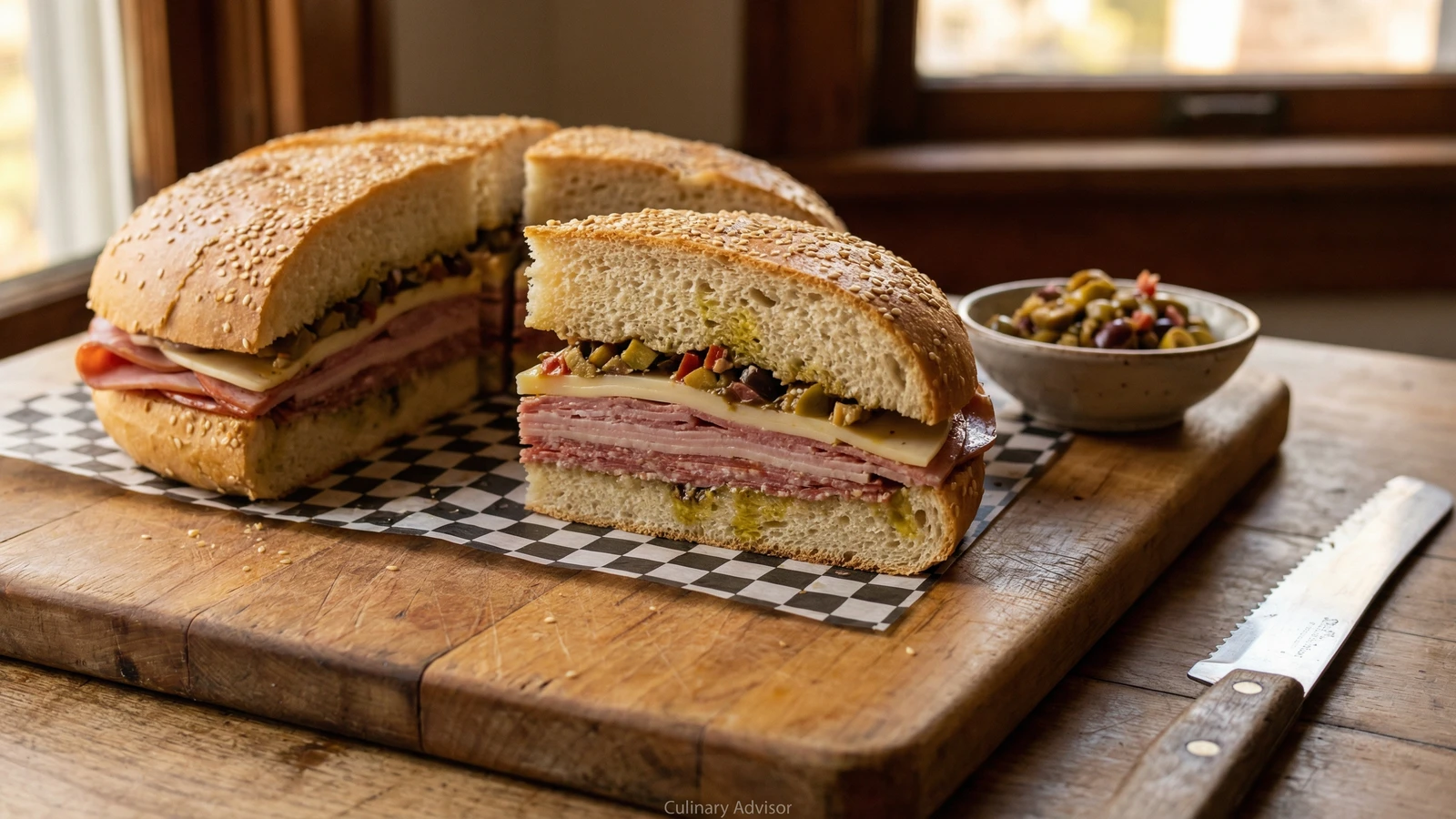
Classic New Orleans Muffuletta
Created by Chef Remy
A magnificent round of sesame-crusted bread piled high with four Italian cured meats, sharp provolone, and the tangy olive salad that made Central Grocery famous, pressed until the flavors become one glorious bite.
The muffuletta tells the story of New Orleans better than any history book. Sicilian immigrants arrived at the turn of the century, setting up shops in the French Quarter, bringing their bread, their cured meats, their way of eating. In 1906, Salvatore Lupo at Central Grocery on Decatur Street watched these workers eating their lunch standing up, juggling bread and meat and olive salad in separate hands. He put it all together in one sandwich. A hundred years later, we are still grateful.
The olive salad is where the magic lives. This is not an afterthought, not a condiment on the side. It is the heart of the whole thing. Briny olives, tangy giardiniera, garlic, good olive oil, all marinated until they speak with one voice. I make mine three days ahead at Lagniappe and let it sit in the walk-in getting better by the hour.
You build a muffuletta with intention. Layer the meats so every bite gets all four. Press the sandwich under weight so the oil soaks into the bread and the whole thing holds together. Serve it at room temperature because cold dulls the flavors. When you cut into that first wedge and see the layers, the glistening olive salad, the meat, the cheese, you understand why this sandwich has outlasted everything else that came and went in a hundred years of New Orleans eating.
The technique, the tradition, and the story behind every dish.
Discover Culinary AdvisorIngredients
green olives with pimentos
Quantity
1 cup
drained and roughly chopped
kalamata olives
Quantity
1 cup
pitted and roughly chopped
giardiniera
Quantity
1/2 cup
drained and chopped
roasted red peppers
Quantity
1/4 cup
drained and diced
capers
Quantity
2 tablespoons
drained
garlic
Quantity
4 cloves
minced
fresh oregano
Quantity
2 tablespoons
chopped
black pepper
Quantity
1 teaspoon
freshly cracked
crushed red pepper flakes
Quantity
1/2 teaspoon
extra-virgin olive oil
Quantity
1/2 cup
red wine vinegar
Quantity
2 tablespoons
muffuletta bread or Italian sesame loaf
Quantity
1 (10-inch) round
Genoa salami
Quantity
1/4 pound
sliced thin
capicola or coppa
Quantity
1/4 pound
sliced thin
mortadella
Quantity
1/4 pound
sliced thin
smoked ham
Quantity
1/4 pound
sliced thin
provolone cheese
Quantity
1/4 pound
sliced
| Ingredient | Quantity |
|---|---|
| green olives with pimentosdrained and roughly chopped | 1 cup |
| kalamata olivespitted and roughly chopped | 1 cup |
| giardinieradrained and chopped | 1/2 cup |
| roasted red peppersdrained and diced | 1/4 cup |
| capersdrained | 2 tablespoons |
| garlicminced | 4 cloves |
| fresh oreganochopped | 2 tablespoons |
| black pepperfreshly cracked | 1 teaspoon |
| crushed red pepper flakes | 1/2 teaspoon |
| extra-virgin olive oil | 1/2 cup |
| red wine vinegar | 2 tablespoons |
| muffuletta bread or Italian sesame loaf | 1 (10-inch) round |
| Genoa salamisliced thin | 1/4 pound |
| capicola or coppasliced thin | 1/4 pound |
| mortadellasliced thin | 1/4 pound |
| smoked hamsliced thin | 1/4 pound |
| provolone cheesesliced | 1/4 pound |
Equipment Needed
- •Large mixing bowl
- •Serrated bread knife
- •Plastic wrap
- •Heavy weight for pressing (cast iron skillet or Dutch oven)
Instructions
- 1
Make the olive salad
Combine both olives in a large bowl. You want texture here, so chop them rough, not fine. Some pieces should be halved, others quartered, a few left nearly whole. Add the giardiniera, roasted peppers, and capers. This is where the muffuletta gets its soul. Toss everything together.
The ratio of green to kalamata olives matters. Green brings brine and brightness; kalamata brings depth and that almost wine-like richness. Equal parts creates balance. - 2
Season the salad
Add the minced garlic, oregano, black pepper, and red pepper flakes to your olive mixture. Pour in the olive oil and red wine vinegar. Stir everything together until well combined. The oil should pool slightly at the bottom. Taste it now. Does it need more vinegar for brightness? More pepper for heat? Adjust. Trust your palate.
Good olive oil makes all the difference here. This is not the place for that dusty bottle in the back of your cabinet. Use something you would happily dip bread into. - 3
Let flavors marry
Cover the olive salad and refrigerate for at least two hours, though overnight is better. The flavors need time to get acquainted. The garlic mellows, the vinegar softens, everything becomes more than the sum of its parts. I've had olive salad sitting three days in my walk-in at Lagniappe, and it only gets better.
- 4
Prepare the bread
Slice the muffuletta loaf horizontally through the equator, creating two equal halves. The bread should have a sturdy crust covered in sesame seeds and a soft, slightly dense interior that can stand up to the olive oil without becoming soggy. If you cannot find true muffuletta bread, a round Italian loaf with sesame seeds will do, though purists will argue.
- 5
Layer the olive salad
Spoon a generous layer of olive salad onto the bottom half of the bread. Use a slotted spoon at first to get the chunky bits distributed evenly, then drizzle some of that beautiful oil over the top. Do the same to the cut side of the top half. Both surfaces need that flavor. Do not be timid here.
- 6
Build the meat layers
Layer the meats on the bottom half in this order: salami first, then capicola, then mortadella, then ham. Overlap the slices slightly and let them drape naturally. You want each bite to contain all four meats. This is not the time for neat, precise placement. Let it be generous and a little unruly.
- 7
Add the cheese
Lay the provolone slices over the meat, covering as much surface as possible. The cheese acts as a barrier between meat and bread, keeping things from getting too slippery. It also adds that sharp, slightly nutty flavor that ties everything together.
- 8
Press and rest
Place the top half of the bread on the sandwich and press down firmly with both hands. Wrap the entire muffuletta tightly in plastic wrap. Set a cast iron skillet or heavy pot on top and let it sit for at least thirty minutes. This pressing is essential. The olive oil soaks into the bread, the layers compact, and everything melds into one cohesive creation.
At Lagniappe, we press our muffulettas for a full hour. The longer press means every bite holds together instead of sliding apart. - 9
Cut and serve
Unwrap your muffuletta and cut it into quarters with a sharp serrated knife. Each wedge should be substantial, the kind of portion that requires both hands and maybe a napkin tucked into your collar. Serve at room temperature. The olive salad should glisten, the meat should be visible in its layers, and there should be enough oil soaking into the bread that you know something good is happening.
Chef Tips
- •The olive salad improves dramatically after 24 to 72 hours of marinating. Make it ahead and thank yourself later.
- •If you cannot find muffuletta bread, look for a round Italian loaf with sesame seeds, about ten inches across. Focaccia works in a pinch, though the texture differs.
- •Ask your deli counter to slice the meats fresh and thin. Pre-packaged cold cuts work, but fresh-sliced has better flavor and texture.
- •A pressed muffuletta is not the same as an unpressed one. Do not skip this step. The weight transforms it from a pile of ingredients into a unified sandwich.
- •Leftovers keep well wrapped in the refrigerator for two days. Let them come to room temperature before eating. Cold muffuletta is a disappointment.
Advance Preparation
- •Olive salad can be made up to one week ahead and stored refrigerated in an airtight container. The flavor develops and improves with time.
- •Assembled and pressed muffuletta can be wrapped tightly and refrigerated overnight. Bring to room temperature for 30 minutes before serving.
- •For a crowd, make multiple muffulettas a day ahead. They travel beautifully to picnics and tailgates.
Frequently Asked Questions
Nutrition Information
1 serving (about 380g)
Where cooking meets culture.
Culinary mentorship, cultural storytelling, and the editorial depth that makes cooking meaningful.
Explore Culinary Advisor