Culinary Advisor
A cooking platform built around craft, culture, and the stories behind what we eat.
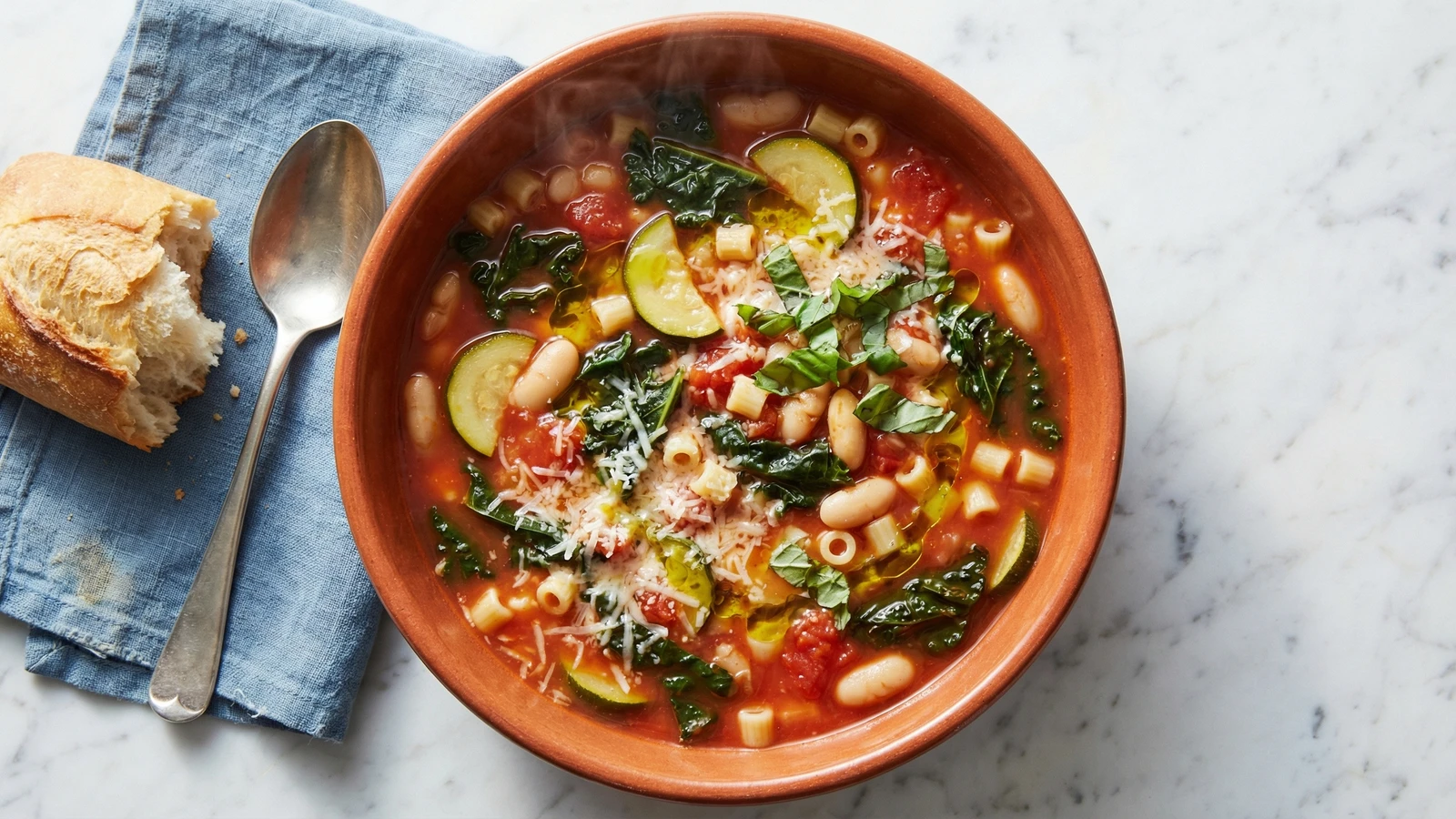
Classic Italian Minestrone
Created by
A hearty Italian vegetable soup built on the holy trinity of onion, celery, and carrot, loaded with beans, pasta, and seasonal greens, finished with parmesan and a slick of good olive oil. This is the soup that proves frugality and flavor are not opposites.
Minestrone is peasant food in the truest sense. Italian farmers and their wives created it from whatever the garden offered, stretching modest ingredients into meals that could feed a family through long winters. There was no single recipe, only a principle: waste nothing, honor everything.
The word itself comes from 'minestra,' meaning soup, with the suffix suggesting abundance. A big soup. A generous soup. The kind of soup that improves the longer it sits, as the flavors deepen their acquaintance overnight in your refrigerator.
I've eaten minestrone in trattorias across Tuscany and in Italian-American kitchens from Boston to San Francisco. The versions differ wildly, yet all share that quality of honest abundance. Beans for protein. Pasta for substance. Vegetables in whatever combination the season provides. And always, always, a drift of parmesan and good olive oil to finish.
This recipe gives you a framework, not a straitjacket. The vegetables listed here work beautifully, but minestrone invites substitution. Summer squash for zucchini. Cabbage for kale. Fresh tomatoes when August makes them worth eating. The soup absorbs your choices and makes them its own.
The technique, the tradition, and the story behind every dish.
Discover Culinary AdvisorIngredients
extra-virgin olive oil
Quantity
1/4 cup, plus more for drizzling
pancetta or bacon
Quantity
4 ounces
diced small
yellow onion
Quantity
1 large
diced
celery stalks
Quantity
3
diced
carrots
Quantity
3 medium
peeled and diced
garlic cloves
Quantity
6
minced
tomato paste
Quantity
2 tablespoons
whole San Marzano tomatoes
Quantity
1 (28-ounce) can
crushed by hand
parmesan rind (optional)
Quantity
about 3 inches
chicken or vegetable stock
Quantity
8 cups
cannellini beans
Quantity
2 (15-ounce) cans
drained and rinsed
zucchini
Quantity
2 medium
quartered lengthwise and sliced
green beans
Quantity
2 cups
trimmed and cut into 1-inch pieces
lacinato kale or Swiss chard
Quantity
4 cups
stems removed, leaves torn
small pasta
Quantity
1 cup
dried oregano
Quantity
1 teaspoon
red pepper flakes
Quantity
1/2 teaspoon
kosher salt
Quantity
to taste
black pepper
Quantity
to taste
freshly ground
Parmigiano-Reggiano
Quantity
1 cup
freshly grated
fresh basil leaves
Quantity
for serving
| Ingredient | Quantity |
|---|---|
| extra-virgin olive oil | 1/4 cup, plus more for drizzling |
| pancetta or bacondiced small | 4 ounces |
| yellow oniondiced | 1 large |
| celery stalksdiced | 3 |
| carrotspeeled and diced | 3 medium |
| garlic clovesminced | 6 |
| tomato paste | 2 tablespoons |
| whole San Marzano tomatoescrushed by hand | 1 (28-ounce) can |
| parmesan rind (optional) | about 3 inches |
| chicken or vegetable stock | 8 cups |
| cannellini beansdrained and rinsed | 2 (15-ounce) cans |
| zucchiniquartered lengthwise and sliced | 2 medium |
| green beanstrimmed and cut into 1-inch pieces | 2 cups |
| lacinato kale or Swiss chardstems removed, leaves torn | 4 cups |
| small pasta | 1 cup |
| dried oregano | 1 teaspoon |
| red pepper flakes | 1/2 teaspoon |
| kosher salt | to taste |
| black pepperfreshly ground | to taste |
| Parmigiano-Reggianofreshly grated | 1 cup |
| fresh basil leaves | for serving |
Equipment Needed
- •Large Dutch oven or heavy-bottomed pot (6-quart minimum)
- •Wooden spoon
- •Ladle
- •Microplane or box grater for cheese
Instructions
- 1
Render the pancetta
Heat a large Dutch oven or heavy-bottomed pot over medium heat. Add the olive oil and diced pancetta. Cook, stirring occasionally, until the fat renders and the pancetta turns golden and crisp at the edges, about 8 minutes. The kitchen will smell of good intentions. This rendered fat becomes the foundation of your soup's depth.
For a vegetarian version, skip the pancetta and add an extra tablespoon of olive oil. The soup will be lighter but still satisfying. - 2
Build the soffritto
Add the onion, celery, and carrots to the pot. Stir to coat in the rendered fat. Cook over medium heat, stirring occasionally, until the vegetables soften and the onions turn translucent, about 10 minutes. Don't rush this. The soffritto is everything. You want the vegetables to sweat and release their sugars, not brown.
- 3
Bloom the aromatics
Push the vegetables to the sides of the pot, creating a clearing in the center. Add the garlic and tomato paste to this clearing. Let the paste cook in direct contact with the hot surface for about 90 seconds, stirring constantly. Watch for the color to deepen from bright red to brick. This caramelization concentrates the tomato's flavor and removes its raw edge.
- 4
Add tomatoes and stock
Pour in the crushed tomatoes with their juices and stir everything together. Add the stock, parmesan rind if using, oregano, and red pepper flakes. The rind will soften as it simmers, releasing glutamates that make the broth taste deeper, more complete. Bring to a boil, then reduce heat to maintain a gentle simmer.
- 5
Simmer the base
Let the soup simmer uncovered for 25 minutes. The tomatoes will break down further and the flavors will begin their conversation. Taste the broth. It should have backbone now, a savory depth that promises good things. Season with salt, remembering that the parmesan you'll add later brings its own salinity.
If you have homemade stock, this is its moment to shine. Store-bought works fine, but the soup made with real stock has a richness that's unmistakable. - 6
Add the beans and green vegetables
Add the cannellini beans, zucchini, and green beans to the pot. Return to a simmer and cook for 10 minutes. The zucchini should still have some structure, not collapsed into mush. The green beans should bend without snapping.
- 7
Cook the pasta and greens
Add the pasta and kale to the soup. Stir well to prevent the pasta from clumping at the bottom. Simmer until the pasta is tender with pleasant resistance, usually 8 to 12 minutes depending on shape. The kale will wilt and darken, its bitterness mellowing into something silky and green.
- 8
Finish and adjust
Remove the parmesan rind (or leave it for someone to discover). Taste the soup. It should be robust but balanced, the tomato bright against the savory depth of the stock and cheese. Adjust salt and pepper. The consistency should be thick with vegetables but still soupy. If it's too thick, add a splash of hot stock or water.
Minestrone thickens as it sits. When reheating, add water or stock to loosen it back to your preferred consistency. - 9
Serve with ceremony
Ladle the soup into deep bowls. Top each portion with a generous handful of grated Parmigiano-Reggiano, a few torn basil leaves, and a drizzle of your best olive oil. The oil should pool on the surface in golden rivulets. Serve with crusty bread for dunking. This is not optional.
Chef Tips
- •Save your parmesan rinds in a bag in the freezer. They keep indefinitely and transform soups and braises with their concentrated umami. One rind per pot of soup is the ratio that works.
- •For deeper flavor, make a quick stock from scratch: simmer chicken bones or vegetable scraps with an onion, carrot, and celery for two hours. Strain and use immediately, or freeze in quart containers for future soup days.
- •The pasta will continue absorbing liquid as the soup sits. If you're making this for meal prep, either cook pasta separately and add to individual portions, or accept that leftover minestrone becomes almost stew-like. Both approaches have their merits.
- •A spoonful of pesto stirred into each bowl at serving creates an entirely different soup, herbaceous and bright. Keep it in mind for summer months when basil overwhelms your garden.
Advance Preparation
- •The soup base without pasta can be made up to 4 days ahead and refrigerated. The flavors improve markedly after a night in the refrigerator. Add pasta when reheating.
- •Minestrone without pasta freezes beautifully for up to 3 months. Thaw overnight in the refrigerator, then reheat gently and add freshly cooked pasta.
- •Prep all vegetables the night before and store in a covered container in the refrigerator. When ready to cook, the actual work takes under 20 minutes of active time.
- •Leftover soup thickens considerably. Add stock or water when reheating, tasting as you go until the consistency pleases you.
Frequently Asked Questions
Nutrition Information
1 serving (about 350g)
Where cooking meets culture.
Culinary mentorship, cultural storytelling, and the editorial depth that makes cooking meaningful.
Explore Culinary Advisor