Culinary Advisor
A cooking platform built around craft, culture, and the stories behind what we eat.
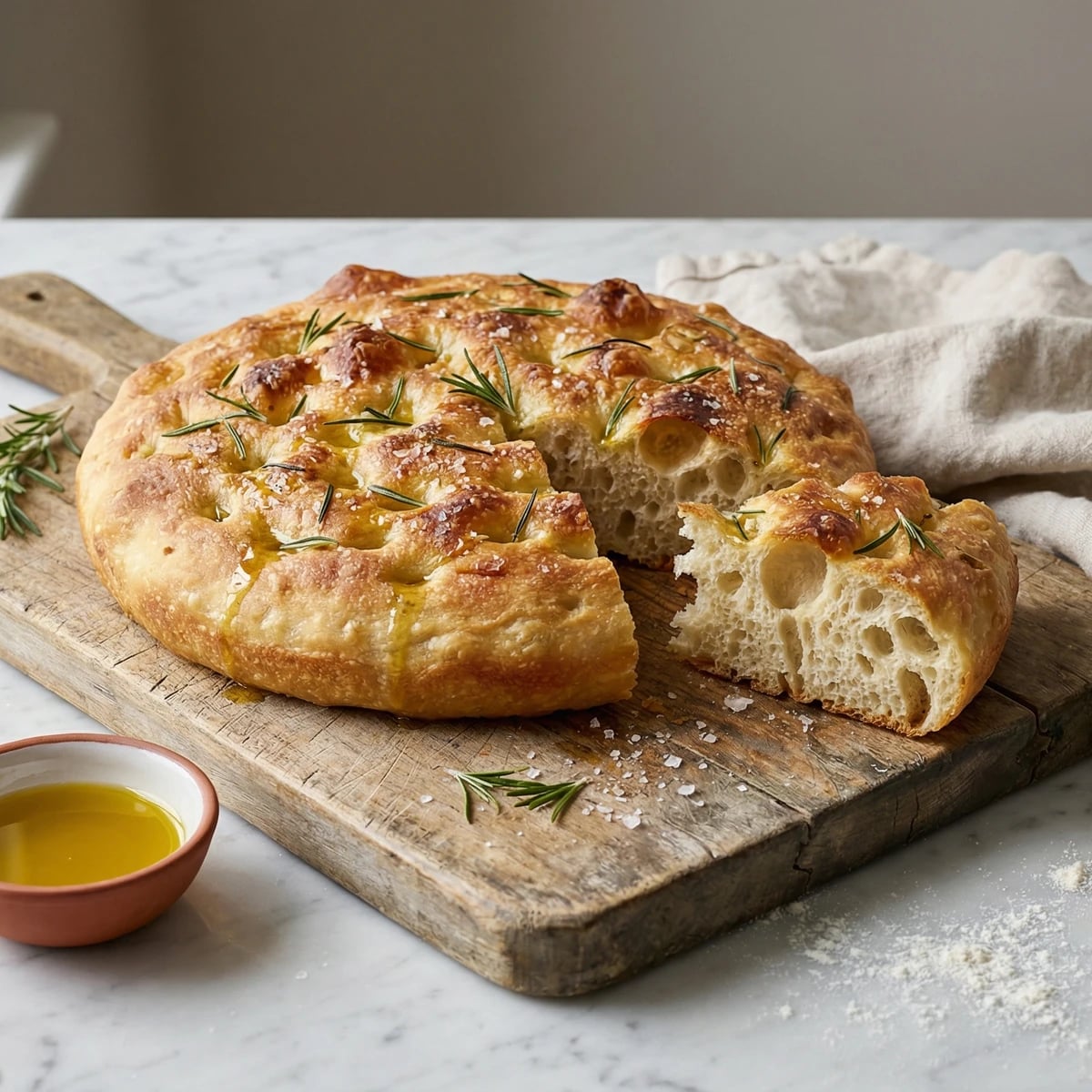
Classic Italian Focaccia
Created by Chef Dean
Golden-crusted Ligurian flatbread, generous with olive oil, dimpled by eager fingers, and scattered with rosemary and flaky salt. The bread that proves simplicity requires no apology.
Focaccia is proof that great bread doesn't demand suffering. No kneading until your arms ache. No precise shaping that makes you question your worth as a cook. Just flour, water, yeast, salt, and more olive oil than seems reasonable. The dough does most of the work while you go about your day.
This bread has fed Ligurian sailors and dockworkers for centuries. They ate it torn into rough pieces, sometimes stuffed with cheese, sometimes topped with nothing more than coarse salt and a slick of oil from the local press. The recipe hasn't changed because it didn't need to. Time and good ingredients handle everything.
What makes focaccia remarkable is its texture: a bottom crust that shatters slightly, giving way to an interior so open and tender it seems impossible from such a wet dough. Those signature dimples serve a purpose beyond tradition. They create pools where olive oil collects and fries gently during baking, producing pockets of extraordinary flavor. Press your fingers in with conviction. Timid dimpling yields timid bread.
I've watched students transform from nervous first-timers to confident bakers with this single recipe. The dough forgives. It stretches when you ask it to stretch and tells you plainly when it needs more rest. Listen to it. By your third focaccia, you'll wonder why you ever bought bread at a store.
Ingredients
bread flour
Quantity
500g (4 cups)
warm water, 100-110°F
Quantity
375g (1½ cups plus 2 tablespoons)
instant yeast
Quantity
7g (2¼ teaspoons)
| Ingredient | Quantity |
|---|---|
| bread flour | 500g (4 cups) |
| warm water, 100-110°F | 375g (1½ cups plus 2 tablespoons) |
| instant yeast | 7g (2¼ teaspoons) |