Culinary Advisor
A cooking platform built around craft, culture, and the stories behind what we eat.
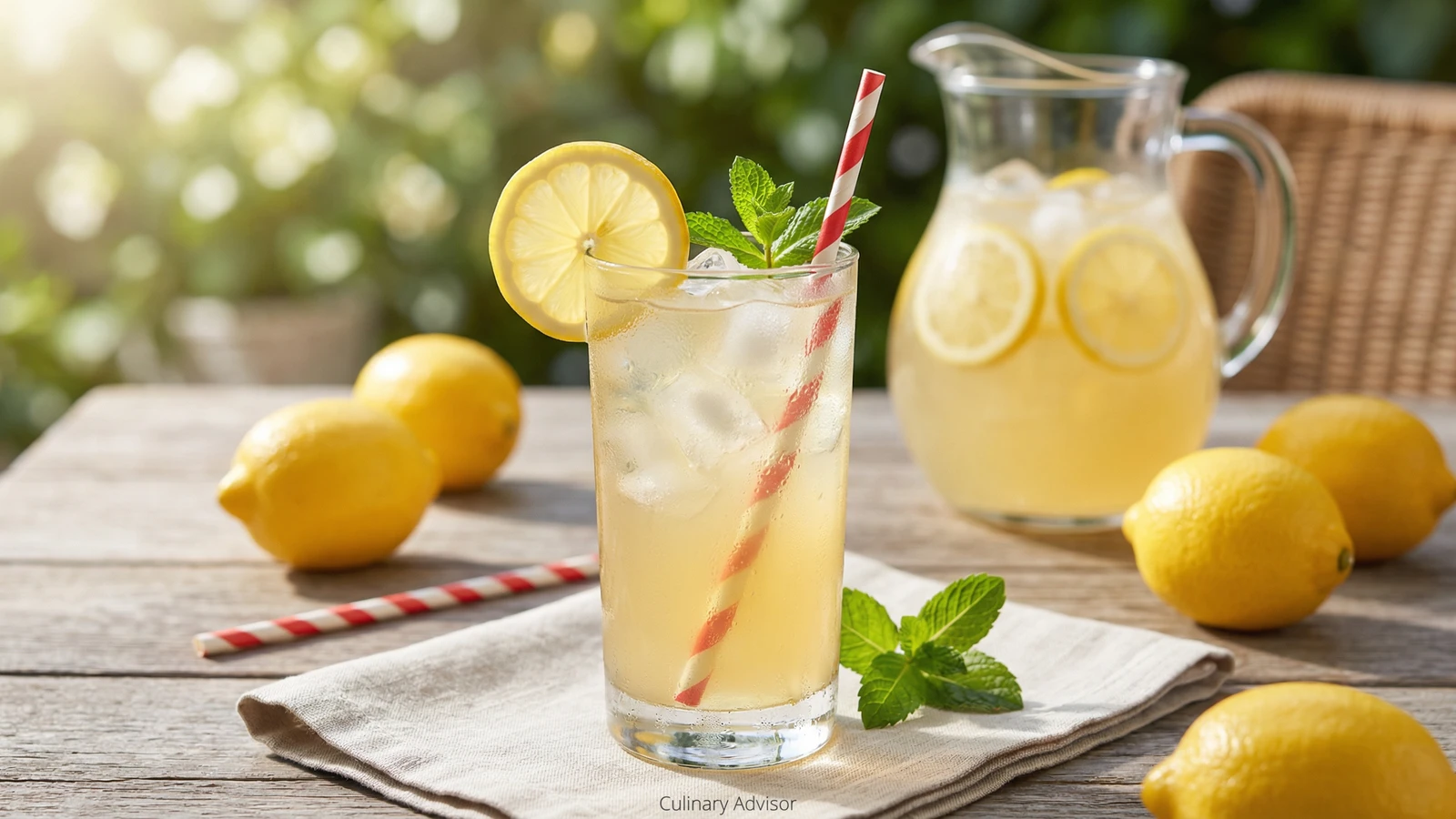
Classic Fresh Lemonade
Created by
Freshly squeezed lemons meet pure cane sugar in a pitcher of honest refreshment, the kind that makes porch sitting a competitive sport and demands refills before the ice melts.
There is no more democratic beverage in American cooking than lemonade. It requires three ingredients, minimal equipment, and about fifteen minutes of your time. Yet most people settle for powdered mixes or syrupy concentrates that taste of nothing so much as missed opportunity. This is a correctable tragedy.
The secret to exceptional lemonade lives in the simple syrup. Dissolving sugar into hot water creates a smooth sweetness that distributes evenly through your pitcher without gritty sediment at the bottom. Cold sugar never fully dissolves. It sits there reproachfully while you stir and stir and eventually give up. Don't give up. Make the syrup.
I've served this lemonade at summer gatherings for decades. It disappears faster than any cocktail, faster than the beer, faster than everything except maybe the fried chicken. Children drink it by the tumbler. Adults add bourbon when the children aren't looking. The pitcher empties and someone always asks for the recipe, surprised to learn there isn't more to it. There doesn't need to be. When you start with proper technique and good lemons, simplicity is the whole point.
The technique, the tradition, and the story behind every dish.
Discover Culinary AdvisorIngredients
pure cane sugar
Quantity
1 cup (200g)
water (for simple syrup)
Quantity
1 cup
freshly squeezed lemon juice
Quantity
1 1/2 cups
about 8-10 large lemons
cold water
Quantity
4-5 cups
ice cubes
Quantity
for serving
lemon slices
Quantity
for garnish
fresh mint sprigs (optional)
Quantity
for garnish
| Ingredient | Quantity |
|---|---|
| pure cane sugar | 1 cup (200g) |
| water (for simple syrup) | 1 cup |
| freshly squeezed lemon juiceabout 8-10 large lemons | 1 1/2 cups |
| cold water | 4-5 cups |
| ice cubes | for serving |
| lemon slices | for garnish |
| fresh mint sprigs (optional) | for garnish |
Equipment Needed
- •Small saucepan
- •Citrus reamer or juicer
- •Fine-mesh strainer
- •Large pitcher (2-quart capacity)
- •Tall serving glasses
Instructions
- 1
Make the simple syrup
Combine the sugar and one cup of water in a small saucepan over medium heat. Stir occasionally until the sugar dissolves completely and the liquid turns from cloudy to crystal clear, about three to four minutes. Do not let it boil vigorously. Remove from heat and let cool to room temperature, or speed the process by setting the pan in an ice bath.
Simple syrup can be made days ahead and refrigerated in a sealed jar. It keeps for a month. Having it ready transforms lemonade from a project into a five-minute pleasure. - 2
Select and prepare the lemons
Choose lemons that feel heavy for their size with thin, smooth skin. These contain more juice than their thick-skinned, lightweight cousins. Roll each lemon firmly against your countertop under the heel of your palm, pressing down as you roll. This breaks the internal membranes and releases significantly more juice. You'll feel the lemon soften as the cells rupture.
Meyer lemons, if you can find them, produce a sweeter, more floral lemonade. Reduce the sugar by two tablespoons when using them. - 3
Juice the lemons properly
Cut each lemon in half crosswise, not pole to pole. This orientation exposes the maximum number of juice vesicles to your reamer or press. Juice into a bowl or measuring cup, using a citrus reamer for maximum extraction. Strain through a fine-mesh sieve to remove seeds and pulp. You want pure, silky juice without bitter pith fragments.
Room temperature lemons yield more juice than cold ones. Pull them from the refrigerator thirty minutes before juicing, or microwave each lemon for fifteen seconds. - 4
Combine and balance
Pour the strained lemon juice and cooled simple syrup into a large pitcher. Add four cups of cold water and stir well. Taste critically. The lemonade should hit three notes in succession: bright acidity first, clean sweetness second, and a lingering citrus finish. If too tart, add more syrup a tablespoon at a time. If too sweet, add water or more lemon juice. Trust your palate.
- 5
Chill thoroughly
Refrigerate the pitcher for at least one hour before serving. Lemonade served immediately over ice dilutes too quickly and never achieves proper cold. The flavors also marry and mellow during this rest. What tasted slightly sharp when first mixed will taste balanced after chilling.
For the coldest lemonade without dilution, freeze lemon juice in ice cube trays. These lemon ice cubes chill your glass without watering down the drink. - 6
Serve with intention
Fill tall glasses with ice cubes. Pour the chilled lemonade over the ice, leaving room at the top. Add a lemon slice to each glass, cut thin enough to bend around the inside curve. A sprig of fresh mint pressed against the ice releases its oils with each sip. Serve immediately with a long spoon for stirring as the ice melts.
Chef Tips
- •The ratio to remember is one part lemon juice, one part simple syrup, and three to four parts water. Scale up or down as needed, adjusting to taste. This formula has never failed me.
- •For entertaining, make the base concentrate (lemon juice plus simple syrup) ahead, refrigerated in a sealed container. Add cold water and ice just before guests arrive. The concentrate keeps for five days.
- •Thin lemon slices frozen in a single layer make beautiful garnishes that chill without diluting. Freeze them on a parchment-lined baking sheet, then transfer to a zip-top bag.
- •For a crowd at the Fourth of July, double or triple this recipe into a beverage dispenser with a spigot. Add sliced lemons and strawberries to the dispenser for a festive look.
- •Save your squeezed lemon halves. Freeze them in a bag and drop into glasses of water, use to scrub cutting boards, or add to the garbage disposal for freshening.
Advance Preparation
- •Simple syrup can be made up to one month ahead and refrigerated in a sealed glass jar.
- •Lemon juice can be squeezed up to two days ahead and refrigerated. Fresh juice does oxidize slightly, so same-day is ideal for peak brightness.
- •The complete lemonade base (juice plus syrup, no water) keeps refrigerated for up to five days. Add cold water when ready to serve.
- •Fully assembled lemonade is best consumed within two days. After that, the fresh lemon flavor fades.
Frequently Asked Questions
Nutrition Information
1 serving (about 300g)
Where cooking meets culture.
Culinary mentorship, cultural storytelling, and the editorial depth that makes cooking meaningful.
Explore Culinary Advisor