Culinary Advisor
A cooking platform built around craft, culture, and the stories behind what we eat.
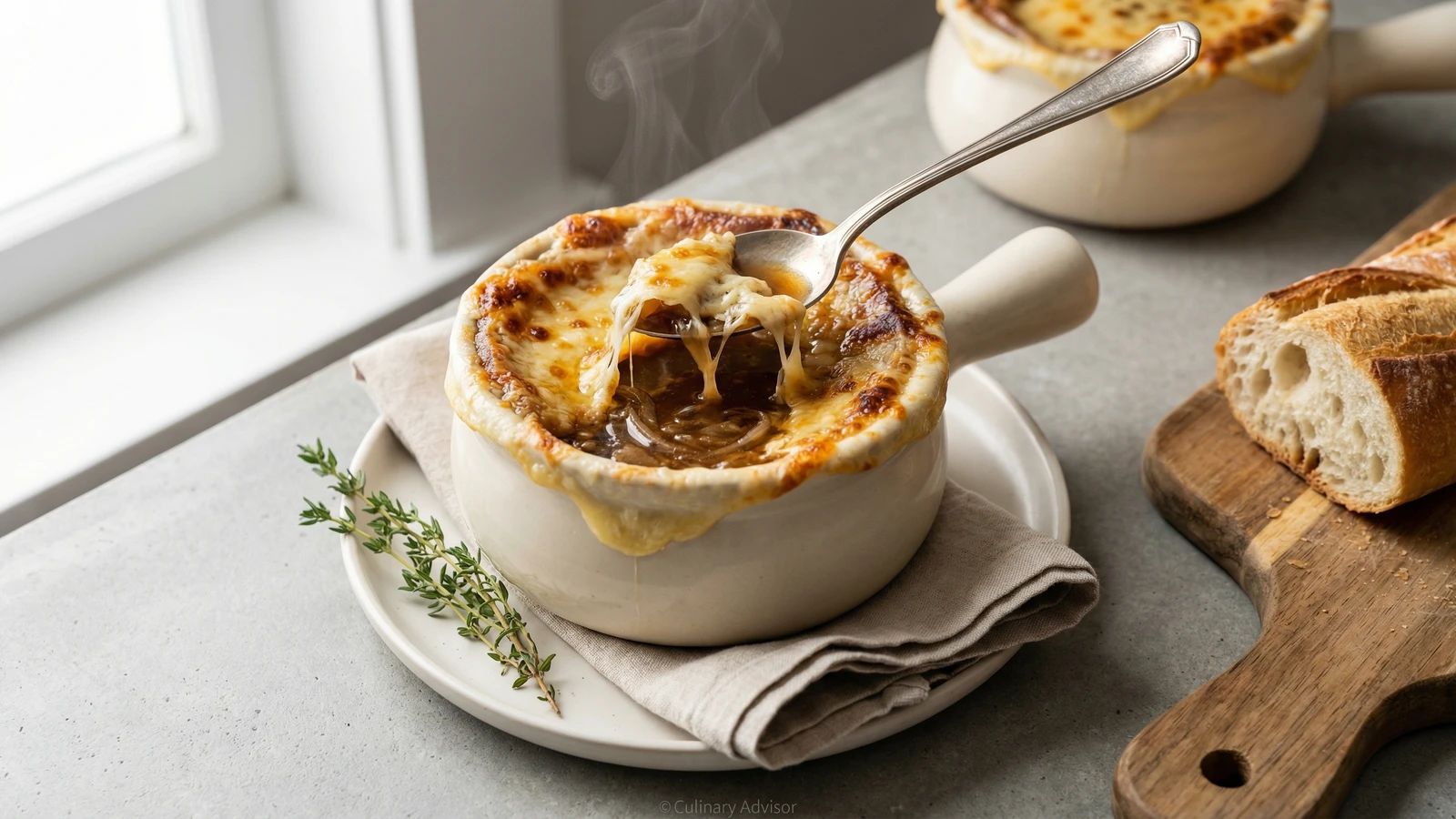
Classic French Onion Soup
Created by
Deeply caramelized onions in rich beef broth, crowned with garlic-rubbed croutons and a bubbling cap of molten Gruyère that cracks to reveal steaming, soul-warming spoonfuls beneath.
The first time I encountered proper French onion soup was in a cramped bistro near Les Halles, the great Parisian market that fed the city before dawn each day. The waiter set down a crock so hot it crackled against the wooden placemat. The cheese cap was bronzed and blistered, stretched taut over the rim like a drum skin. When I broke through with my spoon, steam erupted and the aroma of caramelized onions and rich beef broth filled my corner of the room. I understood immediately why this dish had survived centuries.
The secret is time. Not technique, not special equipment, not rare ingredients. Just the patient caramelization of common yellow onions until their sugars concentrate and deepen into something approaching the color of mahogany. This takes an hour, sometimes more. There are no shortcuts worth taking. The instant you try to rush caramelization with high heat, you get burnt edges and raw centers. Low and slow wins this race, as it wins most races in the kitchen.
What makes this soup particularly satisfying for American home cooks is its forgiving nature. You can make the base days ahead and refrigerate it. You can freeze it for months. When company comes, you simply reheat, ladle into crocks, add bread and cheese, and gratinée under the broiler. Five minutes of last-minute work produces a dish that looks like you've been laboring all afternoon. That's the kind of recipe I've always championed.
The technique, the tradition, and the story behind every dish.
Discover Culinary AdvisorIngredients
yellow onions
Quantity
4 pounds (about 6 large)
halved and thinly sliced
unsalted butter
Quantity
4 tablespoons
olive oil
Quantity
2 tablespoons
granulated sugar
Quantity
1 teaspoon
kosher salt
Quantity
1 teaspoon, plus more to taste
dry white wine or dry sherry
Quantity
1/2 cup
rich beef stock
Quantity
8 cups
fresh thyme
Quantity
4 sprigs
bay leaves
Quantity
2
black pepper
Quantity
1/2 teaspoon
freshly ground
baguette
Quantity
1
cut into 1-inch thick slices
butter for bread
Quantity
2 tablespoons
softened
garlic clove
Quantity
1
halved
Gruyère cheese
Quantity
12 ounces (about 3 cups)
grated
Parmesan cheese
Quantity
2 ounces (about 1/2 cup)
finely grated
| Ingredient | Quantity |
|---|---|
| yellow onionshalved and thinly sliced | 4 pounds (about 6 large) |
| unsalted butter | 4 tablespoons |
| olive oil | 2 tablespoons |
| granulated sugar | 1 teaspoon |
| kosher salt | 1 teaspoon, plus more to taste |
| dry white wine or dry sherry | 1/2 cup |
| rich beef stock | 8 cups |
| fresh thyme | 4 sprigs |
| bay leaves | 2 |
| black pepperfreshly ground | 1/2 teaspoon |
| baguettecut into 1-inch thick slices | 1 |
| butter for breadsoftened | 2 tablespoons |
| garlic clovehalved | 1 |
| Gruyère cheesegrated | 12 ounces (about 3 cups) |
| Parmesan cheesefinely grated | 2 ounces (about 1/2 cup) |
Equipment Needed
- •Large Dutch oven or heavy-bottomed pot (6-quart minimum)
- •Wooden spoon for scraping fond
- •Oven-safe soup crocks (6 individual or 4 large)
- •Sturdy baking sheet to hold crocks
- •Box grater or food processor for cheese
Instructions
- 1
Slice the onions
Halve each onion through the root, peel, and slice into thin half-moons about an eighth of an inch thick. Uniformity matters here. Uneven slices caramelize at different rates, leaving you with burnt edges and pale centers in the same pot. This is meditative work. Put on some music. Four pounds of onions will seem like an absurd mountain, but they'll cook down to a fraction of their volume.
Yellow onions provide the best balance of sweetness and depth. Sweet onions caramelize too quickly and turn to mush. Red onions muddy the color. - 2
Start the caramelization
Melt the butter with olive oil in a large Dutch oven or heavy-bottomed pot over medium heat. The combination gives you butter's flavor with olive oil's higher smoke point. Add all the onions at once. They'll heap above the rim of your pot. Don't worry. Sprinkle with the sugar and salt, then stir to coat every strand with fat. Cover the pot and cook for fifteen minutes, stirring once halfway through. The onions will collapse, releasing their moisture and becoming translucent.
- 3
Build the fond
Remove the lid and reduce heat to medium-low. Now begins the real work. Cook uncovered for 45 minutes to one hour, stirring every five minutes or so. Watch the bottom of the pot. A golden crust called the fond will develop on the surface. This is concentrated flavor. Each time you stir, scrape up this crust and incorporate it into the onions. They'll progress from pale gold to amber to deep mahogany. The kitchen will smell like heaven. The onions are ready when they're uniformly dark brown, sweet, and reduced to about two cups.
Patience is the only secret to proper caramelization. If you rush with high heat, the sugars will burn before the onions soften. Low and slow wins this race. - 4
Deglaze with wine
Push the onions to one side of the pot, exposing the bottom. Pour in the wine and listen to it sizzle against the hot surface. Use a wooden spoon to scrape up every bit of caramelized fond clinging to the pot. This is where restaurant soups get their depth. Stir the wine into the onions and cook until the liquid evaporates completely, about two minutes. The onions will turn glossy and more intensely flavored.
- 5
Add stock and simmer
Pour in the beef stock. Add the thyme sprigs and bay leaves. Bring to a gentle simmer over medium heat, then reduce to low. Let the soup bubble lazily for thirty minutes. The flavors need time to marry. Taste and adjust seasoning with salt and pepper. The broth should taste rich and deeply savory, almost meaty despite the starring role of onions. Remove and discard the thyme stems and bay leaves.
If your stock is unsalted, you may need up to a tablespoon more salt. Season gradually and taste after each addition. You can always add more but you can't take it back. - 6
Toast the croutons
While the soup simmers, prepare your bread. Preheat the broiler. Arrange baguette slices on a baking sheet and brush both sides with softened butter. Broil until golden on both sides, watching carefully as broilers vary wildly. Rub one side of each warm toast with the cut garlic clove. The rough surface will grate the garlic, perfuming the bread without overwhelming it. Set aside.
- 7
Assemble the gratinée
Position a rack six inches from the broiler element. Ladle hot soup into oven-safe crocks, filling them three-quarters full. Float one or two croutons on the surface of each, garlic side down. Pile the grated Gruyère generously over the bread, letting it cascade down the sides to touch the rim of the crock. Sprinkle Parmesan over the top. Place crocks on a sturdy baking sheet.
The cheese touching the crock's edge is intentional. It will crisp against the hot ceramic, creating those coveted crunchy bits. - 8
Broil until bubbling
Slide the baking sheet under the broiler. Watch with the intensity of a hawk. The cheese will begin to bubble within two minutes, then develop golden and brown spots. Pull the crocks when the cheese is deeply bronzed in places and still stretching, about three to four minutes total. The soup beneath will be furiously bubbling around the edges. Use thick oven mitts. Warn your guests. Those crocks retain heat like small furnaces. Rest for two minutes before serving. This soup waits for no one.
Chef Tips
- •The quality of your beef stock determines the quality of your soup. If using store-bought, seek out products sold in glass jars at specialty grocers, or the concentrated pastes that approximate real gelatin. Boxed broths labeled 'stock' often contain more salt than substance.
- •Making stock from scratch transforms this soup entirely. Roast five pounds of beef bones at 450°F until mahogany brown, then simmer with aromatic vegetables for eight hours. The collagen converts to gelatin, giving body that no commercial product can match. Freeze in quart containers for future batches.
- •Dry sherry adds complexity that white wine cannot. Look for Fino or Manzanilla, both bone-dry styles that contribute nuttiness without sweetness. Avoid 'cooking sherry' sold in grocery stores, which contains salt and tastes of nothing worth eating.
- •The crocks matter. Thin ceramic or glass bowls crack under a broiler and don't retain heat properly. Invest in proper oven-safe soup crocks with small handles. They'll last decades and make this soup the theatrical event it deserves to be.
Advance Preparation
- •The soup base, through step 5, can be made up to four days ahead and refrigerated. The flavor deepens considerably overnight as the onions continue to release their essence into the broth.
- •Freeze the soup base without bread or cheese for up to three months. Thaw overnight in the refrigerator and reheat gently before proceeding with gratinée.
- •Croutons can be toasted and garlic-rubbed up to one day ahead. Store in an airtight container at room temperature. They'll soften slightly but crisp again under the broiler.
- •Grate the cheese up to two days ahead and refrigerate in a sealed container. Bring to room temperature before using for better melting.
Frequently Asked Questions
Nutrition Information
1 serving (about 320g)
Where cooking meets culture.
Culinary mentorship, cultural storytelling, and the editorial depth that makes cooking meaningful.
Explore Culinary Advisor