Culinary Advisor
A cooking platform built around craft, culture, and the stories behind what we eat.
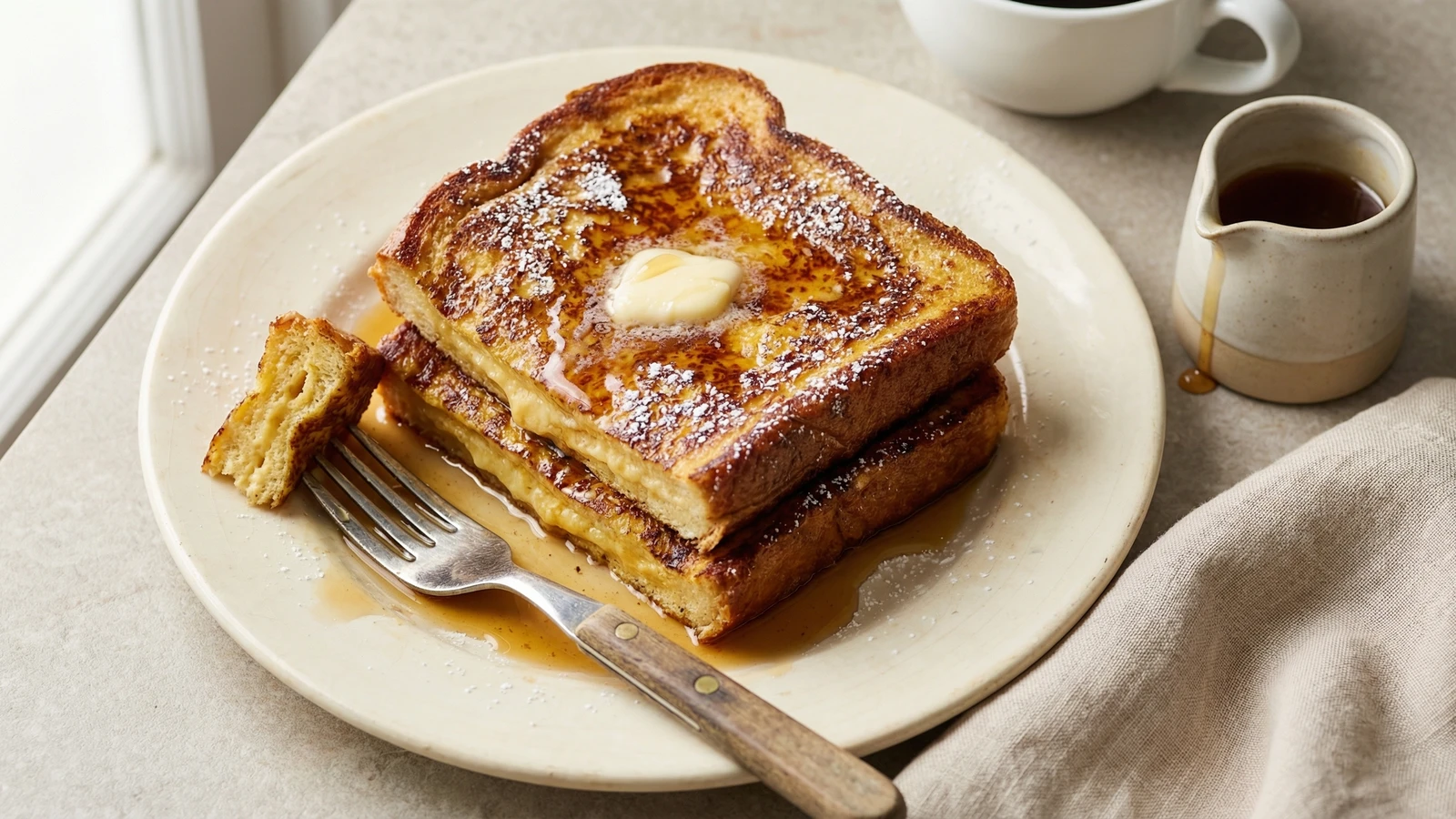
Classic Cinnamon French Toast
Created by
Thick slices of bread transformed by a vanilla-scented custard and butter-crisped to golden perfection, the kind of breakfast that makes children appear at the kitchen door before you've called them.
The French call it pain perdu, lost bread, because the dish began as a way to rescue stale loaves from the rubbish bin. Clever cooks discovered that yesterday's bread, too dry to eat on its own, became something magnificent when soaked in custard and fried in butter. The staleness was the secret. Fresh bread turns to mush. Day-old bread drinks in the custard while holding its shape.
This is the French toast I grew up with, the kind my grandmother made on Saturday mornings while my grandfather read the paper and the coffee pot burbled on the stove. She used whatever bread was going stale, white sandwich slices when times were tight, thick-cut challah when the bakery had day-old loaves on sale. The magic lived in the custard and the generous hand with the butter.
Don't rush this. French toast rewards patience. The bread needs time to absorb the custard mixture, and the pan needs to be properly heated before anything hits the surface. Cook it too fast and you'll have burnt exteriors with raw, eggy centers. Cook it right and you'll have crisp golden crusts giving way to creamy, custardy interiors that practically melt on the tongue.
The technique, the tradition, and the story behind every dish.
Discover Culinary AdvisorIngredients
thick-cut bread
Quantity
8 slices (3/4 to 1 inch thick)
preferably brioche, challah, or Texas toast
large eggs
Quantity
4
whole milk
Quantity
1 cup
heavy cream
Quantity
2 tablespoons
granulated sugar
Quantity
2 tablespoons
ground cinnamon
Quantity
1 1/2 teaspoons
pure vanilla extract
Quantity
1 teaspoon
fine sea salt
Quantity
1/4 teaspoon
freshly grated nutmeg
Quantity
1/8 teaspoon
unsalted butter
Quantity
4 tablespoons
divided
pure maple syrup
Quantity
for serving
warmed
confectioners' sugar
Quantity
for dusting
fresh berries (optional)
Quantity
for serving
| Ingredient | Quantity |
|---|---|
| thick-cut breadpreferably brioche, challah, or Texas toast | 8 slices (3/4 to 1 inch thick) |
| large eggs | 4 |
| whole milk | 1 cup |
| heavy cream | 2 tablespoons |
| granulated sugar | 2 tablespoons |
| ground cinnamon | 1 1/2 teaspoons |
| pure vanilla extract | 1 teaspoon |
| fine sea salt | 1/4 teaspoon |
| freshly grated nutmeg | 1/8 teaspoon |
| unsalted butterdivided | 4 tablespoons |
| pure maple syrupwarmed | for serving |
| confectioners' sugar | for dusting |
| fresh berries (optional) | for serving |
Equipment Needed
- •12-inch cast iron skillet or heavy-bottomed pan
- •Wide shallow dish for soaking
- •Wire cooling rack
- •Rimmed baking sheet
- •Fine-mesh strainer for dusting
Instructions
- 1
Prepare your bread
If your bread is fresh, spread the slices in a single layer on a baking sheet and let them sit uncovered for an hour, or place them in a 300°F oven for five minutes per side to dry slightly. You want bread that feels firm at the edges but not crackling dry. Fresh bread absorbs custard too quickly and falls apart in the pan. Stale bread drinks it in while maintaining structure.
The best French toast comes from bread that's one to two days old. If you plan ahead, leave your loaf unwrapped on the counter overnight. - 2
Build the custard
Crack the eggs into a wide, shallow bowl or baking dish. Whisk until the yolks and whites are completely combined with no streaks remaining. Add the milk, cream, sugar, cinnamon, vanilla, salt, and nutmeg. Whisk vigorously until the sugar dissolves and the mixture is uniform in color. The cinnamon should be evenly distributed, not floating in clumps. Taste the custard. It should be noticeably sweet and fragrant with vanilla and warm spice.
A shallow dish works better than a bowl because you can lay the bread flat for even soaking on both sides. - 3
Soak the bread properly
Working with two slices at a time, lay the bread in the custard mixture. Let it soak for twenty to thirty seconds, then flip and soak the other side for another twenty to thirty seconds. The bread should feel heavy and saturated but not so waterlogged that it threatens to fall apart when lifted. Gently press the center with your finger. It should yield but spring back slightly. Let excess custard drip off before transferring to the pan.
Don't walk away during soaking. Thirty seconds too long and your bread becomes a soggy mess impossible to handle. Stay present. - 4
Heat the pan
Set a large cast iron skillet or heavy-bottomed pan over medium heat. Add one tablespoon of butter and let it melt completely, swirling to coat the surface. Wait until the foaming subsides and the butter smells nutty. This takes longer than you think, about two minutes. If the butter browns instantly and smokes, your pan is too hot. Wipe it out and start again at lower heat.
- 5
Cook the first batch
Lay two soaked bread slices in the pan, leaving space between them. They should sizzle gently on contact, not violently sputter. Cook undisturbed for three to four minutes until the bottom develops a deep golden-brown crust. Peek underneath with a spatula. You want the color of a well-toasted marshmallow, not pale beige. Flip carefully and cook the second side for another three minutes until equally golden.
- 6
Keep warm and continue
Transfer finished slices to a wire rack set inside a baking sheet and place in a 200°F oven. This keeps them warm without steaming the crisp exterior against a flat surface. Add another tablespoon of butter to the pan, let it foam and settle, then soak and cook the remaining slices in batches of two.
Never stack finished French toast directly on top of each other. The trapped steam turns crisp crusts soggy within minutes. - 7
Serve immediately
Arrange two slices on each warm plate. Dust generously with confectioners' sugar through a fine-mesh strainer for even coverage. Add a pat of butter if desired and serve with warm maple syrup on the side. Fresh berries scattered across the plate are welcome but not required. French toast waits for no one. Call the family before you plate, not after.
Chef Tips
- •The bread matters more than any other ingredient. Brioche and challah work beautifully because their enriched doughs contain eggs and butter that complement the custard. Plain white sandwich bread makes acceptable French toast. Artisan sourdough does not. Save that for other purposes.
- •Warm your maple syrup. Cold syrup on hot French toast is an avoidable sadness. Pour it into a small pitcher and microwave for twenty seconds, or warm it in a small saucepan while you cook.
- •Real maple syrup is non-negotiable. The pancake syrup sold in plastic jugs is corn syrup with artificial flavoring. It has no place on proper French toast. Spend the money once and taste the difference.
- •If you're feeding a crowd, make the custard the night before and refrigerate it. In the morning you can move straight to soaking and cooking while still half-asleep.
Advance Preparation
- •The custard mixture can be whisked together and refrigerated up to 24 hours ahead. Give it a good stir before using, as the cinnamon tends to settle.
- •Bread can be sliced and left to stale on the counter overnight, covered loosely with a kitchen towel.
- •Cooked French toast can be frozen for up to one month. Reheat directly from frozen in a 375°F oven for eight to ten minutes until heated through and re-crisped.
Frequently Asked Questions
Nutrition Information
1 serving (about 240g)
Where cooking meets culture.
Culinary mentorship, cultural storytelling, and the editorial depth that makes cooking meaningful.
Explore Culinary Advisor