Culinary Advisor
A cooking platform built around craft, culture, and the stories behind what we eat.
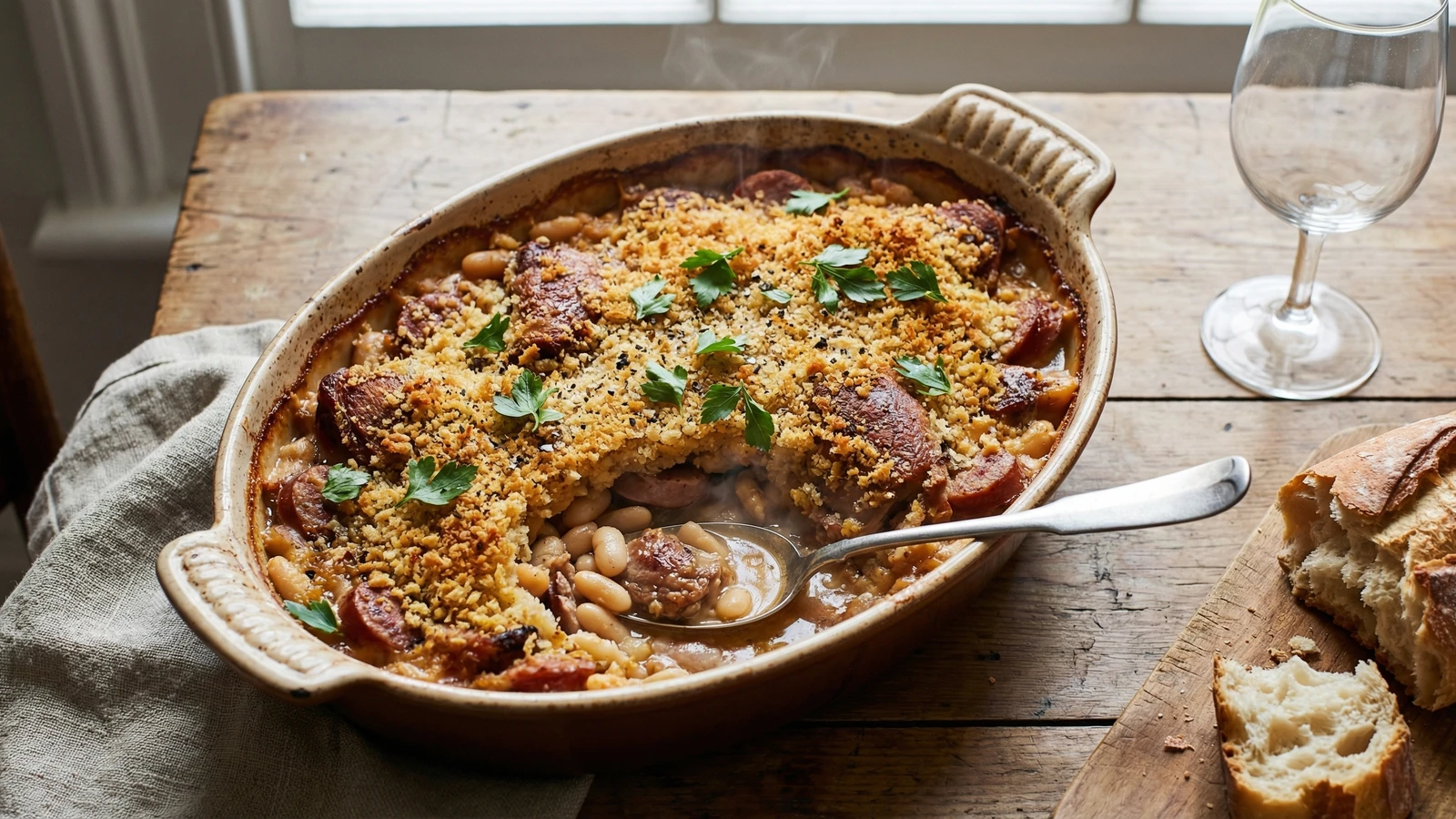
Classic Cassoulet with Duck and Sausage
Created by Chef Ally
The ancient, golden-crusted bean casserole of Languedoc, layered with succulent duck confit and garlicky sausage, baked slowly until the crust cracks and the beans turn creamy with rendered fat.
Cassoulet is peasant food that became legend. It was born in the kitchens of southern France where cooks had white beans, preserved meats, and time. That is still all you need.
Start with the beans. Dried white beans from a source you trust, plump and relatively fresh from the last harvest. Tarbais beans from the region are traditional, with skins so thin they nearly dissolve and interiors that turn creamy without losing their shape. Good cannellini will serve you well if Tarbais are beyond reach.
The duck confit is the heart of this dish. If you have made your own, you understand the alchemy of salt and fat and patience. If you buy it from a producer who cares, that works too. The meat should be rich and yielding, ready to fall apart into the beans. The sausage must be honest pork, seasoned simply with garlic and pepper. Ask your butcher.
This is not a quick supper. Cassoulet asks for a full day, maybe two. But the work is gentle: soaking, simmering, layering, baking. You are not laboring. You are waiting while something remarkable happens in your oven. The beans absorb the fat, the crust forms and is broken and forms again, and the whole thing becomes more than its parts. Worth every moment of its long cooking.
The technique, the tradition, and the story behind every dish.
Discover Culinary AdvisorIngredients
dried white beans
Quantity
1 pound
Tarbais, cannellini, or Great Northern
duck confit legs
Quantity
4
fresh garlic pork sausage
Quantity
1 pound
Toulouse-style
salt pork or thick-cut bacon
Quantity
6 ounces
cut into lardons
yellow onion
Quantity
1 large
diced
garlic
Quantity
1 head
cloves peeled and minced
carrots
Quantity
2 medium
peeled and diced
celery stalks
Quantity
2
diced
tomato paste
Quantity
2 tablespoons
dry white wine
Quantity
1 cup
duck stock or chicken stock
Quantity
6 cups
homemade preferred
fresh thyme
Quantity
4 sprigs
bay leaves
Quantity
2
whole cloves
Quantity
4
black peppercorns
Quantity
1 teaspoon
coarse fresh breadcrumbs
Quantity
1 cup
duck fat or unsalted butter
Quantity
3 tablespoons
melted
fresh parsley
Quantity
2 tablespoons
chopped
kosher salt
Quantity
to taste
black pepper
Quantity
to taste
freshly ground
| Ingredient | Quantity |
|---|---|
| dried white beansTarbais, cannellini, or Great Northern | 1 pound |
| duck confit legs | 4 |
| fresh garlic pork sausageToulouse-style | 1 pound |
| salt pork or thick-cut baconcut into lardons | 6 ounces |
| yellow oniondiced | 1 large |
| garliccloves peeled and minced | 1 head |
| carrotspeeled and diced | 2 medium |
| celery stalksdiced | 2 |
| tomato paste | 2 tablespoons |
| dry white wine | 1 cup |
| duck stock or chicken stockhomemade preferred | 6 cups |
| fresh thyme | 4 sprigs |
| bay leaves | 2 |
| whole cloves | 4 |
| black peppercorns | 1 teaspoon |
| coarse fresh breadcrumbs | 1 cup |
| duck fat or unsalted buttermelted | 3 tablespoons |
| fresh parsleychopped | 2 tablespoons |
| kosher salt | to taste |
| black pepperfreshly ground | to taste |
Equipment Needed
- •Large Dutch oven or deep casserole (at least 6-quart capacity)
- •Wide, shallow baking dish for finishing (if not using the Dutch oven)
- •Large slotted spoon
Instructions
- 1
Soak the beans overnight
Cover the dried beans with cold water by at least three inches and let them soak at room temperature for eight hours or overnight. Good beans need this time. They will nearly double in size and cook more evenly. Drain and rinse before proceeding.
If you can find Tarbais beans from southwest France, buy them. They have a thin skin and creamy interior that cannot be replicated. Otherwise, choose the freshest dried beans you can find. Old beans cook unevenly and never soften properly. - 2
Render the salt pork
Place the lardons in a large Dutch oven over medium heat. Cook slowly, stirring occasionally, until the fat renders and the pieces turn golden and slightly crisp, about ten minutes. Remove with a slotted spoon and set aside. You have just created the foundation of flavor for everything that follows.
- 3
Brown the sausages
In the rendered fat, brown the sausages on all sides until the casings are deep golden and taut, about eight minutes total. They will not cook through at this stage, and that is correct. Remove to a plate. Cut into thick slices once cool enough to handle.
- 4
Build the aromatic base
Add the onion, carrots, and celery to the pot. Cook over medium heat, stirring occasionally, until the vegetables soften and the onion turns translucent, about eight minutes. Add the garlic and cook one minute more until fragrant. Stir in the tomato paste and cook for two minutes until it darkens slightly.
- 5
Deglaze and add beans
Pour in the wine and scrape up any browned bits from the bottom. Let the wine reduce by half, about three minutes. Add the drained beans, the stock, thyme, bay leaves, cloves, and peppercorns. The liquid should cover the beans by about an inch. Bring to a gentle simmer.
Homemade stock makes all the difference here. The gelatin gives the cassoulet its characteristic silky quality. If you must use store-bought, add a splash of good vinegar to brighten it. - 6
Simmer the beans
Cover the pot and cook at a bare simmer, either on the stovetop over low heat or in a 300°F oven, for one hour. The beans should be tender but not falling apart. They will continue cooking in the next stage. Season with salt now, tasting as you go.
- 7
Prepare the duck confit
While the beans simmer, pull the duck confit from its fat. Scrape off excess fat (save it) and pull the meat from the bones in large, rustic pieces. Discard skin and bones. This meat has already given everything to its fat during the original confit process. Now it gives itself to the cassoulet.
- 8
Layer the cassoulet
Fish out and discard the thyme stems, bay leaves, and cloves. Gently fold in the reserved lardons, sliced sausage, and duck meat. The beans and meats should be just barely covered with liquid. If it looks dry, add more stock. If too soupy, remove some liquid. Transfer to a wide, shallow baking dish if not already using one.
A wide dish is essential. More surface area means more crust, and the crust is the soul of cassoulet. - 9
Add the first crust
Toss the breadcrumbs with the melted duck fat and a pinch of salt. Scatter evenly over the surface of the cassoulet. Place in a 350°F oven, uncovered, and bake for one hour. A golden crust will form across the top.
- 10
Break the crust
Use a large spoon to gently break the crust and press it into the beans. This is the ritual of cassoulet. The crust flavors the interior while a new crust forms. Continue baking for another forty-five minutes.
Tradition says to break the crust seven times over many hours. For home cooks, two or three times produces the same effect without camping by the oven all day. - 11
Form the final crust
Break and press down the crust once more. Bake a final forty-five minutes to one hour without disturbing. The top should be deeply golden, almost mahogany in places. The liquid should bubble lazily at the edges, thick and unctuous.
- 12
Rest and serve
Let the cassoulet rest for ten to fifteen minutes before serving. This is not optional. The dish needs time to settle, for the juices to be reabsorbed by the beans. Scatter fresh parsley over the crust and bring the whole dish to the table. Let people serve themselves, cracking through that glorious crust to reach the treasure beneath.
Chef Tips
- •Duck confit can be made weeks ahead and stored in its fat in the refrigerator. Or find a producer at your farmers market who makes it well. The quality of this one ingredient defines the dish.
- •Save every drop of duck fat you encounter. It keeps for months refrigerated, nearly forever frozen, and makes everything better. Use it here for the breadcrumb topping instead of butter.
- •If you cannot find fresh Toulouse-style sausage, look for a garlicky Italian pork sausage without fennel. The herbs should be subtle. Garlic should be present.
- •Serve with a bitter green salad dressed simply with red wine vinegar and olive oil. The richness of the cassoulet needs something sharp alongside it.
- •A sturdy red wine from the same region is traditional. Look for Corbières, Minervois, or Cahors. These wines grew up with this dish.
Advance Preparation
- •The cassoulet improves with rest. Make it a day ahead, refrigerate overnight, and reheat in a 325°F oven for forty-five minutes. The flavors deepen considerably.
- •The fully assembled cassoulet, before the final baking, can be refrigerated for up to two days. Add twenty minutes to the baking time if starting cold.
- •Leftover cassoulet reheats beautifully. Add a splash of stock if it seems dry, cover with foil, and warm at 325°F until bubbling.
Frequently Asked Questions
Nutrition Information
1 serving (about 475g)
Where cooking meets culture.
Culinary mentorship, cultural storytelling, and the editorial depth that makes cooking meaningful.
Explore Culinary Advisor