Culinary Advisor
A cooking platform built around craft, culture, and the stories behind what we eat.
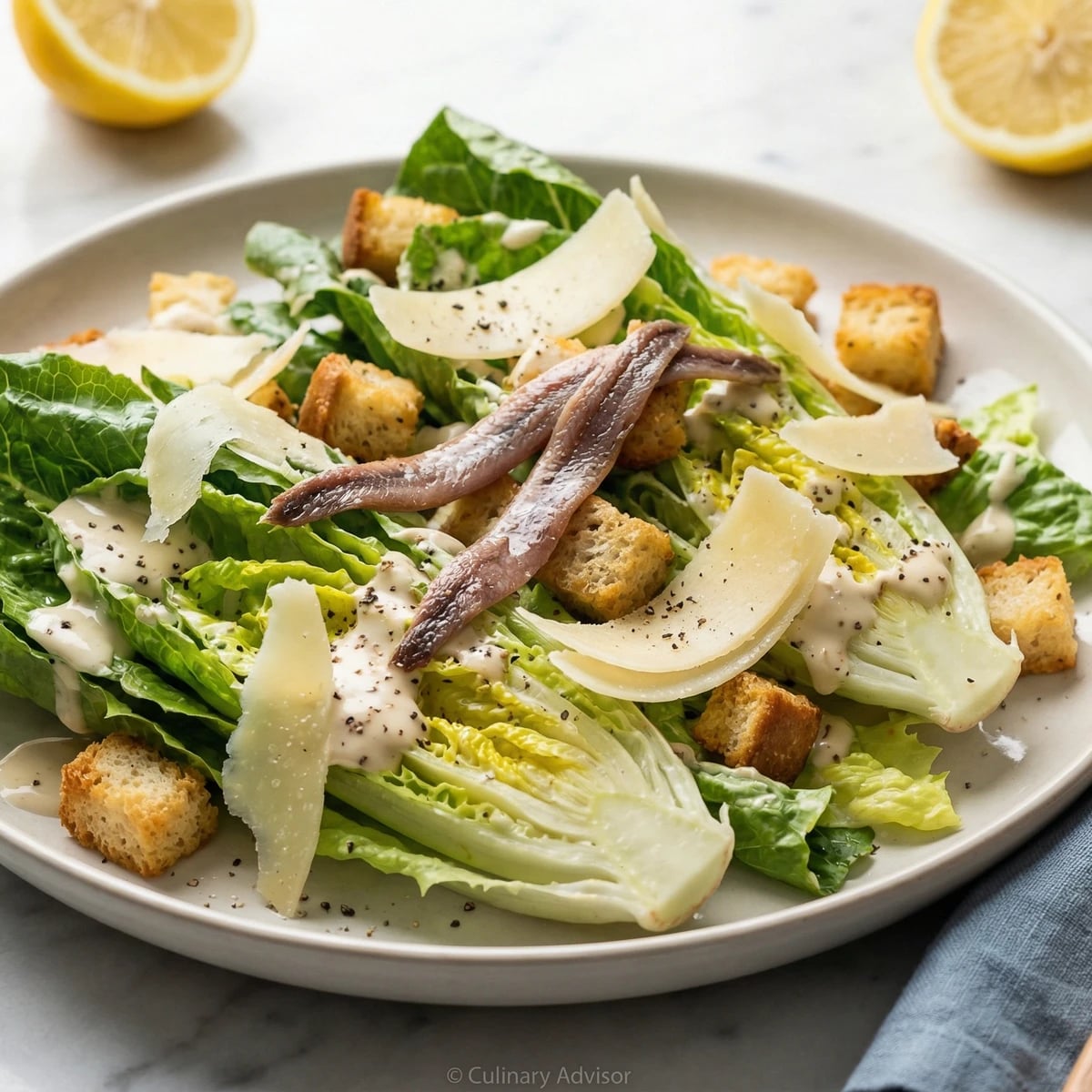
Classic Caesar Salad
Created by Chef Dean
The salad Caesar Cardini invented in Tijuana in 1924, with crisp romaine spears dressed tableside in a garlicky, anchovy-laced emulsion, scattered with crunchy croutons and snow-drifts of Parmigiano-Reggiano.
Caesar Cardini was desperate. The Fourth of July weekend in 1924 had depleted his Tijuana restaurant's kitchen, and hungry Americans kept streaming across the border from San Diego. He grabbed what remained: romaine hearts, eggs, lemons, garlic, olive oil, Worcestershire, and stale bread. Working tableside with theatrical flair, he created what would become the most imitated salad in American history.
The original contained no anchovies. That came later, though I believe the addition was an improvement. The salt and umami they provide deepen the dressing in ways Worcestershire alone cannot achieve. What matters is understanding that this salad lives or dies by its emulsion. The egg yolk and oil must marry completely, creating a coating that clings to each leaf without pooling at the bottom of the bowl.
I've watched countless cooks fail at Caesar salad by treating it as an assembly job. It isn't. This is a dressing you build, a salad you compose, and a dish you serve within minutes of completion. The romaine must shatter when you bite through. The croutons must crunch. The moment these textures soften, you've lost what makes a Caesar worth eating.
Ingredients
romaine lettuce
Quantity
2 heads
preferably hearts
extra-virgin olive oil (for croutons)
Quantity
4 tablespoons
rustic bread
Quantity
3 cups
cut into 3/4-inch cubes
| Ingredient | Quantity |
|---|---|
| romaine lettucepreferably hearts | 2 heads |
| extra-virgin olive oil (for croutons) | 4 tablespoons |
| rustic breadcut into 3/4-inch cubes | 3 cups |