Culinary Advisor
A cooking platform built around craft, culture, and the stories behind what we eat.
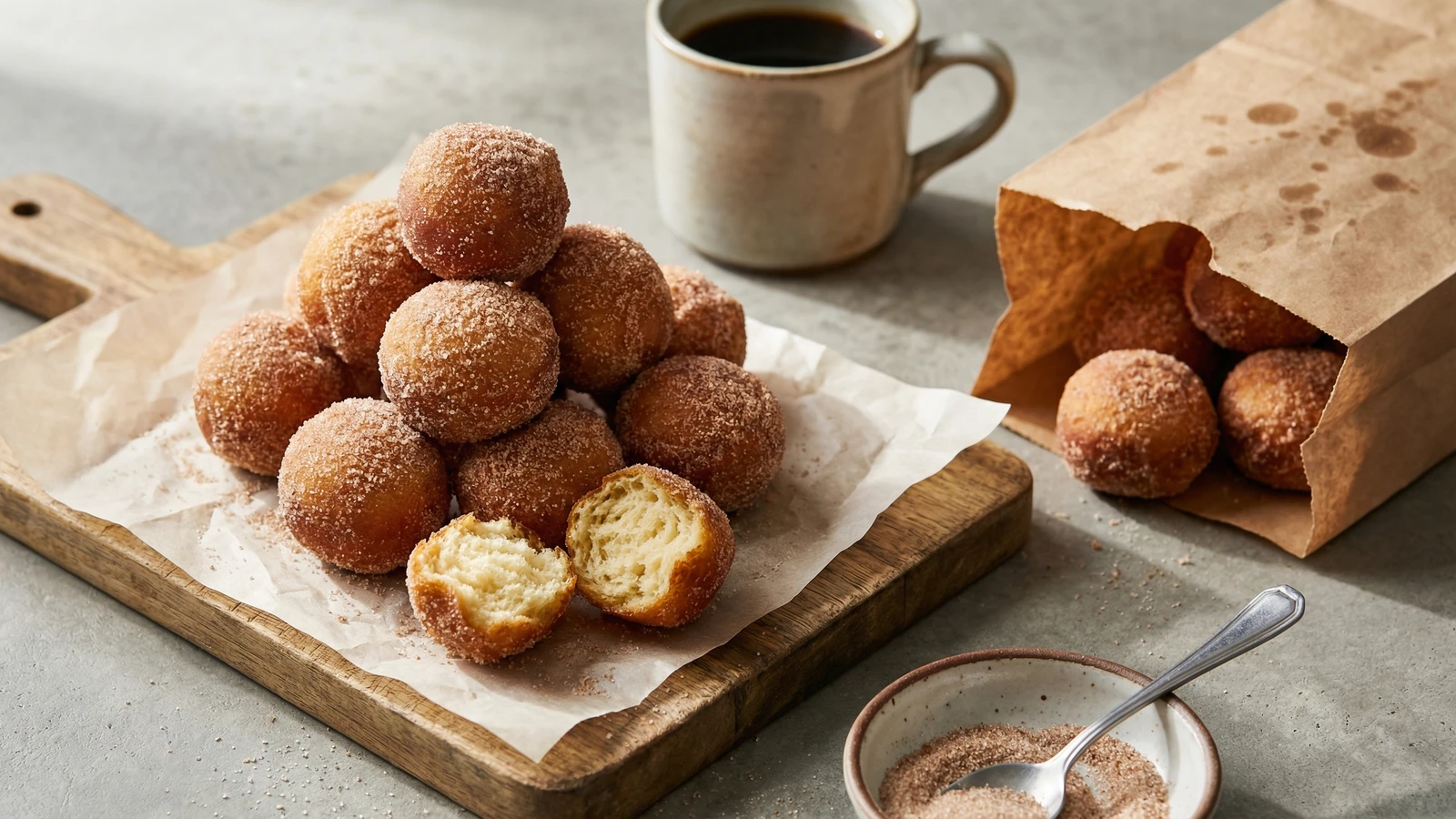
Cinnamon Sugar Donut Holes
Created by
Golden fried bites of tender cake dough rolled in warm cinnamon sugar while still crackling from the oil, the kind of weekend morning treat that has children circling the kitchen and adults pretending they're only supervising.
My grandmother made these on Saturday mornings when I was young enough to think the world existed entirely within her kitchen. She worked from memory, dropping spoonfuls of batter into a pot of shimmering oil while I watched from a safe distance, nose barely clearing the counter. The smell was something I carry still: hot fat, warming cinnamon, the promise that the first one would be mine.
Donut holes require neither special equipment nor professional training. What they demand is attention. The oil temperature matters. The coating timing matters. But the technique itself is forgiving, perfect for teaching young hands their first lessons in frying. This is the kind of cooking that builds memories.
The batter comes together in minutes. Buttermilk provides tang and tenderness. Nutmeg whispers that this is a proper donut, not a carnival novelty. And the cinnamon sugar must be warm when it meets the hot dough, creating that crystalline crust that shatters between your teeth. Make these for a birthday breakfast, a holiday morning, or any Saturday when the house deserves to smell like love takes effort.
The technique, the tradition, and the story behind every dish.
Discover Culinary AdvisorIngredients
all-purpose flour
Quantity
2 cups (250g)
granulated sugar
Quantity
1/3 cup (67g)
baking powder
Quantity
2 teaspoons
baking soda
Quantity
1/2 teaspoon
fine sea salt
Quantity
1 teaspoon
nutmeg
Quantity
1/2 teaspoon
freshly grated
large eggs
Quantity
2
at room temperature
buttermilk
Quantity
1/2 cup (120ml)
at room temperature
whole milk
Quantity
1/4 cup (60ml)
at room temperature
unsalted butter
Quantity
3 tablespoons
melted and cooled slightly
pure vanilla extract
Quantity
1 teaspoon
vegetable oil or peanut oil
Quantity
about 2 quarts
for frying
granulated sugar (for coating)
Quantity
1 cup (200g)
ground cinnamon
Quantity
1 tablespoon
| Ingredient | Quantity |
|---|---|
| all-purpose flour | 2 cups (250g) |
| granulated sugar | 1/3 cup (67g) |
| baking powder | 2 teaspoons |
| baking soda | 1/2 teaspoon |
| fine sea salt | 1 teaspoon |
| nutmegfreshly grated | 1/2 teaspoon |
| large eggsat room temperature | 2 |
| buttermilkat room temperature | 1/2 cup (120ml) |
| whole milkat room temperature | 1/4 cup (60ml) |
| unsalted buttermelted and cooled slightly | 3 tablespoons |
| pure vanilla extract | 1 teaspoon |
| vegetable oil or peanut oilfor frying | about 2 quarts |
| granulated sugar (for coating) | 1 cup (200g) |
| ground cinnamon | 1 tablespoon |
Equipment Needed
- •Heavy-bottomed Dutch oven or deep pot (4-quart minimum)
- •Deep-fry or candy thermometer
- •Spider strainer or slotted spoon
- •Wire cooling rack or paper towel-lined baking sheet
Instructions
- 1
Prepare cinnamon sugar
Whisk together the cup of sugar and cinnamon in a wide, shallow bowl until thoroughly combined. No streaks. Set this near your frying station. The donut holes must meet the cinnamon sugar while they're still hot enough to make the coating cling. Cold donuts reject their coating like a cat rejects bath water.
- 2
Mix dry ingredients
In a large bowl, whisk together the flour, one-third cup sugar, baking powder, baking soda, salt, and nutmeg. The nutmeg is not optional. It's the quiet voice that tells your palate this is a donut and not mere fried dough. Grate it fresh if you can. Pre-ground nutmeg tastes like sawdust by comparison.
Fresh nutmeg releases oils the moment you grate it. Those oils evaporate quickly from pre-ground spice, leaving behind flavor's ghost. - 3
Combine wet ingredients
In a separate bowl, beat the eggs until the yolks and whites become one. Add the buttermilk, whole milk, melted butter, and vanilla. Whisk until smooth. The mixture will look slightly curdled where the butter meets the cold dairy. This is fine. It will come together in the flour.
- 4
Form the batter
Pour the wet ingredients into the dry. Stir with a wooden spoon or sturdy spatula until just combined. The batter should be thick, sticky, and slightly lumpy. Stop stirring the moment you no longer see dry flour. Overworked batter makes tough, chewy donut holes instead of tender ones.
If your batter seems too thick to drop from a spoon, add milk one tablespoon at a time. Buttermilk thickness varies by brand. - 5
Heat the oil
Pour oil into a heavy-bottomed Dutch oven or deep pot to a depth of three inches. Attach a deep-fry thermometer to the side. Heat over medium-high until the oil reaches 350°F. This takes longer than you expect, maybe fifteen minutes. Patience here prevents disaster later. Oil that's too cool produces greasy, pale donuts. Oil that's too hot burns the outside before the inside cooks through.
- 6
Set up your station
Line a baking sheet with paper towels for draining. Position your cinnamon sugar bowl within arm's reach. Place a slotted spoon or spider strainer beside the pot. Have a second clean spoon ready for dropping batter. Organization matters when you're working with hot oil.
- 7
Fry the donut holes
Using two spoons, drop rounded tablespoons of batter into the oil, working in batches of six to eight. Don't crowd the pot. The donut holes will sink briefly, then rise and bob. Fry for two to three minutes, turning occasionally with your spider, until deep golden brown on all sides. The color should remind you of a well-worn baseball glove.
If your donut holes crack open dramatically, the oil is too hot. If they take longer than three minutes to brown, it's too cool. Adjust heat between batches. - 8
Drain briefly
Transfer fried donut holes to the paper towel-lined baking sheet. Let them rest for no more than thirty seconds. You want them dry enough not to splatter sugar everywhere but hot enough to make that sugar stick. The window is narrow. Work with purpose.
- 9
Coat in cinnamon sugar
Drop the still-warm donut holes into the cinnamon sugar, three or four at a time. Roll them gently to coat all surfaces. The sugar will cling in a generous layer, some of it melting slightly from residual heat. Transfer to a serving plate. Continue frying and coating until all batter is used.
- 10
Serve immediately
Pile the finished donut holes high and serve within the hour. They are at their absolute peak in the first fifteen minutes: warm, tender, fragrant with cinnamon and nutmeg. After that, they're still good. But they'll never again be as good as they are right now.
Chef Tips
- •Use a heavy pot with high sides for frying. A Dutch oven is ideal. Thin pots can't maintain steady temperature, and shallow ones invite oil to splash dangerously.
- •Peanut oil fries cleaner than vegetable oil and imparts a subtle sweetness. If you can find it and afford it, use it.
- •Room temperature ingredients incorporate more smoothly and produce a lighter batter. Pull your eggs, buttermilk, and milk from the refrigerator thirty minutes before you begin.
- •Leftover cinnamon sugar keeps indefinitely in a sealed jar. Use it on toast, oatmeal, or your next batch of donuts.
- •A small cookie scoop (about one tablespoon) makes perfectly uniform donut holes with less mess than the two-spoon method. Worth owning if you fry often.
Advance Preparation
- •The dry ingredients can be whisked together and stored in an airtight container overnight. In the morning, you only need to mix the wet ingredients and proceed.
- •Donut holes are best eaten fresh but will keep in an airtight container at room temperature for up to one day. Rewarm briefly in a 300°F oven to revive them, then re-roll in fresh cinnamon sugar.
- •The batter cannot be made ahead. Once the baking powder meets the wet ingredients, the clock starts. Mix and fry within thirty minutes for proper lift.
Frequently Asked Questions
Nutrition Information
1 donut hole (about 25g)
Where cooking meets culture.
Culinary mentorship, cultural storytelling, and the editorial depth that makes cooking meaningful.
Explore Culinary Advisor