Culinary Advisor
A cooking platform built around craft, culture, and the stories behind what we eat.
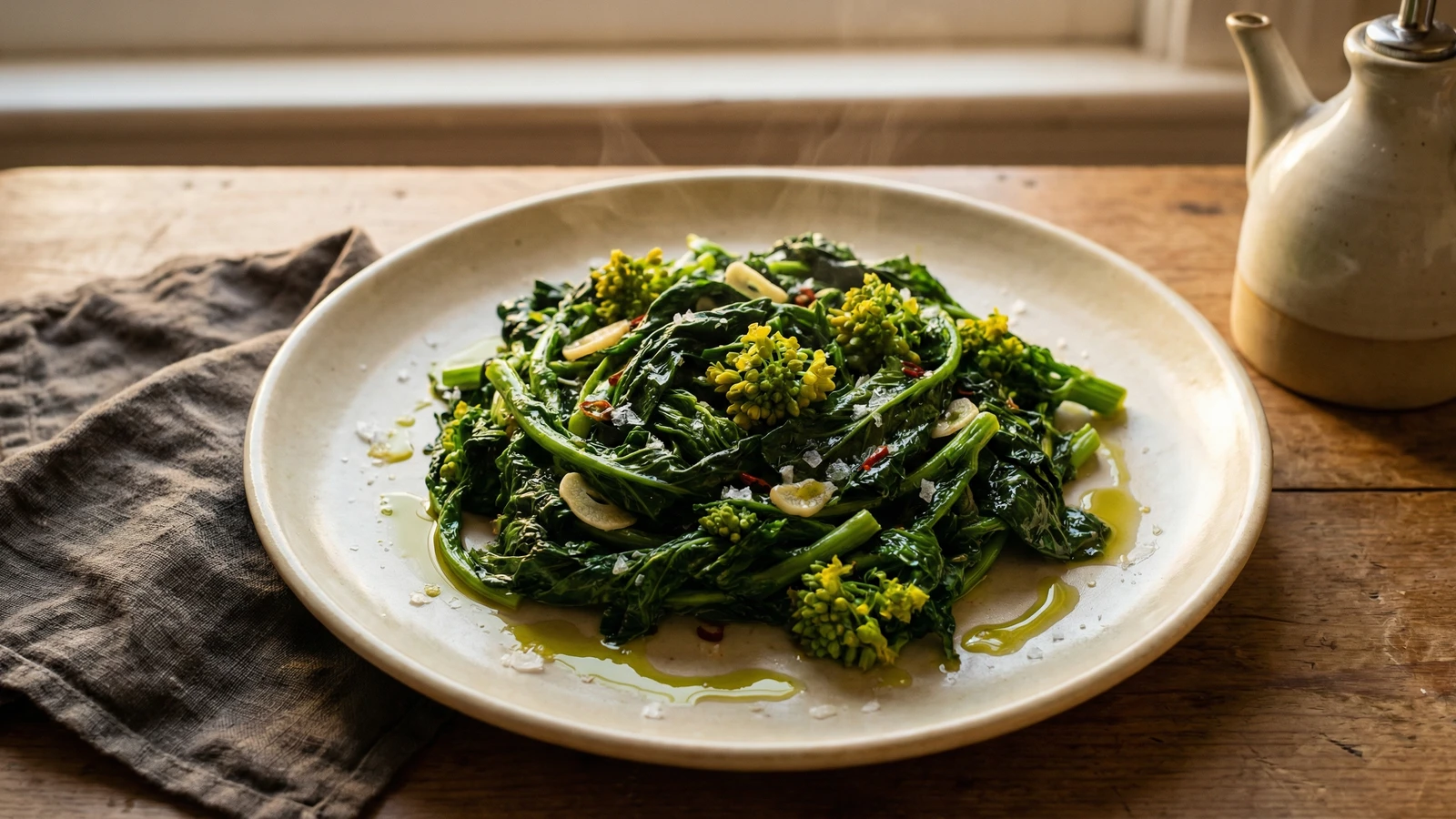
Cime di Rapa all'Aglio
Created by Chef Graziella
The bitter greens of Puglia, blanched and then turned in olive oil with garlic and a whisper of heat. Bitterness here is not a flaw to correct. It is the entire point.
Cime di rapa are not broccoli, though Americans insist on calling them broccoli rabe. They are the flowering tops of a turnip green, and they carry a bitterness that separates those who understand Italian vegetables from those who do not. The bitterness is intentional. It is desirable. It is what makes this vegetable worth cooking.
In Puglia, where this preparation originates, the greens are everywhere in winter markets: bundles of dark leaves with small florets and tender stems. The contadini cook them simply because simple cooking reveals their character. You blanch them first to soften the harshness, then turn them in a pan with olive oil, garlic, and peperoncino. That is all.
The garlic here is used correctly. You slice it thin, let it perfume the oil, and remove it before it can burn and turn bitter itself. This is the difference between Italian cooking and American interpretations of it. The garlic is a whisper, not a shout. What remains after you remove those slices is exactly what you need: the essence without the assault.
Cime di rapa have grown wild across the Mediterranean since antiquity, but Puglia claimed them as its own. The region's cucina povera transformed these bitter greens into the foundation of its most famous dish, orecchiette con cime di rapa, and this simpler contorno that appears on every winter table from Bari to Lecce.
The technique, the tradition, and the story behind every dish.
Discover Culinary AdvisorIngredients
cime di rapa (broccoli rabe)
Quantity
1 1/2 pounds
kosher salt
Quantity
for blanching water
extra virgin olive oil
Quantity
1/4 cup, plus more for finishing
garlic
Quantity
3 cloves
sliced thin
peperoncino flakes
Quantity
1/2 teaspoon
flaky sea salt
Quantity
for finishing
| Ingredient | Quantity |
|---|---|
| cime di rapa (broccoli rabe) | 1 1/2 pounds |
| kosher salt | for blanching water |
| extra virgin olive oil | 1/4 cup, plus more for finishing |
| garlicsliced thin | 3 cloves |
| peperoncino flakes | 1/2 teaspoon |
| flaky sea salt | for finishing |
Equipment Needed
- •Large pot for blanching
- •Colander
- •Large skillet (12-inch preferred)
- •Tongs for turning the greens
Instructions
- 1
Prepare the greens
Trim the tough ends from the cime di rapa, about two inches from the bottom of the stems. Remove any yellowed or wilted leaves. The tender stems, leaves, and small florets are all edible. If the stems are thicker than a pencil, split them lengthwise so they cook evenly. Wash thoroughly in several changes of cold water. Sand hides in the crevices.
- 2
Blanch until just tender
Bring a large pot of water to a boil and salt it generously. It should taste like the sea. Add the cime di rapa and cook until the stems are tender when pierced with a knife but still have pleasant resistance, 3 to 5 minutes depending on thickness. Do not overcook. Mushy greens cannot be rescued.
The blanching water tames the raw bitterness while preserving the character of the vegetable. Skip this step and the greens will be unpleasantly harsh. Overcook them and you have nothing worth eating. - 3
Drain properly
Drain the greens in a colander, reserving half a cup of the cooking water. Shake off excess moisture but do not squeeze them dry. A little water clinging to the leaves will create steam when they hit the hot oil. Let them sit while you prepare the pan.
- 4
Infuse the oil
In a large skillet, warm the olive oil over medium heat. Add the sliced garlic and let it turn pale gold, about 90 seconds. Watch it carefully. The garlic must not brown. Brown garlic is bitter garlic, and you already have bitterness from the greens. You do not need more.
Slicing the garlic thin allows it to release its flavor quickly and evenly. A garlic press creates acrid mush. Crushed whole cloves can be removed entirely if you want only the perfume. - 5
Add heat and greens
Add the peperoncino to the oil and stir once. Immediately add the blanched cime di rapa. The oil will sizzle and spatter, so stand back. Toss the greens with tongs to coat them thoroughly with the seasoned oil. Cook for 2 to 3 minutes, turning frequently, until the greens are heated through and glistening.
- 6
Adjust and serve
If the pan seems dry, add a splash of the reserved cooking water. Taste for salt. The greens will need some. Transfer to a warm serving dish, drizzle with your best olive oil, and scatter flaky salt over the top. Serve immediately. Cime di rapa wait for no one.
Chef Tips
- •Seek out cime di rapa with small, tight florets and dark green leaves. Yellowing indicates age, and aged greens are more bitter than pleasant. The stems should snap crisply when bent.
- •Pugliese olive oil, if you can find it, is the traditional choice. Its grassy, peppery character complements the bitterness of the greens. Any good extra virgin olive oil will serve, but do not use something refined or flavorless.
- •The peperoncino provides warmth, not fire. You should taste its presence without feeling your lips burn. Adjust according to your tolerance and the heat of your particular chili.
Advance Preparation
- •The greens can be blanched up to one day ahead and refrigerated. Bring to room temperature before sautéing, or add an extra minute in the pan.
- •Once sautéed, cime di rapa should be served immediately. They do not reheat well. The texture suffers and the garlic loses its delicacy.
Frequently Asked Questions
Nutrition Information
1 serving (about 150g)
Where cooking meets culture.
Culinary mentorship, cultural storytelling, and the editorial depth that makes cooking meaningful.
Explore Culinary Advisor