Culinary Advisor
A cooking platform built around craft, culture, and the stories behind what we eat.
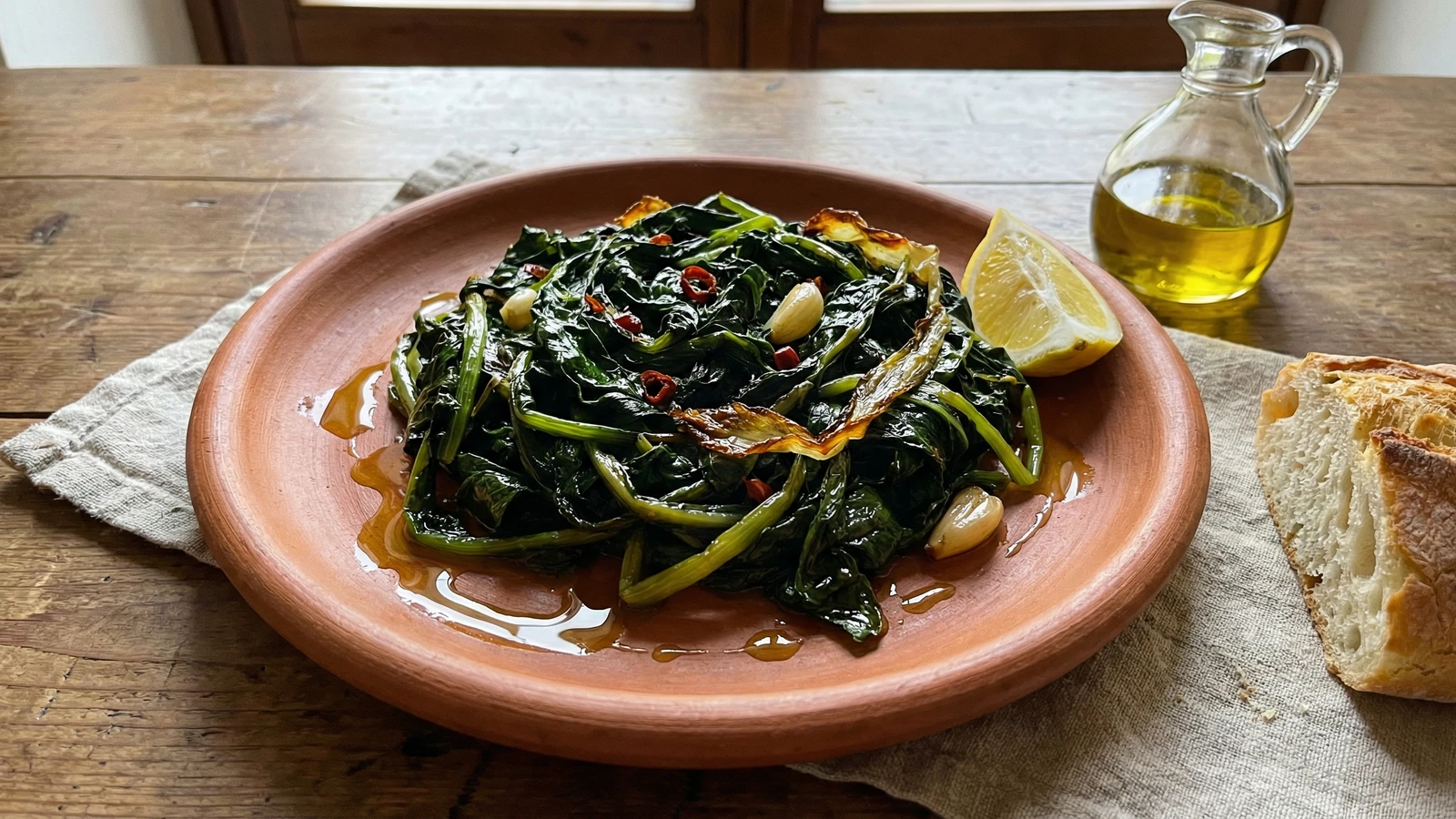
Cicoria Ripassata
Created by Chef Graziella
The Roman way with bitter greens: boiled first, then tossed in a hot pan with garlic and peperoncino until the edges crisp and the bitterness sings. Simple, fierce, essential.
Romans understand bitter greens in a way that most Americans do not. They do not try to tame them. They do not balance them with sweetness or bury them under cheese. They boil them until tender, then ripassare, pass them again through a hot pan with garlic and chili, and serve them as they are: bitter, green, alive.
The word ripassata tells you everything. This is a two-step process, and both steps matter. The boiling tenderizes the tough leaves and mellows their harshness just enough. The pan gives them back their character, crisping the edges and saturating them with garlic-scented oil. Skip either step and you have not made this dish.
Cicoria is a contorno, a side dish, meant to stand beside roasted meat or grilled fish. But I have watched Romans eat it alone, with bread to soak up the oil, as a meal unto itself. The bitterness is the point. If you find yourself wanting to add something to soften it, you have missed the lesson entirely.
Cicoria ripassata belongs to the cucina povera of Rome and the surrounding Lazio countryside, where wild chicory has been gathered from fields for centuries. The ripassata technique, boiling greens then finishing them in a pan with aromatics, appears throughout central Italy but finds its purest expression in Roman trattorias, where bitter greens are served alongside abbacchio and other traditional secondo courses.
The technique, the tradition, and the story behind every dish.
Discover Culinary AdvisorIngredients
chicory
Quantity
2 pounds
cicoria catalogna or puntarelle leaves
kosher salt
Quantity
for the cooking water
extra virgin olive oil
Quantity
1/4 cup
garlic cloves
Quantity
3
lightly crushed
dried peperoncino flakes
Quantity
1/2 teaspoon, or to taste
flaky sea salt
Quantity
to taste
lemon (optional)
Quantity
1
cut into wedges
| Ingredient | Quantity |
|---|---|
| chicorycicoria catalogna or puntarelle leaves | 2 pounds |
| kosher salt | for the cooking water |
| extra virgin olive oil | 1/4 cup |
| garlic cloveslightly crushed | 3 |
| dried peperoncino flakes | 1/2 teaspoon, or to taste |
| flaky sea salt | to taste |
| lemon (optional)cut into wedges | 1 |
Equipment Needed
- •Large pot for boiling
- •Colander
- •Large skillet, 12 inches or wider
Instructions
- 1
Prepare the chicory
Examine the chicory carefully. Remove any yellowed or damaged outer leaves. Trim the tough bottom of each head, about half an inch. If using catalogna, separate the leaves from the central stems. The stems can be eaten too, but they require longer cooking. Wash the leaves in several changes of cold water. Chicory grows close to the ground and holds grit.
- 2
Boil until tender
Bring a large pot of water to a rolling boil. Salt it generously. Add the chicory and push it down to submerge. Boil until the stems are completely tender when pierced with a knife, 8 to 12 minutes depending on the thickness and age of the greens. The leaves will look quite collapsed. This is correct. Drain thoroughly in a colander, pressing gently to extract excess water. The greens can sit at this point while you prepare the pan.
Do not undercook the chicory. This is not spinach. The greens must be fully tender before the ripassata step, or they will be tough and unpleasant. Better too soft than too firm. - 3
Infuse the oil
In a large skillet, heat the olive oil over medium heat. Add the crushed garlic cloves and cook, turning occasionally, until they are pale gold and fragrant, about 2 minutes. The garlic should perfume the oil without browning deeply. If it threatens to darken, reduce the heat immediately. Add the peperoncino flakes and let them sizzle in the oil for 15 seconds. The oil will take on a faint orange tint.
- 4
Ripassata: pass the greens again
Add the drained chicory to the skillet all at once. Increase heat to medium-high. Toss and turn the greens vigorously, coating them completely with the flavored oil. The edges should sizzle against the pan. Cook for 3 to 4 minutes, turning frequently, until the greens are heated through and have absorbed the garlic and chili. Some edges may crisp slightly. This is desirable.
Ripassata means 'passed again.' The greens go through two cooking stages: the pot, then the pan. This is not optional. Skipping the boiling and trying to sauté raw chicory will produce something inedible. - 5
Season and serve
Remove the garlic cloves if you prefer, or leave them for those who want them. Taste the greens and add flaky salt as needed. Transfer to a warm serving dish. Serve immediately with lemon wedges on the side. The lemon is not mandatory, but many Romans squeeze it over the greens at the table. It brightens the bitterness without masking it.
Chef Tips
- •True Roman cicoria is catalogna or the leaves of puntarelle, with long, dandelion-like leaves and a pronounced bitterness. Dandelion greens or escarole can substitute, though the character will differ. Do not use mild greens like spinach or chard. The bitterness is the purpose.
- •The garlic here is used whole and crushed, not minced. It flavors the oil and can be removed before serving. This is gentler than chopped garlic, which can burn and turn acrid in the high heat of the sauté.
- •Romans often drizzle more raw olive oil over the finished dish just before serving. If your oil is good enough, this adds a grassy freshness that complements the cooked flavors.
Advance Preparation
- •The chicory can be boiled, drained, and refrigerated up to one day ahead. Bring to room temperature before the ripassata step.
- •The finished dish does not hold well. Serve it promptly after the final sauté.
Frequently Asked Questions
Nutrition Information
1 serving (about 150g)
Where cooking meets culture.
Culinary mentorship, cultural storytelling, and the editorial depth that makes cooking meaningful.
Explore Culinary Advisor