Culinary Advisor
A cooking platform built around craft, culture, and the stories behind what we eat.
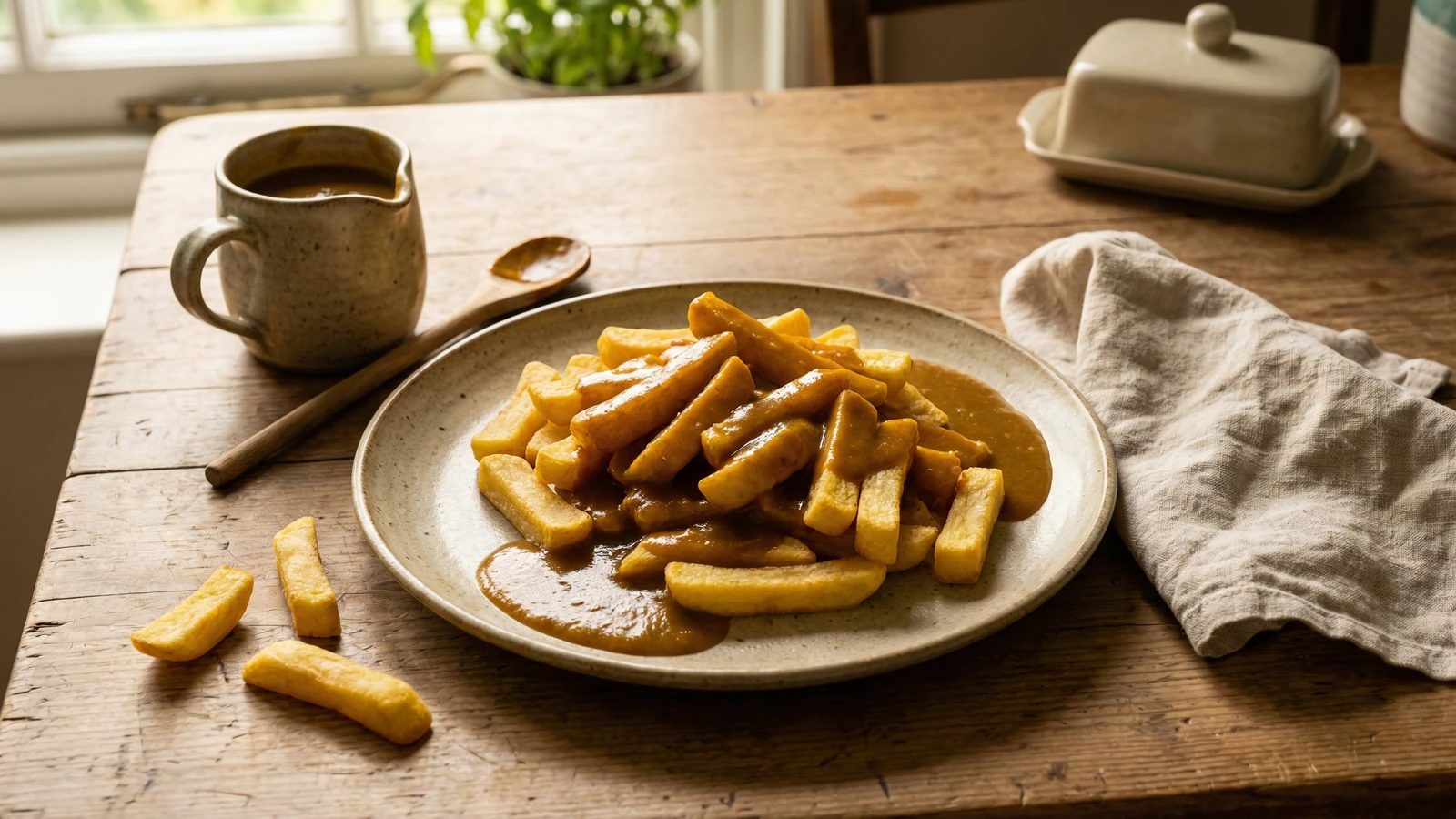
Chip Shop Curry Sauce
Created by Chef Thomas
A proper chip shop curry sauce made at home in half an hour. Mild, fruity, and the colour of an old penny, the kind that turns a plate of chips into Friday night.
Friday, dark by five, the windows already running with condensation from whatever's on the hob. This is the evening for it. A pan of chips in the oven, a small saucepan of curry sauce on the back ring, and the radio on quietly because nobody is in the mood to talk yet. We're only making dinner.
Chip shop curry sauce is one of those things people assume comes from a tin or a packet, and you can buy it that way, of course. But it takes about as long to make properly as it does to walk to the corner and back, and the homemade version tastes of something. Onion cooked down slowly in butter. A grated apple for sweetness and body. Mild curry powder toasted in the pan until it stops smelling raw and starts smelling like the back room of a good chippy. Stock, a spoon of flour to hold it together, a touch of sugar, a drop of vinegar to wake it up. That's all there is.
It's not authentic to anywhere in particular. It isn't trying to be. This is a sauce that grew up in British seaside towns and northern high streets, somewhere between memory and invention, and it has its own quiet integrity. Mild, fruity, glossy, the colour of an old penny. Pour it over hot chips in a generous puddle.
I wrote it down in the notebook the first time I got it right: "Curry sauce. Apple. Toast the spice. Friday." Some things don't need more detail than that.
The technique, the tradition, and the story behind every dish.
Discover Culinary AdvisorIngredients
unsalted butter
Quantity
30g
onion
Quantity
1 large
finely chopped
eating apple
Quantity
1
peeled and grated
garlic
Quantity
1 clove
finely chopped
fresh ginger
Quantity
a thumb
grated
mild madras curry powder
Quantity
2 tablespoons
plain flour
Quantity
1 tablespoon
caster sugar
Quantity
1 teaspoon
chicken or vegetable stock
Quantity
500ml
light soy sauce
Quantity
1 teaspoon
malt vinegar
Quantity
1 teaspoon
fine sea salt
Quantity
to taste
| Ingredient | Quantity |
|---|---|
| unsalted butter | 30g |
| onionfinely chopped | 1 large |
| eating applepeeled and grated | 1 |
| garlicfinely chopped | 1 clove |
| fresh gingergrated | a thumb |
| mild madras curry powder | 2 tablespoons |
| plain flour | 1 tablespoon |
| caster sugar | 1 teaspoon |
| chicken or vegetable stock | 500ml |
| light soy sauce | 1 teaspoon |
| malt vinegar | 1 teaspoon |
| fine sea salt | to taste |
Equipment Needed
- •Small heavy saucepan
- •Stick blender
- •Box grater
- •Fine sieve (optional, for extra gloss)
Instructions
- 1
Soften the onion
Melt the butter in a small heavy saucepan over a low heat. Add the chopped onion and a pinch of salt and let it sweat slowly. You want it soft, sweet, and just barely starting to take on colour at the edges. This takes ten minutes or so. Don't rush it. The onion is doing most of the work in this sauce, and the slower it goes, the better the finished thing tastes.
Chop the onion finer than feels necessary. The sauce gets blended at the end, but the smaller the pieces start, the smoother and quicker the cook. - 2
Add apple, garlic and ginger
Stir in the grated apple, the garlic and the ginger. The apple will collapse almost straight away into the buttery onions, going pale and soft. Cook for two or three minutes until everything smells fragrant and the apple has lost its raw edge. The kitchen should start to smell like the back room of a chip shop, in the best possible way.
- 3
Toast the curry powder
Tip in the curry powder and the flour and stir hard for a minute. The mixture will turn thick and pasty and the spice will go from sharp and dusty to warm and toasted. Trust your nose. The moment it smells properly cooked, not raw, not burnt, you're ready for the stock. This step matters more than any other. Raw curry powder tastes of cupboard.
- 4
Add stock and simmer
Pour in the stock a splash at a time, stirring after each addition so the flour loosens into a smooth sauce. Add the sugar, the soy and the vinegar. Bring to a gentle simmer and let it bubble away quietly for fifteen minutes, stirring every so often, until it's thickened to the consistency of single cream and coats the back of a spoon.
- 5
Blend and season
Take the pan off the heat. Blend until completely smooth with a stick blender. The sauce should be glossy and the colour of an old penny. Taste it. It probably wants a touch more salt, maybe a tiny pinch more sugar if your apple was sharp. If it feels too thick, loosen with a splash of stock. Pour over chips, still hot, in a generous puddle. That's the whole job.
If you want the proper chip-shop gloss, push the blended sauce through a fine sieve. It takes an extra minute and gives you that silky, almost lacquered finish.
Chef Tips
- •Use a cheap, mild madras curry powder, not anything fancy or single-origin. This is one of those rare cases where the supermarket tin is exactly the right ingredient. It's what gives the sauce its particular, slightly nostalgic flavour.
- •An eating apple works better than a Bramley here. Bramleys collapse to fluff and turn the sauce a bit grey. A Cox or a Braeburn holds its sweetness and gives you that gentle fruity backbone the sauce depends on.
- •Make a double batch and freeze half. It defrosts perfectly and means that the next time you fancy chips and curry sauce on a Tuesday, you're ten minutes away from dinner instead of forty.
Advance Preparation
- •The sauce keeps in the fridge for up to four days in a covered container. Reheat gently with a splash of water or stock to loosen.
- •Freezes well for up to three months. Defrost overnight in the fridge and warm through slowly, whisking to bring it back together.
Frequently Asked Questions
Nutrition Information
1 serving (about 220g)
Where cooking meets culture.
Culinary mentorship, cultural storytelling, and the editorial depth that makes cooking meaningful.
Explore Culinary Advisor