Culinary Advisor
A cooking platform built around craft, culture, and the stories behind what we eat.
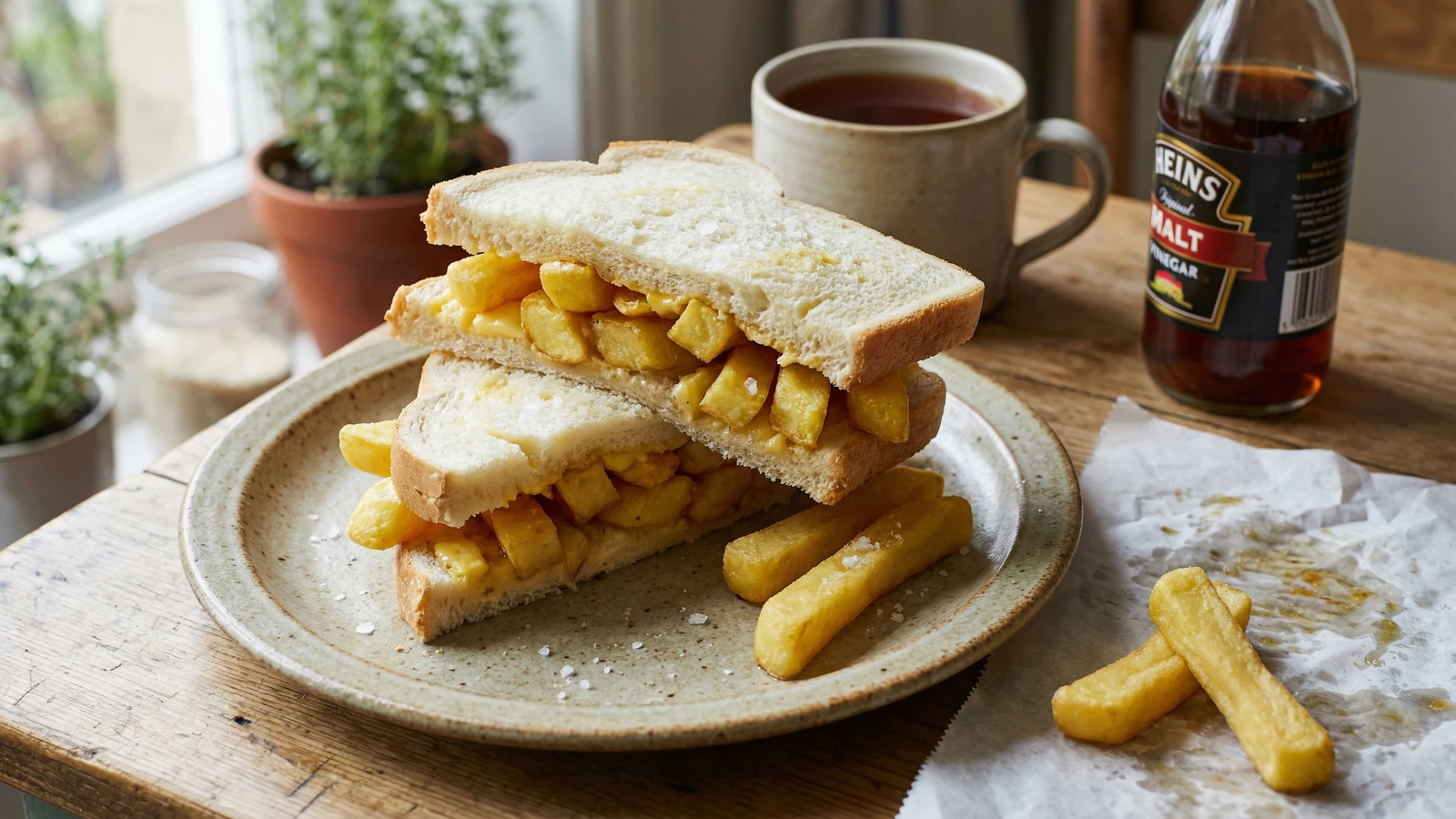
Chip Butty
Created by Chef Thomas
Hot, salt-scattered chips pressed between thick slices of buttered white bread. A sandwich that has no business being this good and knows it, and doesn't care.
There's a smell that belongs to a Friday evening. Potatoes hitting hot fat, the kitchen windows fogging, salt shaken from a height. The chip butty is not a recipe in any meaningful sense. It's an act of faith in three ingredients: good potatoes, real butter, soft white bread.
I grew up eating these. Everybody I knew did. You'd get chips from the shop or make them at home, and either way they went between bread before they went anywhere else. It wasn't a sandwich you thought about. It was a sandwich you needed. The carbs on carbs conversation, the idea that this is somehow excessive, misses the point entirely. A chip butty is comfort distilled to its simplest form. Hot, salty, soft, yielding. The butter melts into the bread where it meets the chips, and that narrow strip of warmth and fat is the best bit of the whole thing.
We're only making dinner. But some dinners ask for nothing more than a pile of chips and a couple of slices of bread, and the quiet satisfaction of standing at the kitchen counter with vinegar on your fingers and your shoulders half an inch lower than they were an hour ago. I wrote it down in the notebook once: chips, bread, butter, Friday. It didn't need more than that.
The technique, the tradition, and the story behind every dish.
Discover Culinary AdvisorIngredients
Maris Piper potatoes
Quantity
4-5 medium
peeled
beef dripping or sunflower oil
Quantity
enough to come halfway up the chips in the pan
good white bread
Quantity
4 thick slices
salted butter
Quantity
generous amount
softened
fine sea salt
Quantity
to taste
malt vinegar
Quantity
to serve
tomato ketchup or brown sauce (optional)
Quantity
to serve
| Ingredient | Quantity |
|---|---|
| Maris Piper potatoespeeled | 4-5 medium |
| beef dripping or sunflower oil | enough to come halfway up the chips in the pan |
| good white bread | 4 thick slices |
| salted buttersoftened | generous amount |
| fine sea salt | to taste |
| malt vinegar | to serve |
| tomato ketchup or brown sauce (optional) | to serve |
Equipment Needed
- •Deep, heavy-bottomed saucepan or high-sided frying pan
- •Spider or slotted spoon
- •Kitchen thermometer, optional
Instructions
- 1
Cut and soak the chips
Cut the potatoes into thick chips, about the width of your index finger. Not matchstick thin. Not wedges. Proper chips. Drop them into a bowl of cold water and leave them for twenty minutes or so. This rinses off the surface starch, which is what makes the difference between chips that go crisp and chips that don't. Drain them and dry them thoroughly on a clean tea towel. Really dry. Water and hot fat aren't friends.
Maris Piper is the potato for chips. Fluffy inside, crisps well on the outside. King Edward will also do the job. Waxy potatoes won't. This matters. - 2
First fry: cook through
Heat the dripping or oil in a deep, heavy pan until a chip dropped in sizzles immediately and rises to the surface. That's around 130C if you have a thermometer, but your ears will tell you just as well. Lower the chips in carefully and cook them for eight to ten minutes, until they're soft all the way through but barely coloured. Pale and floppy. They look wrong. They're not. Lift them out onto kitchen paper and let them rest.
- 3
Second fry: go golden
Bring the fat back up to a higher heat. Hotter this time. When a chip goes in, it should sizzle aggressively, angrily almost. Fry the chips again for three to four minutes, turning them once, until they're deep gold and properly crisp on the outside. You'll hear the sizzle change pitch when they're done: it goes from a roar to a steady crackle. Lift them out, shake off the excess fat, and tip them onto kitchen paper. Salt them immediately. Generously. While they're still glistening.
If you have beef dripping, use it. The flavour it gives chips is the difference between something nice and something you'll think about the next morning. A good butcher will sell it to you for almost nothing. - 4
Butter the bread
While the chips are in their second fry, butter the bread. Both sides of each slice, corner to corner, thick enough that you can see it. This is not the moment for restraint. The butter is structural. It's what makes the bread yield to the hot chips without going soggy. Soft white bread from a proper bakery if you can get it. The sliced stuff from a bag will do, but cut it thick.
- 5
Build and press
Pile the hot chips onto one slice of buttered bread. Don't arrange them. Pile them. A splash of malt vinegar if you want it, and you should want it. The sharp tang against the fat and the salt is the whole architecture of this sandwich. Press the second slice down firmly. The bread should compress around the chips. Some of the butter will melt into the hot potatoes. This is the point. Cut in half if you feel the need, but I never do. Eat immediately, standing up or sitting down, it doesn't matter. Just eat it while it's hot.
Chef Tips
- •The double fry is the difference between chips and fried potatoes. The first fry cooks the inside soft. The second fry, in hotter fat, crisps the outside. Skip this and you'll have something edible. Do it properly and you'll have something worth the bread.
- •Bread choice matters. A soft white bloomer or farmhouse loaf, the kind that gives when you press it. Not sourdough, not granary, not anything with seeds or ambition. This is white bread's finest hour. Let it have it.
- •Vinegar goes on the chips, not the bread. And it's malt vinegar, sharp and brown, from a bottle. This is not the place for balsamic or anything that costs more than a pound. The ketchup-or-brown-sauce question is a matter of personal conviction. I won't get involved.
- •If you're frying in dripping rather than oil, the chips will taste like they came from a proper chip shop. It's animal fat, and it gives a richness and a savour that vegetable oil can't touch. Worth seeking out from a butcher.
Advance Preparation
- •The chips can be given their first fry up to two hours ahead and left at room temperature. The second fry takes only a few minutes when you're ready to eat.
- •This is not a sandwich that waits. Build it, press it, eat it. There is no making ahead.
Frequently Asked Questions
Nutrition Information
1 serving (about 345g)
Where cooking meets culture.
Culinary mentorship, cultural storytelling, and the editorial depth that makes cooking meaningful.
Explore Culinary Advisor