Culinary Advisor
A cooking platform built around craft, culture, and the stories behind what we eat.
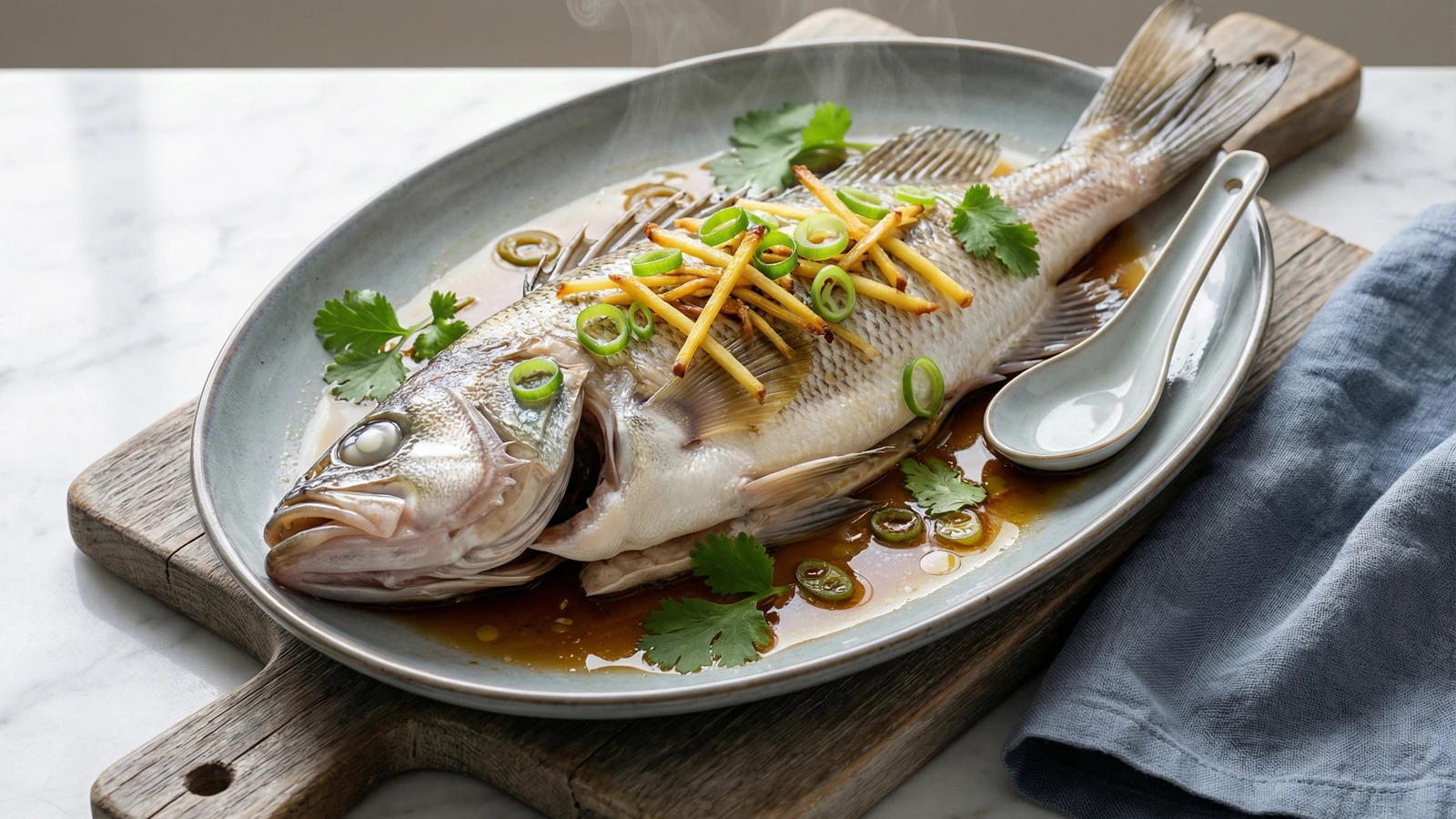
Chinese-Style Steamed Whole Fish
Created by
A whole Pacific rockfish steamed to silken perfection, then shocked with smoking-hot oil that sends ginger and scallions into an aromatic frenzy. This is the dish that proves simplicity requires courage.
The Chinese have understood something about fish for thousands of years that many Western cooks still resist: the best preparation for pristine seafood is often the least complicated. Steaming a whole fish takes perhaps fifteen minutes. The technique asks almost nothing of you except restraint. What it delivers is flesh so delicate it barely holds together, perfumed with ginger and scallion, finished with a dramatic pour of smoking oil that transforms raw aromatics into something transcendent.
This preparation arrived on Pacific Northwest shores with Cantonese immigrants who recognized immediately what they'd found. The cold, clean waters here produce fish of remarkable quality. Rockfish, black cod, lingcod, the occasional wild striped bass. The same waters that sustained Coast Salish peoples for millennia now supply the raw material for one of the great fish dishes of any cuisine.
I learned this technique from a fishmonger in Seattle's International District who refused to sell me a fish until I could describe exactly how I planned to cook it. When I said I wanted to steam it whole, Cantonese-style, he smiled and selected a rockfish from the back of his case. The one he'd been saving. That fish changed how I thought about seafood entirely.
The method rewards you for shopping well. Find a reputable fishmonger who moves volume. Ask what came in that morning. A truly fresh fish has clear eyes, bright red gills, and smells like the ocean, not like fish. The flesh should spring back when pressed. Accept nothing less. This dish has nowhere for mediocre ingredients to hide.
The technique, the tradition, and the story behind every dish.
Discover Culinary AdvisorIngredients
whole rockfish, scaled and gutted
Quantity
1 (about 2 pounds)
fresh ginger
Quantity
3-inch piece
divided
scallions
Quantity
1 bunch (about 8)
divided
light soy sauce
Quantity
3 tablespoons
Shaoxing wine
Quantity
1 tablespoon
toasted sesame oil
Quantity
1 teaspoon
sugar
Quantity
1/2 teaspoon
neutral oil (peanut or grapeseed)
Quantity
1/4 cup
fresh cilantro
Quantity
1/2 cup
leaves and tender stems
cilantro for garnish (optional)
Quantity
1 small handful
kosher salt
Quantity
to taste
| Ingredient | Quantity |
|---|---|
| whole rockfish, scaled and gutted | 1 (about 2 pounds) |
| fresh gingerdivided | 3-inch piece |
| scallionsdivided | 1 bunch (about 8) |
| light soy sauce | 3 tablespoons |
| Shaoxing wine | 1 tablespoon |
| toasted sesame oil | 1 teaspoon |
| sugar | 1/2 teaspoon |
| neutral oil (peanut or grapeseed) | 1/4 cup |
| fresh cilantroleaves and tender stems | 1/2 cup |
| cilantro for garnish (optional) | 1 small handful |
| kosher salt | to taste |
Equipment Needed
- •14-inch wok with lid and steaming rack
- •Oval heatproof plate (about 10 inches)
- •Sharp chef's knife for scoring and julienning
- •Small saucepan for heating oil
Instructions
- 1
Score the fish
Rinse your fish under cold water and pat it completely dry inside and out. Using a sharp knife, make three diagonal slashes on each side, cutting down to the bone at roughly two-inch intervals. These cuts serve two purposes: they allow steam to penetrate the thickest part of the flesh, and they create pockets for your aromatics to nestle into. Season the fish lightly with kosher salt, rubbing it into the slashes and the cavity.
A truly fresh fish feels firm and resilient. If the flesh feels mushy or the slashes gape open instead of holding their shape, the fish isn't fresh enough for this preparation. - 2
Prepare aromatics
Slice half the ginger into thin coins and cut three scallions into three-inch lengths. These go inside and underneath the fish during steaming, creating a fragrant bed that perfumes the flesh from below. Julienne the remaining ginger into thin matchsticks and slice the remaining scallions into fine rings, keeping the white and green parts separate. The julienned ginger and scallion greens get scattered over the fish raw, waiting for the hot oil that will cook them in seconds.
- 3
Build steaming setup
Scatter the ginger coins and scallion lengths across an oval plate or heatproof dish that fits inside your steamer and leaves at least an inch of clearance on all sides for steam circulation. Lay the fish on top, then tuck a few ginger coins and scallion pieces into the cavity. The plate will catch the cooking juices, which become part of your sauce. Make sure your plate isn't too large; trapped steam needs room to move.
- 4
Steam the fish
Fill a wok or large pot with two inches of water and bring it to a rolling boil. Set the plate on a steaming rack above the water, making certain the water doesn't touch the plate. Cover tightly. Steam a two-pound fish for ten to twelve minutes. The flesh should flake easily when tested with a fork at the thickest point near the head. Overcooked fish turns rubbery and dry. Undercooked fish is unpleasant. Check at ten minutes and trust what you see.
The eyes of a perfectly steamed fish turn white and slightly bulge. This is your visual cue even before testing with a fork. - 5
Make the sauce
While the fish steams, whisk together the soy sauce, Shaoxing wine, sesame oil, and sugar in a small bowl until the sugar dissolves. This mixture gets poured over the fish while it's still hot, sinking into the flesh and mingling with the steaming juices. The balance should lean savory with just enough sweetness to round the edges.
- 6
Finish with aromatics
When the fish is done, carefully remove the plate from the steamer. Pour off the accumulated liquid if it seems excessive, though some should remain. Drizzle the soy mixture evenly over the fish. Scatter the julienned ginger over the top, followed by the white parts of the sliced scallions, then the greens. Arrange the cilantro leaves around and over the fish. Everything is now in place for the final flourish.
- 7
Pour sizzling oil
Heat the neutral oil in a small saucepan over high heat until it shimmers and just begins to smoke. You can test it by dropping in a single piece of scallion green; it should sizzle violently and begin to turn golden immediately. Remove the pan from the heat. Standing at arm's length, pour the smoking oil in a thin stream directly over the raw aromatics. The ginger and scallions will crackle and sputter, their raw bite transforming into something sweet and fragrant. The oil sears them in seconds, releasing their essential oils in an aromatic cloud. Serve immediately.
This moment is pure theater. The sizzle, the steam, the perfume of ginger hitting hot fat. Do it at the table if you want to impress your guests. Just protect the surface underneath.
Chef Tips
- •Choose your fish with the same care you'd select a steak. Rockfish, black cod, striped bass, and Pacific snapper all work beautifully. Avoid oily fish like mackerel or bluefish, whose strong flavors fight against the delicate preparation. Whatever you choose, it must be impeccably fresh.
- •The Monterey Bay Aquarium's Seafood Watch guide helps identify sustainable choices. Pacific rockfish populations have rebounded significantly. Wild black cod remains a responsible choice. Ask your fishmonger what's being managed well this season.
- •Light soy sauce is essential here. The dark variety is too heavy, too sweet, too dominant. Lee Kum Kee or Pearl River Bridge both make excellent light soy sauces available at Asian grocers and increasingly at regular supermarkets.
- •If you don't own a wok with a steaming rack, a roasting pan with an inverted heatproof bowl works fine. Set the plate on the overturned bowl, add water around it, cover tightly with foil. Improvisation is an honored tradition in home kitchens.
- •Pair this fish with a bone-dry Riesling from the Columbia Valley or an Oregon Pinot Gris. The acidity cuts through the richness of the oil while echoing the ginger's brightness.
Advance Preparation
- •The fish can be scored, seasoned, and refrigerated up to four hours ahead. Bring to room temperature for 20 minutes before steaming.
- •Julienned ginger and sliced scallions can be prepped several hours ahead and kept covered at room temperature.
- •The soy sauce mixture can be whisked together earlier in the day. The final steps must happen in sequence and cannot be done ahead.
Frequently Asked Questions
Nutrition Information
1 serving (about 300g)
Where cooking meets culture.
Culinary mentorship, cultural storytelling, and the editorial depth that makes cooking meaningful.
Explore Culinary Advisor