Culinary Advisor
A cooking platform built around craft, culture, and the stories behind what we eat.
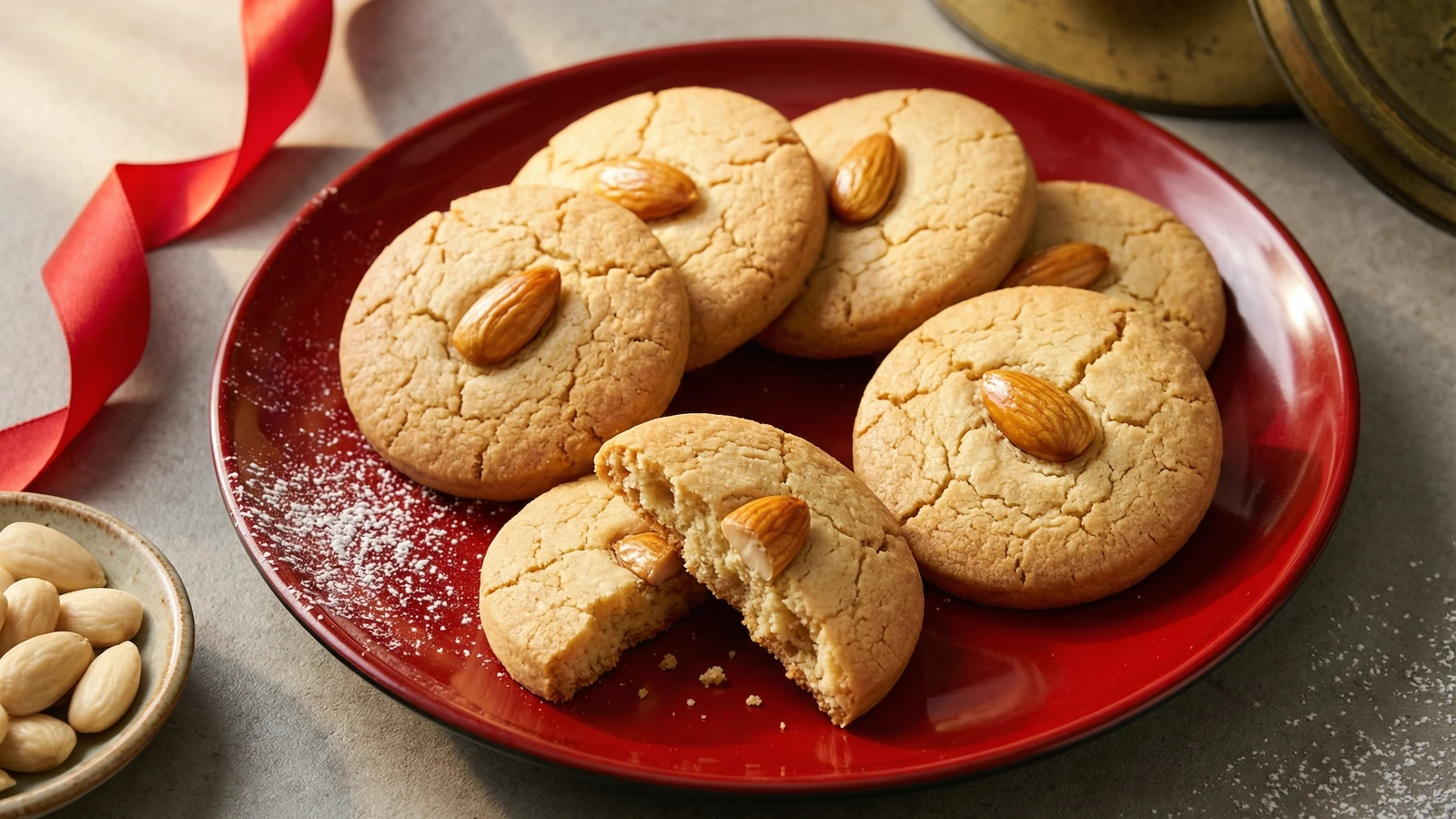
Chinese Almond Cookies
Created by
Crumbly, fragrant cookies shaped like golden coins for good fortune, with an intense almond flavor that perfumes your kitchen and announces the Lunar New Year to anyone lucky enough to walk through your door.
These cookies arrived in American Chinatown bakeries over a century ago, adapting traditional Chinese walnut cookies to Western ingredients and local tastes. The swap to almonds proved inspired. That round shape? It's deliberate. Each cookie represents a coin, a wish for prosperity pressed into dough and baked to golden perfection. During Lunar New Year, stacks of these cookies appear on offering tables and in gift boxes, their symbolism as important as their flavor.
The texture sets them apart from anything in the Western cookie tradition. They shatter at first bite, then dissolve on your tongue like sweet sand. This comes from the combination of almond flour with all-purpose flour, plus lard or butter worked into the dry ingredients until barely cohesive. The dough should feel almost too crumbly to hold together. Trust the process. It comes together when you press it.
I learned to make these from a baker in San Francisco's Chinatown who'd been turning them out since 1962. She measured nothing, shaped each cookie with three quick motions, and pressed the almond on top with her thumb like she was stamping a letter. Fifty years of practice looked effortless. Your first batch won't be effortless, but it will be delicious. That's what matters.
These cookies keep beautifully, which makes them ideal for holiday baking. Tin them up, tie with red ribbon, and you've got gifts worthy of the new year. The whole almonds on top aren't just decoration. They're meant to be noticed, admired, and eaten first by anyone who appreciates good fortune.
The technique, the tradition, and the story behind every dish.
Discover Culinary AdvisorIngredients
all-purpose flour
Quantity
1 cup (125g)
almond flour
Quantity
1/2 cup (50g)
granulated sugar
Quantity
1/2 cup (100g)
baking soda
Quantity
1/4 teaspoon
baking powder
Quantity
1/4 teaspoon
fine sea salt
Quantity
1/4 teaspoon
cold unsalted butter or lard
Quantity
1/2 cup (113g)
cubed
large egg yolk
Quantity
1
pure almond extract
Quantity
1 1/2 teaspoons
whole blanched almonds
Quantity
24
large egg
Quantity
1
beaten with 1 tablespoon water for egg wash
| Ingredient | Quantity |
|---|---|
| all-purpose flour | 1 cup (125g) |
| almond flour | 1/2 cup (50g) |
| granulated sugar | 1/2 cup (100g) |
| baking soda | 1/4 teaspoon |
| baking powder | 1/4 teaspoon |
| fine sea salt | 1/4 teaspoon |
| cold unsalted butter or lardcubed | 1/2 cup (113g) |
| large egg yolk | 1 |
| pure almond extract | 1 1/2 teaspoons |
| whole blanched almonds | 24 |
| large eggbeaten with 1 tablespoon water for egg wash | 1 |
Equipment Needed
- •Pastry blender or your clean hands
- •Parchment-lined baking sheets
- •Pastry brush for egg wash
- •Wire cooling rack
Instructions
- 1
Combine dry ingredients
Whisk together the all-purpose flour, almond flour, sugar, baking soda, baking powder, and salt in a large bowl. The almond flour tends to clump, so break up any lumps with your fingers as you go. This takes thirty seconds of attention but prevents pockets of raw almond flour in your finished cookies.
- 2
Cut in the fat
Add the cold cubed butter (or lard, if you want true Chinatown bakery authenticity) to the flour mixture. Using a pastry blender or your fingertips, work the fat into the flour until the mixture resembles coarse sand with some pea-sized pieces remaining. This should take two to three minutes. The mixture will look dry and shaggy. That's correct.
Lard produces a more tender, traditional cookie. Butter gives a richer flavor. Both work beautifully. - 3
Add wet ingredients
Drop the egg yolk and almond extract into the center of the flour mixture. Stir with a fork until the dough begins to clump together. It will seem too dry at first. Keep working it. Press the dough against the side of the bowl with the fork. Within a minute, it will come together into a rough mass. If it absolutely refuses to hold together, add water by the half-teaspoon until it does, but this should rarely be necessary.
- 4
Shape the cookies
Scoop tablespoon-sized portions of dough and roll each into a ball between your palms. Place on parchment-lined baking sheets, spacing them two inches apart. Flatten each ball gently with your palm until about half an inch thick. The edges may crack slightly. That's fine and even traditional. These are rustic cookies, not macarons.
- 5
Add the almonds
Press one whole blanched almond firmly into the center of each cookie. Push it about halfway into the dough. The almond should sit securely but remain mostly visible. This is the cookie's crown, its symbol of good fortune. Make it count.
Traditional bakers arrange all the almonds pointing the same direction. This attention to uniformity honors the symbolism and looks stunning on a gift plate. - 6
Chill the dough
Refrigerate the shaped cookies for at least 15 minutes while you preheat your oven to 325°F (165°C). Cold dough bakes more evenly and holds its shape better. If you're making these ahead, the shaped unbaked cookies can stay refrigerated overnight or frozen for up to a month.
- 7
Apply egg wash
Brush the top of each cookie lightly with the egg wash, using a pastry brush with a gentle touch. Cover the surface and the exposed part of the almond, but don't let the wash pool around the edges or drip onto the parchment. This glaze is what gives the cookies their characteristic golden shine, reminiscent of actual coins.
- 8
Bake to golden perfection
Bake for 16 to 18 minutes, rotating the pan halfway through, until the cookies are golden on top and slightly darker around the edges. The surface should look dry and set, with fine cracks appearing around the almond. The cookies will feel soft when you touch them but firm up as they cool. Resist the urge to overbake. These should stay pale gold, not deep brown.
- 9
Cool completely
Let the cookies rest on the baking sheet for five minutes before transferring to a wire rack. They're fragile when warm and will break if you move them too soon. Once completely cool (give them at least twenty minutes), they'll have that signature sandy, crumbly texture that shatters when you bite through. The almond flavor intensifies as they cool.
Chef Tips
- •Store these cookies in an airtight tin at room temperature for up to two weeks. They actually improve after a day or two as the almond flavor mellows and deepens.
- •For gift-giving, layer cookies between sheets of wax paper in a decorative tin. Red and gold tins are traditional for Lunar New Year.
- •If you can find it, substitute a tablespoon of the all-purpose flour with rice flour for an even more delicate, sandy texture closer to traditional Chinese bakery versions.
- •The egg wash is essential for both color and symbolism. Skip it, and you lose the golden coin appearance that makes these cookies meaningful for the new year.
- •Blanched almonds (white, with skins removed) are traditional. You can use raw almonds with skins for a more rustic look, but blanched almonds toast to a prettier golden color.
Advance Preparation
- •Shaped unbaked cookies can be refrigerated on the baking sheet, covered, for up to 24 hours before baking.
- •Freeze shaped unbaked cookies on a sheet until solid, then transfer to a freezer bag for up to 2 months. Bake directly from frozen, adding 2 to 3 minutes to the baking time.
- •Baked cookies keep in an airtight container at room temperature for 2 weeks, making them ideal for holiday baking schedules.
- •The dough can be mixed and refrigerated in a ball, wrapped tightly, for up to 3 days before shaping and baking.
Frequently Asked Questions
Nutrition Information
1 serving (about 40g)
Where cooking meets culture.
Culinary mentorship, cultural storytelling, and the editorial depth that makes cooking meaningful.
Explore Culinary Advisor