Culinary Advisor
A cooking platform built around craft, culture, and the stories behind what we eat.
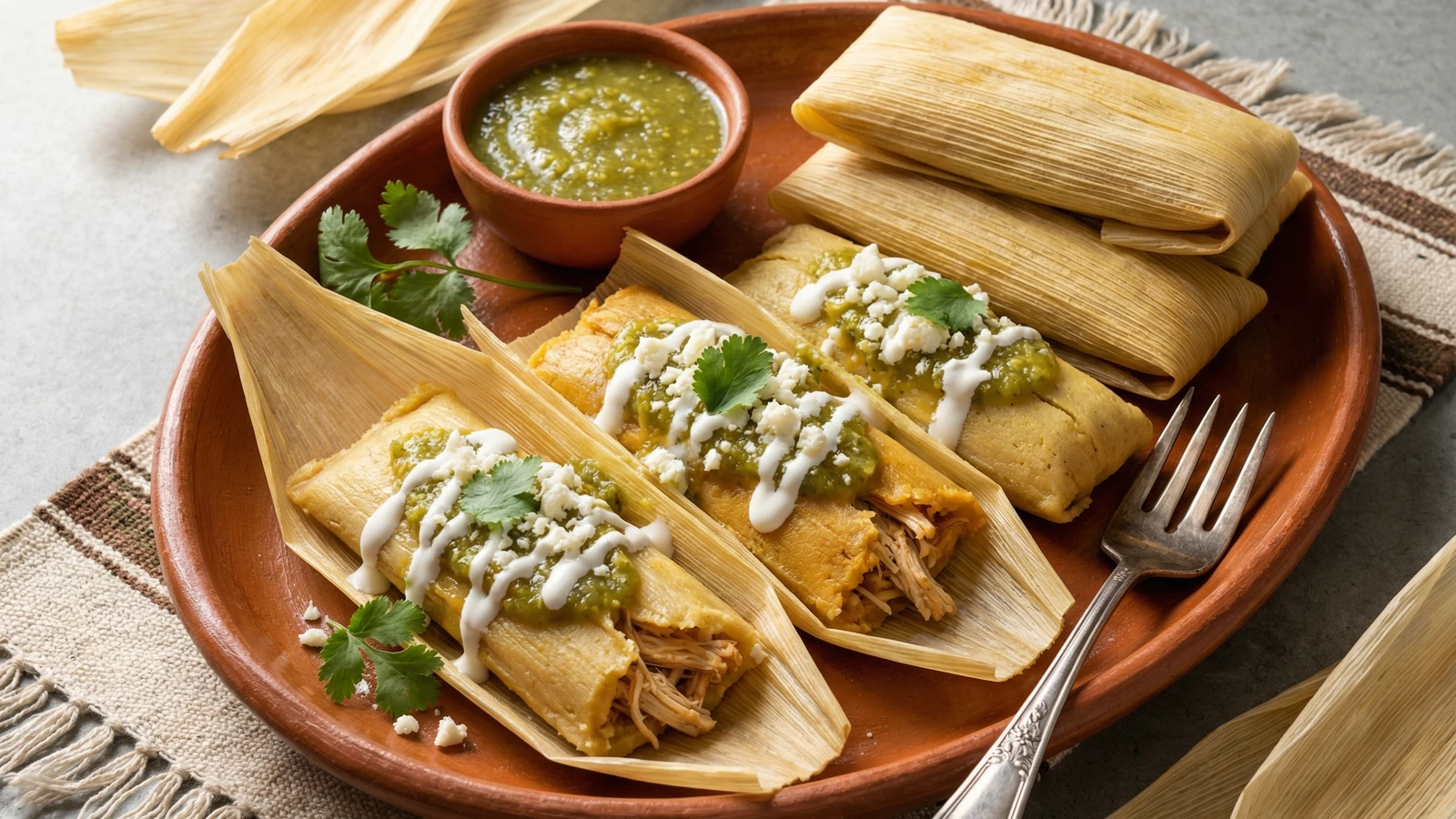
Chicken Tamales with Green Sauce
Created by
Pillowy corn masa wrapped around shredded chicken bathed in bright tomatillo salsa, steamed in fragrant corn husks until tender. This is the tamale that brings families together every December.
Tamales predate European contact by thousands of years. The Aztecs carried them into battle. Maya priests offered them to the gods. When Mexican families gather each December for the tamalada, they're participating in something ancient, something that connects a Tuesday night in San Antonio to civilizations that built pyramids.
I've made tamales with grandmothers who learned from their grandmothers, and every single one of them told me the same thing: the secret is in the masa. It must be light. It must be properly beaten. When a small ball floats in cold water, you're ready. Skip this test at your peril.
The green sauce here uses tomatillos, those papery-husked fruits that look like small green tomatoes but taste nothing like them. Roasted until blistered and blended with serranos and garlic, they produce a sauce that's bright, acidic, and utterly alive. It cuts through the richness of the masa like a conversation you didn't know you needed.
Yes, this takes time. A proper batch of tamales is a project, not a weeknight whim. But the beauty of tamales is that they freeze beautifully, reheat perfectly, and improve with a day's rest. Make them once, eat them for weeks. That's the wisdom of generations of cooks who understood that some things are worth the effort.
The technique, the tradition, and the story behind every dish.
Discover Culinary AdvisorIngredients
dried corn husks
Quantity
1 package (about 40 husks)
bone-in, skin-on chicken thighs
Quantity
2 pounds
white onion
Quantity
1 medium
quartered, divided
garlic cloves
Quantity
4
divided
bay leaves
Quantity
2
whole black peppercorns
Quantity
1 tablespoon
masa harina
Quantity
2 cups
lard or vegetable shortening
Quantity
1 cup
at room temperature
baking powder
Quantity
1 teaspoon
fine salt
Quantity
1 1/2 teaspoons
divided
warm chicken broth
Quantity
1 1/2 cups
reserved from poaching
fresh tomatillos
Quantity
1 1/2 pounds
husked and rinsed
serrano peppers
Quantity
2
fresh cilantro
Quantity
1/2 cup
packed
ground cumin
Quantity
1 teaspoon
Mexican crema or sour cream (optional)
Quantity
for serving
queso fresco (optional)
Quantity
for serving
crumbled
| Ingredient | Quantity |
|---|---|
| dried corn husks | 1 package (about 40 husks) |
| bone-in, skin-on chicken thighs | 2 pounds |
| white onionquartered, divided | 1 medium |
| garlic clovesdivided | 4 |
| bay leaves | 2 |
| whole black peppercorns | 1 tablespoon |
| masa harina | 2 cups |
| lard or vegetable shorteningat room temperature | 1 cup |
| baking powder | 1 teaspoon |
| fine saltdivided | 1 1/2 teaspoons |
| warm chicken brothreserved from poaching | 1 1/2 cups |
| fresh tomatilloshusked and rinsed | 1 1/2 pounds |
| serrano peppers | 2 |
| fresh cilantropacked | 1/2 cup |
| ground cumin | 1 teaspoon |
| Mexican crema or sour cream (optional) | for serving |
| queso fresco (optional)crumbled | for serving |
Equipment Needed
- •Large stockpot with steamer insert or rack
- •Stand mixer with paddle attachment
- •Blender
- •Large basin or clean sink for soaking husks
- •Sheet pans for assembly
Instructions
- 1
Soak the corn husks
Place the corn husks in a large basin or clean sink and cover with very hot tap water. Weight them down with a plate to keep them submerged. They need at least two hours to become pliable, so start this first. Stiff husks tear when you fold them. Properly soaked husks bend like leather.
Sort through your husks as they soak. You want the largest, most intact ones for wrapping. Smaller or torn pieces work perfectly for tying and lining your steamer. - 2
Poach the chicken
Place chicken thighs in a large pot with half the quartered onion, 2 cloves of garlic, bay leaves, and peppercorns. Add cold water to cover by two inches. Bring to a gentle simmer over medium heat, then reduce to low. Poach for 35 to 40 minutes until the chicken is cooked through and tender. The liquid should barely bubble. A rolling boil makes tough, stringy meat.
- 3
Shred the chicken
Transfer chicken to a cutting board and let it cool until you can handle it. Strain the poaching liquid and reserve at least two cups for the masa. Discard the skin and bones, then shred the meat into bite-sized pieces using two forks or your fingers. The texture should be rustic, not pulverized. You want distinct strands that will catch the sauce.
- 4
Roast the tomatillos
While the chicken poaches, position an oven rack six inches from the broiler and heat to high. Spread tomatillos and serranos on a foil-lined baking sheet. Broil for 5 to 7 minutes until the tops blister and blacken in spots. Flip everything and broil another 4 to 5 minutes. The tomatillos should be soft, collapsed, and swimming in their own juices. This charring is essential. Raw tomatillos taste harsh and vegetal. Roasting transforms them.
For milder sauce, remove the seeds and ribs from the serranos before roasting. For proper heat, leave them intact. - 5
Make the salsa verde
Transfer roasted tomatillos and serranos to a blender, including all the accumulated juices from the pan. Add the remaining raw onion quarter, remaining 2 garlic cloves, cilantro, cumin, and half a teaspoon of salt. Blend until smooth. Taste and adjust salt. The sauce should be bright and assertive, slightly more acidic than you think it should be. It will mellow as it melds with the chicken.
- 6
Prepare the filling
Combine shredded chicken with one cup of the salsa verde in a bowl. Toss to coat evenly. The chicken should be well-dressed but not swimming. Reserve the remaining salsa for serving. Let the filling sit while you make the masa so the flavors can marry.
- 7
Beat the lard
In a stand mixer fitted with the paddle attachment, beat the lard on medium-high speed for a full five minutes. It should become white, fluffy, and increased in volume by nearly half. This step is not optional. Properly beaten fat is the difference between tamales that are light and tender versus dense and heavy. Your arm will thank you for using a machine.
Traditional cooks beat the lard by hand for ten minutes or more. A stand mixer does the job in half the time with better consistency. - 8
Mix the masa
With the mixer on low, add the masa harina, baking powder, and one teaspoon of salt. Mix until combined, then slowly stream in the warm chicken broth. Increase speed to medium and beat for another two to three minutes. The masa should be smooth, spreadable, and light. Here is the crucial test: drop a small ball of masa into a glass of cold water. If it floats, you're ready. If it sinks, beat for another minute and test again.
- 9
Set up your assembly station
Drain the corn husks and pat them dry with clean towels. Tear a few smaller husks into quarter-inch strips for tying. Arrange your workspace with husks on one side, masa in the center, filling within reach, and a clean sheet pan for finished tamales. Assembly goes faster when everything is organized. This is production cooking.
- 10
Spread the masa
Take a large husk and hold it with the tapered end pointing toward you. Using the back of a spoon or a rubber spatula, spread about three tablespoons of masa into a rectangle on the smooth side of the husk. Cover roughly the top two-thirds of the husk, leaving a two-inch border at the wide end and the entire tapered bottom third bare. The masa should be about a quarter-inch thick. Thinner is better than thicker.
- 11
Fill and fold
Spoon two tablespoons of the chicken filling down the center of the masa. Fold one long side of the husk over the filling so the masa edges meet and seal. Roll the tamale toward the uncovered side to form a cylinder. Fold the tapered bottom end up toward the seam and tie with a husk strip to secure. The wide top stays open. Stand each finished tamale upright on your sheet pan, open end up.
Don't overfill. Two tablespoons feels stingy but produces properly proportioned tamales. The masa-to-filling ratio matters. - 12
Prepare the steamer
Set a steamer insert or rack in a large pot. Line the bottom and sides with extra corn husks or the torn ones you set aside. This creates a barrier between the tamales and direct steam, promoting gentle, even cooking. Add water to just below the rack level. You'll need to monitor and replenish this during steaming.
- 13
Steam the tamales
Arrange tamales upright in the prepared steamer, open ends facing up. Pack them snugly so they support each other but aren't crushed. Cover the tops with more husks, then a clean kitchen towel, then the lid. The towel absorbs condensation that would otherwise drip and make the tamales soggy. Bring to a boil, then reduce heat to maintain steady steam. Cook for 60 to 75 minutes.
- 14
Test for doneness
After one hour, remove a tamale and let it rest for five minutes. Unwrap it carefully. The masa should pull away cleanly from the husk without sticking and feel firm but tender when you press it. If it's gummy or sticks to the husk, rewrap and steam for another 15 minutes. Altitude, humidity, and how tightly you packed them all affect timing.
Check your water level every 20 minutes. Running dry will scorch your husks and ruin the tamales. Keep a kettle of hot water ready to replenish. - 15
Rest and serve
Let tamales rest in the covered pot, off heat, for ten minutes before serving. This allows the masa to set fully. Serve with the reserved salsa verde spooned over the top, a drizzle of crema, and a scattering of crumbled queso fresco. Present them still in their husks. Unwrapping is part of the ritual.
Chef Tips
- •Lard makes the most authentic, flavorful tamales. Good quality leaf lard from a Mexican market or butcher shop produces superior results to vegetable shortening. But if lard isn't an option, shortening works. Your tamales will still be good. They just won't be transcendent.
- •The float test for masa is non-negotiable. Every grandmother I've watched makes tamales does this. It takes three seconds and tells you everything about whether your masa has been beaten enough to steam up light and tender.
- •Tamales are meant to be made in quantity. The effort of setup, soaking husks, and making masa is the same whether you make twelve or forty-eight. Make the full batch. Your freezer will thank you in January.
- •A tamalada, the tamale-making party, is the traditional approach for good reason. With three or four people working, one spreading masa, one filling, one folding, the work becomes social rather than tedious. Put on music. Open some wine. This is how families have made tamales for centuries.
Advance Preparation
- •Salsa verde keeps refrigerated for one week. Make it up to three days ahead. The flavor improves as it sits.
- •Chicken can be poached, shredded, and refrigerated up to two days before assembly. Reserve the broth separately.
- •Masa should be made fresh on assembly day. It doesn't hold well.
- •Assembled, uncooked tamales can be frozen for up to three months. Freeze them on a sheet pan until solid, then transfer to freezer bags. Steam directly from frozen, adding 20 to 30 minutes to the cooking time.
- •Cooked tamales refrigerate for up to one week. Reheat by steaming for 15 minutes or microwaving in their husks for 2 minutes.
- •For Christmas gatherings, make tamales one to two days ahead and store refrigerated. Reheat the entire batch in your steamer for 20 to 25 minutes before serving.
Frequently Asked Questions
Nutrition Information
1 tamale (about 100g)
Where cooking meets culture.
Culinary mentorship, cultural storytelling, and the editorial depth that makes cooking meaningful.
Explore Culinary Advisor