Culinary Advisor
A cooking platform built around craft, culture, and the stories behind what we eat.
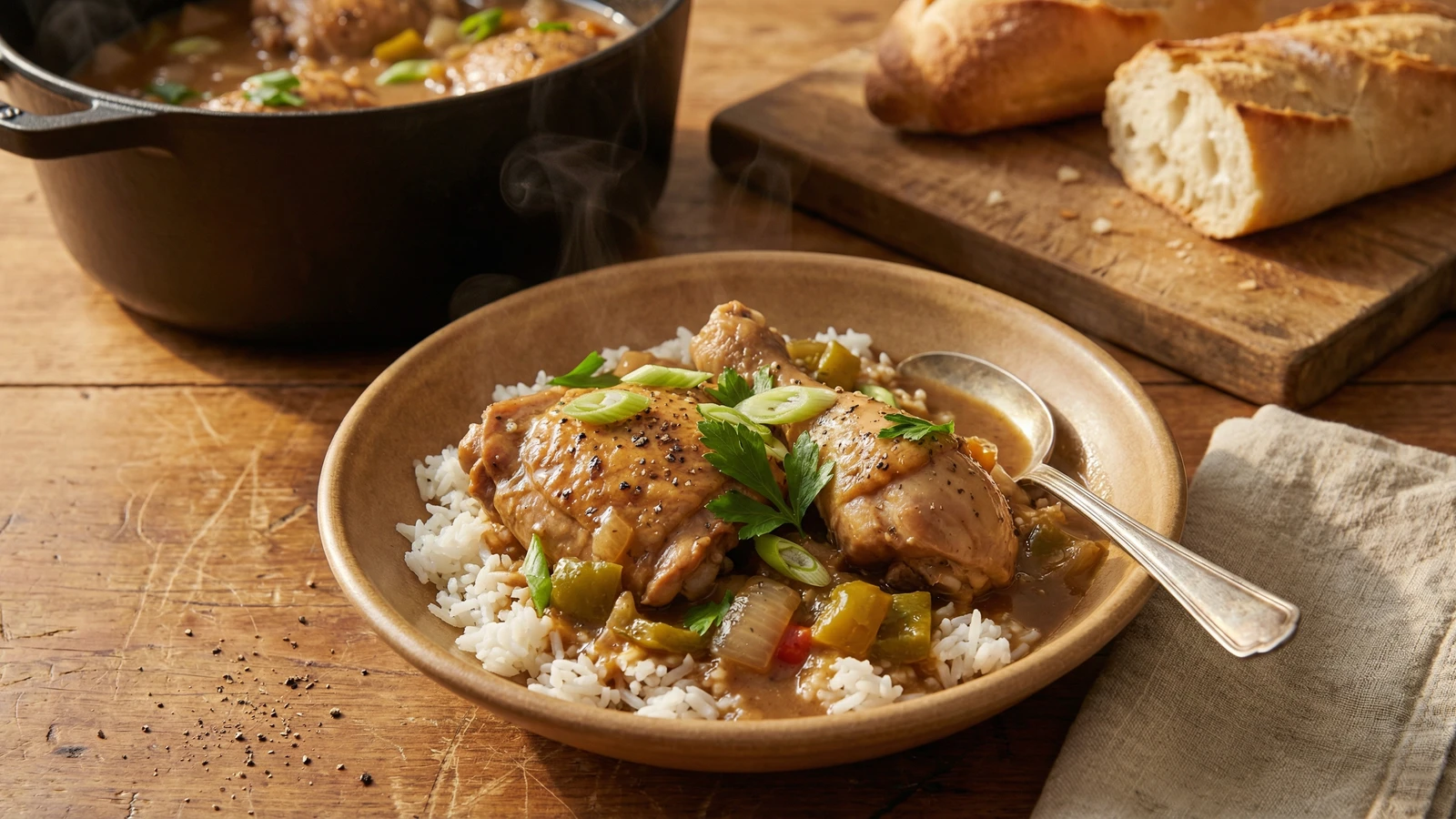
Chicken Fricassee
Created by Chef Remy
Bone-in chicken smothered in a silky brown roux gravy with the holy trinity, braised low and slow until the meat surrenders to your fork, served over fluffy white rice the way generations of Louisiana families have gathered around on Sunday afternoons.
Fricassee is where patience meets passion. This is the dish that taught me what smothered cooking truly means. You take humble ingredients, simple technique, and two hours of gentle heat, and you create something that brings a whole family to the table.
The French brought fricassee to Louisiana, but we made it our own. Where the original called for cream and delicate seasonings, Cajun cooks built a brown roux base and added the holy trinity. We seasoned boldly and braised until the chicken fell apart at the suggestion of a fork. At Lagniappe, this is our Sunday special. People drive from three parishes away because they know what awaits them.
The secret lives in the browning. You must be patient with that chicken skin, letting it develop deep color before it ever touches the gravy. That fond on the bottom of your pot becomes the foundation of everything. Then comes the roux, stirred constantly until it reaches that perfect peanut butter shade. Rush either step and you have ordinary food. Give them the time they deserve and you have something that tastes like love.
My grandmother Evangeline served fricassee every Sunday after church. The whole family would crowd into her little kitchen in Lafayette Parish, the smell of that gravy pulling us in from the yard like a magnet. She never wrote down a recipe in her life. She cooked by taste, by feel, by four generations of memory passed down through wooden spoons and cast iron pots. This is her dish, translated for your kitchen.
The technique, the tradition, and the story behind every dish.
Discover Culinary AdvisorIngredients
whole chicken
Quantity
1 (3 1/2 to 4 pounds)
cut into 8 pieces
Cajun seasoning
Quantity
2 tablespoons
divided
kosher salt
Quantity
1 teaspoon
black pepper
Quantity
1/2 teaspoon
freshly ground
vegetable oil
Quantity
1/2 cup
all-purpose flour
Quantity
1/2 cup
yellow onions
Quantity
2 large
diced
green bell pepper
Quantity
1 large
diced
celery stalks
Quantity
3
diced
garlic
Quantity
6 cloves
minced
chicken stock
Quantity
3 cups
warm
water
Quantity
1 cup
bay leaves
Quantity
2
cayenne pepper
Quantity
1/2 teaspoon, or to taste
dried thyme
Quantity
1/2 teaspoon
green onions
Quantity
4
sliced, white and green parts separated
fresh parsley
Quantity
2 tablespoons
chopped
cooked white rice
Quantity
for serving
| Ingredient | Quantity |
|---|---|
| whole chickencut into 8 pieces | 1 (3 1/2 to 4 pounds) |
| Cajun seasoningdivided | 2 tablespoons |
| kosher salt | 1 teaspoon |
| black pepperfreshly ground | 1/2 teaspoon |
| vegetable oil | 1/2 cup |
| all-purpose flour | 1/2 cup |
| yellow onionsdiced | 2 large |
| green bell pepperdiced | 1 large |
| celery stalksdiced | 3 |
| garlicminced | 6 cloves |
| chicken stockwarm | 3 cups |
| water | 1 cup |
| bay leaves | 2 |
| cayenne pepper | 1/2 teaspoon, or to taste |
| dried thyme | 1/2 teaspoon |
| green onionssliced, white and green parts separated | 4 |
| fresh parsleychopped | 2 tablespoons |
| cooked white rice | for serving |
Equipment Needed
- •Large Dutch oven or heavy-bottomed pot with lid (5-quart minimum)
- •Flat-bottomed wooden spoon or heat-resistant spatula
- •Instant-read thermometer
Instructions
- 1
Season the chicken
Pat the chicken pieces completely dry with paper towels. Wet skin will not brown, and browning is where your flavor begins. Season generously on all sides with one tablespoon of Cajun seasoning, the salt, and black pepper. Work the seasoning into the meat with your hands. Let the chicken sit at room temperature for twenty minutes while you prepare your vegetables. This takes the chill off and ensures even cooking.
Season the chicken the night before if you can. The salt penetrates deeper and the flavors marry together. That's how we do it at Lagniappe for our Sunday special. - 2
Brown the chicken
Heat the oil in a large Dutch oven or heavy-bottomed pot over medium-high heat until it shimmers and a pinch of flour sizzles immediately when dropped in. Working in batches to avoid crowding, brown the chicken pieces on all sides, about four minutes per side. You want deep golden color, almost approaching brown. Do not move the pieces around. Let them develop that crust. The fond building on the bottom of your pot is liquid gold for your gravy. Transfer browned chicken to a platter and set aside.
- 3
Build the roux
Reduce heat to medium. You should have about half a cup of oil remaining in the pot. If not, add more to reach that amount. Whisk in the flour all at once, scraping up every bit of fond from the bottom. Keep whisking constantly. The roux will bubble and foam, then begin to darken. You want a medium brown color, like peanut butter. This takes eight to ten minutes of constant attention. The smell should be nutty and toasted, not burned. One minute of neglect and you start over.
My grandmother Evangeline called this color 'café au lait roux.' Darker than blond, lighter than chocolate. It gives body to the gravy without overpowering the chicken. - 4
Cook the trinity
Add the onions, bell pepper, and celery to the roux. The vegetables will sizzle and protest. Stir constantly for the first minute to coat everything in that beautiful roux. Reduce heat to medium-low and cook, stirring often, until the onions turn translucent and sweet, about eight to ten minutes. The vegetables release their moisture and stop the roux from cooking further. Add the garlic and the white parts of the green onions. Cook one minute more until fragrant.
- 5
Build the gravy
Add the warm chicken stock slowly, about half a cup at a time, whisking constantly to prevent lumps. The mixture will seize up initially, then loosen as you add more liquid. Add the water, bay leaves, remaining tablespoon of Cajun seasoning, cayenne, and thyme. Stir well and bring to a simmer. Taste the gravy now and adjust your seasoning. The cayenne should wake up your palate without setting it on fire. You can always add more heat, but you cannot take it away.
Warm stock prevents temperature shock that can make your roux seize into lumps. I keep a pot simmering on the back burner whenever I make fricassee. - 6
Braise the chicken
Nestle the browned chicken pieces into the gravy, spooning some of that rich liquid over the top. The gravy should come about halfway up the chicken. Cover the pot and reduce heat to low. You want lazy bubbles, not a rolling boil. Braise for one hour, turning the pieces once halfway through. The chicken is done when the meat pulls easily from the bone and the thigh registers 185 degrees. The gravy will have thickened and the flavors will have married into something beautiful.
- 7
Finish and serve
Remove the bay leaves. Taste the gravy one final time and adjust salt, pepper, and cayenne as needed. Stir in the green parts of the green onions and the parsley. Let everything rest for five minutes off the heat. Serve over hot white rice, spooning plenty of that gravy over everything. The rice soaks up the sauce and makes the dish complete. When the last bite is as good as the first, you have done it right.
Chef Tips
- •Use a whole chicken cut into pieces, not boneless breasts. The bones and skin add body to the gravy that boneless meat simply cannot provide. Ask your butcher to break it down for you if you are not comfortable doing it yourself.
- •The gravy should be the consistency of heavy cream when finished. If it seems too thick, add a splash of stock. If too thin, remove the lid for the last fifteen minutes of braising to let it reduce.
- •Fricassee tastes even better the next day after the flavors have had time to deepen. Make it Saturday night, refrigerate overnight, and reheat gently for Sunday dinner.
- •For extra richness, stir two tablespoons of cold butter into the finished gravy off the heat. That's the restaurant trick for that glossy finish.
Advance Preparation
- •The chicken can be seasoned up to 24 hours ahead and refrigerated uncovered. The salt penetrates deeper and the skin dries out slightly, promoting better browning.
- •Completed fricassee keeps refrigerated for up to 4 days. The flavors improve overnight. Reheat gently over low heat, adding a splash of stock if the gravy has thickened too much.
- •Fricassee freezes well for up to 3 months. Thaw overnight in the refrigerator and reheat slowly on the stovetop.
Frequently Asked Questions
Nutrition Information
1 serving (about 250g)
Where cooking meets culture.
Culinary mentorship, cultural storytelling, and the editorial depth that makes cooking meaningful.
Explore Culinary Advisor