Culinary Advisor
A cooking platform built around craft, culture, and the stories behind what we eat.
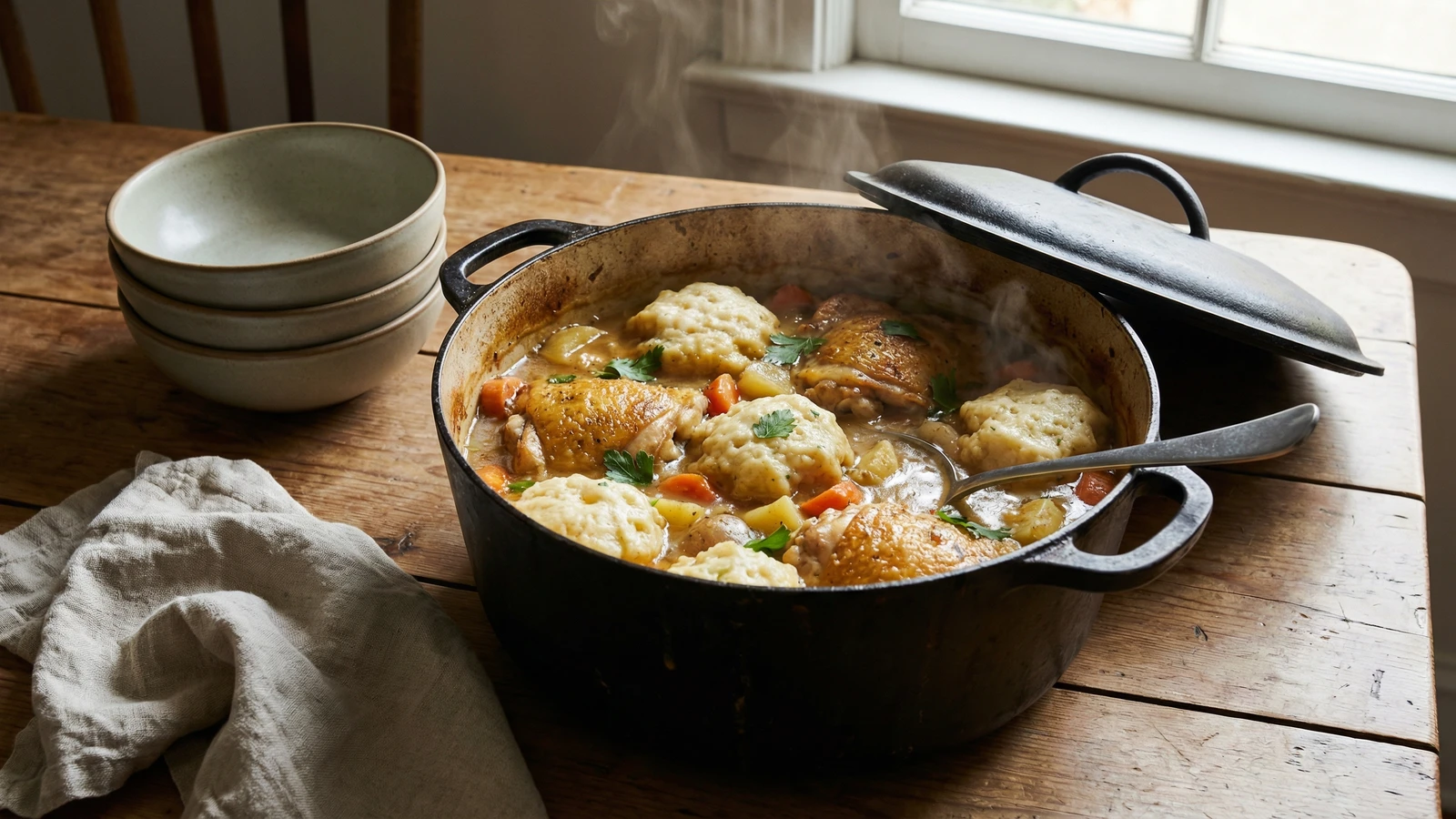
Chicken Casserole with Dumplings
Created by Chef Thomas
Chicken thighs braised slowly with root vegetables and thyme, suet dumplings dropped on top to steam and swell into something pillowy, the whole pot brought to the table on a cold evening when nothing else will do.
The rain started at four and hadn't stopped. The kitchen window had gone grey. I stood at the hob with a glass of cider and the last of the parsnips from the market, and it occurred to me that this was a dumplings evening. You know the ones. The evenings that call for something heavy and kind, brought to the table in the pot it was cooked in.
A chicken casserole with dumplings is not a dish that asks you to be clever. It asks you to be patient. To brown the meat properly, to let the onions go soft and sweet, to leave the pot alone while it does its quiet work. The dumplings go on top for the last twenty minutes, and they puff and swell in the steam until they're pillowy on top and soaked with sauce underneath. The first time someone cuts into one and the inside is light and cloud-like, you'll understand why this dish has survived every food fashion going.
I think this is the most democratic dish in Britain. It doesn't care about your kitchen or your budget. It cares about the evening: cold outside, warm in, someone to feed. We're only making dinner. But sometimes dinner is the whole point.
I wrote it down in the notebook last winter: chicken, dumplings, Tuesday, rain. It didn't need more than that.
The technique, the tradition, and the story behind every dish.
Discover Culinary AdvisorIngredients
bone-in, skin-on chicken thighs
Quantity
8
plain flour
Quantity
2 tablespoons
seasoned with salt and pepper
butter
Quantity
a knob
olive oil
Quantity
a splash
onions
Quantity
2
halved and sliced
carrots
Quantity
3
peeled and cut into thick rounds
celery
Quantity
2 sticks
sliced
parsnips
Quantity
2
peeled and cut into chunks
garlic
Quantity
3 cloves
crushed
thyme
Quantity
a few sprigs
bay leaves
Quantity
2
chicken stock
Quantity
500ml
dry cider or white wine
Quantity
200ml
Dijon mustard
Quantity
1 tablespoon
fine sea salt
Quantity
to taste
black pepper
Quantity
to taste
self-raising flour
Quantity
150g
shredded suet
Quantity
75g
flat-leaf parsley
Quantity
1 tablespoon
chopped
salt
Quantity
a pinch
cold water
Quantity
5-6 tablespoons
| Ingredient | Quantity |
|---|---|
| bone-in, skin-on chicken thighs | 8 |
| plain flourseasoned with salt and pepper | 2 tablespoons |
| butter | a knob |
| olive oil | a splash |
| onionshalved and sliced | 2 |
| carrotspeeled and cut into thick rounds | 3 |
| celerysliced | 2 sticks |
| parsnipspeeled and cut into chunks | 2 |
| garliccrushed | 3 cloves |
| thyme | a few sprigs |
| bay leaves | 2 |
| chicken stock | 500ml |
| dry cider or white wine | 200ml |
| Dijon mustard | 1 tablespoon |
| fine sea salt | to taste |
| black pepper | to taste |
| self-raising flour | 150g |
| shredded suet | 75g |
| flat-leaf parsleychopped | 1 tablespoon |
| salt | a pinch |
| cold water | 5-6 tablespoons |
Equipment Needed
- •Large cast-iron casserole pot with a lid, at least 4 litres
- •Mixing bowl for the dumplings
- •Tongs for turning the chicken
Instructions
- 1
Brown the chicken
Pat the chicken thighs dry and dust them in the seasoned flour. Get a large, heavy casserole pot over a medium-high heat with the butter and oil. When the butter foams and the kitchen starts to smell warm and toasty, lay the thighs in, skin side down, and leave them alone. Don't crowd the pan. Do them in two batches if you need to. Three or four minutes per side, until the skin is deep gold and properly crisp. Lift them out onto a plate. The skin won't stay crisp forever, but the browning builds the flavour that everything else will borrow from.
Bone-in thighs are essential here. They hold their shape through a long braise and give the sauce a richness that breast meat never will. Don't be tempted to substitute. - 2
Soften the vegetables
Turn the heat down to medium. There should be golden, sticky residue on the bottom of the pot. Good. Add the onions with a pinch of salt and stir them through the fat, scraping up all the caramelised bits as you go. Let them cook for five or six minutes until they're soft and starting to turn translucent. Add the carrots, celery, parsnips, and garlic. Stir everything together and cook for another three or four minutes, just long enough for the vegetables to take on a little colour at the edges and the garlic to smell of itself.
- 3
Build the braise
Pour in the cider or wine and let it bubble for a minute, dissolving anything still stuck to the bottom. Add the stock, the mustard, the thyme, and the bay leaves. Stir it all through. Nestle the chicken thighs back in, skin side up, so they sit on top of the vegetables with the skin just above the liquid. You want the skin exposed to the heat, not submerged. Bring it to a gentle simmer, put the lid on slightly ajar, and let it cook for forty minutes. Low and quiet. The kitchen will start to smell the way a kitchen should smell on a cold evening.
If you have good homemade stock, this is the place to use it. The braise has few enough ingredients that the stock does real work. If you're using bought stock, choose the best you can find and taste the sauce later with a careful hand on the salt. - 4
Make the dumplings
While the casserole simmers, make the dumplings. Combine the self-raising flour, suet, chopped parsley, and a pinch of salt in a bowl. Add the cold water a tablespoon at a time, mixing with a fork until the dough just comes together. It should be soft and slightly sticky, not dry and not wet. Flour your hands and roll the mixture into eight rough balls. Don't overwork them. A light touch makes a light dumpling. A heavy hand makes a cannonball.
- 5
Add dumplings and finish
After forty minutes, take the lid off the casserole. The sauce should have reduced a little and the chicken should be tender enough that a knife slides through it without resistance. Taste the sauce. Season it now, properly: salt, pepper, more mustard if it needs a sharper edge. Drop the dumplings gently onto the surface of the stew, leaving a little space between each one. They'll swell as they cook. Put the lid back on and cook for fifteen to twenty minutes, until the dumplings have puffed up and feel firm when you press the top lightly with a finger. Take the lid off for the last five minutes if you want the tops to set with a slight golden crust.
The dumplings cook in the steam as much as the liquid. Keep the lid on and resist the urge to check too often, or you'll lose the heat they need to rise properly. - 6
Serve at the table
Bring the whole pot to the table. That's the proper way to serve this. Let people help themselves, spooning out chicken and vegetables and dumplings and plenty of the sauce. A scattering of parsley over the top if you have it. Good bread on the side if you want, though the dumplings do the bread's job honestly. There are few better feelings than putting this pot in the middle of the table on a dark, cold evening and watching people lean in.
Chef Tips
- •Suet makes the dumplings. Don't substitute butter or oil here. Suet gives a lightness and a particular savoury quality that nothing else replicates. Vegetable suet works if you prefer it, but proper beef suet from the butcher is the original and still the best.
- •The casserole improves if you make it a day ahead, up to the point before adding the dumplings. Let it cool, refrigerate it overnight, and the next evening reheat it gently on the hob while you make the dumplings fresh. The sauce will have deepened, and the fat will have set on top so you can lift it off if you like.
- •A tablespoon of Dijon mustard stirred into the sauce is not traditional, but it adds a quiet heat that rounds the whole thing out. You won't taste mustard. You'll taste something you can't quite place, and you'll want more.
- •If you have a few leeks going soft in the fridge, slice them and add them with the onions. They melt into the sauce and sweeten it in a way that carrots alone can't. The market decides, as always.
Advance Preparation
- •The casserole base, without dumplings, can be made a day ahead and refrigerated. Reheat gently on the hob and add freshly made dumplings before serving.
- •Leftover casserole without dumplings freezes well for up to three months. Defrost overnight in the fridge and reheat slowly. Make fresh dumplings on the day.
Frequently Asked Questions
Nutrition Information
1 serving (about 580g)
Where cooking meets culture.
Culinary mentorship, cultural storytelling, and the editorial depth that makes cooking meaningful.
Explore Culinary Advisor