Culinary Advisor
A cooking platform built around craft, culture, and the stories behind what we eat.
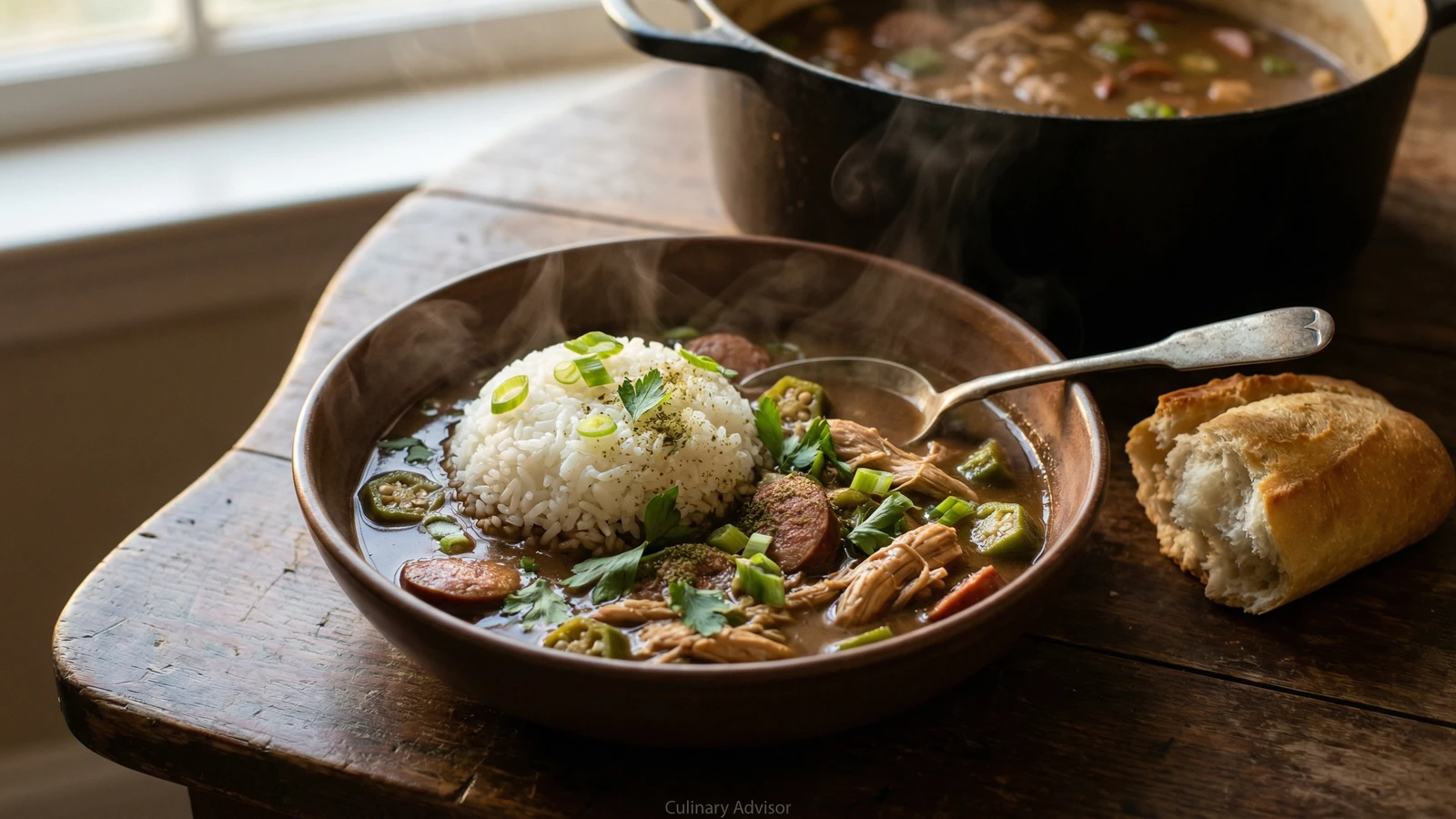
Chicken and Sausage Gumbo
Created by Chef Remy
A dark mahogany roux, smoky andouille, and tender chicken swimming in a rich broth with the holy trinity and fresh okra, ladled generously over steaming rice the way four generations of Boudreaux cooks have served it.
The roux is everything. That's the first thing you need to understand about gumbo. You take equal parts flour and oil, and you stand at that stove stirring constantly for forty-five minutes or more. No shortcuts. No walking away to check your phone. You're building the foundation of something that matters.
My grandmother Evangeline made gumbo every Sunday after church. She'd start that roux before we left for mass, and my grandfather would stand there stirring while she dressed us kids in our Sunday clothes. By the time we got home, the whole house smelled like heaven, and that pot was simmering low and slow on the back of the stove. I can close my eyes and smell it now.
At Lagniappe, we serve more gumbo than any other dish. People drive from three parishes away for a bowl. The secret isn't some mysterious ingredient. It's patience with the roux, it's seasoning in layers, and it's letting everything get acquainted in that pot. You season the chicken before it goes in. You season the sausage. You season the trinity when it hits the roux. Then you taste and adjust at the end. That's the bayou way.
This recipe feeds a crowd, and it should. Gumbo is not a dish you make for one. It's a dish you make when the family is coming over, when the neighbors need feeding, when you want your kitchen to smell like Louisiana. Trust your palate, take your time with that roux, and you'll make something that would make my grandmother proud.
The technique, the tradition, and the story behind every dish.
Discover Culinary AdvisorIngredients
vegetable oil
Quantity
1 cup
all-purpose flour
Quantity
1 cup
bone-in, skin-on chicken thighs
Quantity
2 pounds
andouille sausage
Quantity
1 pound
sliced into half-moons
Cajun seasoning
Quantity
2 tablespoons, divided
yellow onions
Quantity
2 large
diced
celery stalks
Quantity
4
diced
green bell peppers
Quantity
2 large
diced
garlic
Quantity
6 cloves
minced
chicken stock
Quantity
10 cups
warmed
bay leaves
Quantity
2
dried thyme
Quantity
1 teaspoon
black pepper
Quantity
1 teaspoon
freshly ground
cayenne pepper
Quantity
1/2 teaspoon, or to taste
fresh okra
Quantity
1 pound
sliced into 1/2-inch rounds
Worcestershire sauce
Quantity
1 tablespoon
kosher salt
Quantity
to taste
hot sauce
Quantity
to taste
cooked white rice
Quantity
for serving
green onions
Quantity
4
sliced thin
fresh flat-leaf parsley
Quantity
for garnish
chopped
filé powder (optional)
Quantity
for serving
| Ingredient | Quantity |
|---|---|
| vegetable oil | 1 cup |
| all-purpose flour | 1 cup |
| bone-in, skin-on chicken thighs | 2 pounds |
| andouille sausagesliced into half-moons | 1 pound |
| Cajun seasoning | 2 tablespoons, divided |
| yellow onionsdiced | 2 large |
| celery stalksdiced | 4 |
| green bell peppersdiced | 2 large |
| garlicminced | 6 cloves |
| chicken stockwarmed | 10 cups |
| bay leaves | 2 |
| dried thyme | 1 teaspoon |
| black pepperfreshly ground | 1 teaspoon |
| cayenne pepper | 1/2 teaspoon, or to taste |
| fresh okrasliced into 1/2-inch rounds | 1 pound |
| Worcestershire sauce | 1 tablespoon |
| kosher salt | to taste |
| hot sauce | to taste |
| cooked white rice | for serving |
| green onionssliced thin | 4 |
| fresh flat-leaf parsleychopped | for garnish |
| filé powder (optional) | for serving |
Equipment Needed
- •Large Dutch oven or heavy-bottomed pot (7-quart minimum)
- •Wooden spoon or flat-bottomed spatula for stirring roux
- •Ladle for serving
Instructions
- 1
Season the chicken
Pat the chicken thighs dry with paper towels. Season generously on all sides with one tablespoon of the Cajun seasoning, rubbing it into the meat and under the skin where you can. Set aside at room temperature while you prepare everything else. Seasoning the protein first is how you build flavor in layers. This is not optional.
Bone-in, skin-on thighs give you the richest flavor. The bones add body to the broth, and the fat from the skin renders out into the gumbo. - 2
Brown the sausage
Heat a large Dutch oven or heavy-bottomed pot over medium-high heat. Add the andouille slices in a single layer and cook until the edges turn dark and caramelized, about three minutes per side. You want to hear a good sizzle when they hit the pan. If your pot is crowded, work in batches. Remove the sausage to a plate, leaving every drop of that rendered fat in the pot. That fat is flavor you're building.
- 3
Sear the chicken
In the same pot with the sausage fat, sear the seasoned chicken thighs skin-side down until golden brown, about five minutes. Flip and sear the other side for three minutes more. The skin should be crispy and gorgeous. Remove to the plate with the sausage. Pour off all but about two tablespoons of the fat from the pot, but do not wipe it clean. Those browned bits on the bottom are pure gold.
- 4
Build the roux
Reduce heat to medium-low and add the cup of vegetable oil to the pot. When it shimmers, whisk in the flour all at once. Now the work begins. Stir constantly with a wooden spoon or flat-bottomed spatula, scraping every corner of the pot. The roux will progress from white to blond to peanut butter to the color of milk chocolate. This takes forty to fifty minutes. Do not walk away. Do not answer the phone. A burned roux cannot be saved, and you will have to start over.
Keep a cup of ice water nearby. If you see any black specks or smell burning, you can briefly dip the bottom of the pot in the water to stop the cooking. But honestly, if you smell burning, it's probably too late. Start over. - 5
Watch the color transform
As you stir, watch the roux darken. It will smell like popcorn, then like roasted nuts, then like the most incredible thing you've ever smelled. The color you want is dark chocolate, maybe a shade lighter than a Hershey bar. This deep color gives gumbo its signature flavor: nutty, smoky, complex. A blond roux is for white gravy. We're making gumbo.
- 6
Add the holy trinity
The moment your roux reaches that deep chocolate color, add all the diced onions, celery, and bell pepper at once. Stir vigorously. The vegetables will sizzle and steam and the roux will seize up. This is exactly right. Keep stirring for eight to ten minutes until the vegetables soften and turn translucent. The roux will loosen as the vegetables release their moisture. Add the garlic in the last minute and stir until fragrant.
Some folks call this the 'first stir' because the trinity stops the roux from cooking. Have your vegetables chopped and ready before you start the roux, so you can add them the second you reach the right color. - 7
Build the broth
Add the warmed stock one cup at a time, stirring well after each addition. Using warm stock prevents the temperature shock that can make your roux seize into lumps. Stir until smooth before adding the next cup. After all the stock is incorporated, the liquid should be glossy and slightly thickened, the color of strong coffee with cream.
- 8
Simmer the gumbo
Return the seared chicken thighs to the pot, nestling them into the broth. Add the bay leaves, dried thyme, black pepper, cayenne, and the remaining tablespoon of Cajun seasoning. Bring to a gentle simmer, then reduce heat to low. Cover and cook for one hour, stirring occasionally. The chicken should be falling-off-the-bone tender when done.
- 9
Shred the chicken
Remove the chicken thighs to a cutting board. When cool enough to handle, pull the meat from the bones and shred it into bite-sized pieces. Discard the skin and bones. Return the shredded chicken to the pot along with the reserved browned andouille.
- 10
Add the okra
Stir in the sliced okra and Worcestershire sauce. Simmer uncovered for thirty minutes more. The okra will soften and release its natural thickening agent. If you find okra's texture challenging, this long simmer mellows it considerably. The gumbo should be rich and silky, coating a spoon but still brothy enough to ladle.
If you can't find fresh okra, frozen works fine. Don't thaw it first, just add it straight from the bag and add five minutes to the cooking time. - 11
Taste and adjust
Now comes the most important step: taste, taste, taste. Add salt until the flavors brighten and sing. A few dashes of hot sauce add depth even if you don't want more heat. Fish out the bay leaves. The gumbo should taste rich, smoky, deeply savory, with a gentle warmth that builds at the back of your throat. If it tastes flat, it needs more salt. Trust your palate.
- 12
Serve generously
Mound a generous scoop of white rice in deep bowls. Ladle the gumbo around and over the rice, making sure everyone gets plenty of chicken, sausage, and okra. Scatter green onions and parsley over the top. Set the filé powder on the table for those who want it, along with more hot sauce. Serve with crusty French bread for sopping up every last drop.
Chef Tips
- •The roux cannot be rushed. If you try to speed it up with higher heat, you'll burn it. Forty-five minutes of stirring is the price of admission to great gumbo. Your arm will hurt. That's how you know you're doing it right.
- •Always use real andouille from Louisiana if you can find it. The smoked pork sausage from the grocery store deli is not the same thing. Look for Cajun brands online if your local stores don't carry it.
- •Gumbo is better the next day. The flavors marry overnight in the refrigerator. Make it Saturday, serve it Sunday. At Lagniappe, we make our gumbo the day before service, every single time.
- •Filé powder (ground sassafras leaves) is traditional but optional. Add it at the table, never to the cooking pot, because it turns stringy when boiled. A little goes a long way.
- •If the gumbo gets too thick as it sits, thin it with a splash of stock. If it's too thin, simmer uncovered until it reaches the consistency you want. Gumbo is forgiving that way.
Advance Preparation
- •The holy trinity can be diced up to two days ahead and stored refrigerated in an airtight container. Keeping onions, celery, and peppers separate is unnecessary for this application.
- •Completed gumbo refrigerates beautifully for up to five days. The flavor improves significantly after the first night. Reheat gently over medium-low heat, adding stock if needed to thin.
- •Gumbo freezes well for up to three months. Freeze without rice. Thaw overnight in the refrigerator and reheat slowly. The okra may soften further but the flavor remains excellent.
Frequently Asked Questions
Nutrition Information
1 serving (about 500g)
Where cooking meets culture.
Culinary mentorship, cultural storytelling, and the editorial depth that makes cooking meaningful.
Explore Culinary Advisor