Culinary Advisor
A cooking platform built around craft, culture, and the stories behind what we eat.
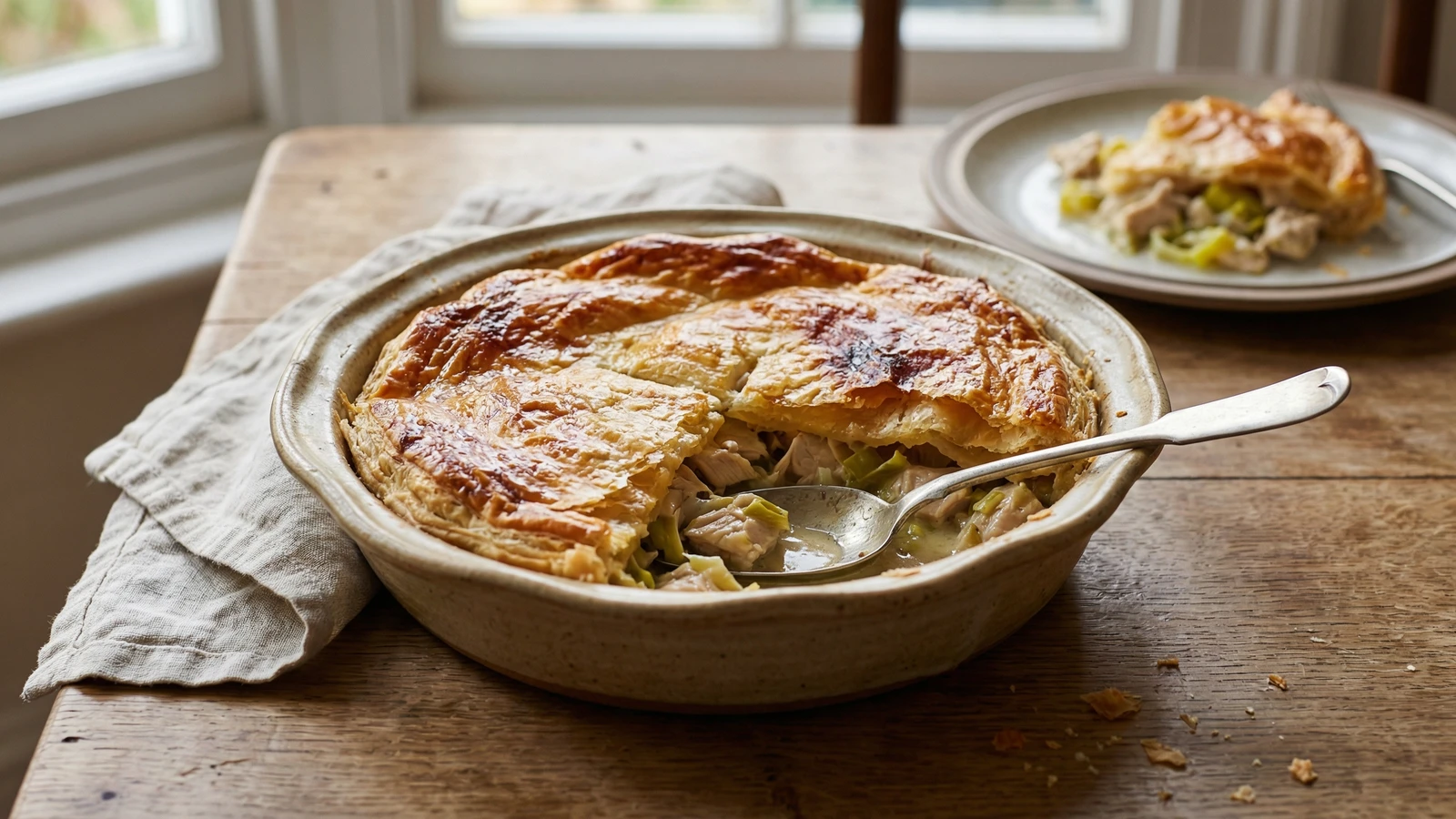
Chicken and Leek Pie
Created by Chef Thomas
Chicken thighs and sweet leeks braised in a gentle, mustardy cream, tucked under golden puff pastry and baked until the top shatters at the touch of a spoon. A midweek pie that asks very little and gives back everything.
The leeks arrive at the market in late autumn, fat and heavy, their outer leaves still dark and muddy. I buy more than I need because I always do. They sit in the kitchen for a day or two, patient and unhurried, until the evening is cold enough and quiet enough to warrant a pie.
This is a gentle thing. No showmanship. Chicken thighs browned in butter, leeks softened until they're silky and sweet, a sauce that barely qualifies as one: stock, cream, a scrape of English mustard, a few leaves of thyme stripped from the stalk. It comes together in one pan, gets tipped into a dish, and a sheet of pastry goes over the top. The oven does the rest. You don't need to have made a pie before. You need a bit of patience and a willingness to trust that something this simple can be this good.
I've made this more times than I can count, and the note in the notebook is always brief: pie, leeks, cold night. There are few better feelings than carrying something golden and bubbling to the table, cutting through the pastry and watching the steam curl upward. We're only making dinner. But some dinners are worth sitting down for properly, with plates warmed and the wine already poured.
The technique, the tradition, and the story behind every dish.
Discover Culinary AdvisorIngredients
boneless, skinless chicken thighs
Quantity
600g
cut into generous pieces
leeks
Quantity
3 large
white and pale green parts, sliced into rounds
unsalted butter
Quantity
40g
plain flour
Quantity
2 tablespoons
good chicken stock
Quantity
300ml
double cream
Quantity
150ml
English mustard
Quantity
1 teaspoon
fresh thyme
Quantity
a few sprigs
bay leaf
Quantity
1
all-butter puff pastry
Quantity
320g (1 sheet)
egg
Quantity
1
beaten
fine sea salt and black pepper
Quantity
to taste
| Ingredient | Quantity |
|---|---|
| boneless, skinless chicken thighscut into generous pieces | 600g |
| leekswhite and pale green parts, sliced into rounds | 3 large |
| unsalted butter | 40g |
| plain flour | 2 tablespoons |
| good chicken stock | 300ml |
| double cream | 150ml |
| English mustard | 1 teaspoon |
| fresh thyme | a few sprigs |
| bay leaf | 1 |
| all-butter puff pastry | 320g (1 sheet) |
| eggbeaten | 1 |
| fine sea salt and black pepper | to taste |
Equipment Needed
- •1.5-litre pie dish or shallow ovenproof dish
- •Large frying pan or sauté pan
- •Pastry brush
- •Rolling pin (if the pastry needs it)
Instructions
- 1
Brown the chicken
Cut the chicken thighs into generous pieces, roughly three or four per thigh. Season well with salt and pepper. Heat half the butter in a large pan over a medium-high heat until it foams. Brown the chicken in batches, giving each piece a couple of minutes on each side until properly golden. Don't crowd the pan. If there are too many pieces in there they'll steam rather than colour, and colour is where the flavour lives. Transfer to a plate as they're done.
- 2
Soften the leeks
Turn the heat down to medium-low. Add the remaining butter to the pan along with the sliced leeks and the bay leaf. Stir the leeks through the buttery, chickeny residue at the bottom of the pan. This is where the flavour begins to build. Let them cook gently for eight to ten minutes, stirring now and then, until they've gone completely soft and silky, sweet enough to eat on their own. They should look translucent and almost melting. If they start to take on colour, your heat is too high.
Leeks trap grit between their layers. Slice them first, then wash in a bowl of cold water, swishing them about. Lift them out and let the sand settle at the bottom. Don't skip this, or you'll know about it at the table. - 3
Build the sauce
Scatter the flour over the leeks and stir for a minute or so until it disappears into the butter. Pour in the stock gradually, stirring as you go, and let it come to a gentle simmer. It will thicken as it heats. Stir in the cream, the mustard, and the thyme leaves stripped from their stalks. Return the chicken and any resting juices to the pan. Let everything simmer together for five minutes until the chicken is cooked through and the sauce coats the back of a spoon. It should feel slightly loose. It will tighten in the oven. Season well. Taste it. Then taste it again.
The mustard isn't here for heat. It's a background warmth, a quiet depth that you can't quite identify but would miss if it weren't there. A teaspoon is right. Two would be too much. - 4
Assemble the pie
Heat the oven to 200C (180C fan). Tip the filling into a 1.5 litre pie dish or similar ovenproof dish, removing the bay leaf and the bare thyme stalks if they're still in there. Let it cool for ten minutes. Hot filling under cold pastry means soggy pastry, and nobody wants that. Unroll the puff pastry and drape it over the dish, pressing the edges down to seal against the rim. Trim any overhang with a knife. Cut a small slit in the centre to let the steam out. Brush the whole surface with beaten egg.
If you want to use the pastry trimmings, cut a few rough leaf shapes and press them onto the top before the egg wash. It takes thirty seconds and makes the thing look like you tried harder than you did. - 5
Bake until golden
Bake for twenty-five to thirty minutes until the pastry has puffed up magnificently and gone a deep, burnished gold, the kind of colour that makes you want to call someone into the kitchen just to look at it. The filling will be bubbling gently at the edges. Let the pie sit for five minutes before you cut into it. The filling is volcanic straight from the oven, and the short rest lets everything settle into itself. Serve with something green and simple. Buttered cabbage. A plain salad. Nothing that competes.
Chef Tips
- •Use thighs, not breast. Thigh meat stays juicy and tender under the pastry where breast turns dry and chalky. It's a better piece of meat for this kind of enclosed, gentle cooking, and it costs less. There is no good reason to use breast here.
- •Good ready-made all-butter puff pastry is one of the few shortcuts I will always defend. Making puff pastry from scratch is a day's project and the shop-bought version, if it's made with real butter, is honestly very good. Read the ingredients. If butter is the first fat listed, you're fine.
- •The leeks need proper cooking before they go under the pastry. Undercooked leeks are squeaky and fibrous and no amount of oven time will save them. You want them completely soft, almost dissolving, sweet enough to eat on their own with a spoon. Give them the time they're asking for.
- •Thyme is what I reach for here, but tarragon works beautifully if you have it. Just the leaves, torn, stirred through at the end. It brings something almost aniseedy that suits chicken and cream. Use one or the other, not both.
Advance Preparation
- •The filling can be made a day ahead and refrigerated. Let it come to room temperature before topping with pastry and baking, or add five minutes to the oven time.
- •You can assemble the whole pie, unbaked, cover it with cling film, and refrigerate for up to a day. Brush with egg wash just before it goes into the oven.
- •Leftover pie reheats well in a moderate oven for fifteen minutes, though the pastry won't be quite as shatteringly crisp the second time. It will still be good.
Frequently Asked Questions
Nutrition Information
1 serving (about 290g)
Where cooking meets culture.
Culinary mentorship, cultural storytelling, and the editorial depth that makes cooking meaningful.
Explore Culinary Advisor