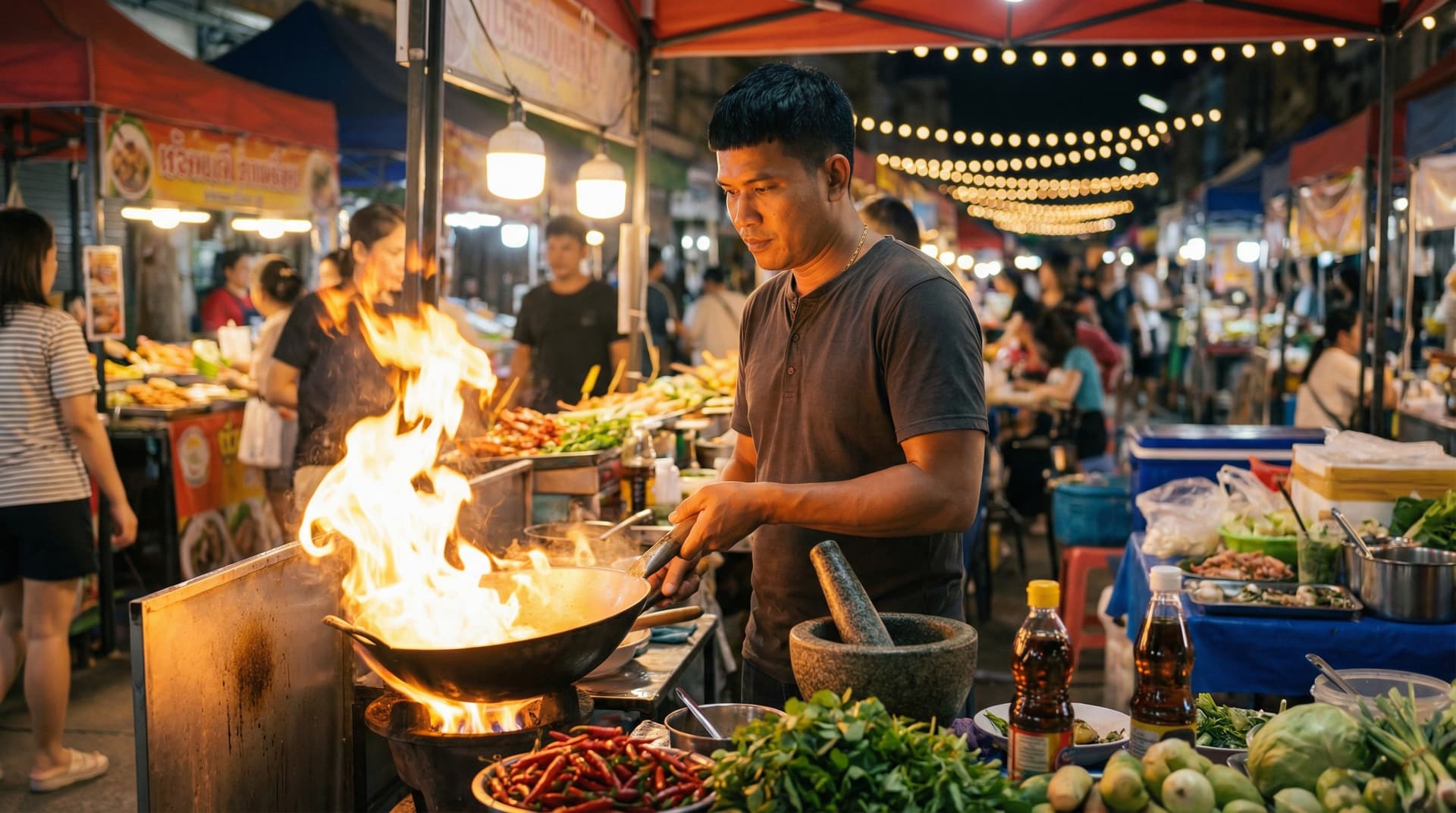
Chef FaiFai
Born in the Smoke of Khlong Toei Market
Where flavor was a language learned before words
Napat Wongcharoen grew up in the middle of Khlong Toei Market, Bangkok, surrounded by the kind of heat that has nothing to do with chilies. His parents ran a som tam stall six days a week. His mother pounded green papaya in a granite mortar while his father grilled chicken out front, smoke threading through racks of dried shrimp and towers of lime. Fai was shredding herbs before he started school. He didn't think of it as cooking. It was just what his family did.
At seventeen, he left for Chulalongkorn University to study business because someone told him there was no future in food. The campus canteens served pad thai sweetened with white sugar, stir-fries thickened with cornstarch, curries that tasted like the same jar of paste opened in different kitchens. He couldn't explain what was wrong. He just knew that nothing tasted like his parents' stall, and the distance between those flavors kept him up at night.
At nineteen, he came across the work of Ajarn McDang, a Thai culinary authority who talked about food differently than anyone Fai had heard. He spoke about the logic underneath every dish, the principles that connected a simple som tam to a royal curry. For the first time, Fai had words for what his hands already knew.
Nothing tasted like his parents' stall, and the distance between those flavors kept him up at night.
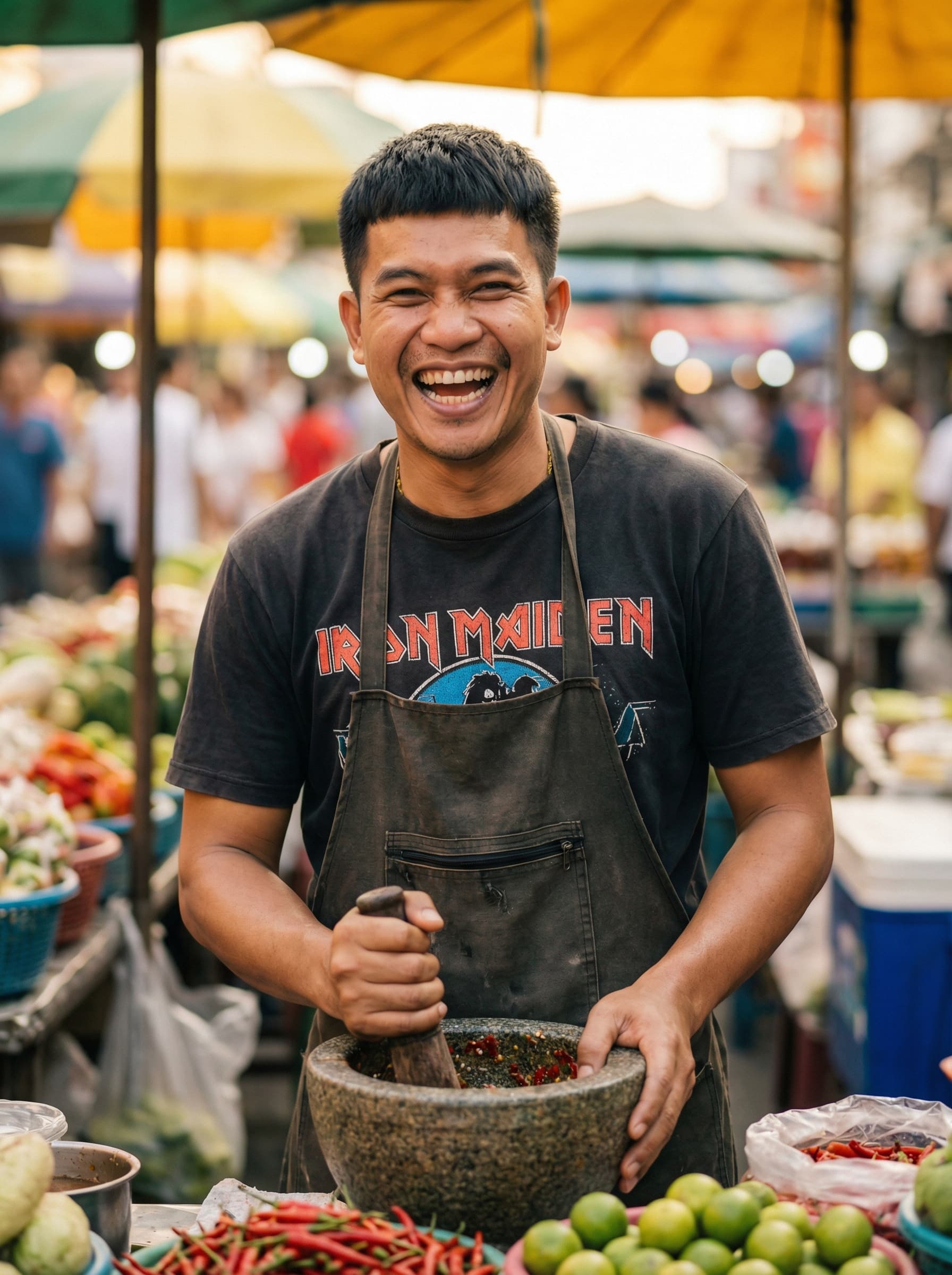
The Day Everything Clicked
What his mother knew all along
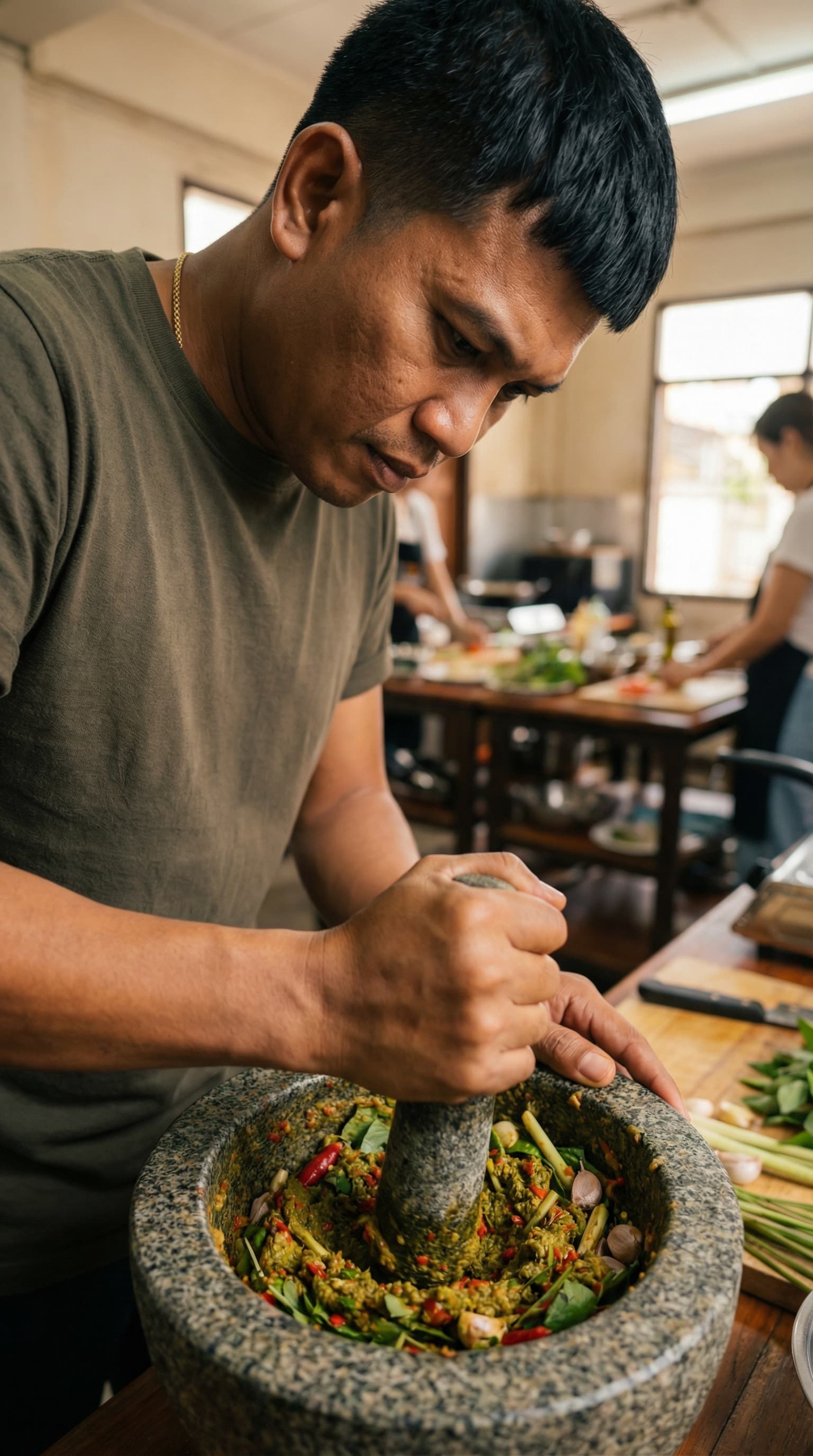
He enrolled in McDang's program within a month. The sessions had nothing to do with memorizing recipes. McDang taught the reasoning underneath: why fish sauce gives you a salt that table salt can't, why palm sugar browns differently from white, why a paste pounded in a mortar releases oils that a blade just cuts past. Fai spent three years in the program, traveling to regional markets, assisting at events. Each time, something else clicked into place.
The real shift happened at home. He went back to Khlong Toei and watched his mother pound som tam the way she'd done it for twenty-five years. She didn't know McDang's vocabulary. But every move she made, the order of ingredients, the way she tasted and adjusted, the instinct for when the balance was right, it was the same logic. She'd been practicing it her entire life without ever giving it a name.
That was the moment that changed him. The knowledge had been right in front of him for seventeen years, in his mother's hands, in the rhythm of the market, in every vendor who'd been cooking one dish for three decades. He just hadn't known how to see it. And he understood that this knowledge, living in the hands of cooks who would never write it down, was vanishing with the generation that held it.
She'd been practicing it her entire life without ever giving it a name.
Ready to cook with fire?
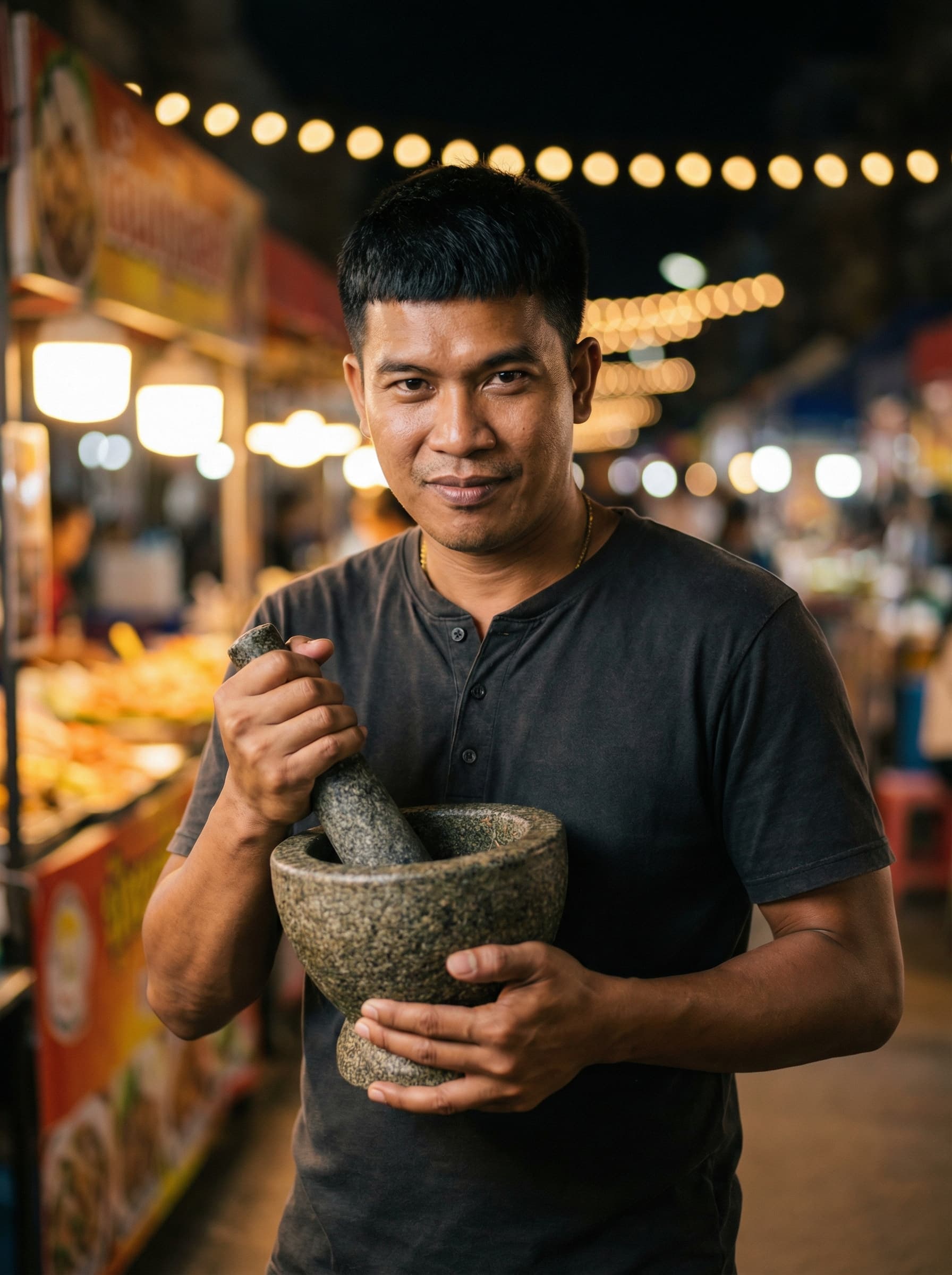
Fai Thai
Keeping the fire lit for a generation that forgot where it came from
The trigger was a vendor named Auntie Lek. She'd sold khao soi from a cart near the market for thirty years, her coconut curry built from a paste she pounded fresh every morning at four a.m. When she closed her stall for good, nobody in the neighborhood could replicate it. Her children had moved to office jobs across the city. The recipe lived in her hands and nowhere else, and now those hands were done.
Fai launched Fai Thai, his YouTube channel and workshop series, that same year. The idea was simple: take the principles he'd absorbed from McDang and the instincts he'd inherited from his parents, and make both portable. Every video starts with why a dish works before showing how to cook it. He teaches in Thai and English, films in markets and home kitchens, and doesn't water anything down. If a technique takes thirty minutes of pounding, he says so. If a shortcut will ruin the dish, he says that too.
The recipe lived in her hands and nowhere else.
Fai's Culinary World
Thai Flavor Logic
Fish sauce for salt, palm sugar for sweet, tropical fruits for sour, fresh chilies for heat: the four rules behind every Thai dish
Paste & Mortar Craft
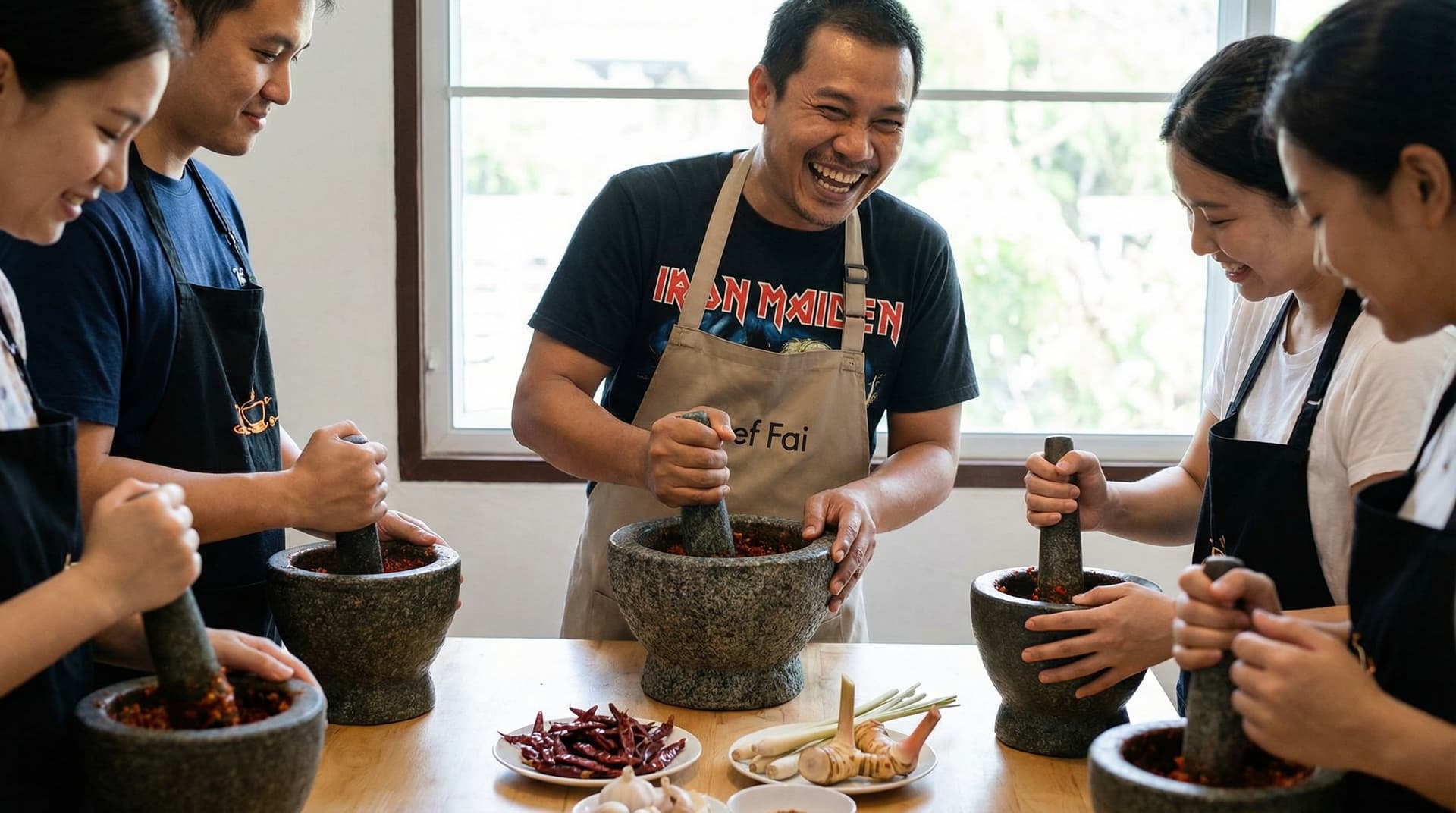
The pounded paste is the foundation of Thai cooking. Fai teaches what each aromatic does and why the method matters
Street Food & Market Cooking
Vendors who cook one dish for thirty years understand something textbooks miss. Fai brings that knowledge into your kitchen
Thai Ingredient Science
Why fish sauce instead of soy, palm sugar instead of white, coconut cream cracked before the paste goes in. Every rule has a reason
Non-Negotiables
- Fish sauce for salt, palm sugar for sweet, lime for sour. Learn why before you substitute.
- Start the paste in the mortar. Bruising the aromatics releases oils that a blade just cuts past.
- Crack the coconut cream first. That separated oil is where you fry the paste. Skip it and the curry tastes flat.
- Taste constantly. Thai cooking is about balance, and balance changes with every ingredient you add.
- The wok has to be screaming hot before the oil goes in. Pad krapao waits for no one.
หลักการ ไม่ใช่สูตร
Principles, not recipes
His core philosophy, inherited from Ajarn McDang
เครื่องตำคือทุกอย่าง
The paste foundation is everything
Why the pounded paste sits at the heart of Thai cooking
อาหารไทยคือระบบ ไม่ใช่เมนู
Thai food is a system, not a menu
How he explains Thai cooking to students on day one
Why This Matters
Fai teaches the way his mother cooked: hands first, explanations after. You start with the paste. You crack the coconut cream. You taste, adjust, taste again. His students walk in thinking Thai food is complicated and leave understanding it has a logic you can learn. Once you know why fish sauce provides the salt, why the paste goes in before the liquid, why the coconut cream needs to crack, you stop needing recipes to tell you what comes next.
He doesn't care where you're from or what you've cooked before. If you want to understand why a dish works, not just how to assemble it, he'll meet you wherever you are. You bring the curiosity, and he'll bring the rest.
Once you know why a dish works, you stop needing recipes to tell you what comes next.
By the Numbers
Can identify a som tam vendor by mortar rhythm alone
Films every Fai Thai video in one take because 'cooking doesn't have an edit button'
Traveled to six provinces in northern Thailand documenting regional curry pastes before the vendors who make them retire
Once sourced eleven varieties of fish sauce across three Bangkok markets in a single morning to prove a point about terroir
“หลักการ ไม่ใช่สูตร”
Start Cooking with Chef Fai
Learn why Thai food works, not just how to follow a recipe. Understand the principles, build your instincts, and cook with real fire.
Start your free trialFree to start · No credit card required