Culinary Advisor
A cooking platform built around craft, culture, and the stories behind what we eat.
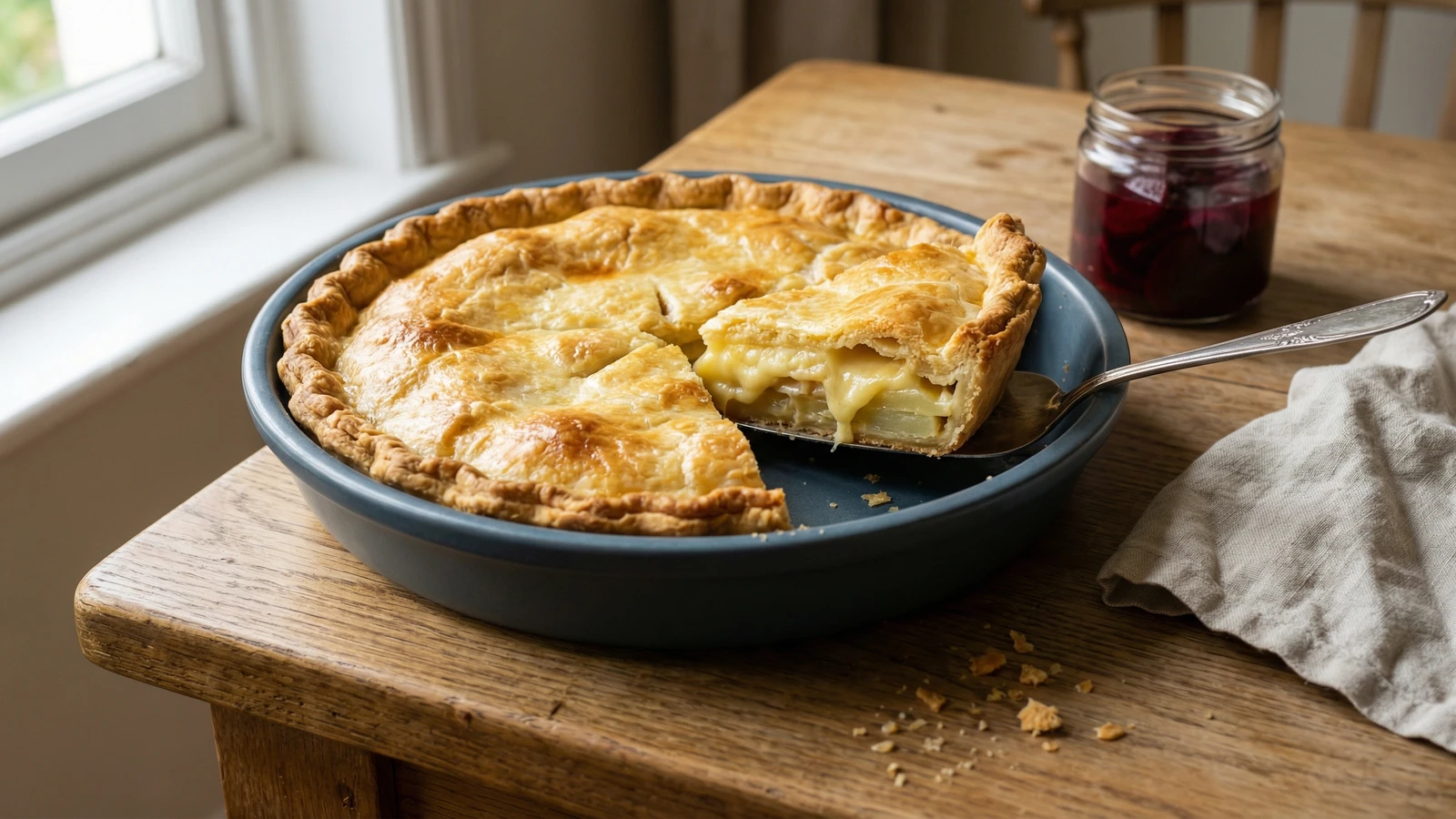
Cheese and Potato Pie
Created by Chef Thomas
A Lancashire pie of layered potatoes and strong cheese under a butter pastry crust, baked until the kitchen smells of the kind of evening where you don't answer the door.
January has a particular cold to it. Not the sharp, clean cold of November, but something heavier, wetter, the sort that gets into your coat and stays there. This is what this pie is for. Not summer. Not a dinner party. A dark evening when you want something solid and plain and good, carried to the table in the dish it was baked in.
Cheese and potato pie is Lancashire in its bones. The combination sounds too simple to be worth the effort, and that's exactly why it works. Layers of thinly sliced potato and strong cheese, softened onions between, all wrapped in a short, buttery pastry. The potatoes go creamy in the oven. The cheese melts into every gap and crevice. The pastry does what pastry should do: holds it all together and gives you something to break through.
I make this when the week has been long and the fridge is nearly bare. A few potatoes, an onion, a wedge of good cheese, flour and butter for pastry. That's it. There are few better feelings than putting something this honest in front of someone. No performance, no complication, just a warm pie on a cold night. We're only making dinner.
I wrote it down in the notebook years ago: cheese pie, Tuesday, rain on the window, second helpings. It didn't need more detail than that.
The technique, the tradition, and the story behind every dish.
Discover Culinary AdvisorIngredients
plain flour
Quantity
300g
cold unsalted butter (for pastry)
Quantity
150g
cubed
egg yolk
Quantity
1
cold water
Quantity
2-3 tablespoons
fine sea salt
Quantity
pinch
waxy potatoes
Quantity
800g
peeled and sliced 3-4mm thick
onion
Quantity
1 large
halved and thinly sliced
strong Lancashire cheese or mature Cheddar
Quantity
200g
crumbled or grated
unsalted butter (for filling)
Quantity
30g
fine sea salt
Quantity
to taste
white pepper
Quantity
to taste
milk or beaten egg
Quantity
a little
for glazing
| Ingredient | Quantity |
|---|---|
| plain flour | 300g |
| cold unsalted butter (for pastry)cubed | 150g |
| egg yolk | 1 |
| cold water | 2-3 tablespoons |
| fine sea salt | pinch |
| waxy potatoespeeled and sliced 3-4mm thick | 800g |
| onionhalved and thinly sliced | 1 large |
| strong Lancashire cheese or mature Cheddarcrumbled or grated | 200g |
| unsalted butter (for filling) | 30g |
| fine sea salt | to taste |
| white pepper | to taste |
| milk or beaten eggfor glazing | a little |
Equipment Needed
- •23cm deep pie dish (ceramic or enamel)
- •Rolling pin
- •Large saucepan for par-cooking potatoes
Instructions
- 1
Make the pastry
Tip the flour and salt into a large bowl. Add the cold butter and rub it in with your fingertips until the mixture looks like rough breadcrumbs. Some larger pieces of butter are fine. Welcome, even. They make the pastry flaky. Stir in the egg yolk and enough cold water to bring it together into a dough. Don't overwork it. The moment it holds in a ball, stop. Wrap it in cling film and rest it in the fridge for at least twenty minutes while you get on with the filling.
Cold hands and cold butter. If your kitchen runs warm, put the cubed butter back in the fridge for ten minutes before you start. Pastry rewards patience and punishes warm hands. - 2
Soften the onion
Melt the butter in a pan over a gentle heat. Add the sliced onion and a pinch of salt. Cook slowly, stirring now and then, until the onion is completely soft and sweet but hasn't taken on any colour. This takes a good ten minutes, sometimes longer. You'll smell the change before you see it: from sharp and raw to something rounder, sweeter, almost like the beginning of a soup. Take the pan off the heat and let the onion cool.
- 3
Par-cook the potatoes
While the onion softens, bring a large pan of well-salted water to the boil. Add the sliced potatoes and cook for four to five minutes, just until they start to give when you press one between your thumb and finger, but still hold their shape. Drain well and let them steam dry in the colander. Wet potatoes make a soggy pie, and a soggy pie helps nobody.
Salt the water generously. This is your only chance to season the potatoes from within. Under-seasoned potatoes will make an under-seasoned pie, and no amount of cheese will rescue it. - 4
Assemble the layers
Set the oven to 190C/170C fan. Roll out just over half the pastry on a floured surface and use it to line a deep pie dish, about 23cm across, leaving the pastry hanging over the edges. Now build the layers: a shingled layer of potato slices across the base, a scattering of softened onion, a generous handful of cheese, and a seasoning of salt and white pepper. Repeat, finishing with a layer of cheese pressed firmly on top. Be generous with the cheese. This is, after all, the point.
Lancashire cheese, if you can get it, crumbles beautifully and melts into something tangy and rich. A good mature Cheddar does the job just as well. What matters is that the cheese has real flavour. Mild cheese makes a mild pie, and a mild pie is a missed opportunity. - 5
Seal and glaze
Roll out the remaining pastry for the lid. Brush the overhanging edges of the base with a little water, lay the lid over the top, and press the edges together firmly with a fork or your fingers. Trim the excess and crimp it however pleases you. Cut a small slit in the centre to let the steam out. Brush the top with milk or beaten egg. The glaze is the difference between a pie that looks golden and inviting and one that looks like it hasn't quite decided whether it's finished.
- 6
Bake until golden
Bake in the centre of the oven for forty-five minutes to an hour. You'll know it's ready when the pastry is a deep, confident gold, not pale, not timid, and you can hear the filling bubbling faintly where it's pushed through the steam hole. The kitchen will smell of butter and melting cheese and something that makes you want to sit down immediately. Let it rest for ten minutes before cutting. The filling needs time to settle, and the first slice from a pie that hasn't rested is always a mess.
Chef Tips
- •The cheese is the soul of this pie, so choose one that actually tastes of something. A proper Lancashire, crumbly and sharp, is traditional and worth seeking out. Failing that, a mature Cheddar with real bite will carry it. Save the mild cheese for sandwiches.
- •Slice the potatoes evenly, about the thickness of a pound coin. Too thick and they won't cook through. Too thin and they'll collapse into mush. You want them to hold their shape but give way when you press a fork through the crust.
- •This pie improves with a simple accompaniment. Pickled beetroot from a jar, or pickled red cabbage if you've got it. The sharpness cuts through the richness. A green salad dressed with a little vinegar and mustard does the same job. Nothing elaborate. Just something bright alongside something golden.
- •Leftover pie, eaten cold the next day with a smear of mustard, is an entirely different pleasure. Some things are better the second time around.
Advance Preparation
- •The pastry can be made a day ahead and kept wrapped in the fridge. Bring it out twenty minutes before you need to roll it, or it'll crack and fight you.
- •The whole pie can be assembled, covered, and refrigerated for up to a day before baking. Add an extra five to ten minutes to the baking time if it goes in cold.
- •Baked pie keeps in the fridge for up to three days and reheats well in a moderate oven. It doesn't freeze particularly gracefully; the potatoes turn grainy.
Frequently Asked Questions
Nutrition Information
1 serving (about 310g)
Where cooking meets culture.
Culinary mentorship, cultural storytelling, and the editorial depth that makes cooking meaningful.
Explore Culinary Advisor