Culinary Advisor
A cooking platform built around craft, culture, and the stories behind what we eat.
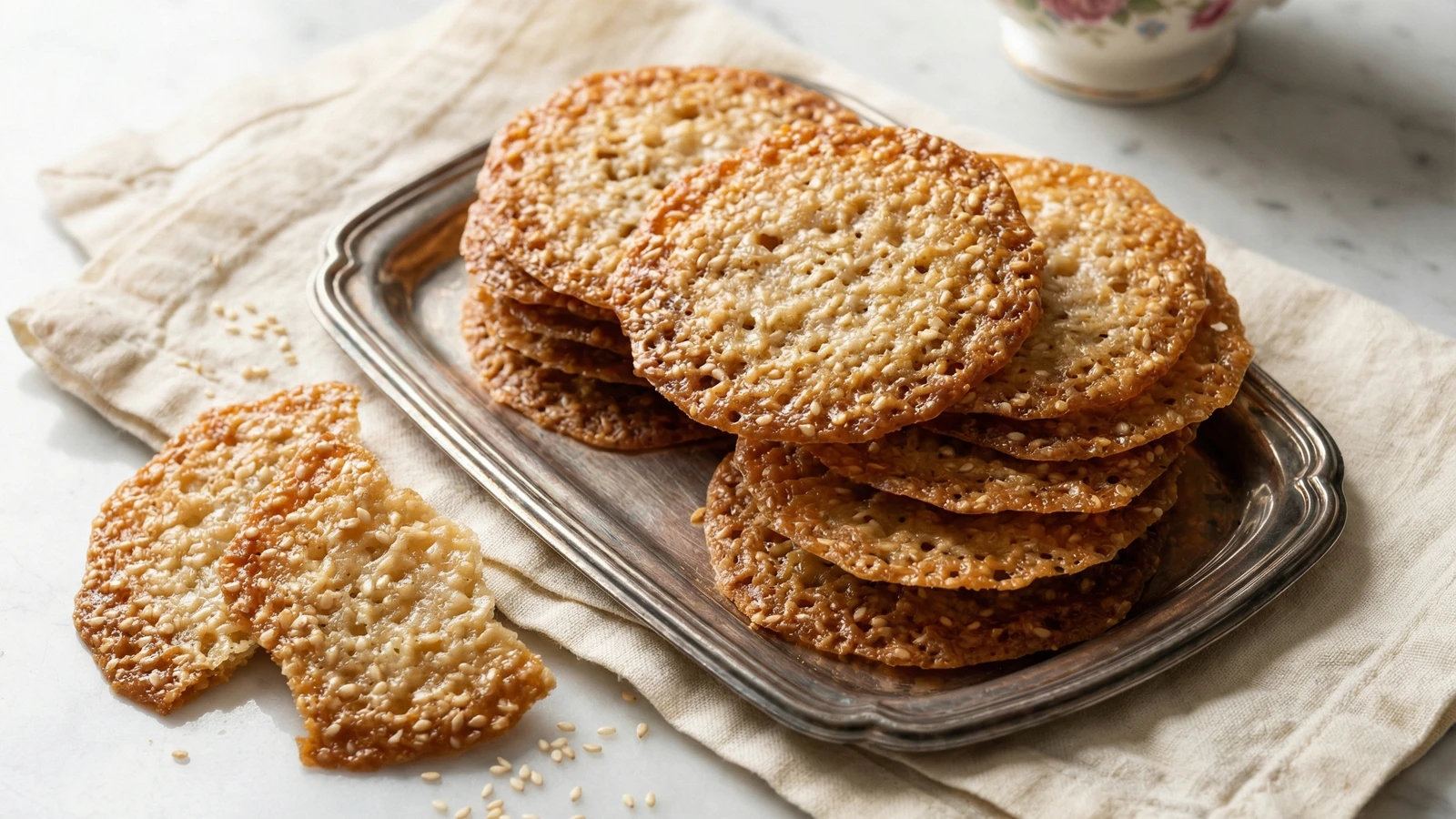
Charleston Benne Wafers
Created by
Impossibly thin, shatteringly crisp sesame cookies from Charleston's Lowcountry, where African benne seeds became a signature of Southern hospitality and one of America's first fusion foods.
These delicate wafers carry more history than any cookie has a right to. Benne seeds arrived in Charleston's harbor in the 1600s, brought by enslaved West Africans who knew their worth. The Wolof word 'benne' means sesame, and these seeds were considered good luck. They grew wild in the Carolina heat while their keepers preserved the knowledge of how to use them.
Charleston society eventually adopted benne wafers as their own, serving them at tea parties and holidays, often forgetting to credit the people who made them possible. I don't forget. Every time I toast these seeds, I think about the hands that first cultivated them on American soil and the wisdom that traveled across an ocean under the worst possible circumstances.
The technique here is simple but unforgiving. You're making cookies so thin they're almost translucent, held together by butter, brown sugar, and the earthy richness of toasted sesame. They spread dramatically in the oven. This is intentional. Fight the urge to make them thicker. The joy of a benne wafer is that first shatter when you bite down, followed by waves of caramel and nut.
These keep beautifully in a tin, which makes them ideal for gift-giving or keeping on hand when company drops by. Charleston hostesses have known this for centuries.
The technique, the tradition, and the story behind every dish.
Discover Culinary AdvisorIngredients
benne (sesame) seeds
Quantity
1 cup
unsalted butter
Quantity
6 tablespoons
melted and cooled
light brown sugar
Quantity
1 cup
packed
large egg
Quantity
1
lightly beaten
pure vanilla extract
Quantity
1 teaspoon
all-purpose flour
Quantity
1/2 cup
fine sea salt
Quantity
1/4 teaspoon
baking powder
Quantity
1/4 teaspoon
| Ingredient | Quantity |
|---|---|
| benne (sesame) seeds | 1 cup |
| unsalted buttermelted and cooled | 6 tablespoons |
| light brown sugarpacked | 1 cup |
| large egglightly beaten | 1 |
| pure vanilla extract | 1 teaspoon |
| all-purpose flour | 1/2 cup |
| fine sea salt | 1/4 teaspoon |
| baking powder | 1/4 teaspoon |
Equipment Needed
- •Heavy-bottomed 10-inch skillet for toasting
- •Two rimmed baking sheets
- •Parchment paper or silicone baking mats
- •1/2 teaspoon measure
- •Thin offset spatula
- •Wire cooling rack
Instructions
- 1
Toast the benne seeds
Pour the sesame seeds into a dry skillet over medium heat. Stir constantly with a wooden spoon, watching them like a hawk. After three to four minutes, they'll begin to turn golden and release a fragrance that's nutty, almost intoxicating. The moment you see color developing, remove the pan from heat immediately. Seeds continue toasting in the hot pan, and burnt sesame is bitter beyond redemption. Transfer to a plate to cool completely.
Listen for the seeds to start popping gently. That's your cue that they're nearly done. - 2
Prepare baking sheets
Position racks in the upper and lower thirds of your oven and preheat to 325°F. Line two baking sheets with parchment paper or silicone mats. These cookies spread aggressively and will fuse together without proper spacing, so you'll bake in batches.
- 3
Mix wet ingredients
In a medium bowl, whisk together the melted butter and brown sugar until smooth and glossy. The mixture should look like wet sand at the beach. Add the beaten egg and vanilla, whisking until fully combined. You're building the base that will spread paper-thin in the oven.
- 4
Add dry ingredients
In a small bowl, whisk together the flour, salt, and baking powder. Add this to the butter mixture and stir just until no dry streaks remain. Fold in the toasted benne seeds. The batter will be loose, almost pourable. This is correct. Trust it.
- 5
Portion the batter
Drop level half-teaspoons of batter onto the prepared sheets, spacing them three inches apart in all directions. Yes, three inches. These spread into circles roughly two and a half inches across. You'll fit about twelve per standard baking sheet. Resist the temptation to make them larger.
A small offset spatula helps release the sticky batter from your measuring spoon cleanly. - 6
Bake until golden
Bake for 10 to 12 minutes, rotating the sheets between racks and front to back at the halfway point. The wafers are done when they're deep golden brown across the entire surface with slightly darker, caramelized edges. Underbaked wafers stay chewy. You want them golden and honest, not pale and timid.
- 7
Cool completely on sheets
Let the wafers cool on the baking sheets for a full five minutes. They'll be soft and pliable when they emerge from the oven, firming as they cool. After five minutes, transfer to a wire rack with a thin spatula. Handle them gently. They're delicate until they crisp completely, which takes another five minutes on the rack.
- 8
Continue with remaining batter
Repeat with the remaining batter, allowing your baking sheets to cool between batches. Hot sheets cause the batter to spread too quickly, resulting in wafers that are too thin even by these standards. Patience here rewards you with consistent results.
Chef Tips
- •Seek out unhulled sesame seeds if you can find them at a specialty grocer or Asian market. They have a more complex, earthier flavor than the white hulled variety. Either will work, but unhulled seeds are more historically accurate to Charleston tradition.
- •These wafers are humidity's enemy. On damp days, they'll lose their crisp within hours. Store them in an airtight tin with a silica packet if you have one, or plan to serve them the day you bake.
- •Brown sugar varies in moisture content by brand. If your batter seems too thick to spread, add a teaspoon of melted butter. If it's so loose it runs, add a tablespoon more flour.
- •Pair these with a glass of sweet tea for the full Charleston experience, or serve alongside a cheese course where their nutty crunch complements aged cheddar or creamy brie.
Advance Preparation
- •Benne seeds can be toasted up to one week ahead and stored in an airtight container at room temperature.
- •The batter can be made and refrigerated for up to 3 days. Let it come to room temperature before baking, as cold batter won't spread properly.
- •Baked wafers keep in an airtight tin at room temperature for up to 2 weeks. Do not refrigerate or freeze, as moisture will destroy their crisp texture.
- •For gift-giving, layer wafers between sheets of wax paper in a decorative tin. They ship reasonably well in cool, dry weather.
Frequently Asked Questions
Nutrition Information
1 wafer (about 10g)
Where cooking meets culture.
Culinary mentorship, cultural storytelling, and the editorial depth that makes cooking meaningful.
Explore Culinary Advisor