Culinary Advisor
A cooking platform built around craft, culture, and the stories behind what we eat.
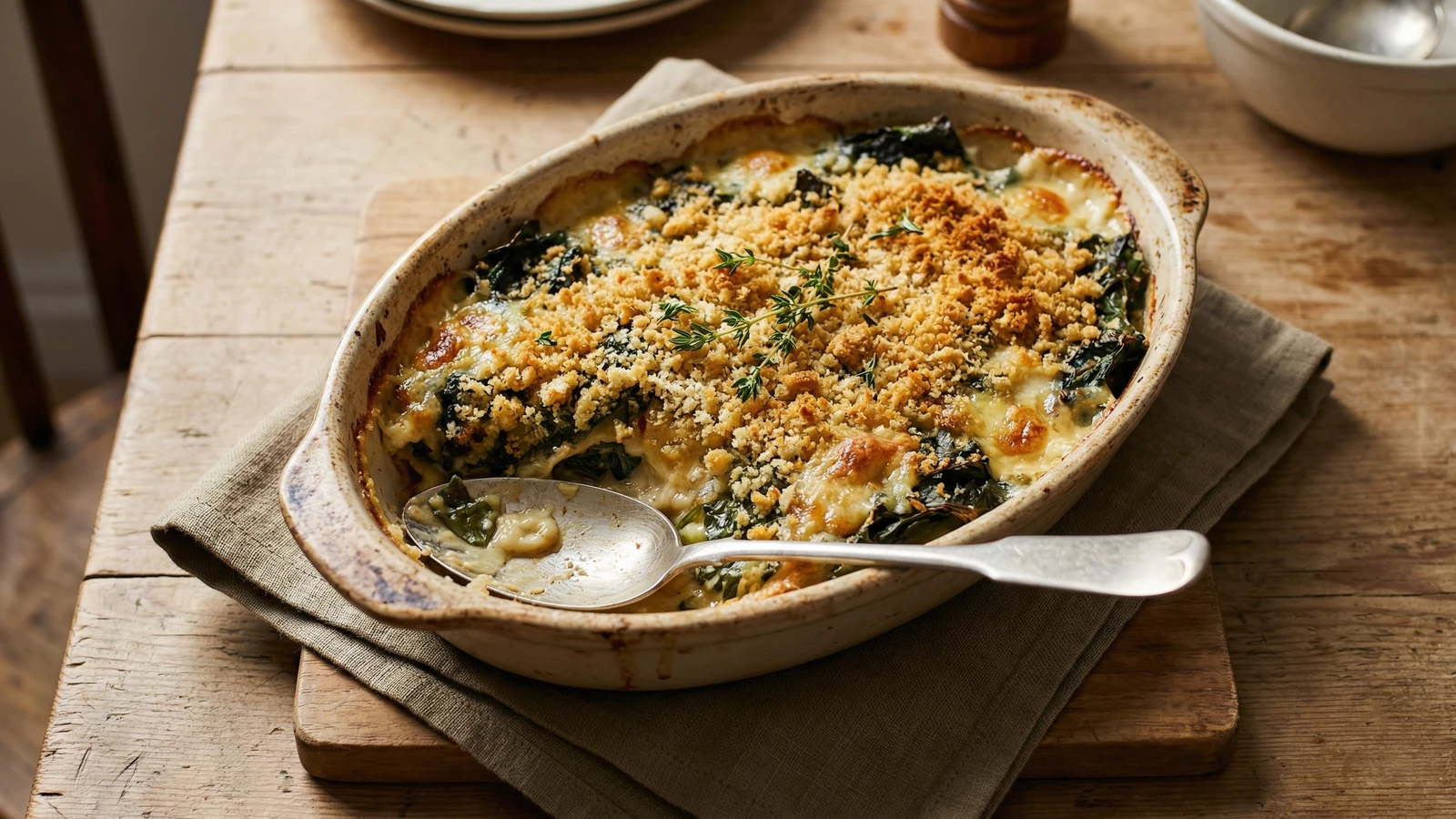
Chard Gratin with Breadcrumbs
Created by Chef Ally
Swiss chard stems and leaves treated with equal care, layered with nutmeg-scented cream and aged gruyère, finished with breadcrumbs that shatter when you break through to the tender greens below.
Abunch of chard is two vegetables in one. The stems are crisp and mild, almost like celery. The leaves are earthy and mineral, full of iron and life. Most recipes discard the stems or cook everything together until it is all the same mush. This wastes half the gift.
The French approach is better. Blanch the stems until just tender. Wilt the leaves separately. Bring them together in a gratin where cream and gruyère bind everything into something greater than its parts. The breadcrumbs on top are not decoration. They provide contrast, a shatter against the soft.
I learned to cook chard this way from farmers who grew tired of seeing their stems thrown away. They had put months into those plants. Using the whole leaf is not just thrift. It is respect. It is the understanding that the food system works better when we value what the land gives us.
The technique, the tradition, and the story behind every dish.
Discover Culinary AdvisorIngredients
Swiss chard
Quantity
2 large bunches (about 2 pounds)
stems and leaves separated
unsalted butter
Quantity
2 tablespoons, plus more for the dish
shallot
Quantity
1 medium
minced
garlic
Quantity
2 cloves
minced
heavy cream
Quantity
1 cup
nutmeg
Quantity
1/4 teaspoon
freshly grated
gruyère cheese
Quantity
1 cup
grated
fresh breadcrumbs
Quantity
1 cup
from good bread
extra-virgin olive oil
Quantity
2 tablespoons
fresh thyme leaves
Quantity
1 teaspoon
fine sea salt
Quantity
to taste
black pepper
Quantity
to taste
freshly ground
| Ingredient | Quantity |
|---|---|
| Swiss chardstems and leaves separated | 2 large bunches (about 2 pounds) |
| unsalted butter | 2 tablespoons, plus more for the dish |
| shallotminced | 1 medium |
| garlicminced | 2 cloves |
| heavy cream | 1 cup |
| nutmegfreshly grated | 1/4 teaspoon |
| gruyère cheesegrated | 1 cup |
| fresh breadcrumbsfrom good bread | 1 cup |
| extra-virgin olive oil | 2 tablespoons |
| fresh thyme leaves | 1 teaspoon |
| fine sea salt | to taste |
| black pepperfreshly ground | to taste |
Equipment Needed
- •Large pot for blanching
- •10-inch skillet
- •2-quart baking dish or gratin dish
- •Box grater or microplane for nutmeg
Instructions
- 1
Choose your chard
Look for bunches with crisp, unwilted leaves and stems that snap when you bend them. The color does not matter so much. Red, rainbow, or green chard all cook the same. What matters is freshness. Leaves should look alive, not tired. Stems should feel firm, not rubbery. This is the foundation of the whole dish.
Chard from a farmers market will have more flavor than anything shipped across the country. Ask when it was picked. - 2
Separate stems and leaves
Wash the chard well in cold water, swishing to release any grit. Lay each leaf flat and cut along both sides of the center rib, separating the tender green from the sturdy stem. Slice the stems into half-inch pieces. Roughly chop the leaves. Keep them separate. The stems need more time than the leaves, and treating them differently honors what each part offers.
- 3
Blanch the stems
Bring a large pot of well-salted water to a boil. Add the chard stems and cook until just tender, about three minutes. They should yield to a knife but still have some texture. Lift them out with a slotted spoon and spread on a clean towel to drain. Keep the water boiling.
- 4
Blanch the leaves
Add the chard leaves to the same boiling water. They will collapse quickly. Cook just until wilted and bright, about one minute. Drain and run under cold water to stop the cooking. Squeeze out as much water as you can. Wet greens make a watery gratin.
- 5
Build the base
Heat two tablespoons of butter in a skillet over medium heat. Add the minced shallot and cook until soft and fragrant, about two minutes. Add the garlic and stir for thirty seconds, just until you smell it. Pour in the cream and let it simmer gently for three to four minutes until it thickens slightly. Grate in the nutmeg. Season with salt and pepper. Taste it. The cream should be savory and aromatic.
- 6
Combine chard and cream
Add the blanched stems and leaves to the cream mixture. Fold everything together gently. The greens should be coated but not swimming. Taste again and adjust the seasoning. Chard can handle salt, so do not be shy.
- 7
Assemble the gratin
Preheat your oven to 400F. Butter a baking dish generously. Spread the chard mixture in an even layer. Scatter the grated gruyère over the top. The cheese will melt into the cream and form golden patches where it meets the heat.
- 8
Make the breadcrumb topping
Toss the fresh breadcrumbs with olive oil, thyme leaves, and a pinch of salt. The crumbs should be lightly coated, not soggy. Scatter them evenly over the cheese. They will turn golden and crisp in the oven while the gratin bubbles beneath.
Make breadcrumbs from bread that is a day or two old. Tear it into rough pieces and pulse in a food processor. Store-bought breadcrumbs lack soul. - 9
Bake until golden
Bake the gratin for twenty to twenty-five minutes until the cream is bubbling at the edges and the breadcrumbs are deeply golden. The top should look like something you want to break into with a spoon. Let it rest for five minutes before serving. This allows the cream to settle and the first bite to be perfect rather than scalding.
Chef Tips
- •Chard is available nearly year-round, but it peaks in spring and fall. Summer heat makes it bitter. Winter cold sweetens it. Ask your farmer what the weather has been like.
- •Gruyère aged six months or more has the best flavor for gratins. Young gruyère melts well but tastes like nothing in particular.
- •If you cannot find good chard, this technique works beautifully with beet greens, turnip greens, or a mix of whatever your farmer has too much of.
- •The gratin reheats well. Cover with foil and warm at 350F for fifteen minutes. The breadcrumbs will soften slightly but the flavor deepens overnight.
Advance Preparation
- •The chard can be blanched, squeezed dry, and refrigerated up to two days ahead. Bring to room temperature before assembling.
- •The entire gratin can be assembled, covered, and refrigerated for up to one day before baking. Add five to ten minutes to the baking time if starting cold.
- •Leftover gratin keeps refrigerated for three days. It makes an excellent bed for a fried egg at breakfast.
Frequently Asked Questions
Nutrition Information
1 serving (about 165g)
Where cooking meets culture.
Culinary mentorship, cultural storytelling, and the editorial depth that makes cooking meaningful.
Explore Culinary Advisor