Culinary Advisor
A cooking platform built around craft, culture, and the stories behind what we eat.
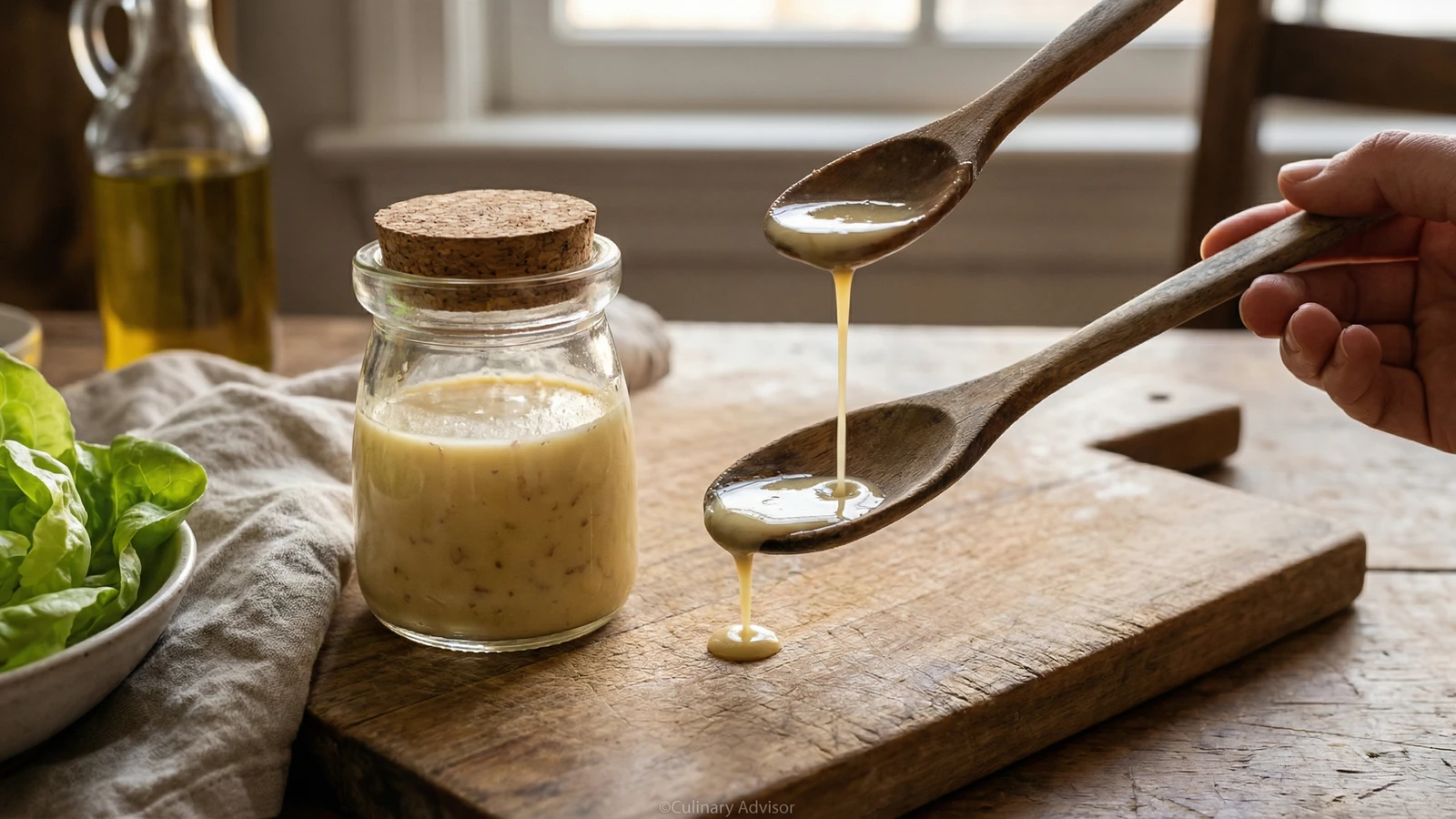
Champagne Vinaigrette
Created by Chef Ally
A quiet, refined vinaigrette built on the delicate acidity of champagne vinegar, soft enough for butter lettuces and elegant enough for your best dinner party, yet simple enough for any Tuesday.
Start with the vinegar. Champagne vinegar has a lightness that red wine and balsamic cannot offer. It is gentle, almost floral, with an acidity that lifts rather than overwhelms. When you dress tender lettuces, the greens should still taste like themselves. This dressing lets them.
The technique is ancient and forgiving. You are making an emulsion, coaxing oil and acid into temporary harmony with the help of mustard. The French have been doing this for centuries, and the method has not changed because it does not need to. Whisk slowly. Taste often. Trust your palate.
I keep a jar of this in my refrigerator at all times. It is the dressing I reach for when the lettuce is perfect, when the tomatoes are warm from the garden, when I want to honor the ingredient rather than transform it. Good olive oil, good vinegar, a little patience. That is all.
The technique, the tradition, and the story behind every dish.
Discover Culinary AdvisorIngredients
champagne vinegar
Quantity
1/4 cup
shallot
Quantity
1 small (about 2 tablespoons)
minced
Dijon mustard
Quantity
1 teaspoon
fine sea salt
Quantity
1/2 teaspoon
extra-virgin olive oil
Quantity
3/4 cup
black pepper
Quantity
to taste
freshly ground
| Ingredient | Quantity |
|---|---|
| champagne vinegar | 1/4 cup |
| shallotminced | 1 small (about 2 tablespoons) |
| Dijon mustard | 1 teaspoon |
| fine sea salt | 1/2 teaspoon |
| extra-virgin olive oil | 3/4 cup |
| black pepperfreshly ground | to taste |
Equipment Needed
- •Small mixing bowl or glass jar with tight-fitting lid
- •Whisk
- •Sharp knife for mincing
Instructions
- 1
Mince the shallot
Peel and mince the shallot as finely as you can manage. The pieces should nearly dissolve into the dressing. A coarse chop will announce itself in every bite, and that is not what we want here. The shallot should whisper, not shout.
- 2
Combine the base
Place the minced shallot in a small bowl or jar. Add the champagne vinegar and let it sit for five minutes. This brief rest softens the shallot's bite and allows it to release its sweetness into the acid. Patience here rewards you later.
This step is called macerating. The acid gently cooks the shallot, mellowing its raw edge while preserving its flavor. - 3
Add mustard and salt
Whisk in the Dijon mustard and salt. The mustard does double duty here. It brings its own quiet heat and acts as an emulsifier, helping the oil and vinegar come together into something silky rather than separating on the plate.
- 4
Emulsify with olive oil
Add the olive oil in a slow, steady stream while whisking constantly. Start with drops, then a thin ribbon. The dressing will thicken and become creamy as you whisk. If you pour too quickly, the emulsion will break and you will have oil floating on vinegar. Take your time.
If using a jar, add all ingredients, seal tightly, and shake vigorously for thirty seconds. The jar method works beautifully and leaves you with a storage vessel. - 5
Season and taste
Grind in black pepper. Taste. Dip a lettuce leaf into the dressing if you have one nearby. This is the only honest way to know if the balance is right. Adjust salt or add a touch more vinegar if it tastes flat. The dressing should be bright without being sharp.
Chef Tips
- •Seek out champagne vinegar from a producer who cares. The cheap versions are harsh and one-dimensional. A good bottle costs a few dollars more and lasts for months.
- •Your olive oil matters here more than anywhere else. This is not the moment for that dusty bottle from the back of the pantry. Use oil you would happily drink from a spoon.
- •If the dressing separates in the refrigerator, do not worry. Bring it to room temperature and whisk or shake again. It will come back together.
- •For a lighter variation in spring, add a teaspoon of finely chopped fresh chervil or chives just before serving.
Advance Preparation
- •The vinaigrette keeps refrigerated for up to two weeks. The shallot will continue to mellow and the flavors will marry.
- •Bring to room temperature before using. Cold olive oil becomes thick and mutes the flavor. Twenty minutes on the counter is enough.
Frequently Asked Questions
Nutrition Information
1 serving (about 30g)
Where cooking meets culture.
Culinary mentorship, cultural storytelling, and the editorial depth that makes cooking meaningful.
Explore Culinary Advisor