Culinary Advisor
A cooking platform built around craft, culture, and the stories behind what we eat.
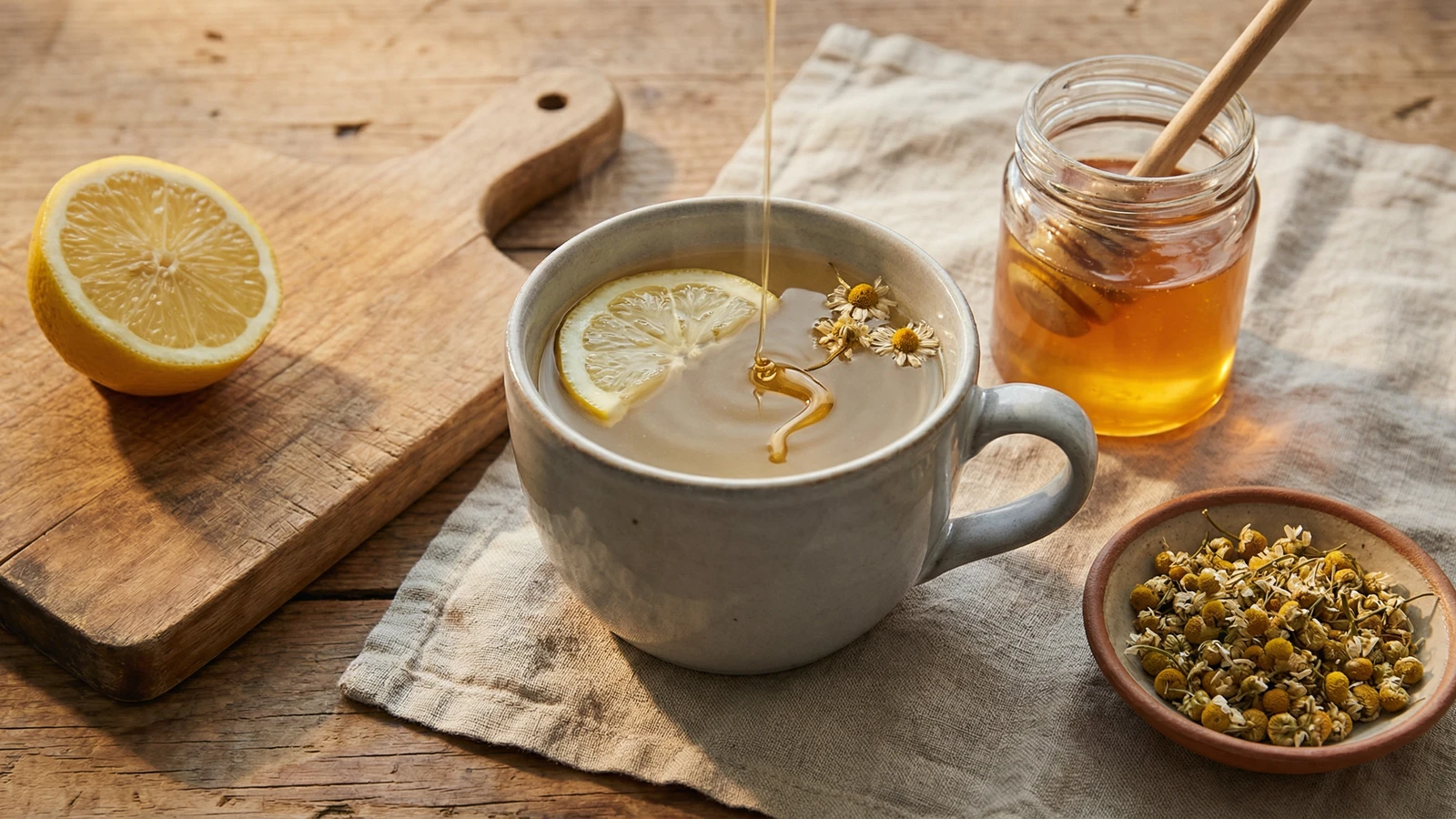
Chamomile Honey Tea with Lemon
Created by Chef Ally
Golden chamomile blossoms steeped in quiet patience, sweetened with honey from bees you could almost name, and brightened with a squeeze of sun-warmed lemon. A cup that asks nothing of you but stillness.
Start with the chamomile. Find blossoms that smell like apples and summer grass when you open the jar. Good dried chamomile should feel papery but not dusty, the flowers still intact, the color a faded gold rather than brown. If you grow chamomile in your garden, all the better. Snip the heads when they are fully open, dry them on a screen in a warm room, and you will have tea that tastes like your own patch of earth.
The honey matters as much as the herb. Seek out a local beekeeper. Ask what the bees were foraging when they made it. Wildflower honey from spring carries different notes than honey gathered in late summer. Each jar tells a story of place. Industrial honey from a plastic bear tells you nothing.
This tea is not complicated. Hot water, flowers, sweetness, a squeeze of citrus. But when the ingredients are right, when the chamomile is fragrant and the honey is honest and the lemon was picked this week, the cup becomes something more. It becomes a ritual. A pause. A small act of care for yourself at the end of a long day.
Every meal is a meaningful choice. Even a cup of tea.
The technique, the tradition, and the story behind every dish.
Discover Culinary AdvisorIngredients
dried chamomile blossoms
Quantity
2 tablespoons
filtered water
Quantity
1 cup
local wildflower honey
Quantity
1 to 2 teaspoons
fresh lemon
Quantity
1 wedge
| Ingredient | Quantity |
|---|---|
| dried chamomile blossoms | 2 tablespoons |
| filtered water | 1 cup |
| local wildflower honey | 1 to 2 teaspoons |
| fresh lemon | 1 wedge |
Equipment Needed
- •Small saucepan or kettle
- •Fine mesh strainer or tea infuser
- •Ceramic teacup or mug
Instructions
- 1
Heat the water
Bring filtered water to just below a boil, around 200 degrees. You want to see small bubbles forming at the bottom of the pot, steam rising steadily, but no rolling action. Boiling water bruises chamomile and turns it bitter. Patience here matters.
If you do not have a thermometer, bring the water to a boil, then let it rest for one minute. The temperature will settle where you need it. - 2
Steep the chamomile
Place the chamomile blossoms in a warmed cup or small teapot. Pour the hot water over them and watch the flowers unfurl and release their golden color. Cover with a small saucer or lid. Let steep for five to seven minutes. The longer you wait, the deeper the flavor, but beyond eight minutes the tea grows grassy.
Covering the cup keeps the volatile oils from escaping with the steam. Those oils hold the fragrance and the calm. - 3
Strain and sweeten
Strain the tea through a fine mesh strainer into your favorite cup, pressing gently on the blossoms to release the last of their essence. Stir in the honey while the tea is still hot. Taste. Add more if you wish, but good honey needs only a small amount to transform the cup.
- 4
Add lemon and serve
Squeeze the lemon wedge directly into the tea, letting a few drops fall at a time. Watch the color brighten. The acid lifts the floral notes and wakes the honey. Float the squeezed wedge in the cup if you like. Drink slowly. This is not a beverage to rush.
Chef Tips
- •Buy chamomile from farmers' markets or herb growers who can tell you where and when it was harvested. Health food stores often carry fresher stock than grocery shelves.
- •Local honey supports beekeepers in your region and arrives with pollen from plants you recognize. It tastes like where you live.
- •Never use bottled lemon juice. The flavor is flat and chemical. One fresh lemon costs almost nothing and transforms the cup.
- •If you grow chamomile, harvest in the morning after the dew dries but before the afternoon heat. The oils are most concentrated then.
- •This tea pairs beautifully with a small piece of dark chocolate or a plain shortbread cookie. Let the flavors speak to each other.
Advance Preparation
- •Dried chamomile keeps for up to a year in an airtight container stored away from light. After that, the flavor fades.
- •This tea is best made fresh. It does not hold well, and reheating dulls the floral notes.
Frequently Asked Questions
Nutrition Information
1 serving (about 240g)
Where cooking meets culture.
Culinary mentorship, cultural storytelling, and the editorial depth that makes cooking meaningful.
Explore Culinary Advisor