Culinary Advisor
A cooking platform built around craft, culture, and the stories behind what we eat.
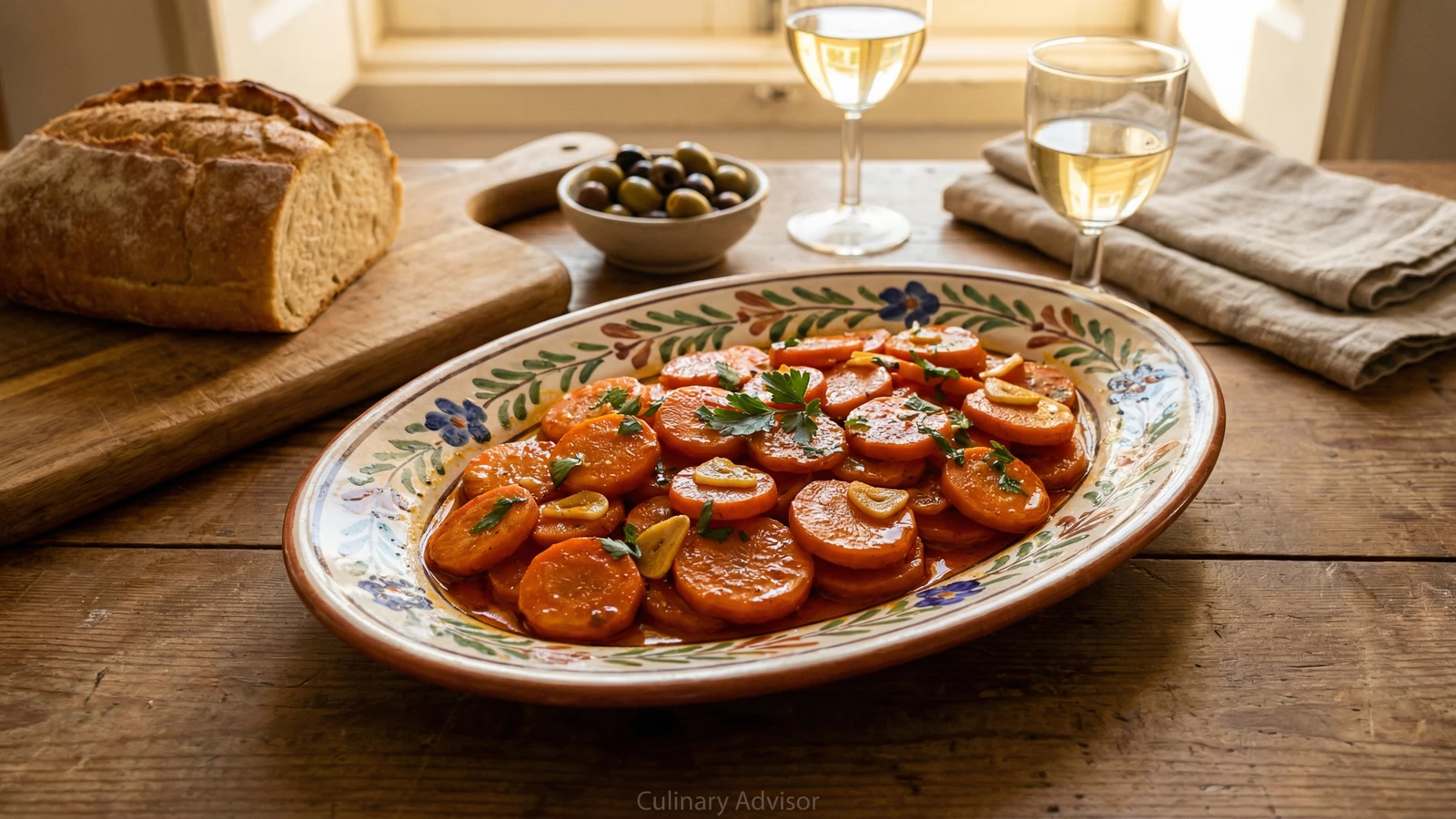
Cenouras à Algarvia
Created by
The marinated carrots of the Algarve, where garlic, paprika, and good azeite transform a humble root into something you'll make every week. Proof that the south knows how to treat vegetables.
The Algarve doesn't get enough credit for its vegetable dishes. Everyone talks about the seafood, the cataplanas, the grilled fish. But spend time in the tascas of Faro or Tavira and you'll find these carrots on every table. A petisco so simple it barely needs a recipe, so good you'll wonder why carrots anywhere else taste like nothing.
This is what happens when you treat vegetables with the same respect you'd give fish or meat. Boil them properly. Dress them while warm. Use good azeite, real vinegar, garlic sliced thin, and that particular Algarve combination of colorau and heat that makes everything taste like sunshine.
Avó Leonor was from Alentejo, not the Algarve, but she made a version of this with whatever vegetables came from the garden. Carrots, green beans, cauliflower. The technique is the same: cook, dress warm, let time do its work. She called it "deixar casar" (letting them marry). The flavors need time to know each other.
Make these the night before a dinner party. By the next day, the carrots will have turned that deep terracotta orange, the garlic will have mellowed, and you'll have a petisco that costs almost nothing and tastes like you know what you're doing. Because now you do.
Cenouras à Algarvia reflects the Moorish influence that shaped southern Portuguese cuisine for five centuries. The combination of vinegar preservation, warm spices, and olive oil echoes North African techniques that took root in the Algarve long before the Reconquista. This style of preparing vegetables (escabeche-adjacent, but simpler) appears across the south in different forms.
The technique, the tradition, and the story behind every dish.
Discover Culinary AdvisorIngredients
carrots
Quantity
750g
peeled and sliced into 5mm rounds
garlic
Quantity
4 cloves
thinly sliced
extra virgin olive oil (azeite)
Quantity
1/3 cup
red wine vinegar
Quantity
3 tablespoons
sweet paprika (colorau doce)
Quantity
1 teaspoon
hot paprika or piri-piri (optional)
Quantity
1/2 teaspoon
sea salt
Quantity
1 teaspoon
bay leaf
Quantity
1
flat-leaf parsley
Quantity
for garnish
roughly chopped
| Ingredient | Quantity |
|---|---|
| carrotspeeled and sliced into 5mm rounds | 750g |
| garlicthinly sliced | 4 cloves |
| extra virgin olive oil (azeite) | 1/3 cup |
| red wine vinegar | 3 tablespoons |
| sweet paprika (colorau doce) | 1 teaspoon |
| hot paprika or piri-piri (optional) | 1/2 teaspoon |
| sea salt | 1 teaspoon |
| bay leaf | 1 |
| flat-leaf parsleyroughly chopped | for garnish |
Equipment Needed
- •Large pot for boiling
- •Small saucepan for marinade
- •Wide shallow serving dish
Instructions
- 1
Cook the carrots
Bring a large pot of salted water to a boil with the bay leaf. Add the carrot rounds and cook until just tender, about 8 to 10 minutes. You want them cooked through but with a slight firmness at the center. They'll soften more as they marinate. Test one with a knife: it should slide through with just a whisper of resistance.
- 2
Drain and arrange
Drain the carrots well and spread them in a single layer on a wide shallow dish or platter. They should still be warm. This matters. Warm carrots drink the marinade better than cold ones.
- 3
Build the marinade
In a small pan, warm the olive oil over medium-low heat. Add the sliced garlic and let it sizzle gently until fragrant and just turning golden at the edges, about 2 minutes. Don't let it brown. Remove from heat and stir in the sweet paprika and hot paprika if using. The oil will turn a beautiful reddish-orange. Add the vinegar carefully (it will sputter) and a pinch of salt.
Colorau doce is Portuguese sweet paprika. Spanish pimentón works, but if you can find Portuguese colorau, use it. The flavor is slightly different, earthier, more rounded. - 4
Dress the carrots
Pour the warm marinade over the carrots, tossing gently to coat every piece. The orange oil should pool around the edges. Taste and adjust salt and vinegar. Let the carrots sit at room temperature for at least 30 minutes, or better, cover and refrigerate overnight. The longer they marinate, the deeper the flavor.
- 5
Serve
Bring to room temperature before serving. Cold oil tastes flat. Scatter the parsley over top and drizzle with a little more fresh azeite if needed. Serve with bread for mopping up the sauce. This is not negotiable.
Chef Tips
- •Slice the carrots evenly so they cook at the same rate. About the thickness of a euro coin. Thinner rounds get mushy; thicker ones don't absorb the marinade.
- •Pour the marinade over warm carrots, not cold. This is the difference between carrots that taste dressed and carrots that taste transformed. The warmth opens them up.
- •These improve dramatically overnight. If you can wait, wait. The second day is better than the first. The third day, if they last that long, is better still.
- •Some cooks in the Algarve add a splash of white wine to the marinade. Others add cumin seeds. I've seen both at grandmothers' tables. Try the classic first, then experiment.
Advance Preparation
- •Best made at least 2 hours ahead, ideally overnight. The marinating time is what makes this dish.
- •Will keep refrigerated for up to 5 days, improving in flavor each day. Always bring to room temperature before serving.
- •Can be doubled or tripled easily for a crowd. Adjust serving vessel size accordingly.
Frequently Asked Questions
Nutrition Information
1 serving (about 150g)
Where cooking meets culture.
Culinary mentorship, cultural storytelling, and the editorial depth that makes cooking meaningful.
Explore Culinary Advisor