Culinary Advisor
A cooking platform built around craft, culture, and the stories behind what we eat.
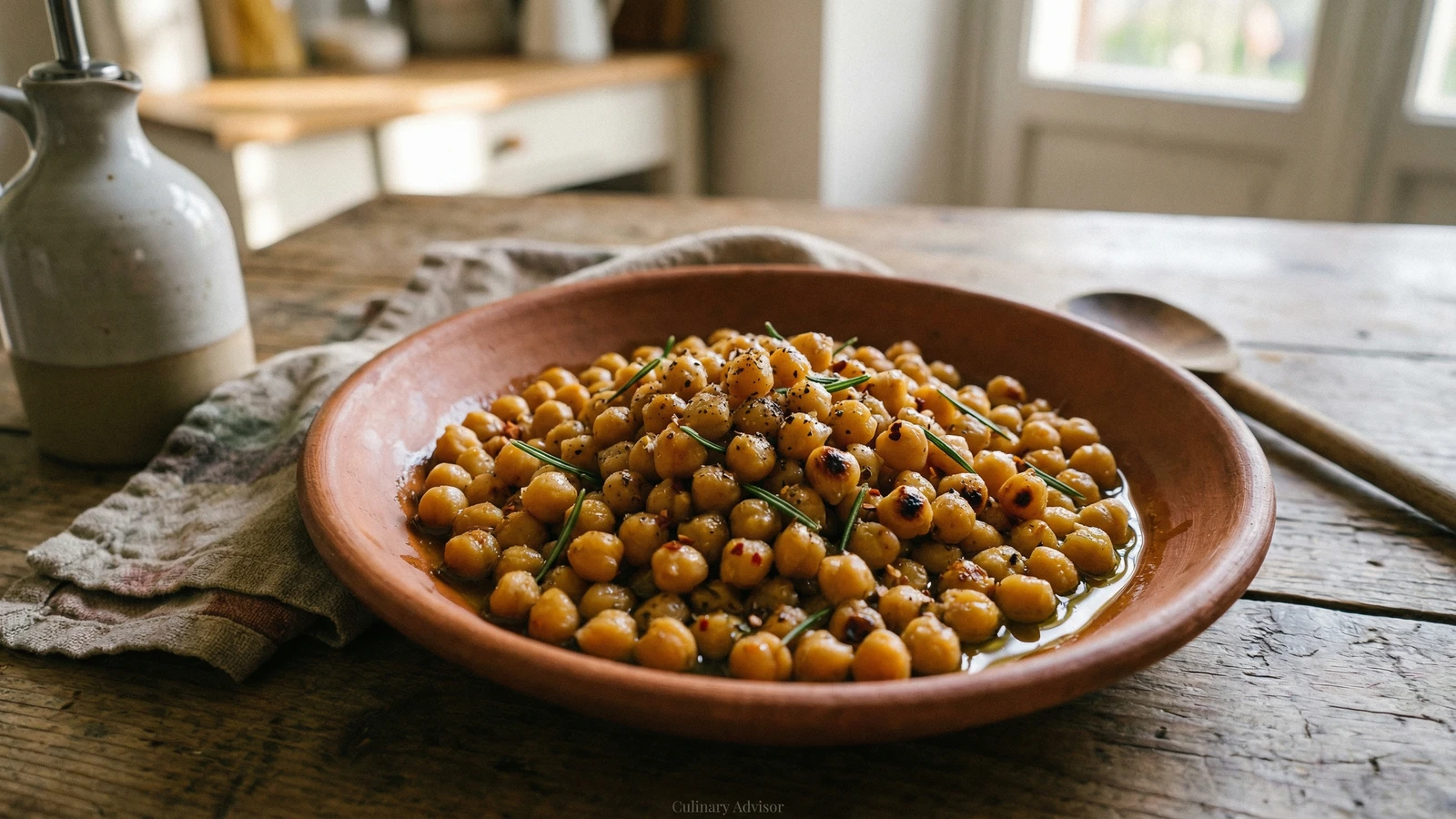
Ceci al Rosmarino
Created by Chef Graziella
Chickpeas cooked with restraint: garlic infused and removed, rosemary perfuming the oil, nothing more. A contorno that proves legumes need only respect, not complication.
The chickpea asks little of the cook. Dried, it wants only water and time. From a can, it wants only to be drained and treated with dignity. What it does not want is to be drowned in sauce, buried under cheese, or assaulted with the aggressive garlic that Americans mistake for Italian cooking.
This is a dish of infusion and restraint. The garlic goes into cold oil and warms slowly until it releases its essence, then it is removed. The rosemary does the same. What remains is oil that carries memory, not presence. The chickpeas absorb this perfume as they warm, developing spots of gold where they meet the hot pan.
You will find versions of this contorno from Liguria to Sicily, from farmhouse kitchens to Roman trattorias. Each cook makes small adjustments: a pinch of chili here, a squeeze of lemon there. But the foundation remains constant. Good chickpeas. Good oil. Fresh rosemary. And the understanding that what you keep out matters as much as what you put in.
Chickpeas have fed the Mediterranean since before Rome was an empire. The Romans called them cicer, from which we get both 'ceci' and the name of the orator Cicero, whose family supposedly had a chickpea-shaped wart. As a contorno, ceci al rosmarino represents the peasant tradition of transforming humble legumes into something worthy of any table through nothing more than good oil and aromatic herbs.
The technique, the tradition, and the story behind every dish.
Discover Culinary AdvisorIngredients
chickpeas
Quantity
2 cans (15 ounces each) or 1 pound dried
drained and rinsed, or soaked overnight and cooked
extra virgin olive oil
Quantity
1/4 cup, plus more for finishing
garlic cloves
Quantity
3
lightly crushed with the flat of a knife
fresh rosemary
Quantity
2 sprigs (about 4 inches each)
red pepper flakes (optional)
Quantity
1/4 teaspoon
kosher salt
Quantity
to taste
black pepper
Quantity
to taste
freshly ground
| Ingredient | Quantity |
|---|---|
| chickpeasdrained and rinsed, or soaked overnight and cooked | 2 cans (15 ounces each) or 1 pound dried |
| extra virgin olive oil | 1/4 cup, plus more for finishing |
| garlic cloveslightly crushed with the flat of a knife | 3 |
| fresh rosemary | 2 sprigs (about 4 inches each) |
| red pepper flakes (optional) | 1/4 teaspoon |
| kosher salt | to taste |
| black pepperfreshly ground | to taste |
Equipment Needed
- •Large skillet (12-inch)
- •Wooden spoon or spatula
Instructions
- 1
Infuse the oil
In a large skillet, combine the olive oil, crushed garlic cloves, and rosemary sprigs. Set over medium-low heat. Let the garlic and rosemary warm gently in the oil until the garlic turns pale gold and the kitchen smells of rosemary, about 3 to 4 minutes. The garlic must not brown. Brown garlic is bitter garlic, and bitter garlic ruins everything it touches.
Crush the garlic with the flat of your knife, not a press. The press creates acrid mush. A crushed clove releases its perfume gently and can be removed before serving. - 2
Remove aromatics
Remove the garlic cloves and rosemary sprigs from the oil and discard them. They have done their work. What remains is perfumed oil, not a garlic delivery system. Add the red pepper flakes if using and let them bloom in the warm oil for 30 seconds.
- 3
Add the chickpeas
Add the drained chickpeas to the skillet. If using canned, pat them dry first. Wet chickpeas will spatter. Increase heat to medium and toss the chickpeas in the flavored oil until they are heated through and beginning to develop golden spots on their skins, about 8 to 10 minutes. Shake the pan occasionally. Do not stir constantly.
- 4
Season and finish
Season with salt and pepper. Be generous with the salt. Legumes absorb seasoning. Taste one and adjust. Transfer to a warm serving bowl and drizzle with your best olive oil. Strip the leaves from one reserved rosemary sprig and scatter a few needles over the top. Serve warm or at room temperature.
The finishing oil is not the same as the cooking oil. Use your finest, greenest, most peppery olive oil here. This is where you taste it.
Chef Tips
- •Dried chickpeas, soaked overnight and simmered until tender, have superior texture and flavor. But I am a realist. Good-quality canned chickpeas, rinsed well, produce an honest contorno for a weeknight table.
- •The rosemary must be fresh. Dried rosemary is dusty hay. If you cannot find fresh rosemary, use fresh sage leaves instead. Do not use dried herbs.
- •Serve this alongside roasted chicken, grilled lamb, or a piece of simply cooked fish. It wants protein beside it. It does not want to be the center of attention.
Advance Preparation
- •The chickpeas can be sautéed several hours ahead and served at room temperature. Add the finishing oil just before serving.
- •If cooking dried chickpeas, they can be prepared up to three days in advance and refrigerated in their cooking liquid. Drain before using.
Frequently Asked Questions
Nutrition Information
1 serving (about 150g)
Where cooking meets culture.
Culinary mentorship, cultural storytelling, and the editorial depth that makes cooking meaningful.
Explore Culinary Advisor