Culinary Advisor
A cooking platform built around craft, culture, and the stories behind what we eat.
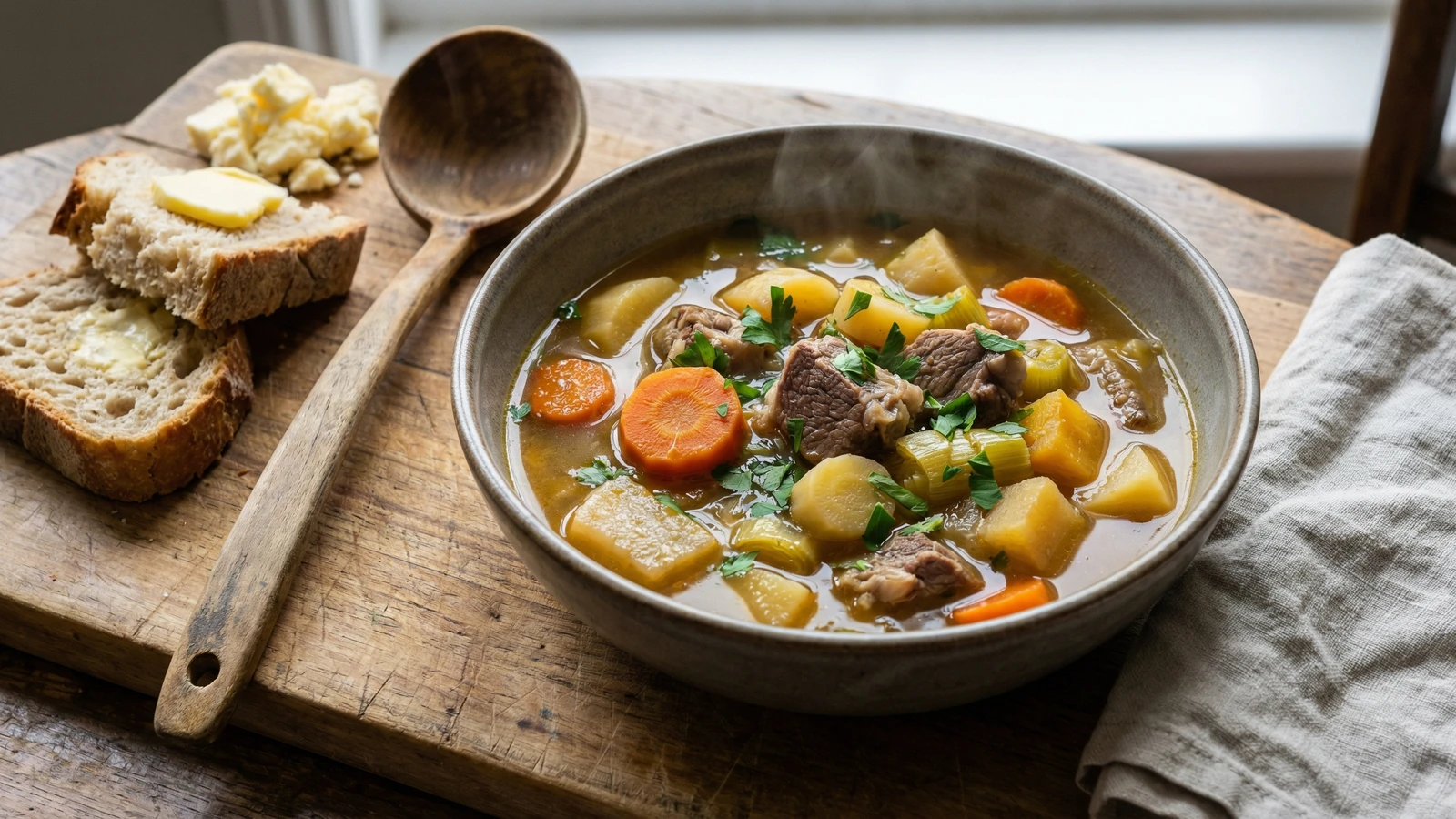
Cawl
Created by Chef Thomas
A Welsh lamb broth of quiet, sustaining goodness, built from bones and root vegetables and the particular kindness of a pot left to simmer for hours, better tomorrow than today.
January rain. The kind that doesn't stop, that turns the garden path to mud and makes the window glass run with water all afternoon. That's a cawl evening. You don't plan it weeks ahead. You feel it in the weather.
Every Welsh family has a version of this. Some start with beef, some with bacon. Mine uses lamb neck, bone in, browned properly in a heavy pot until the kitchen fills with the smell of rendered fat and caramelised meat. The roots go in next: carrots, swede, parsnips, whatever the season and the market offer. Then the potatoes, then the leeks, because leeks need the least time and deserve the most respect. It simmers. You wait. The house warms.
I wrote it down in the notebook years ago, after making it for the first time from a scribbled recipe given to me by a woman at a farmers' market near Brecon. She said, "There's no wrong way, love, only your way." A recipe is a conversation, not a contract. She was right. I've been adjusting it ever since, and I expect I always will.
Make it a day ahead if you can. Cawl improves overnight in the way that certain things do: the broth thickens, the lamb softens further, the vegetables hold their shape but absorb the stock until they taste of the whole pot rather than themselves. Reheated slowly the next day, with thick bread and a crumble of Caerphilly on the side, it's one of the more useful things you can put in front of someone on a cold evening. There are few better feelings.
The technique, the tradition, and the story behind every dish.
Discover Culinary AdvisorIngredients
lamb neck or shoulder
Quantity
800g, bone in
cut into large pieces
dripping or vegetable oil
Quantity
2 tablespoons
onions
Quantity
2
peeled and roughly chopped
carrots
Quantity
3
peeled and cut into thick rounds
swede
Quantity
1 small
peeled and cut into chunks
parsnips
Quantity
2
peeled and cut into chunks
potatoes
Quantity
3 medium
peeled and cut into large pieces
leeks
Quantity
3 large
washed and sliced into thick rings
lamb or chicken stock, or water
Quantity
1.5 litres
fresh thyme
Quantity
a few sprigs
bay leaves
Quantity
2
fresh flat-leaf parsley
Quantity
a good handful
roughly chopped
fine sea salt
Quantity
to taste
black pepper
Quantity
to taste
Caerphilly or Lancashire cheese (optional)
Quantity
to serve
| Ingredient | Quantity |
|---|---|
| lamb neck or shouldercut into large pieces | 800g, bone in |
| dripping or vegetable oil | 2 tablespoons |
| onionspeeled and roughly chopped | 2 |
| carrotspeeled and cut into thick rounds | 3 |
| swedepeeled and cut into chunks | 1 small |
| parsnipspeeled and cut into chunks | 2 |
| potatoespeeled and cut into large pieces | 3 medium |
| leekswashed and sliced into thick rings | 3 large |
| lamb or chicken stock, or water | 1.5 litres |
| fresh thyme | a few sprigs |
| bay leaves | 2 |
| fresh flat-leaf parsleyroughly chopped | a good handful |
| fine sea salt | to taste |
| black pepper | to taste |
| Caerphilly or Lancashire cheese (optional) | to serve |
Equipment Needed
- •Large heavy-bottomed pot or Dutch oven, at least 5 litres
- •Ladle
- •Slotted spoon for skimming
Instructions
- 1
Brown the lamb
Pat the lamb dry. Get a large, heavy pot properly hot with the dripping and brown the meat in batches. Don't crowd the pan. You want a deep, golden-brown crust on each piece, the kind that smells of rendered fat and roasted Sunday dinners. This takes longer than you expect, maybe four or five minutes a side. Set the browned pieces aside on a plate. The fond left on the bottom of the pot is the foundation of everything that follows.
Bone-in lamb gives you a richer broth. The bones work quietly for two hours, lending body and a silky quality to the liquid that no amount of seasoning can replicate. - 2
Soften the onions
Turn the heat down. Add the onions to the pot with a pinch of salt and let them soften in the lamb fat for five minutes or so, scraping up the sticky bits from the bottom as you stir. Those bits matter. They carry more flavour than you'd think.
- 3
Build the broth
Return the lamb to the pot. Add the carrots, swede, and parsnips. Pour in the stock or water. It should cover everything comfortably, so add a little more if it doesn't. Tuck in the thyme sprigs and bay leaves. Bring it to the gentlest simmer you can manage, not a boil, barely a murmur on the surface, then put the lid on slightly ajar. Let it go for an hour and a half. The kitchen will start to smell like a proper winter evening.
Water makes a perfectly good cawl. The lamb bones and vegetables will build the broth for you. If you have good stock, so much the better, but don't let the lack of it stop you. - 4
Add potatoes and leeks
After an hour and a half, add the potatoes. Give it another twenty minutes, then add the leeks. The leeks go in last because they need the least time and they turn grey and miserable if overcooked. Another fifteen to twenty minutes, until the potatoes are soft through and the leeks have wilted but still hold their shape.
- 5
Skim and season
Skim any fat from the surface. There will be some; lamb is generous that way. Pull out the thyme stalks and bay leaves if you can find them. Fish out the lamb, strip the meat from the bones, and return the meat to the pot in large, rough pieces. Season with salt and pepper. Taste it. Then taste it again. Stir in most of the parsley, keeping a little back for the bowls.
- 6
Rest or serve
Ladle into deep, warmed bowls. Scatter the remaining parsley over the top. If you have Caerphilly, crumble a little alongside. Serve with thick bread and good butter. But if you can bear it, let the whole pot cool and refrigerate it overnight. Cawl that has sat for a day is a different, better thing. The flavours settle and deepen, the broth thickens as it cools, and when you reheat it slowly the next evening, the kitchen will smell like coming home.
Chef Tips
- •Ask your butcher for lamb neck on the bone. It's an inexpensive cut with more flavour than shoulder and it falls apart beautifully after a long, slow cook. The bones turn the water into something worth calling broth.
- •Don't cut the vegetables too small. They need to hold their shape through two hours of simmering. Thick rounds, generous chunks. You're making a meal in a bowl, not a delicate consommé.
- •The leeks are the heart of this and they go in last. Fifteen minutes is enough. Overcooked leeks lose their colour and their sweetness and turn into something nobody wants to eat. Watch them.
- •A crumble of Caerphilly on top is traditional and worth seeking out. It's crumbly, slightly salty, and it melts into the hot broth just enough to thicken each spoonful. Lancashire cheese does a similar job if you can't find Caerphilly.
Advance Preparation
- •Cawl is better made a day ahead. Let it cool completely, refrigerate overnight, then lift off any solidified fat from the surface before reheating gently. The flavours deepen and the broth becomes silky and more cohesive.
- •It keeps in the fridge for up to three days and freezes well for up to three months. Reheat slowly on the hob, never in a hurry. A microwave will do it no favours.
Frequently Asked Questions
Nutrition Information
1 serving (about 630g)
Where cooking meets culture.
Culinary mentorship, cultural storytelling, and the editorial depth that makes cooking meaningful.
Explore Culinary Advisor