Culinary Advisor
A cooking platform built around craft, culture, and the stories behind what we eat.
Cauliflower Soup
Created by Chef Thomas
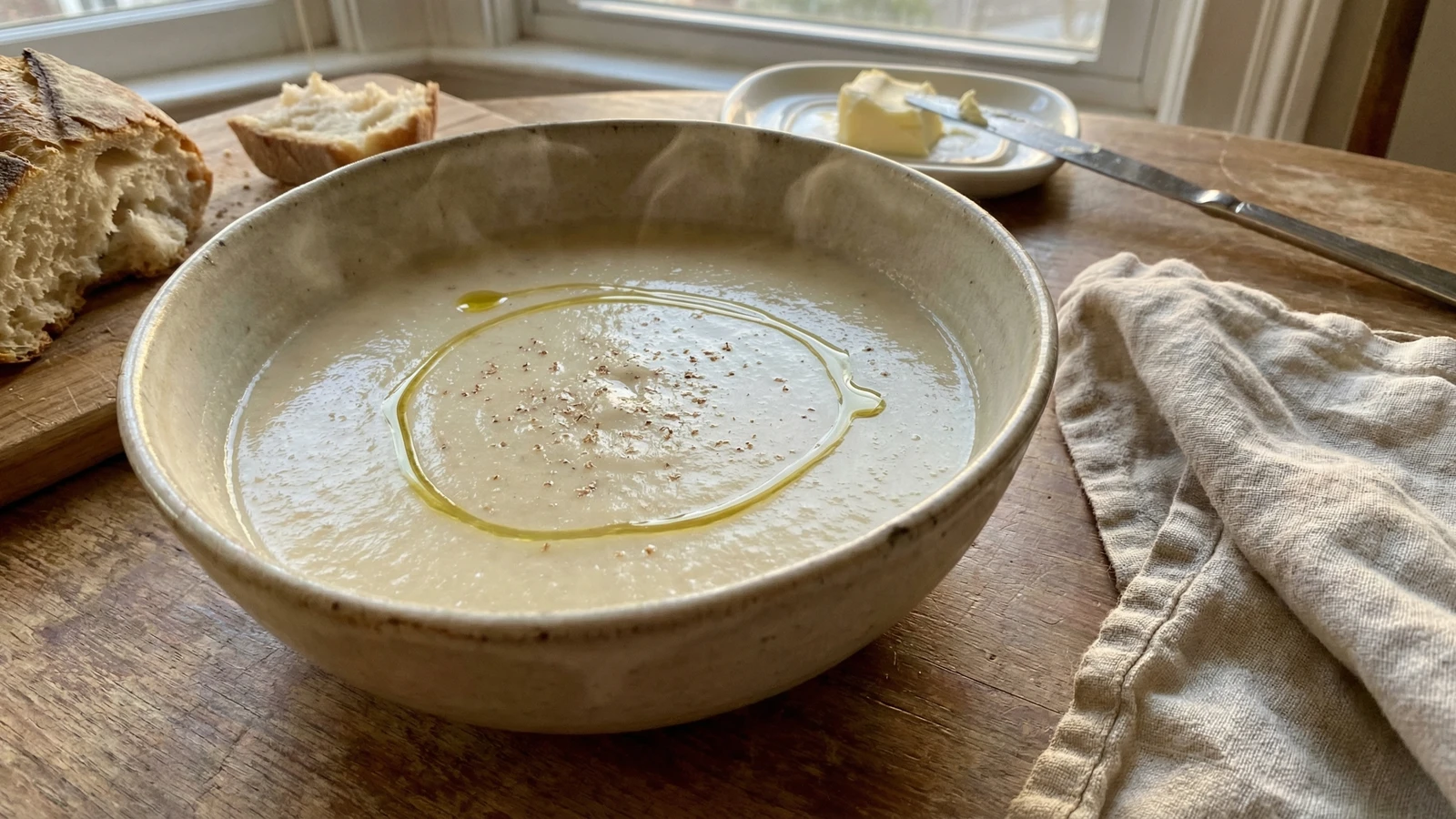
Cauliflower simmered slowly in milk with a grating of nutmeg, blended to something pale and silky, the sort of soup that makes a cold Tuesday evening feel like it was the plan all along.
January. The kitchen is cold until the hob has been on for ten minutes. There's a cauliflower on the counter, bought from the market on Saturday with no particular plan, the way the best meals start. It has sat there patiently for two days, waiting for the right evening. Tonight is the right evening.
This is a soup of almost nothing. Cauliflower, milk, butter, a whisper of nutmeg. No stock cube heroics, no cream by the carton. The cauliflower does the work. Simmered gently in milk until it falls apart, then blended smooth into something so pale and quiet it barely looks like food at all. But the taste is deep, that sweet, slightly mineral quality that good cauliflower has when you don't drown it in cheese or spice. A recipe is a conversation, not a contract, and this one only has a few words.
I've made this more times than I can count. The notebook entry just says: cauliflower, milk, nutmeg, Wednesday. That was enough to bring it back. The kitchen smelled clean and warm, the bowl was hot, and I sat at the table and ate it with bread and butter and didn't want anything else. There are few better feelings than putting a warm plate in front of someone, and this soup, for all its simplicity, does what the most elaborate dishes sometimes can't. It makes the evening feel looked after.
The technique, the tradition, and the story behind every dish.
Discover Culinary AdvisorIngredients
cauliflower
Quantity
1 large
leaves and core removed, broken into florets
unsalted butter
Quantity
30g
onion
Quantity
1 medium
finely sliced
garlic
Quantity
1 clove
flattened with the side of a knife
whole milk
Quantity
500ml
vegetable or light chicken stock
Quantity
250ml
whole nutmeg
Quantity
for grating
fine sea salt
Quantity
to taste
white pepper
Quantity
to taste
double cream (optional)
Quantity
a splash
good olive oil or extra butter (optional)
Quantity
for serving
| Ingredient | Quantity |
|---|---|
| cauliflowerleaves and core removed, broken into florets | 1 large |
| unsalted butter | 30g |
| onionfinely sliced | 1 medium |
| garlicflattened with the side of a knife | 1 clove |
| whole milk | 500ml |
| vegetable or light chicken stock | 250ml |
| whole nutmeg | for grating |
| fine sea salt | to taste |
| white pepper | to taste |
| double cream (optional) | a splash |
| good olive oil or extra butter (optional) | for serving |
Equipment Needed
- •Heavy-bottomed saucepan
- •Stick blender or countertop blender
- •Fine grater or microplane for nutmeg
- •Ladle
Instructions
- 1
Soften the onion
Melt the butter in a heavy-bottomed saucepan over a low heat. Add the sliced onion and the garlic clove and cook gently, stirring now and then, until the onion has gone soft and translucent. Ten minutes, maybe a little more. You don't want any colour here. None at all. The point of this soup is its paleness, its quietness. If the onion starts to catch, turn the heat down and add a splash of water.
The garlic is there as a whisper, not a shout. One clove, flattened, cooked gently. You should barely know it's in the finished soup, but you'd miss it if it weren't. - 2
Add the cauliflower
Add the cauliflower florets to the pan and stir them through the buttery onion. Let them sit in the warmth for a couple of minutes. They won't colour, and that's fine. You're just introducing them to the butter, letting them relax.
- 3
Pour in milk and stock
Pour in the milk and the stock. The liquid should just cover the cauliflower. If it doesn't, add a splash more milk. Bring it to a gentle simmer, not a boil. Milk boils over with a determination that will ruin your afternoon. Keep the heat low, the surface barely trembling, and let it cook for twenty to twenty-five minutes until the cauliflower is completely tender. A floret should collapse when you press it against the side of the pan with a wooden spoon.
Watch the pan. Milk simmers quietly and then suddenly rises in a foam that covers your hob in seconds. A lid set slightly ajar helps, but the real answer is attention. - 4
Blend until smooth
Take the pan off the heat. Fish out the garlic clove if you can find it (it doesn't matter if you can't, it'll blend in). Use a stick blender to blitz the soup until it's completely smooth. This takes longer than you think. Keep going until the texture is like silk, no graininess, no lumps. If it's too thick, add a little more milk. If too thin, let it simmer uncovered for a few more minutes to tighten up.
- 5
Season and serve
Return the soup to a low heat. Grate in a little nutmeg, just a few passes across a fine grater. The nutmeg should be there like a memory, not a presence. Season with salt and white pepper. Taste it. Then taste it again. Stir in a splash of cream if you want it richer, though it doesn't need much. Ladle into warm bowls and finish with a thread of good olive oil or a small knob of butter melting on the surface. Serve with bread you'd be happy eating on its own.
Chef Tips
- •Use the whole cauliflower, not just the florets from a bag. The inner leaves and the tender parts of the core add sweetness you'd otherwise lose. Trim the tough outer leaves and the woody base, but don't be too aggressive. The bits you'd normally throw away are pulling their weight here.
- •Whole milk, not semi-skimmed. The fat carries the flavour and gives the soup its body. Semi-skimmed will leave you with something thin and grey and not worth the trouble. If you have a good dairy near you, the difference is worth the walk.
- •Nutmeg from a whole nut, grated fresh. Pre-ground nutmeg tastes of cardboard. A whole nutmeg, grated directly into the soup, smells warm and sweet and slightly resinous. Three or four passes on the grater is enough. You want a suggestion, not a statement.
- •If you want a variation for another evening, try roasting the cauliflower first. Cut it into thick wedges, toss in olive oil, and roast until the edges are deep golden and slightly charred. Then simmer in stock instead of milk. It's a different soup entirely: darker, nuttier, more robust. Both versions earn their place in the notebook.
Advance Preparation
- •The soup can be made a day ahead and refrigerated before adding the cream and nutmeg. Reheat gently over a low flame, stir in the cream, and grate the nutmeg fresh just before serving. It thickens as it sits, so you may need a splash of milk when reheating.
- •Freezes well for up to two months without the cream. Defrost overnight in the fridge and reheat slowly, finishing with cream and nutmeg on the day.
Frequently Asked Questions
Nutrition Information
1 serving (about 350g)
Where cooking meets culture.
Culinary mentorship, cultural storytelling, and the editorial depth that makes cooking meaningful.
Explore Culinary Advisor