Culinary Advisor
A cooking platform built around craft, culture, and the stories behind what we eat.
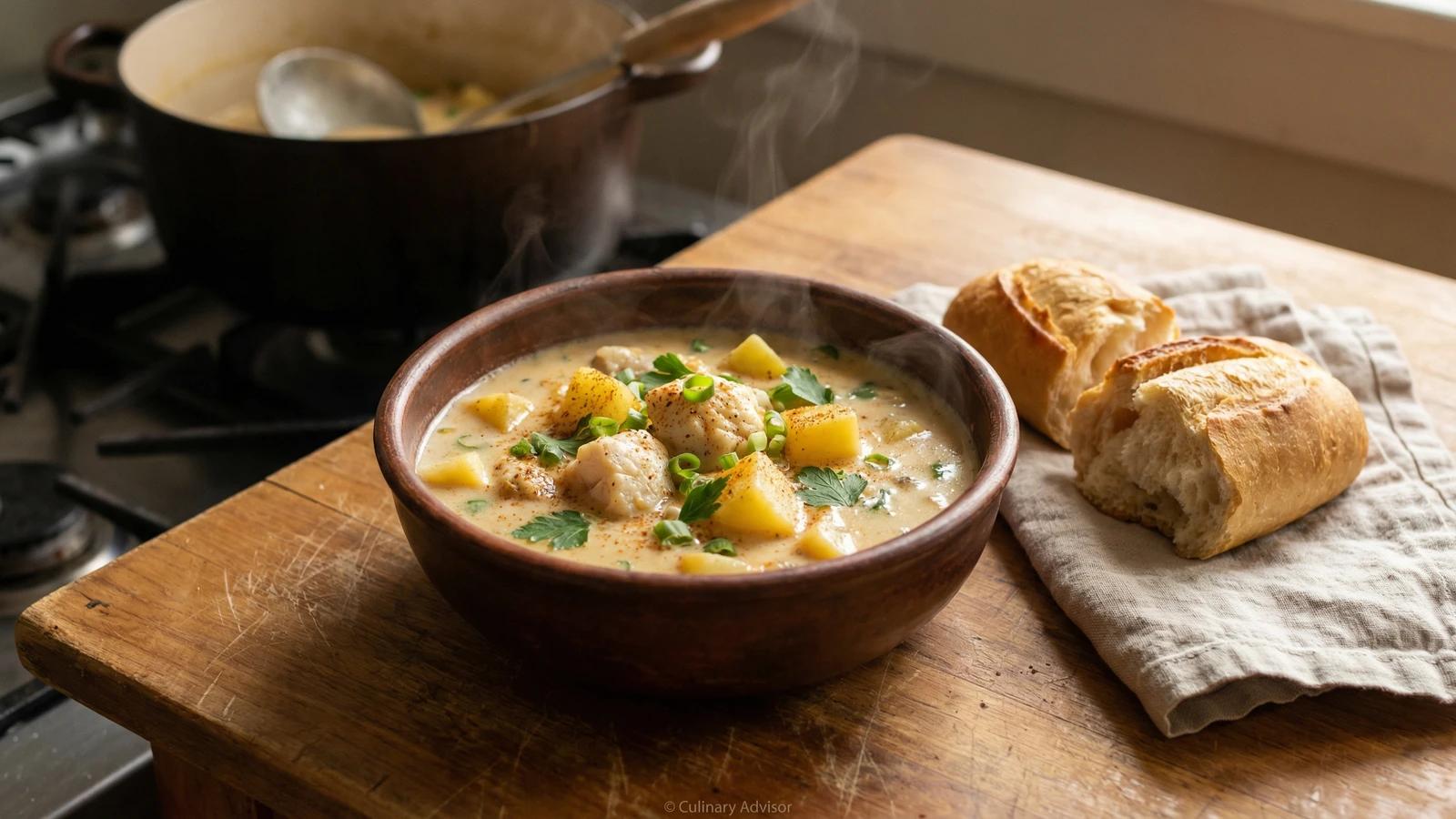
Catfish and Potato Chowder
Created by Chef Remy
Tender chunks of catfish and buttery potatoes swimming in a creamy, well-seasoned broth built on the holy trinity, the kind of soul-warming bowl that proves budget-friendly cooking can be extraordinary.
Good food does not require expensive ingredients. My grandmother Evangeline fed a family of seven on a fisherman's budget, and nobody at that table ever felt poor. Catfish and potato chowder is that kind of cooking: humble ingredients transformed into something that wraps around you like a warm blanket on a chilly bayou evening.
The secret to a chowder worth eating is building flavor in layers before the dairy ever touches the pot. Season your fish first. Cook your trinity slow and patient. Add your spices to the broth and taste, taste, taste. Only then do you add the cream, when the foundation is already singing with flavor. Too many cooks pour in milk too early and wonder why their soup tastes flat. You cannot fix bland with cream. You fix it with seasoning, with technique, with love.
At Lagniappe, this chowder started as a staff meal on slow Monday nights. The cooks would bring in whatever catfish we had not sold over the weekend, and we would stretch it into enough soup to feed everyone. Word got out. Regulars started asking for it. Now it is on the menu every winter, and I still make it the same way: down and dirty Cajun, honest food that does not apologize for being simple.
The technique, the tradition, and the story behind every dish.
Discover Culinary AdvisorIngredients
catfish fillets
Quantity
1 1/2 pounds
cut into 1-inch chunks
Cajun seasoning
Quantity
2 teaspoons, divided
kosher salt
Quantity
1 teaspoon, divided, plus more to taste
black pepper
Quantity
1/2 teaspoon
freshly ground
unsalted butter
Quantity
4 tablespoons
yellow onion
Quantity
1 large
diced
celery stalks
Quantity
2
diced
green bell pepper
Quantity
1 medium
diced
garlic
Quantity
4 cloves
minced
all-purpose flour
Quantity
3 tablespoons
Yukon Gold potatoes
Quantity
1 1/2 pounds
peeled and cut into 1/2-inch cubes
chicken stock or fish stock
Quantity
4 cups
bay leaves
Quantity
2
dried thyme
Quantity
1/2 teaspoon
cayenne pepper
Quantity
1/4 teaspoon, or to taste
whole milk
Quantity
1 1/2 cups
heavy cream
Quantity
1/2 cup
green onions
Quantity
3
sliced thin, white and green parts separated
fresh parsley
Quantity
2 tablespoons
chopped
hot sauce (optional)
Quantity
for serving
| Ingredient | Quantity |
|---|---|
| catfish filletscut into 1-inch chunks | 1 1/2 pounds |
| Cajun seasoning | 2 teaspoons, divided |
| kosher salt | 1 teaspoon, divided, plus more to taste |
| black pepperfreshly ground | 1/2 teaspoon |
| unsalted butter | 4 tablespoons |
| yellow oniondiced | 1 large |
| celery stalksdiced | 2 |
| green bell pepperdiced | 1 medium |
| garlicminced | 4 cloves |
| all-purpose flour | 3 tablespoons |
| Yukon Gold potatoespeeled and cut into 1/2-inch cubes | 1 1/2 pounds |
| chicken stock or fish stock | 4 cups |
| bay leaves | 2 |
| dried thyme | 1/2 teaspoon |
| cayenne pepper | 1/4 teaspoon, or to taste |
| whole milk | 1 1/2 cups |
| heavy cream | 1/2 cup |
| green onionssliced thin, white and green parts separated | 3 |
| fresh parsleychopped | 2 tablespoons |
| hot sauce (optional) | for serving |
Equipment Needed
- •Large Dutch oven or heavy-bottomed pot (5-quart minimum)
- •Wooden spoon
- •Ladle
Instructions
- 1
Season the catfish
Place the catfish chunks in a bowl and season with one teaspoon of Cajun seasoning, half a teaspoon of salt, and the black pepper. Toss gently to coat every piece. This is where flavor building starts. Season the protein first, always. Let it sit while you prep the vegetables so that seasoning has time to penetrate the fish.
Farm-raised catfish works beautifully here. It's mild, sweet, and one of the most affordable fish you can buy. That's the bayou way: make something extraordinary from humble ingredients. - 2
Build the trinity foundation
Melt the butter in a large Dutch oven or heavy-bottomed pot over medium heat. When it foams and the foam subsides, add the onion, celery, and bell pepper with a pinch of salt. The salt draws moisture and helps the vegetables soften without browning. Cook, stirring occasionally, until the trinity turns soft and translucent, about eight to ten minutes. Your kitchen will start smelling like Louisiana.
The holy trinity is the foundation of nearly every dish we make down here. Treat it with respect: cook it slow, cook it right, and the rest of the dish follows. - 3
Add garlic and flour
Add the garlic and the white parts of the green onions to the pot. Stir for about thirty seconds until fragrant. You will know because that garlic perfume will hit you. Now sprinkle in the flour and stir constantly for two minutes. This is a blond roux, just barely golden. It thickens the chowder and adds a subtle nuttiness without the deep color of a gumbo roux.
- 4
Add stock and potatoes
Pour in the stock slowly, stirring as you go to prevent lumps. Add the cubed potatoes, bay leaves, thyme, cayenne, and the remaining teaspoon of Cajun seasoning. Stir well, scraping up any bits stuck to the bottom of the pot. Those bits are flavor. Bring everything to a boil, then reduce to a gentle simmer.
Yukon Golds hold their shape better than russets in a long simmer. They also have a natural buttery quality that belongs in chowder. - 5
Simmer until potatoes are tender
Let the chowder simmer uncovered for fifteen to twenty minutes, stirring occasionally. The potatoes are ready when a fork slides through them easily but they still hold their shape. Some will break down and thicken the broth naturally. That is exactly what you want. Taste the broth now. Adjust salt if needed. Build flavor before the dairy goes in, because once you add milk and cream, the window for seasoning closes.
- 6
Add the dairy
Reduce heat to low. Stir in the milk and heavy cream. Let it warm through for three to four minutes, but do not let it boil. Boiling dairy in a chowder can cause it to break and turn grainy. You want this silky and smooth. The color should be creamy with specks of seasoning throughout.
At Lagniappe, we always warm our milk before adding it to hot soup. It prevents temperature shock and keeps the chowder velvety. - 7
Add the catfish
Gently lower the seasoned catfish chunks into the simmering chowder. Do not stir aggressively or you will break the fish into shreds. Let it poach in the hot liquid for five to six minutes. The fish is done when it turns opaque and flakes easily when you press it with a spoon. Catfish is forgiving, but overcooked fish is a tragedy nobody deserves.
- 8
Finish and serve
Remove the bay leaves. Taste the chowder one final time. This is your last chance. Adjust salt, add a pinch more cayenne if you want more warmth. Stir in the green onion tops and half the parsley. Ladle into deep bowls, garnish with remaining parsley, and serve with hot sauce on the side for those who want extra heat. When the last bite is as good as the first, you have done it right.
This chowder thickens as it sits. When reheating leftovers, add a splash of milk to loosen it back to the proper consistency.
Chef Tips
- •Farm-raised catfish from Louisiana or Mississippi has the cleanest flavor. If your fish smells muddy, soak the fillets in buttermilk for thirty minutes before cooking. The acid neutralizes that earthy taste.
- •Save your shrimp shells and fish bones in the freezer. When you have enough, simmer them into a quick stock. Homemade fish stock takes this chowder from good to unforgettable.
- •The cayenne level I give you is mild, a starting point. Cajun food should have warmth, but your warmth is different from mine. Add more if you like heat. That is the bayou way: cook to your own taste.
- •A crusty loaf of French bread is not optional. You need something to soak up every last drop from the bowl.
Advance Preparation
- •The chowder base without fish can be made one day ahead and refrigerated. Reheat gently and add the seasoned catfish just before serving.
- •Leftovers keep refrigerated for two days. The fish will break down more as it sits, making a thicker, more rustic texture. Add milk when reheating.
- •Do not freeze this chowder. Dairy-based soups do not freeze well, and the potatoes will turn mealy.
Frequently Asked Questions
Nutrition Information
1 serving (about 350g)
Where cooking meets culture.
Culinary mentorship, cultural storytelling, and the editorial depth that makes cooking meaningful.
Explore Culinary Advisor