Culinary Advisor
A cooking platform built around craft, culture, and the stories behind what we eat.
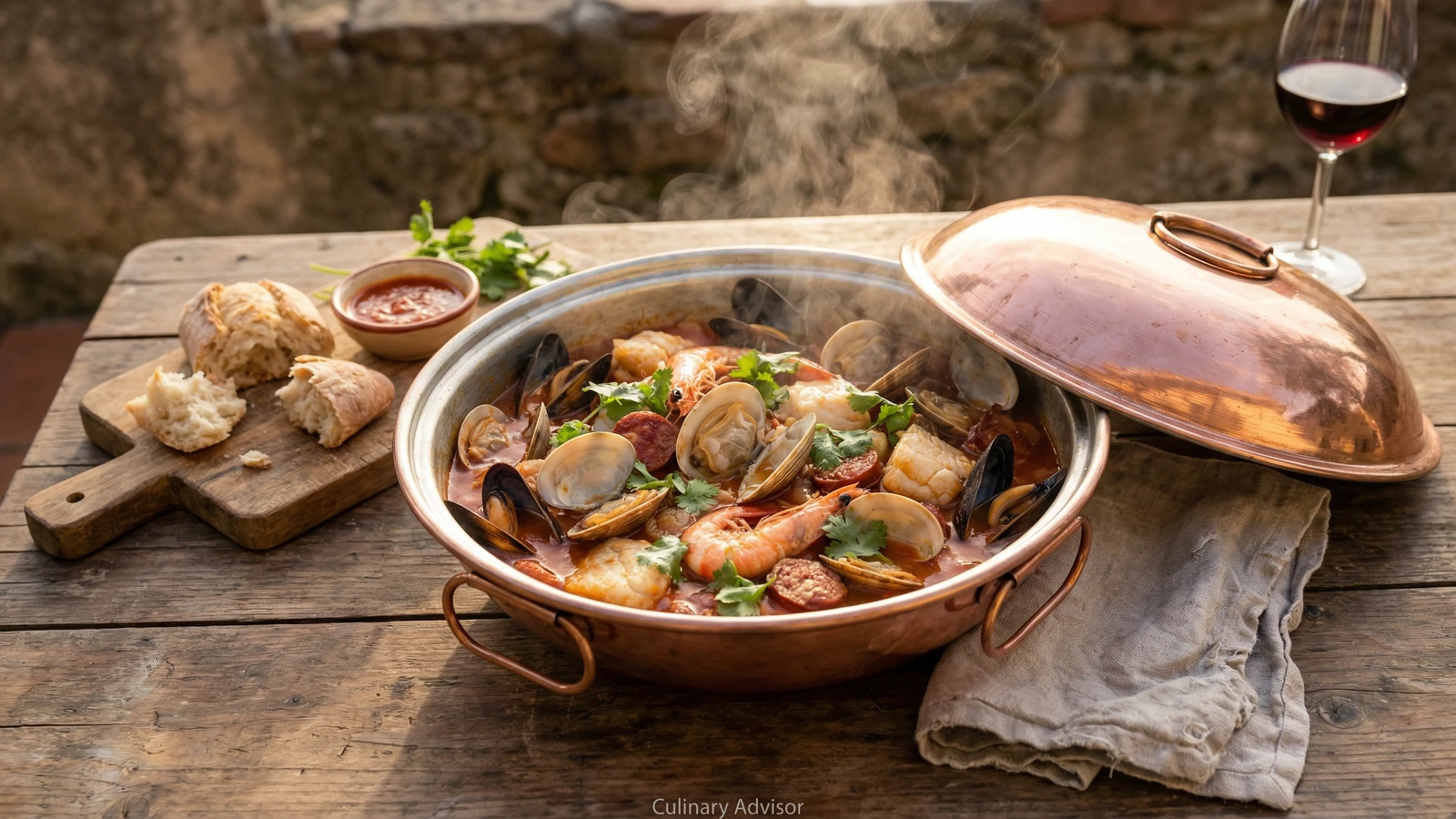
Cataplana de Marisco
Created by
The copper pot that holds the soul of the Algarve, where shellfish, fish, and chouriço steam together in a tradition the Moors left behind and Portuguese grandmothers perfected.
There's a moment when you unclasp a cataplana at the table, lift the lid, and the steam rushes up carrying the smell of the sea, garlic, wine, and chouriço all tangled together. That moment is the Algarve in a single breath.
I didn't grow up with cataplana. Avó Leonor was Alentejana, landlocked, her cooking rooted in pork and bread and survival. But when I started documenting recipes across Portugal, the grandmothers of the Algarve opened their kitchens and their cataplanas to me. In Olhão, in Tavira, in tiny fishing villages where the boats still go out at dawn, I learned that this copper pot isn't just cookware. It's heritage. It's Moorish engineering meeting Atlantic abundance.
The cataplana works like a clam itself: two halves clasped tight, everything steaming together in its own juices. You build a refogado base, layer in the seafood, close the lid, and trust the pot to do its work. Não mexas nisso. Don't open it to peek. The magic happens in the sealed steam.
At Mesa da Avó, when I serve cataplana, I bring it to the table closed. The guests gather around. I unclasp it, and the room fills with that perfume. Every time, someone closes their eyes. That's the reaction I live for. This is who we are: a people who figured out how to make the sea sing.
The cataplana pot arrived in Portugal with the Moors during their 500-year presence in the Algarve, likely derived from North African tagine designs. The hinged copper vessel became synonymous with Algarve coastal cooking by the 16th century, its design perfectly suited to steaming the region's abundant shellfish. Today it remains the symbol of Algarvian cuisine, though genuine hand-hammered copper cataplanas are increasingly rare.
The technique, the tradition, and the story behind every dish.
Discover Culinary AdvisorIngredients
clams (amêijoas)
Quantity
500g
scrubbed and purged
mussels
Quantity
500g
scrubbed and debearded
large prawns
Quantity
300g
shell-on
firm white fish (tamboril or monkfish)
Quantity
300g
cut into chunks
chouriço
Quantity
150g
sliced into rounds
extra virgin olive oil (azeite)
Quantity
1/3 cup
onions
Quantity
2 medium
halved and sliced thin
red bell pepper
Quantity
1
sliced into strips
garlic
Quantity
4 cloves
sliced
bay leaves
Quantity
2
sweet paprika (pimentão doce)
Quantity
1 teaspoon
piri-piri or red pepper flakes
Quantity
1/4 teaspoon
ripe tomatoes
Quantity
400g
peeled and roughly chopped
dry white wine
Quantity
3/4 cup
fresh cilantro (coentros)
Quantity
1 large bunch
roughly chopped
sea salt
Quantity
to taste
black pepper
Quantity
to taste
freshly ground
crusty bread
Quantity
for serving
| Ingredient | Quantity |
|---|---|
| clams (amêijoas)scrubbed and purged | 500g |
| musselsscrubbed and debearded | 500g |
| large prawnsshell-on | 300g |
| firm white fish (tamboril or monkfish)cut into chunks | 300g |
| chouriçosliced into rounds | 150g |
| extra virgin olive oil (azeite) | 1/3 cup |
| onionshalved and sliced thin | 2 medium |
| red bell peppersliced into strips | 1 |
| garlicsliced | 4 cloves |
| bay leaves | 2 |
| sweet paprika (pimentão doce) | 1 teaspoon |
| piri-piri or red pepper flakes | 1/4 teaspoon |
| ripe tomatoespeeled and roughly chopped | 400g |
| dry white wine | 3/4 cup |
| fresh cilantro (coentros)roughly chopped | 1 large bunch |
| sea salt | to taste |
| black pepperfreshly ground | to taste |
| crusty bread | for serving |
Equipment Needed
- •Cataplana (traditional copper clam-shaped pot, about 30cm diameter)
- •Large bowl for purging shellfish
- •Crusty bread for serving
Instructions
- 1
Purge the shellfish
Place the clams in cold salted water (as salty as the sea) for at least 30 minutes. They'll spit out sand and grit. Discard any that don't close when tapped. Scrub the mussels under cold water, pulling off the beards. Discard any that stay open. This step is not optional. One sandy clam ruins the whole pot.
The grandmothers in Olhão told me: if a clam doesn't close when you tap it, it's dead. If a mussel doesn't open when cooked, it was dead. Either way, throw it out. - 2
Build the refogado
Heat the azeite in the bottom half of the cataplana over medium heat. Add the chouriço slices and let them render their fat and turn golden at the edges, about 3 minutes. Remove and set aside. Add the onions and red pepper to the fragrant oil. Cook slowly, stirring occasionally, until the onions are soft and golden, about 12 minutes. Não tenhas pressa. This is your flavor foundation.
The chouriço goes in first so its smoky paprika-spiced fat becomes part of the cooking oil. This is the Algarve secret: the sea and the land meeting in the same pot. - 3
Add aromatics and tomato
Add the garlic, bay leaves, paprika, and piri-piri. Stir for one minute until fragrant. Add the tomatoes and cook, stirring occasionally, until they break down and the mixture becomes saucy, about 8 minutes. Season with salt and pepper. Pour in the white wine and let it bubble for 2 minutes. Taste the sauce. It should be bright, slightly smoky, with gentle heat. Adjust the seasoning now.
- 4
Layer the seafood
Arrange the fish chunks in the sauce, nestling them into the tomato mixture. Scatter the reserved chouriço over the fish. Arrange the clams and mussels on top, hinge-side down so they open upward. Tuck the prawns among the shellfish. Scatter half the coentros over everything. This layering matters: the fish cooks in the sauce, the shellfish steam above.
Don't stir once you start layering. Each element is placed where it needs to be for proper cooking. Trust the process. - 5
Steam in the sealed cataplana
Close the cataplana tightly, clasping both sides. Increase heat to medium-high. Cook for 8 to 10 minutes without opening. You'll hear the shellfish popping as they open. You'll smell the steam escaping from the seal. When the sizzling quiets and the aroma intensifies, it's ready. Resist the temptation to peek. The sealed environment is everything.
- 6
Serve at the table
Bring the cataplana to the table still closed. This is theater; don't skip it. Unclasp the lid in front of your guests and lift it away. The steam will rush up, carrying the perfume of the sea. Scatter the remaining coentros over everything. Discard any shellfish that didn't open. Serve immediately with plenty of crusty bread to soak up the broth. Pão, azeite, vinho, sempre. Bread, olive oil, wine, always.
Chef Tips
- •If you don't have a cataplana, use a wide heavy pot with a tight-fitting lid. It won't be the same (the shape matters for circulation), but it will work. The grandmothers in the Algarve would forgive you.
- •Chouriço is not Spanish chorizo. Portuguese chouriço is smoked, less spicy, with a different paprika profile. If you can't find it, use a good smoky linguiça. Never substitute Mexican or Spanish chorizo.
- •The fish should be firm enough to hold its shape during steaming. Tamboril (monkfish) is traditional, but any meaty white fish works. Avoid delicate fish that will fall apart.
- •The broth at the bottom is liquid gold. That's what the bread is for. Anyone who leaves broth in the pot has missed the point.
- •Some families add a splash of aguardente (Portuguese brandy) with the wine. Avó Leonor would have approved. A tablespoon, no more.
Advance Preparation
- •The refogado (sauce base) can be made several hours ahead and kept at room temperature. Reheat before adding seafood.
- •Shellfish should be purged and cleaned up to 4 hours ahead, stored in the refrigerator covered with a damp cloth. Never in fresh water.
- •This dish cannot be made ahead. The seafood must be cooked and served immediately. Reheated shellfish is tragedy.
- •Mise en place is essential. Have everything prepped and within reach before you start cooking. Once the seafood goes in, there's no stopping.
Frequently Asked Questions
Nutrition Information
1 serving (about 450g)
Where cooking meets culture.
Culinary mentorship, cultural storytelling, and the editorial depth that makes cooking meaningful.
Explore Culinary Advisor