Culinary Advisor
A cooking platform built around craft, culture, and the stories behind what we eat.
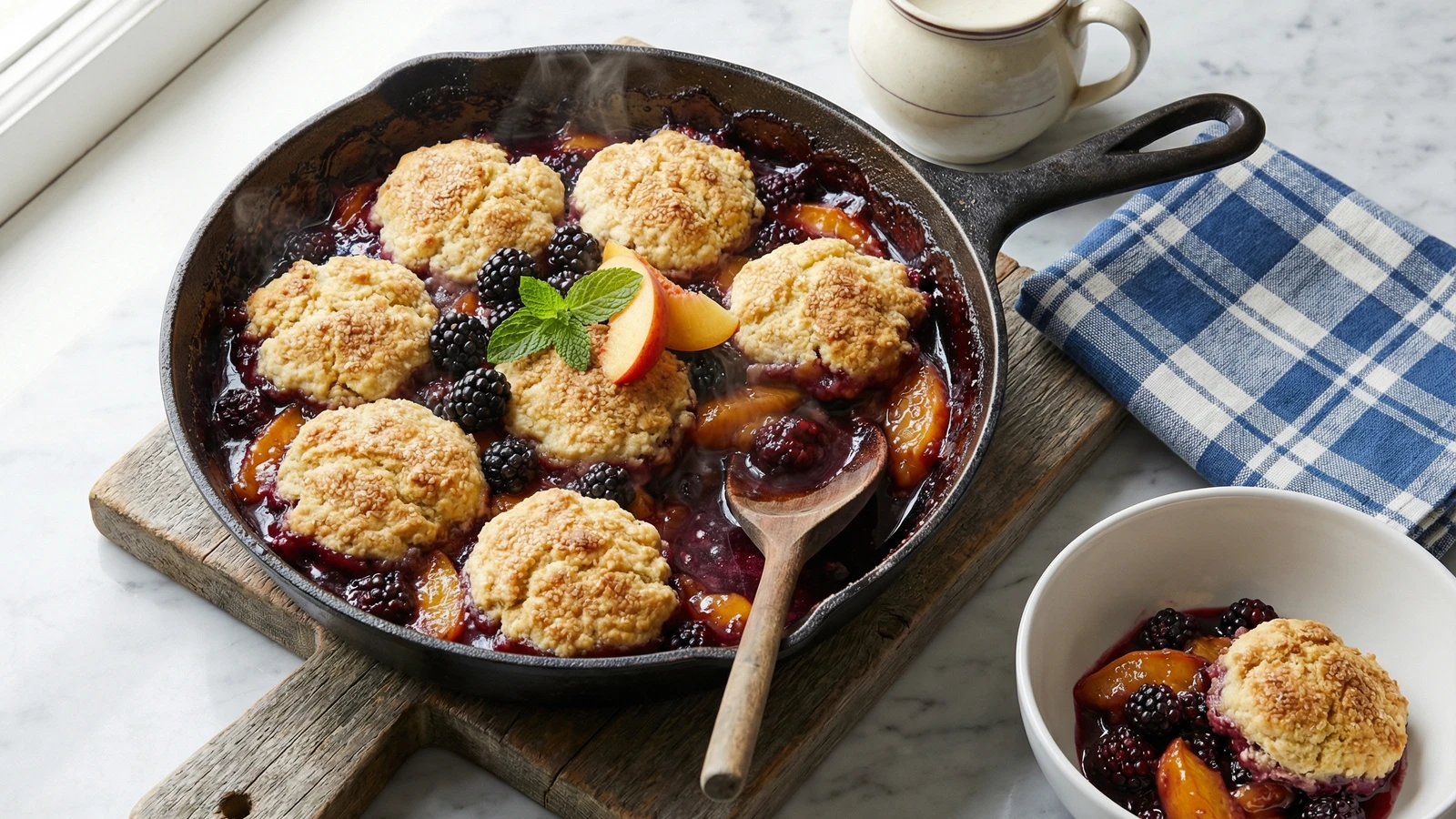
Cast-Iron Blackberry Peach Cobbler
Created by
Summer's finest stone fruits and wild berries bubble beneath shaggy buttermilk biscuits in a screaming-hot cast iron skillet, the edges caramelized where fruit meets iron, demanding nothing more than cold cream poured from a pitcher.
This is Southern porch cooking at its most honest. The cobbler predates our cookbooks, born from farmwives who needed to stretch whatever fruit hung heavy on the branch into something that would feed a crowd. Blackberries grew wild along fence lines. Peaches ripened all at once, demanding immediate attention. The solution was always the same: cut the fruit, sweeten it modestly, and drop biscuit dough on top.
The cast iron skillet transforms this humble dessert into something extraordinary. Preheat it properly and the fruit begins cooking the moment it hits the pan. The sugars caramelize against the hot iron, creating those dark, jammy edges that people fight over. The center stays loose and saucy while the perimeter turns almost candied. No glass baking dish can replicate this.
I've eaten cobbler across the South, from church suppers in Alabama to backyard gatherings in the Texas Hill Country. The best versions share common ground: fruit that tastes like the season it came from, biscuits that shatter on top but turn tender where they meet the juice, and the wisdom to serve it warm rather than hot. Give it fifteen minutes after it leaves the oven. The flavors settle. The bubbling subsides. Then pour cold heavy cream over the top and watch it pool into the crevices.
This recipe works because it respects the ingredients. Ripe peaches need little help. Good blackberries bring their own tartness to balance the sugar. The buttermilk biscuit topping uses cold butter and a light hand, nothing more. Master this technique and you'll adapt it all summer long, swapping in whatever the farmers market offers.
The technique, the tradition, and the story behind every dish.
Discover Culinary AdvisorIngredients
ripe yellow peaches
Quantity
2 pounds (about 6 medium)
fresh blackberries
Quantity
2 cups
granulated sugar
Quantity
3/4 cup, divided
fresh lemon juice
Quantity
1 tablespoon
vanilla extract
Quantity
1 teaspoon
cornstarch
Quantity
2 tablespoons
ground cinnamon
Quantity
1/4 teaspoon
fine sea salt
Quantity
pinch
all-purpose flour
Quantity
2 cups
granulated sugar
Quantity
1/3 cup
baking powder
Quantity
1 tablespoon
baking soda
Quantity
1/2 teaspoon
fine sea salt
Quantity
1/2 teaspoon
cold unsalted butter
Quantity
6 tablespoons
cut into 1/2-inch cubes
cold buttermilk
Quantity
1 cup
heavy cream
Quantity
1 tablespoon
for brushing
turbinado sugar
Quantity
2 tablespoons
for topping
cold heavy cream or vanilla ice cream (optional)
Quantity
for serving
| Ingredient | Quantity |
|---|---|
| ripe yellow peaches | 2 pounds (about 6 medium) |
| fresh blackberries | 2 cups |
| granulated sugar | 3/4 cup, divided |
| fresh lemon juice | 1 tablespoon |
| vanilla extract | 1 teaspoon |
| cornstarch | 2 tablespoons |
| ground cinnamon | 1/4 teaspoon |
| fine sea salt | pinch |
| all-purpose flour | 2 cups |
| granulated sugar | 1/3 cup |
| baking powder | 1 tablespoon |
| baking soda | 1/2 teaspoon |
| fine sea salt | 1/2 teaspoon |
| cold unsalted buttercut into 1/2-inch cubes | 6 tablespoons |
| cold buttermilk | 1 cup |
| heavy creamfor brushing | 1 tablespoon |
| turbinado sugarfor topping | 2 tablespoons |
| cold heavy cream or vanilla ice cream (optional) | for serving |
Equipment Needed
- •12-inch cast iron skillet
- •Large mixing bowl
- •Pastry cutter or fork
- •Rubber spatula
- •Heavy oven mitts
Instructions
- 1
Preheat skillet and oven
Place a 12-inch cast iron skillet in the oven and preheat to 375°F. The skillet must heat along with the oven, reaching temperature slowly and evenly. This takes at least 20 minutes. A properly preheated pan starts cooking the fruit immediately, building those caramelized edges that distinguish great cobbler from ordinary.
If your skillet has been sitting unused, wipe it with a thin layer of vegetable oil before heating. This maintains the seasoning and prevents sticking. - 2
Prepare the peaches
Bring a large pot of water to boil. Score a shallow X on the bottom of each peach. Drop peaches into boiling water for 30 to 60 seconds, then transfer immediately to an ice bath. The skins will slip off easily. Slice peaches into 1/2-inch wedges, discarding the pits. You should have about 5 cups of sliced fruit. Truly ripe peaches from a farmers market may not need blanching. Test one by rubbing the skin. If it peels back under gentle pressure, skip the hot water entirely.
- 3
Season the fruit
In a large bowl, combine sliced peaches and blackberries. Add 1/2 cup of the granulated sugar, lemon juice, vanilla, cornstarch, cinnamon, and a pinch of salt. Fold gently with a rubber spatula until the cornstarch dissolves and the fruit glistens. Taste a peach slice. The sugar should enhance, not mask. If your peaches are exceptionally sweet, reduce sugar to 1/3 cup. The blackberries provide tartness; trust them to do their work.
The cornstarch thickens the juices as they bubble in the oven. Without it, your cobbler becomes soup beneath the biscuits. - 4
Make the biscuit dough
In a separate large bowl, whisk together flour, remaining 1/3 cup sugar, baking powder, baking soda, and salt. Add the cold butter cubes. Using your fingertips or a pastry cutter, work the butter into the flour until the mixture resembles coarse meal with some pea-sized pieces remaining. Those larger pieces create flaky layers. Pour in the cold buttermilk and stir with a fork until the dough just comes together. It should look shaggy and rough. Overworking develops gluten, producing tough biscuits. Stop before you think you should.
- 5
Assemble in hot skillet
Carefully remove the preheated skillet from the oven using heavy oven mitts. The handle will be dangerously hot. Pour the fruit mixture into the skillet. It should sizzle immediately. Listen for that sound. It tells you the pan reached proper temperature. Using a large spoon, drop biscuit dough in rough mounds over the fruit, leaving gaps between them. Eight to ten mounds works well. The dough will spread as it bakes. Brush the tops with heavy cream and sprinkle generously with turbinado sugar. The coarse crystals stay crunchy through baking.
- 6
Bake until golden
Return the skillet to the oven and bake for 40 to 45 minutes. The cobbler is done when the biscuits turn deep golden brown, the fruit bubbles vigorously around the edges, and the center no longer looks wet. If the biscuits brown too quickly before the fruit finishes cooking, tent loosely with aluminum foil for the final 10 minutes. Insert a toothpick into the center of a biscuit. It should come out clean, with no raw dough clinging.
- 7
Rest and serve
Remove the skillet from the oven and place on a wooden board or folded towel. Let the cobbler rest for 15 minutes. This is not optional. The bubbling juices need time to thicken, and the fruit is too hot to eat safely straight from the oven. Serve warm, not hot, spooned into shallow bowls. Pass cold heavy cream in a pitcher and encourage people to pour generously. The contrast between warm fruit, tender biscuit, and cold cream is the whole point.
Warn guests about the skillet handle. Even after resting, cast iron retains heat. Keep a potholder nearby as a visual reminder.
Chef Tips
- •Seek out freestone peaches at farmers markets from July through September. The flesh separates cleanly from the pit, making prep faster. Clingstone varieties taste fine but require more knife work.
- •Frozen fruit works in winter, though the result differs. Thaw completely, drain excess liquid, and add an extra tablespoon of cornstarch. Summer's version remains superior.
- •Leftover cobbler keeps refrigerated for three days. Reheat individual portions in a 350°F oven for 15 minutes. The microwave turns biscuits rubbery.
- •A well-seasoned cast iron skillet makes cleanup simple. Let it cool completely, then wipe with a paper towel. Any stubborn fruit can be loosened with coarse salt and a damp cloth. Never soak cast iron.
- •For larger gatherings, double the recipe and bake in a 15-inch skillet or divide between two 10-inch pans. Increase baking time by 10 minutes for the larger vessel.
Advance Preparation
- •Biscuit dough can be made up to 2 hours ahead and refrigerated. Cold dough actually drops more easily onto the fruit.
- •Peaches can be sliced and tossed with lemon juice up to 4 hours ahead. Refrigerate and add remaining fruit seasonings just before assembling.
- •The assembled cobbler cannot wait. Once fruit hits the hot skillet, it must go directly into the oven.
Frequently Asked Questions
Nutrition Information
1 serving (about 280g)
Where cooking meets culture.
Culinary mentorship, cultural storytelling, and the editorial depth that makes cooking meaningful.
Explore Culinary Advisor