Culinary Advisor
A cooking platform built around craft, culture, and the stories behind what we eat.
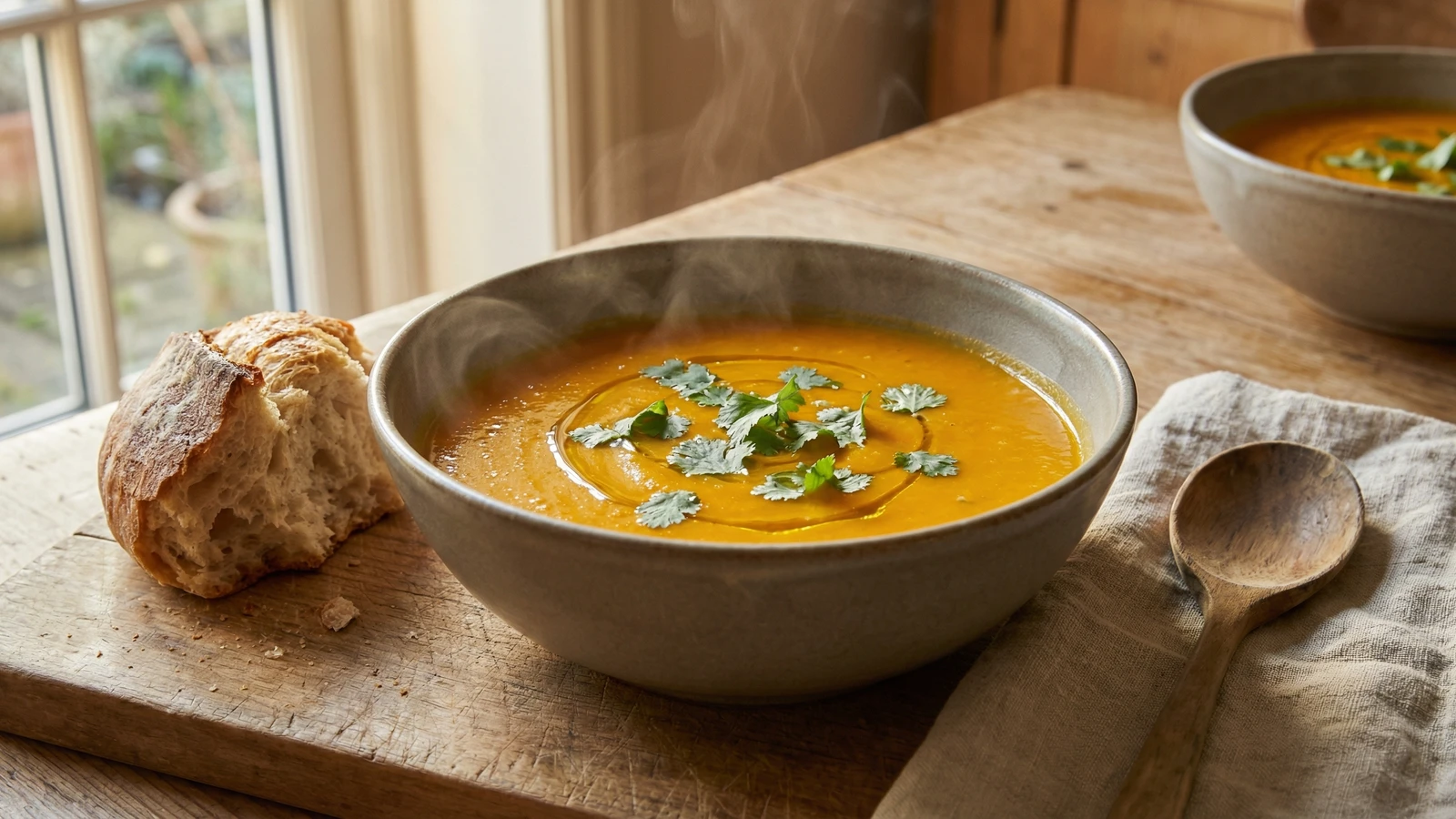
Carrot and Coriander Soup
Created by Chef Thomas
A bowl of carrot and coriander soup, sweet and peppery and cheap, the kind the whole country makes because it works, and because carrots ask so little and give so much back.
There's a bag of carrots in every kitchen in the country. They sit in the bottom of the fridge or in a paper sack on the counter, patient and undemanding, waiting for someone to do something decent with them. This soup is the best thing you can do.
I make it in October, when the first cold evenings arrive and the carrots at the market are fat and deeply orange, still flecked with soil. The ground coriander goes in early, toasted in the butter until it smells warm and almost like citrus. The fresh coriander goes in at the end, stirred through just before blending so the green, peppery brightness survives the heat. Between the two of them, they turn a bag of cheap carrots into something that tastes like you tried harder than you did.
There is a reason this is one of the most-made soups in Britain. It costs almost nothing. It takes less than an hour. It feeds four people from a few root vegetables and a bunch of herbs. And it's good. Quietly, reliably, without fuss. I wrote it down in the notebook years ago with a single line: "carrots, coriander, Wednesday, rain." That's the whole story.
A recipe is a conversation, not a contract. If your carrots are sweet, ease back on the cooking time. If they're woody and late-season, give them longer. Trust your nose. The soup will tell you when it's ready.
The technique, the tradition, and the story behind every dish.
Discover Culinary AdvisorIngredients
unsalted butter
Quantity
30g
olive oil
Quantity
1 tablespoon
onion
Quantity
1 medium
roughly chopped
celery
Quantity
1 stick
sliced
carrots
Quantity
600g
peeled and chopped into rough coins
ground coriander
Quantity
1 teaspoon
vegetable or chicken stock
Quantity
850ml
fresh coriander
Quantity
large bunch
stalks and leaves separated
lemon
Quantity
half
juiced
fine sea salt
Quantity
to taste
black pepper
Quantity
to taste
| Ingredient | Quantity |
|---|---|
| unsalted butter | 30g |
| olive oil | 1 tablespoon |
| onionroughly chopped | 1 medium |
| celerysliced | 1 stick |
| carrotspeeled and chopped into rough coins | 600g |
| ground coriander | 1 teaspoon |
| vegetable or chicken stock | 850ml |
| fresh corianderstalks and leaves separated | large bunch |
| lemonjuiced | half |
| fine sea salt | to taste |
| black pepper | to taste |
Equipment Needed
- •Heavy-bottomed saucepan or stockpot
- •Stick blender or countertop blender
- •Ladle
Instructions
- 1
Soften the base
Melt the butter with the oil in a heavy-bottomed pan over a gentle heat. Add the onion, celery, and the coriander stalks, chopped finely. A pinch of salt. Stir it all through the fat and put a lid on. Let it sweat for eight to ten minutes, stirring now and then, until everything is soft and translucent and the kitchen smells sweet and green. No colour. If the onion starts to catch, turn the heat down. You're coaxing, not frying.
Don't throw the coriander stalks away. They carry more flavour than the leaves and they soften completely when cooked. Use the whole bunch. Nothing wasted. - 2
Toast the spice and add carrots
Add the ground coriander and stir it through the softened vegetables for a minute or so. You'll smell it change: raw and dusty at first, then warm, almost citrusy, like something waking up. Add the carrots and turn them through the buttery base until they're coated. Give them two minutes in the pan, letting the edges just start to soften.
- 3
Simmer in stock
Pour in the stock. It should just cover the carrots. If it doesn't, add a splash of water. Bring to a gentle simmer, put the lid slightly ajar, and cook for twenty to twenty-five minutes. The carrots are ready when a knife slides through them without resistance. Not firm, not falling apart. Just giving way.
Good stock matters here because there are so few places for flavour to come from. Homemade if you have it, a decent bought one if you don't. Avoid anything that tastes of salt and nothing else. - 4
Blend until smooth
Take the pan off the heat. Drop in most of the coriander leaves, keeping a handful back. Blend until completely smooth. A stick blender in the pan is easiest and saves the washing up. The texture you want is velvety, not thick. If it feels heavy, thin it with a splash of stock or water. It should pour from a ladle like cream, not paste.
- 5
Season and finish
Return the pan to a low heat. Squeeze in the lemon juice. Season with salt and pepper. Taste it. The lemon should sharpen the sweetness of the carrots without announcing itself. If you can taste lemon, you've added too much. If it tastes flat, add more salt. Taste again. Ladle into warm bowls and scatter the remaining coriander leaves over the top. Good bread alongside. That's dinner.
Chef Tips
- •The two forms of coriander do different work. Ground coriander, toasted in the butter, gives a warm, almost nutty depth. Fresh coriander, stirred in at the end, gives brightness and pepper. You need both. One without the other leaves the soup half-dressed.
- •Carrots vary wildly in sweetness depending on the season and where they've come from. Taste the soup before seasoning and adjust. A squeeze of lemon is the quiet correction that stops sweetness from tipping into something cloying. It should balance, not dominate.
- •This soup is better the next day. The flavours settle overnight into something calmer and more complete. Make a big batch on Sunday and eat it on Monday. The coriander leaves on top are best added fresh when you reheat, not the night before.
- •If you want more body, add a small potato to the pan with the carrots. It thickens the soup without cream and gives it a silkier texture. Peel it, chop it roughly, and let it cook alongside. No need to change anything else.
Advance Preparation
- •The soup can be made two days ahead and kept refrigerated. Reheat gently and add fresh coriander leaves when serving.
- •Freezes well for up to three months. Defrost overnight in the fridge and reheat on the hob. Stir in fresh lemon juice and coriander after thawing, as both lose their edge in the freezer.
Frequently Asked Questions
Nutrition Information
1 serving (about 400g)
Where cooking meets culture.
Culinary mentorship, cultural storytelling, and the editorial depth that makes cooking meaningful.
Explore Culinary Advisor