Culinary Advisor
A cooking platform built around craft, culture, and the stories behind what we eat.
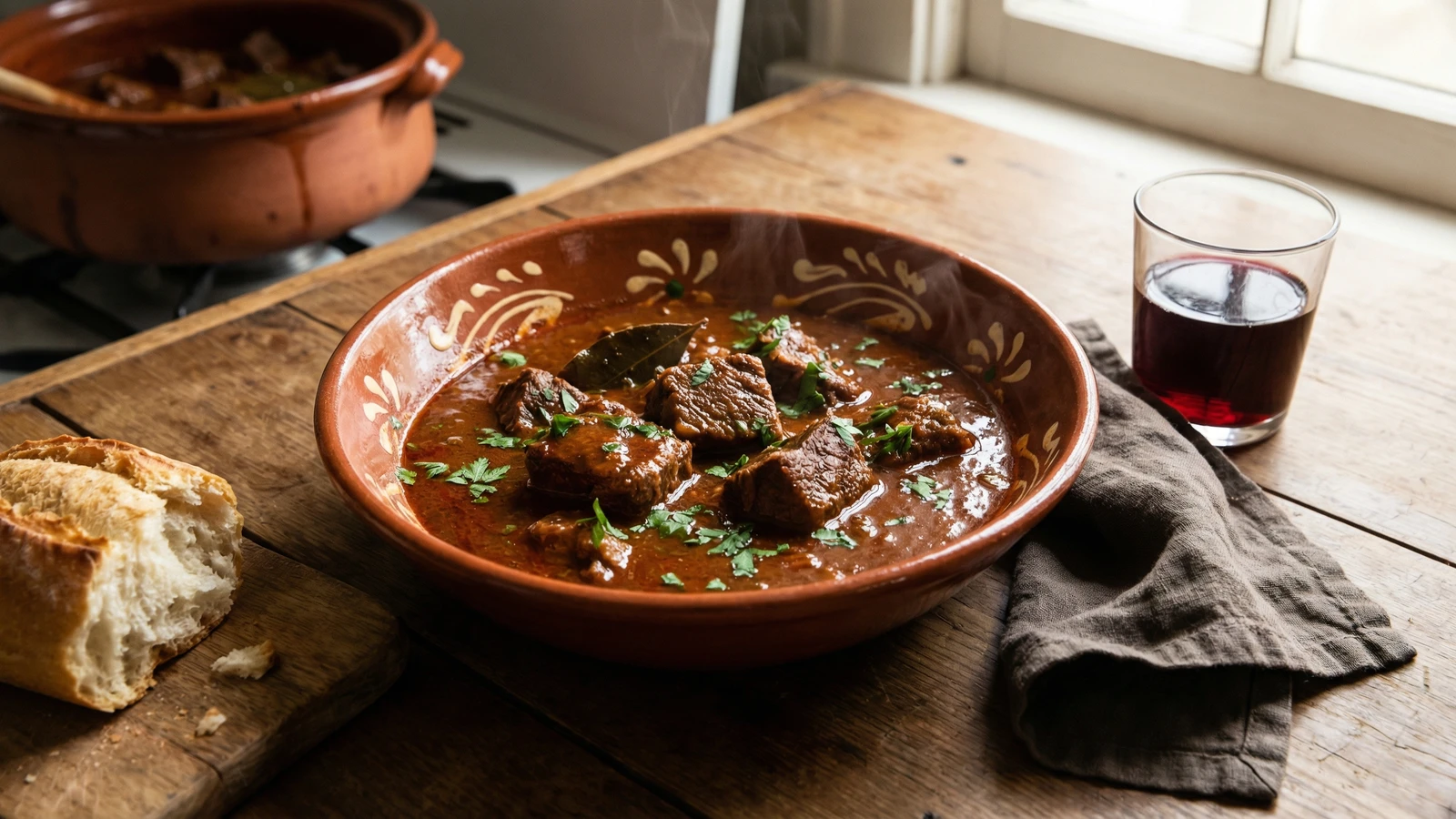
Carne Guisada
Created by
The beef stew every Portuguese mother makes, built on a slow refogado and patient braising until the meat surrenders to your fork. Grab bread. This is comfort defined.
This is the smell of Sunday. The smell of a kitchen where someone has been paying attention all morning, where a heavy pot has been doing its slow, patient work on the back of the stove.
Avó Leonor made carne guisada when the house needed warming. Not just the rooms, but the people in them. Bad week at school? Carne guisada. Cold rain that wouldn't stop? Carne guisada. Family coming from Lisbon? Definitely carne guisada. She'd start it after breakfast and let it bubble gently until lunch became a four-hour affair with bread baskets emptied and wine bottles multiplied.
The secret isn't a secret at all. It's time. It's the refogado cooked until the onions give up their structure entirely. It's the wine reduced until it concentrates into something deeper. It's the beef braised until a wooden spoon can pull it apart. You cannot rush this dish. The moment you try, it knows. The meat tightens. The sauce thins. The soul leaves.
At Mesa da Avó, I serve this in the same clay pot it cooked in. I put bread on the table before anything else. Because the bread is not a side dish here. The bread is a tool, a sponge, the thing that lets you get every last bit of that sauce. Watch people eat this stew and you'll see them forget their manners. That's when you know you've done it right.
Carne guisada descends from the estufados and ensopados of rural Portugal, where tough cuts of beef from working animals required long, slow cooking to become tender. The dish gained its modern form after tomatoes arrived from the Americas in the 16th century, transforming Portuguese braising traditions. Every region claims their version: the Alentejo adds coriander, the north uses more wine, and Lisbon homes often finish with a handful of olives.
The technique, the tradition, and the story behind every dish.
Discover Culinary AdvisorIngredients
beef chuck or shoulder
Quantity
1.2 kg
cut into 5cm pieces
extra virgin olive oil (azeite)
Quantity
1/4 cup
onions
Quantity
2 large
halved and sliced
garlic
Quantity
4 cloves
minced
tomato paste (concentrado de tomate)
Quantity
2 tablespoons
canned whole tomatoes
Quantity
400g
crushed by hand
dry red wine
Quantity
1 cup
beef stock or water
Quantity
2 cups
bay leaves (louro)
Quantity
3
sweet paprika (colorau doce)
Quantity
1 teaspoon
hot paprika or piri-piri (optional)
Quantity
1/2 teaspoon
cinnamon stick (optional)
Quantity
1
red wine vinegar
Quantity
1 tablespoon
fine sea salt
Quantity
to taste
black pepper
Quantity
to taste
freshly ground
fresh parsley
Quantity
for serving
chopped
| Ingredient | Quantity |
|---|---|
| beef chuck or shouldercut into 5cm pieces | 1.2 kg |
| extra virgin olive oil (azeite) | 1/4 cup |
| onionshalved and sliced | 2 large |
| garlicminced | 4 cloves |
| tomato paste (concentrado de tomate) | 2 tablespoons |
| canned whole tomatoescrushed by hand | 400g |
| dry red wine | 1 cup |
| beef stock or water | 2 cups |
| bay leaves (louro) | 3 |
| sweet paprika (colorau doce) | 1 teaspoon |
| hot paprika or piri-piri (optional) | 1/2 teaspoon |
| cinnamon stick (optional) | 1 |
| red wine vinegar | 1 tablespoon |
| fine sea salt | to taste |
| black pepperfreshly ground | to taste |
| fresh parsleychopped | for serving |
Equipment Needed
- •Heavy 5-6 liter Dutch oven or clay pot (panela de barro)
- •Wooden spoon
- •Deep serving bowls
Instructions
- 1
Season the beef
Pat the beef pieces thoroughly dry with paper towels. Season generously with salt, pepper, and the sweet paprika, rubbing the spices into all sides. Let the meat sit at room temperature while you prepare the aromatics, at least 20 minutes. Cold meat doesn't brown properly.
- 2
Brown the beef
Heat the azeite in a heavy pot or Dutch oven over medium-high heat until it shimmers. Working in batches so you don't crowd the pan, brown the beef on all sides until deeply golden, about 3 to 4 minutes per side. Transfer to a plate. Don't skip this step and don't rush it. This browning is where half your flavor lives.
If you crowd the pan, the meat steams instead of browns. Work in two or three batches. The patience pays off. - 3
Build the refogado
Reduce heat to medium-low. Add the sliced onions to the pot with a pinch of salt. Cook slowly, stirring occasionally and scraping up the browned bits from the bottom, until the onions are completely soft and golden, about 15 minutes. Add the garlic in the final minute. The kitchen should smell like the beginning of something wonderful.
Avó Leonor always said: não tenhas pressa com a cebola. Don't rush the onion. This is the foundation. Get it right. - 4
Add tomato and spice
Stir in the tomato paste and cook for 1 minute until it darkens slightly. Add the crushed tomatoes, the hot paprika if using, and the cinnamon stick if using. Let everything bubble together for 2 to 3 minutes, stirring to combine.
- 5
Deglaze with wine
Pour in the red wine and bring to a simmer. Let it bubble vigorously for 3 to 4 minutes, allowing the alcohol to cook off and the wine to reduce slightly. Scrape the bottom of the pot to release any remaining fond. This is liquid gold.
- 6
Braise low and slow
Return the beef and any accumulated juices to the pot. Add the stock, bay leaves, and enough water to barely cover the meat if needed. Bring to a gentle simmer, then reduce heat to low. Cover with a tight-fitting lid and let it cook at the barest simmer for 2 to 2.5 hours. The sauce should be lazily bubbling, not actively boiling. Check occasionally and adjust heat if needed.
You can also braise this in a 150°C (300°F) oven. Some say it gives more even heat. Avó Leonor used the stovetop because that's what she had. - 7
Check for doneness
The stew is ready when the beef is completely tender and falling apart at the touch of a fork. The sauce should be rich and glossy, coating the back of a spoon. If the sauce is too thin, remove the lid and simmer uncovered for 15 to 20 minutes to reduce. If too thick, add a splash of water.
- 8
Finish and serve
Remove the bay leaves and cinnamon stick. Stir in the red wine vinegar. Taste and adjust salt and pepper. The vinegar brightens everything, cuts through the richness, wakes the whole dish up. Ladle into deep bowls, scatter with parsley, and serve immediately with plenty of crusty bread for soaking up every drop of sauce. This is not optional. The bread is essential.
Chef Tips
- •Use a tough, well-marbled cut like chuck or shoulder. Lean cuts will dry out during the long braise. The fat and connective tissue are what make this dish silky.
- •The stew is even better the next day. Make it on Saturday, refrigerate overnight, and reheat gently on Sunday. The flavors deepen and marry beautifully.
- •Some families add cubed potatoes in the last 30 minutes of cooking. Others serve it over rice. Both are correct. Avó Leonor served it with nothing but bread because she believed the bread was doing important work.
- •Portuguese red wine is traditional, but any dry, full-bodied red works. Don't use anything you wouldn't drink. The wine concentrates as it cooks and bad wine makes bad sauce.
Advance Preparation
- •The stew can be made up to 3 days ahead and refrigerated. The flavor improves with time. Reheat gently over low heat, adding a splash of water if the sauce has thickened too much.
- •Freezes beautifully for up to 3 months. Thaw overnight in the refrigerator and reheat slowly.
Frequently Asked Questions
Nutrition Information
1 serving (about 330g)
Where cooking meets culture.
Culinary mentorship, cultural storytelling, and the editorial depth that makes cooking meaningful.
Explore Culinary Advisor