Culinary Advisor
A cooking platform built around craft, culture, and the stories behind what we eat.
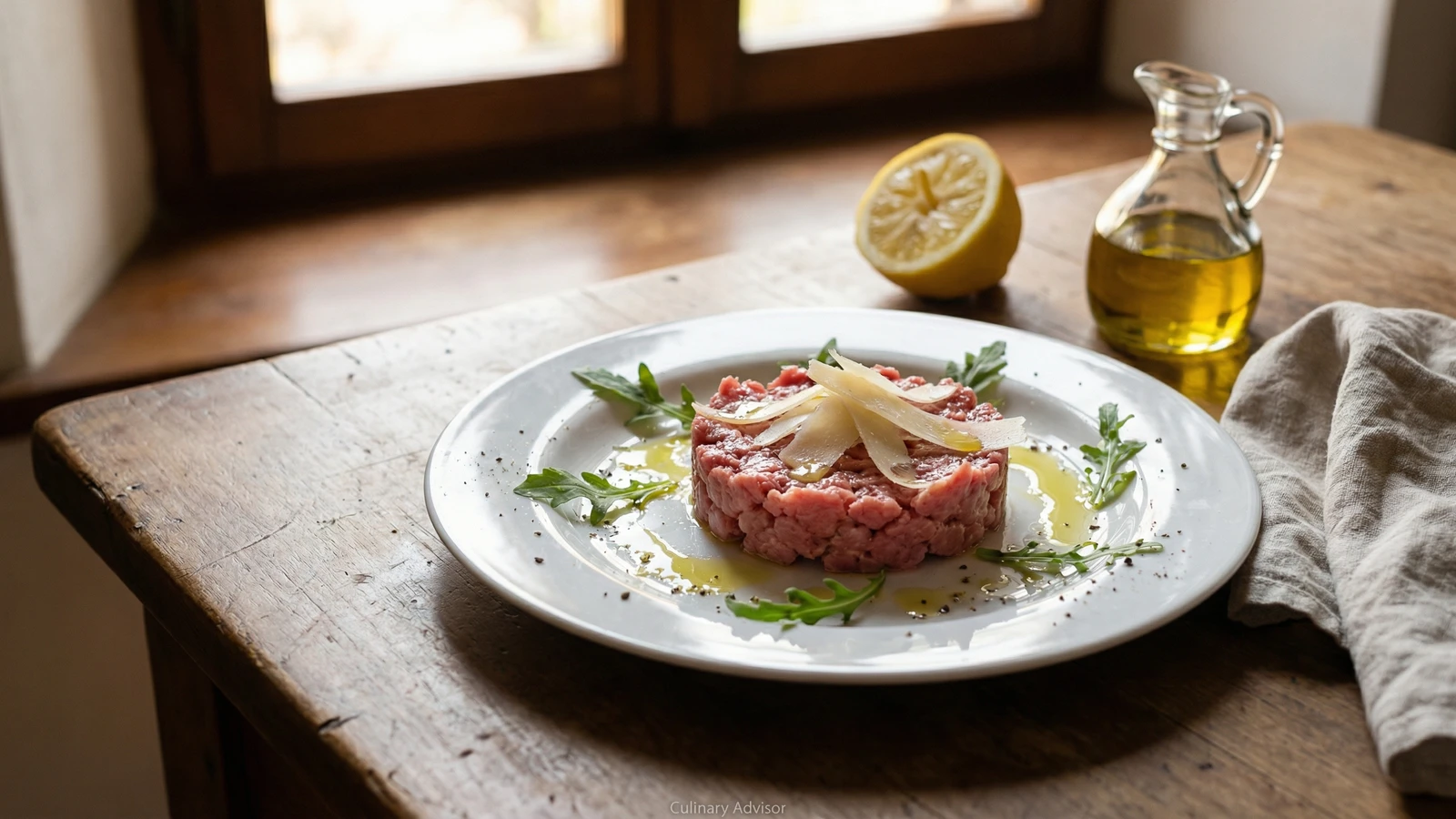
Carne Cruda all'Albese
Created by Chef Graziella
Raw beef, hand-chopped to silk, dressed with nothing more than lemon and olive oil. From Alba, where they understand that restraint is the highest form of cooking.
In Alba, in the heart of Piedmont's truffle country, they serve this dish as though it were the most natural thing in the world. And it is. Take impeccable beef, chop it by hand until it becomes almost silken, dress it with lemon and oil, and serve it immediately. That is all. That is everything.
The knife work matters more than anything else you will do. A meat grinder crushes the fibers and releases moisture, leaving you with wet, textureless meat. A food processor is worse. You must stand at the cutting board with a sharp knife and reduce the beef to fine pieces through patience. The result has a texture that cannot be achieved any other way: each tiny piece distinct, yielding, catching the dressing in its surfaces.
This is not steak tartare with its capers and onions and egg yolk. Piemontese carne cruda is austere by comparison, almost severe. What you keep out is as significant as what you put in. The restraint forces you to taste the beef itself, the quality of your olive oil, the brightness of fresh lemon. There is nowhere for mediocre ingredients to hide.
Carne cruda emerged from the cattle country of Piedmont, where the Piemontese breed of cattle produces meat so naturally tender that cooking seemed almost wasteful. In Alba and throughout the Langhe hills, butchers and home cooks have served raw beef for centuries, though the dish gained wider recognition in the 20th century as the region's white truffles brought international attention to its cuisine.
The technique, the tradition, and the story behind every dish.
Discover Culinary AdvisorIngredients
beef tenderloin or top round
Quantity
1 pound
impeccably fresh
extra virgin olive oil
Quantity
3 tablespoons
lemon
Quantity
1
freshly squeezed
garlic clove
Quantity
1 small
halved
flaky sea salt
Quantity
to taste
black pepper
Quantity
to taste
freshly ground
wild arugula (optional)
Quantity
small handful
Parmigiano-Reggiano (optional)
Quantity
for shaving
fresh white truffle (optional)
Quantity
for shaving
| Ingredient | Quantity |
|---|---|
| beef tenderloin or top roundimpeccably fresh | 1 pound |
| extra virgin olive oil | 3 tablespoons |
| lemonfreshly squeezed | 1 |
| garlic clovehalved | 1 small |
| flaky sea salt | to taste |
| black pepperfreshly ground | to taste |
| wild arugula (optional) | small handful |
| Parmigiano-Reggiano (optional) | for shaving |
| fresh white truffle (optional) | for shaving |
Equipment Needed
- •Sharp chef's knife or butcher's knife
- •Large cutting board
- •Mixing bowl
- •Chilled serving plates
Instructions
- 1
Source the beef
The quality of the beef is everything. There is nothing to hide behind. Seek out a butcher you trust and explain that you intend to eat the meat raw. You want beef that was cut that day, stored properly, and comes from a single muscle with no sinew. Tenderloin is traditional for its silkiness. Top round from the leg works beautifully and has more flavor. Either must be absolutely fresh.
In Piedmont, they use fassone beef from the local breed. The meat is exceptionally lean and tender. Grass-fed beef with good marbling is your best substitute. - 2
Prepare the beef
Trim away any fat or silverskin. The meat should be pure, deep red muscle. Place it in the freezer for 15 to 20 minutes. This firms it slightly and makes slicing easier. You do not want it frozen, only cold enough to hold its shape under the knife.
- 3
Chop by hand
Remove the beef from the freezer. With a sharp knife, slice it as thin as you can manage, then cut those slices into thin strips, then chop the strips crosswise into small pieces. The final texture should be fine but not paste. You want to see distinct pieces of meat, each about the size of a lentil or small pea. This takes patience. A meat grinder destroys the texture. A food processor turns it to mush. There is no substitute for the knife.
Work in batches if the beef begins to warm and stick. Return it to the freezer for five minutes, then continue. Cold beef chops cleanly. Warm beef smears. - 4
Season the serving bowl
Take a mixing bowl and rub the interior thoroughly with the cut side of the garlic clove. The garlic deposits its essence without overwhelming. Discard the garlic. It has done its work. This is the only garlic that belongs in this dish.
- 5
Dress the beef
Place the chopped beef in the garlic-scented bowl. Add the olive oil and lemon juice. Season generously with salt and pepper. Toss gently with a fork, lifting from the bottom rather than pressing down. The beef should be evenly coated, glistening, each piece separate from the others. Taste and adjust. The lemon should brighten without dominating. The oil should give richness without slick. The salt must be present.
- 6
Serve immediately
Divide among chilled plates, mounding the beef in the center. If using arugula, scatter a few leaves around the edges. If using Parmigiano, shave thin curls over the top. If you are fortunate enough to have white truffle, shave it generously at the table, where its perfume can be appreciated. Serve at once. The beef begins to oxidize and the lemon continues to work on the proteins. This is a dish of the moment.
Chef Tips
- •Speak with your butcher. Tell them you intend to eat the meat raw. A good butcher will cut from a fresh piece, trim it properly, and may even chop it for you if you explain what you need.
- •The lemon juice begins to cure the meat almost immediately. Dress the beef no more than five minutes before serving. Any longer and the texture changes, the color dulls.
- •White truffle is traditional in autumn, when Alba's famous tartufo bianco is in season. Without truffle, the dish stands perfectly on its own. Do not substitute truffle oil, which tastes of chemicals and pretension.
- •Some serve this with thin shavings of Parmigiano-Reggiano. Others consider cheese a distraction. Both traditions exist in Piedmont. Choose according to your taste.
Advance Preparation
- •The beef can be trimmed and chilled hours ahead. Do not chop until just before serving.
- •This dish cannot be made in advance. The chopping, dressing, and serving should happen within 10 minutes. Once dressed, the clock is running.
Frequently Asked Questions
Nutrition Information
1 serving (about 145g)
Where cooking meets culture.
Culinary mentorship, cultural storytelling, and the editorial depth that makes cooking meaningful.
Explore Culinary Advisor