Culinary Advisor
A cooking platform built around craft, culture, and the stories behind what we eat.
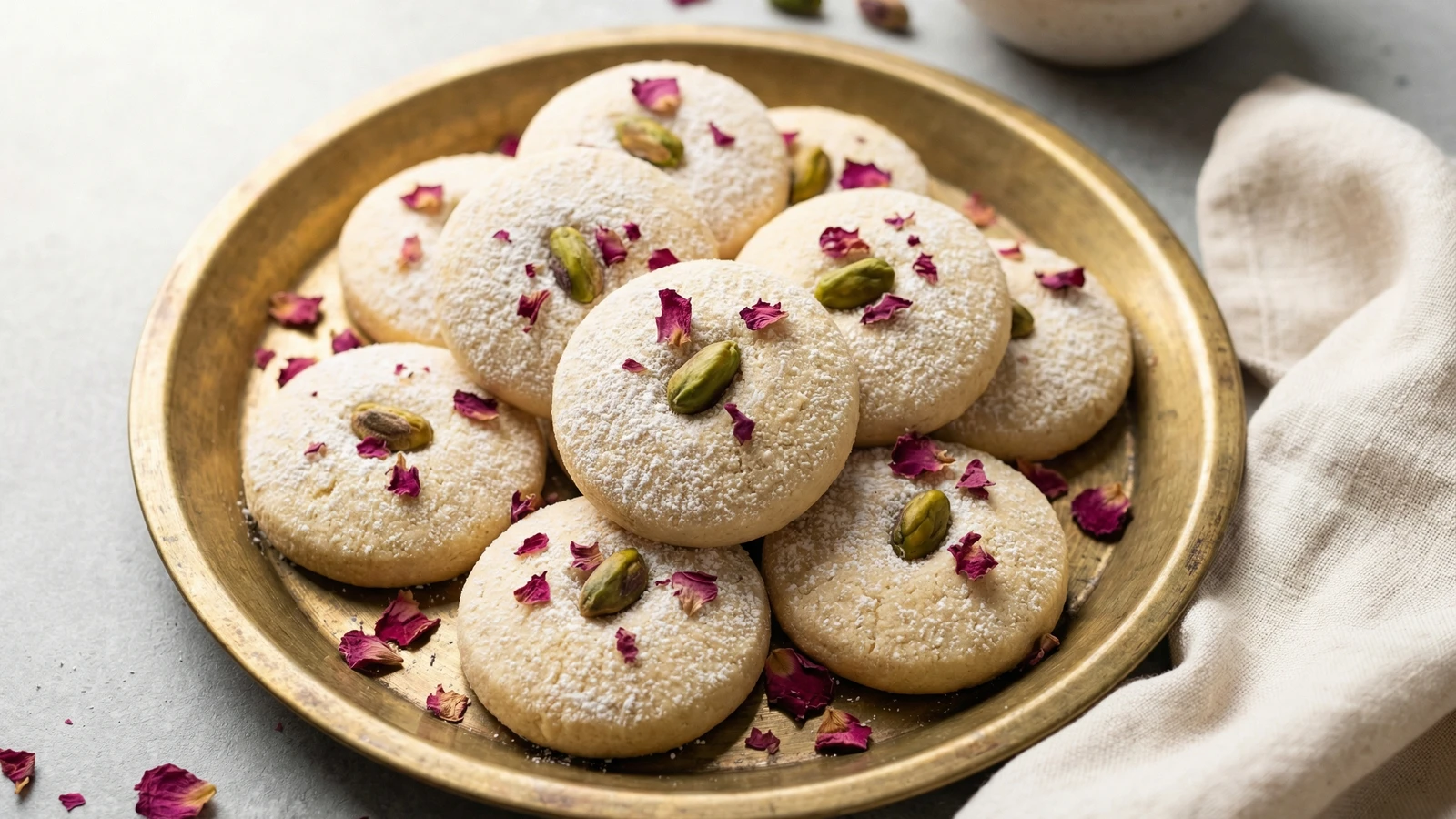
Cardamom Rose Pistachio Cookies
Created by
Fragrant butter cookies perfumed with cardamom and rose water, studded with bright green pistachios and crowned with dried rose petals. A Persian-inspired treasure for holiday cookie tins that proves American baking has always borrowed brilliantly from the world.
The Persians understood something about sweets that took the rest of us centuries to appreciate: restraint creates elegance. Where European baking often drowns in sugar and butter, the Persian tradition lets aromatics lead. Cardamom. Rose water. Saffron. These ancient flavors speak quietly but leave lasting impressions.
These cookies represent the best kind of culinary borrowing. We take the tender, sandy crumb of an American butter cookie and infuse it with the perfumed sensibility of Tehran's pastry shops. The result belongs to both traditions and neither. It simply belongs on your holiday table.
I first encountered this combination at a small bakery in Los Angeles, run by an Iranian grandmother who'd been making these cookies for fifty years. She measured nothing. Her hands knew the dough by feel. When I asked for her recipe, she laughed and told me to watch. I watched for three batches before I understood what she was doing. The cardamom must be freshly ground. The rose water must be real, not imitation. The pistachios must be raw and unsalted. Everything else is just technique.
These cookies improve after a day in an airtight tin, which makes them ideal for the holiday baker who plans ahead. The flavors marry and deepen. The rose becomes more pronounced. By day three, they're transcendent. If they last that long.
The technique, the tradition, and the story behind every dish.
Discover Culinary AdvisorIngredients
unsalted butter, softened
Quantity
226g (1 cup / 2 sticks)
granulated sugar
Quantity
100g (1/2 cup)
powdered sugar
Quantity
60g (1/2 cup)
large egg yolk
Quantity
1
rose water
Quantity
2 teaspoons
vanilla extract
Quantity
1 teaspoon
all-purpose flour
Quantity
280g (2 1/4 cups)
ground cardamom
Quantity
1 1/2 teaspoons
freshly ground preferred
fine sea salt
Quantity
1/2 teaspoon
raw pistachios
Quantity
75g (1/2 cup)
finely chopped, plus 36 whole for topping
dried culinary rose petals (optional)
Quantity
2 tablespoons
for garnish
| Ingredient | Quantity |
|---|---|
| unsalted butter, softened | 226g (1 cup / 2 sticks) |
| granulated sugar | 100g (1/2 cup) |
| powdered sugar | 60g (1/2 cup) |
| large egg yolk | 1 |
| rose water | 2 teaspoons |
| vanilla extract | 1 teaspoon |
| all-purpose flour | 280g (2 1/4 cups) |
| ground cardamomfreshly ground preferred | 1 1/2 teaspoons |
| fine sea salt | 1/2 teaspoon |
| raw pistachiosfinely chopped, plus 36 whole for topping | 75g (1/2 cup) |
| dried culinary rose petals (optional)for garnish | 2 tablespoons |
Equipment Needed
- •Electric hand mixer or stand mixer
- •Wire cooling racks
- •Rimmed baking sheets
- •Sharp chef's knife for slicing dough
- •Spice grinder (if grinding whole cardamom)
Instructions
- 1
Cream the butter and sugars
In a large bowl, beat the softened butter with both sugars until pale and fluffy, about 3 minutes with an electric mixer. The combination of granulated and powdered sugar gives these cookies their distinctive sandy, melt-in-your-mouth texture. Scrape down the sides of the bowl at least once. You want a uniform, almost white mixture with no visible butter streaks.
Truly softened butter should hold a fingerprint when pressed but not be greasy or melted. If your kitchen is cold, cut the butter into cubes and let it sit for 45 minutes. - 2
Add wet ingredients
Add the egg yolk, rose water, and vanilla extract to the butter mixture. Beat on medium speed until fully incorporated, about 30 seconds. The dough may look slightly curdled at this stage. That's fine. It will come together when you add the flour. The rose water should announce itself immediately. If you can't smell it, your rose water is old or inferior. Real Persian rose water has a perfume that fills the room.
- 3
Mix dry ingredients
In a separate bowl, whisk together the flour, cardamom, and salt. Run your fingers through the mixture to break up any cardamom clumps. If you've ground your own cardamom (and you should), the green-gray flecks will be visible throughout the flour. This is correct. Those specks mean fresh flavor.
To grind your own cardamom, crack open green pods and remove the black seeds. Grind seeds in a spice grinder until powdery. Ten pods yield about one teaspoon ground. - 4
Combine and add pistachios
Add the flour mixture to the butter mixture in two additions, mixing on low speed just until the flour disappears. Overworking develops gluten, which makes cookies tough instead of tender. Fold in the chopped pistachios with a spatula, distributing them evenly throughout the dough. The dough will be soft but not sticky, holding together when pressed.
- 5
Shape and chill the dough
Divide the dough in half. Roll each portion into a log about 1 1/2 inches in diameter, using plastic wrap or parchment to help shape it evenly. Don't worry about perfection here. Slight irregularity gives handmade character. Wrap the logs tightly and refrigerate for at least 45 minutes or until firm enough to slice cleanly. The dough can rest in the refrigerator for up to three days or the freezer for two months.
For perfectly round cookies, roll the chilled log on the counter every 15 minutes during the first hour of chilling. This prevents the bottom from flattening. - 6
Preheat and prepare
Position racks in the upper and lower thirds of your oven and preheat to 325°F (165°C). Line two baking sheets with parchment paper. The moderate temperature is essential. These cookies should barely color. Golden edges mean you've gone too far. You want them pale with the faintest blush around the bottom.
- 7
Slice the cookies
Remove one log from the refrigerator. Using a sharp knife, slice into rounds about 1/3 inch thick. If the dough crumbles when you cut, it's too cold. Let it warm for five minutes. If it smears, it's too warm. Return it to the refrigerator. Arrange rounds on the prepared baking sheets, leaving one inch between cookies. They spread only slightly.
- 8
Add toppings and bake
Press one whole pistachio gently into the center of each cookie. The nut should be half-submerged, anchored but visible. Bake for 12 to 14 minutes, rotating the pans from top to bottom and front to back at the halfway point. The cookies are done when the edges are set and the bottoms show the palest gold. The tops will still look almost raw. Trust this. They firm as they cool.
Underbaking is the key to the signature sandy, tender texture. These cookies should never be crisp. If yours are, reduce your oven temperature by 15 degrees next time. - 9
Cool and garnish
Let cookies cool on the baking sheets for 5 minutes, then transfer to a wire rack to cool completely. They're fragile when warm. Handle them gently. Once fully cooled, scatter a few dried rose petals over each cookie or press one petal beside the pistachio. The petals are edible and add visual drama, a hint of the perfume within.
- 10
Store for best flavor
Layer cooled cookies between sheets of parchment in an airtight tin. Store at room temperature for up to two weeks. The flavor peaks on days two through five as the cardamom and rose water permeate the butter. These ship beautifully and make exceptional gifts for anyone tired of the usual holiday fare.
Chef Tips
- •Source your rose water from a Middle Eastern grocery or specialty spice shop. The bottles sold in craft stores for soap-making are often synthetic and will ruin your cookies. Real rose water comes from Iran, Morocco, or India and lists only roses and water as ingredients.
- •If you can't find raw pistachios, use roasted unsalted and reduce the baking time by one minute. The roasted nuts brown faster. Avoid the dyed red pistachios of our grandparents' generation. They'll turn your dough pink.
- •Cardamom loses its potency quickly once ground. Whole pods stored in an airtight container keep their punch for a year. Pre-ground cardamom from the supermarket spice aisle may have been sitting there for two. Taste it before you commit.
- •For a stunning gift presentation, arrange cookies in a single layer in a shallow tin lined with tissue paper. Scatter extra rose petals between cookies. Include a card explaining the Persian inspiration. Recipients remember thoughtful details.
Advance Preparation
- •Dough logs can be refrigerated for up to 3 days or frozen for up to 2 months. Slice and bake directly from frozen, adding 2 minutes to baking time.
- •Baked cookies keep in an airtight container at room temperature for 2 weeks. Flavor improves after the first day as aromatics develop.
- •For holiday planning, bake these up to 10 days before your celebration. They actually taste better after resting than fresh from the oven.
Frequently Asked Questions
Nutrition Information
1 cookie (about 30g)
Where cooking meets culture.
Culinary mentorship, cultural storytelling, and the editorial depth that makes cooking meaningful.
Explore Culinary Advisor