Culinary Advisor
A cooking platform built around craft, culture, and the stories behind what we eat.
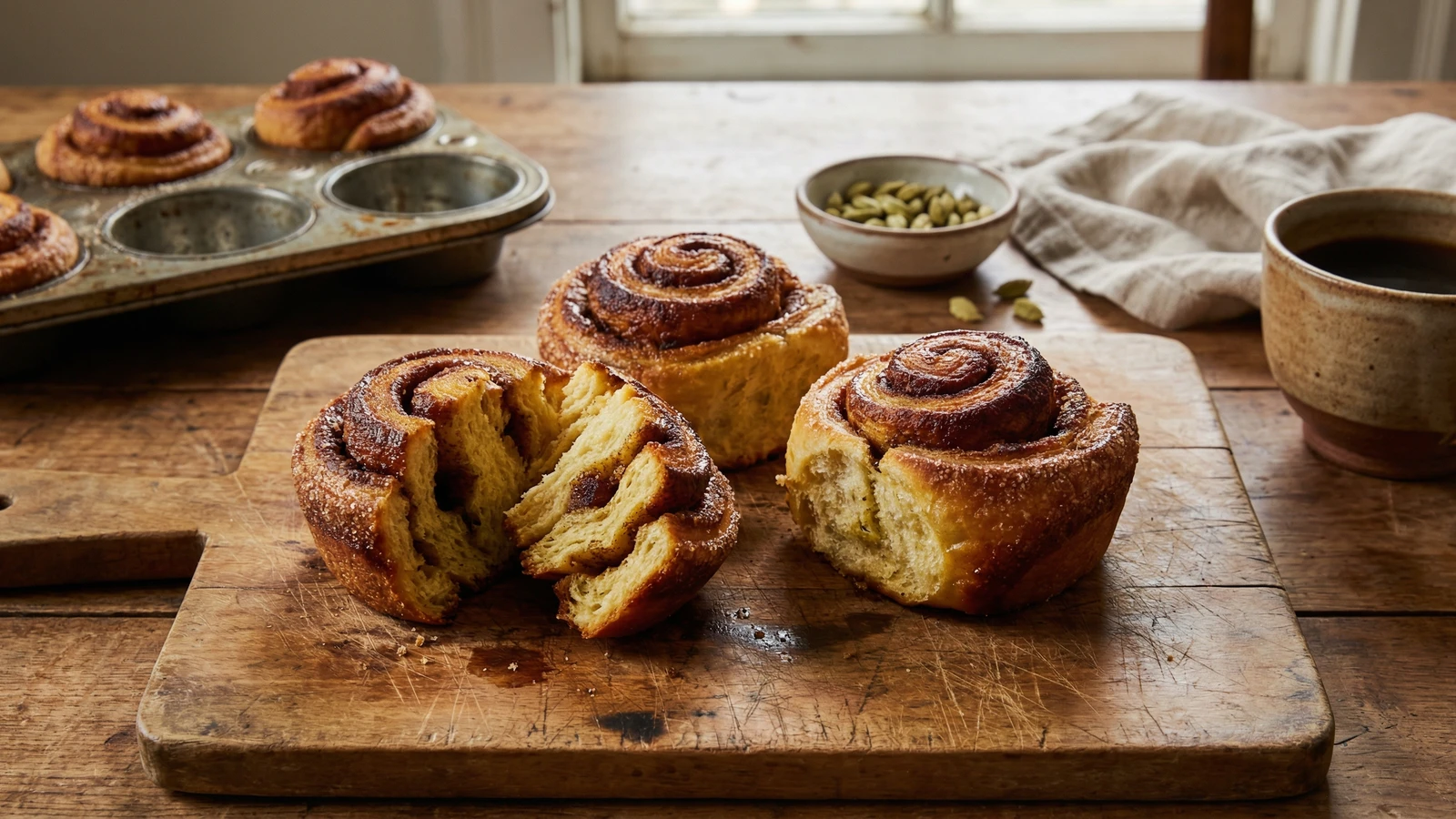
Cardamom Morning Buns
Created by Chef Ally
Flaky, buttery laminated pastry spiraled with brown sugar and freshly ground cardamom, baked until the edges turn deeply caramelized and the kitchen smells like Sunday mornings should.
Cardamom is the heart of this pastry. Buy it in pods, green and fragrant, and crack them open yourself. The seeds inside should smell intensely floral, almost citrus-bright. Pre-ground cardamom from a jar has lost its aliveness. You will taste the difference in every bite.
The butter matters just as much. Good European-style butter with high fat content creates those shattering layers. I look for butter from small dairies, the kind with flavor so pronounced you could spread it on bread and call it dessert. This is not the moment for shortcuts.
Morning buns came out of Berkeley in a way that felt inevitable. The city's obsession with quality ingredients, the French provincial techniques that had taken root here, the willingness to wake before dawn to bake something extraordinary. When you pull these from the oven, sugar caramelized into amber lace around the edges, you understand why people lined up before the doors opened.
This is a two-day recipe. The dough rests overnight, which develops flavor and makes lamination gentler on your schedule. The process rewards patience. Every fold builds more layers. Every rest makes the butter and flour become partners rather than adversaries.
The technique, the tradition, and the story behind every dish.
Discover Culinary AdvisorIngredients
active dry yeast
Quantity
2 1/4 teaspoons (1 packet)
warm water
Quantity
1/4 cup
105-110°F
whole milk
Quantity
3/4 cup
cold
granulated sugar (for dough)
Quantity
1/4 cup
fine sea salt (for dough)
Quantity
1 teaspoon
large egg
Quantity
1
at room temperature
all-purpose flour
Quantity
3 cups (380g), plus more for rolling
cold unsalted European-style butter
Quantity
1 cup plus 2 tablespoons (2 1/2 sticks/283g)
divided
light brown sugar
Quantity
1 cup
packed
freshly ground cardamom
Quantity
1 1/2 tablespoons
from about 40 pods
ground cinnamon
Quantity
1 teaspoon
fine sea salt (for filling)
Quantity
1/4 teaspoon
unsalted butter (for filling)
Quantity
4 tablespoons
melted and cooled
granulated sugar (for coating)
Quantity
1/2 cup
| Ingredient | Quantity |
|---|---|
| active dry yeast | 2 1/4 teaspoons (1 packet) |
| warm water105-110°F | 1/4 cup |
| whole milkcold | 3/4 cup |
| granulated sugar (for dough) | 1/4 cup |
| fine sea salt (for dough) | 1 teaspoon |
| large eggat room temperature | 1 |
| all-purpose flour | 3 cups (380g), plus more for rolling |
| cold unsalted European-style butterdivided | 1 cup plus 2 tablespoons (2 1/2 sticks/283g) |
| light brown sugarpacked | 1 cup |
| freshly ground cardamomfrom about 40 pods | 1 1/2 tablespoons |
| ground cinnamon | 1 teaspoon |
| fine sea salt (for filling) | 1/4 teaspoon |
| unsalted butter (for filling)melted and cooled | 4 tablespoons |
| granulated sugar (for coating) | 1/2 cup |
Equipment Needed
- •Stand mixer with dough hook
- •Rolling pin
- •Spice grinder or mortar and pestle
- •Standard 12-cup muffin tin
- •Pastry brush
- •Wire cooling rack
Instructions
- 1
Bloom the yeast
Sprinkle the yeast over the warm water in a small bowl. Let it sit until foamy, about five minutes. If nothing happens, your yeast is dead. Start again with fresh yeast. This step tells you whether your bread will rise before you commit to the work.
- 2
Mix the dough
In a stand mixer fitted with the dough hook, combine the cold milk, sugar, salt, egg, and bloomed yeast. Add the flour and two tablespoons of the butter, softened. Mix on low speed until a shaggy dough forms, then increase to medium and knead for four to five minutes. The dough should be smooth, slightly tacky, and pull cleanly from the sides of the bowl.
Cold milk is intentional. It keeps the dough cool, which matters when you introduce the butter block later. - 3
First rise
Shape the dough into a ball and place it in a lightly oiled bowl. Cover with plastic wrap and let rise at room temperature until doubled, about one hour. Then refrigerate for at least four hours, or overnight. The cold rest makes the dough easier to roll and develops more complex flavor.
- 4
Prepare the butter block
Cut the remaining cup of cold butter into tablespoon-sized pieces and arrange them on a sheet of parchment paper in a rough square. Cover with another sheet of parchment and pound with a rolling pin until you have an even 6-inch square, about half an inch thick. The butter should be pliable but still cold. Refrigerate until firm but bendable, about twenty minutes.
The butter and dough must be the same temperature and pliability. If the butter is too cold, it will crack through the dough. Too warm, and it will ooze out. - 5
Encase the butter
On a lightly floured surface, roll the chilled dough into a 10-inch square. Place the butter block diagonally in the center, like a diamond. Fold the four corners of the dough over the butter, overlapping slightly in the center. Pinch the seams to seal completely. No butter should be visible.
- 6
First fold
Roll the dough away from you into a rectangle about 8 by 18 inches, keeping the edges as straight as possible. Brush off excess flour with a dry pastry brush. Fold the bottom third up and the top third down, like a business letter. This is your first turn. Wrap in plastic and refrigerate for thirty minutes.
- 7
Complete the lamination
Repeat the rolling and folding process two more times, chilling for thirty minutes between each turn. Always start with the seam on your left, like a book. After three turns, you have created eighty-one layers of butter and dough. Wrap tightly and refrigerate for at least one hour, or overnight.
If the butter starts to break through or the dough feels warm at any point, stop and refrigerate for fifteen minutes. Patience here creates flakiness. - 8
Make the cardamom filling
Crack the cardamom pods and remove the seeds. Grind them in a spice grinder or mortar until fine but not powdery. You want some texture. Combine with the brown sugar, cinnamon, and salt in a bowl. The fragrance should be immediate and intoxicating. If it smells faint, your cardamom is too old.
- 9
Roll and fill
On a lightly floured surface, roll the laminated dough into a 12 by 18-inch rectangle, about a quarter inch thick. Brush the entire surface with the melted butter, leaving a half-inch border along one long edge. Spread the cardamom sugar evenly over the butter, pressing gently so it adheres.
- 10
Shape the buns
Starting from the long edge closest to you, roll the dough into a tight log. Keep tension but do not stretch. Pinch the seam gently to seal. Using a sharp knife, trim the uneven ends, then cut the log into twelve equal pieces, each about one and a half inches wide.
- 11
Prepare the pan
Generously butter a standard twelve-cup muffin tin. Spoon about two teaspoons of granulated sugar into each cup, tilting to coat the sides. This sugar will caramelize during baking, creating that signature lacquered shell. Place one spiral, cut side up, into each cup. The dough should fill about two-thirds of each cup.
- 12
Final rise
Cover the pan loosely with plastic wrap and let rise in a warm spot until the buns are puffy and have risen to the rim of the cups, about one and a half to two hours. They should jiggle when you gently shake the pan. Preheat your oven to 375°F during the last thirty minutes of rising.
- 13
Bake until caramelized
Bake for twenty to twenty-five minutes, until deeply golden brown on top and the sugar around the edges has turned to amber caramel. The buns will puff dramatically and may spill over slightly. This is good. Rotate the pan halfway through for even browning.
- 14
Coat and cool
Place the remaining granulated sugar in a shallow bowl. Let the buns cool in the pan for exactly three minutes. Not longer, or the caramel will cement them in place. Invert the pan over a wire rack, tapping firmly to release. Immediately roll each warm bun in the sugar, coating all sides. The heat makes the sugar adhere and adds a sparkled crunch.
Chef Tips
- •Buy cardamom pods from a spice shop with good turnover, or order from a source you trust. The green pods should feel plump. Crack one open and smell the seeds. They should hit you immediately with that unmistakable floral, almost eucalyptus brightness.
- •European-style butter has at least eighty-two percent fat compared to the standard eighty percent in American butter. That extra fat creates more distinct layers and a richer taste. Look for brands like Plugrá, Kerrygold, or butter from a local creamery.
- •If your kitchen is warm, chill your rolling pin and work surface. Lamination fails when butter melts into the dough instead of staying in layers. A marble slab, if you have one, stays naturally cool.
- •These buns are best within four hours of baking, when the caramel is still slightly tacky and the interior impossibly soft. They will keep overnight in an airtight container, but they lose their magic quickly.
Advance Preparation
- •The dough can be made and laminated up to two days ahead. After completing all three turns, wrap tightly in plastic and refrigerate. The cold rest actually improves the texture.
- •Shaped buns can be refrigerated overnight before baking. Cover the filled muffin tin with plastic wrap and refrigerate immediately after shaping. In the morning, let them come to room temperature and rise for about two hours before baking.
- •The cardamom filling can be mixed up to one week ahead and stored in an airtight container. The flavors will meld and deepen.
Frequently Asked Questions
Nutrition Information
1 serving (about 100g)
Where cooking meets culture.
Culinary mentorship, cultural storytelling, and the editorial depth that makes cooking meaningful.
Explore Culinary Advisor