Culinary Advisor
A cooking platform built around craft, culture, and the stories behind what we eat.
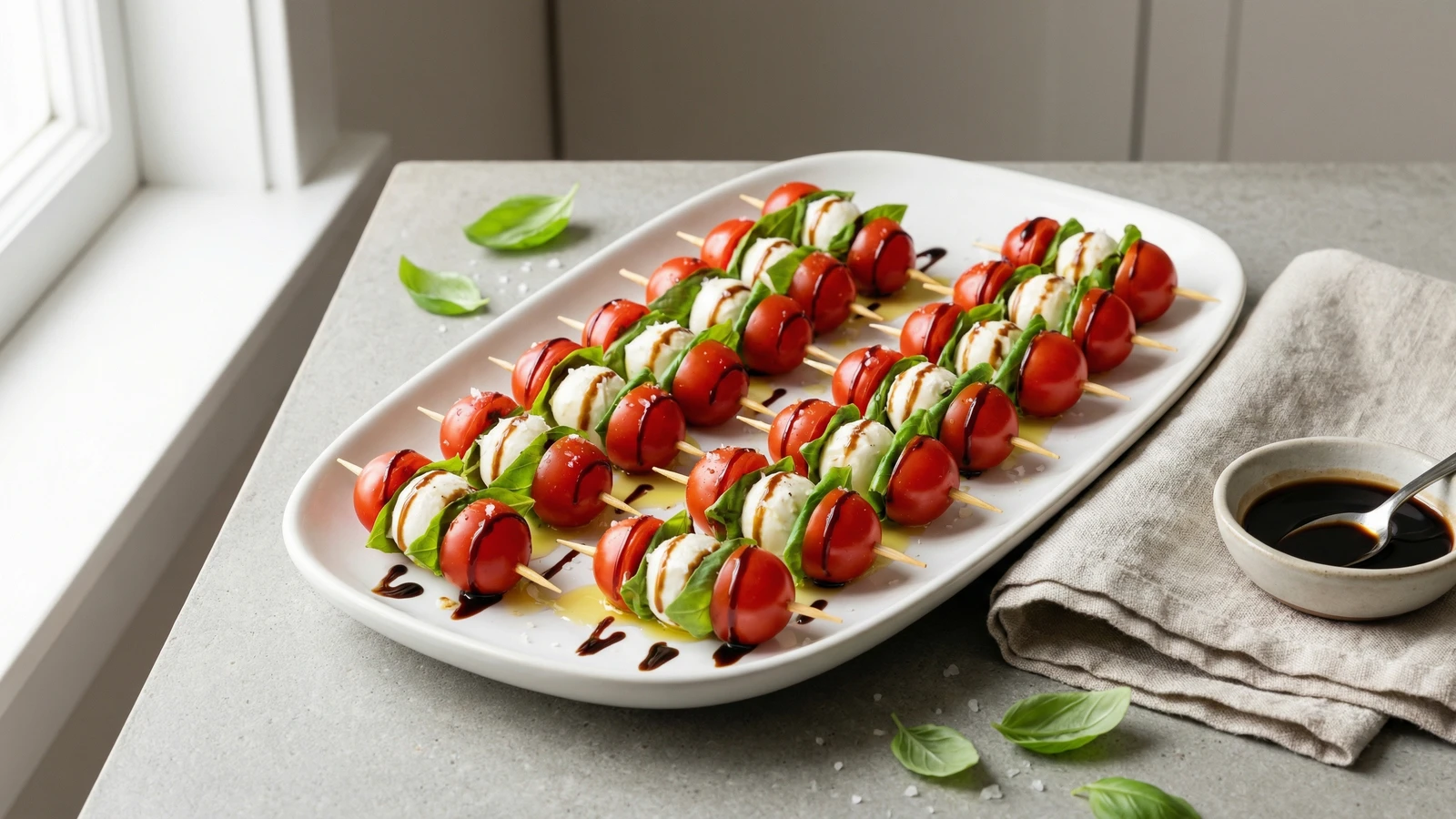
Caprese Skewers with Balsamic Glaze
Created by
The holy trinity of Italian summer cooking, assembled on a stick for civilized eating. Ripe tomatoes, milky mozzarella, and fragrant basil become finger food that disappears faster than you can make it.
The insalata caprese has survived countless bastardizations since it left the island of Capri in the early twentieth century. Mealy winter tomatoes. Rubbery mass-produced mozzarella. Dried basil from a jar. I've seen crimes committed in its name at hotel buffets across this nation.
But the original concept is flawless: three ingredients at their peak, assembled with restraint, dressed with nothing more than good olive oil and perhaps a whisper of sea salt. Threading these components onto skewers transforms an iconic salad into party food without sacrificing its soul.
The skewer format solves the eternal cocktail party problem. Guests can eat while holding a drink, without balancing a plate or hunting for a fork. Each bite contains the complete composition. No one gets stuck with a naked tomato while someone else hoards all the mozzarella.
This recipe succeeds or fails entirely on ingredient quality. I cannot stress this enough. A perfect caprese skewer made with supermarket tomatoes in February will disappoint you. The same skewer made with farmers market tomatoes in August will make you briefly reconsider every choice that led you away from a life in Italy.
The technique, the tradition, and the story behind every dish.
Discover Culinary AdvisorIngredients
ripe cherry or grape tomatoes
Quantity
24 (about 1 pint)
fresh mozzarella
Quantity
8 ounces
ciliegine or bocconcini, drained
fresh basil leaves
Quantity
24
medium-sized
extra-virgin olive oil
Quantity
3 tablespoons
balsamic glaze
Quantity
2 tablespoons
flaky sea salt
Quantity
to taste
black pepper
Quantity
to taste
freshly cracked
wooden skewers or cocktail picks
Quantity
24 (4-6 inches)
| Ingredient | Quantity |
|---|---|
| ripe cherry or grape tomatoes | 24 (about 1 pint) |
| fresh mozzarellaciliegine or bocconcini, drained | 8 ounces |
| fresh basil leavesmedium-sized | 24 |
| extra-virgin olive oil | 3 tablespoons |
| balsamic glaze | 2 tablespoons |
| flaky sea salt | to taste |
| black pepperfreshly cracked | to taste |
| wooden skewers or cocktail picks | 24 (4-6 inches) |
Equipment Needed
- •24 wooden skewers or bamboo cocktail picks (4-6 inches)
- •Serving platter or wooden board
- •Paper towels for draining mozzarella
Instructions
- 1
Select your tomatoes
Sort through your cherry tomatoes with a critical eye. You want specimens that are uniformly ripe, meaning they yield slightly to pressure and smell like summer through the skin. Discard any with soft spots, cracks, or pale shoulders. Rinse gently and dry completely. Water on the surface will prevent olive oil from adhering and dilute your seasoning.
Grape tomatoes hold up better for make-ahead preparation, but cherry tomatoes burst with more juice when bitten. Choose based on your timeline and preference. - 2
Prepare the mozzarella
Drain your mozzarella thoroughly. Fresh mozzarella sits in brine or whey that will weep onto your platter if not removed. Spread the balls on a paper towel-lined plate and pat dry. If using larger bocconcini, cut them in half. Each piece should be roughly the same size as your tomatoes for visual harmony and balanced bites.
- 3
Ready the basil
Select basil leaves of similar size, large enough to wrap partially around the mozzarella but not so enormous they overwhelm the skewer. Rinse only if necessary and dry gently between paper towels. Bruised basil oxidizes and turns black. Handle the leaves as you would something precious, because they are.
- 4
Assemble the skewers
Thread each skewer in this order: tomato first, pushing it toward the bottom third of the skewer. Next, fold a basil leaf in half or quarters and pierce through. Finally, add a mozzarella ball. The tomato anchors the bottom, the cheese crowns the top, and the basil provides a verdant stripe between. Work efficiently but without rushing. Assembly line methodology helps here.
If your wooden skewers have splinters, soak them in water for ten minutes first. Better yet, invest in bamboo cocktail picks with decorative ends. They look more polished and pierce ingredients cleanly. - 5
Arrange for serving
Lay completed skewers on your serving platter in neat rows, all facing the same direction. Leave space between each for easy grabbing. A white platter showcases the red, white, and green beautifully, though a wooden board offers rustic appeal. The choice depends on your table and your mood.
- 6
Dress with olive oil
Drizzle extra-virgin olive oil over the assembled skewers using a confident back-and-forth motion. You want thin ribbons that coat without pooling. The oil should glisten on every surface, highlighting the tomato's taut skin and the mozzarella's porcelain smoothness. Good olive oil announces itself with grassy, peppery fragrance the moment it hits the ingredients.
- 7
Add the balsamic glaze
Drizzle balsamic glaze in thin zigzag lines across the platter. The consistency should be syrupy enough to hold its shape, thick enough to cling rather than run. Dark mahogany streaks against the pale mozzarella create visual drama. Resist the urge to flood the platter. Balsamic glaze is intense, and restraint here prevents the sweetness from overwhelming the fresh ingredients.
Store-bought balsamic glaze works beautifully. To make your own, simmer one cup of balsamic vinegar over medium-low heat until reduced by half, about fifteen minutes. It thickens further as it cools. - 8
Season and serve
Finish with a generous pinch of flaky sea salt scattered from height, so it distributes evenly and lands like snowflakes. Add several grinds of black pepper. Serve within thirty minutes at room temperature. Cold mozzarella tastes muted. Room temperature mozzarella tastes like milk and cream and everything good about Italian dairying.
Chef Tips
- •Seek out ciliegine (cherry-sized mozzarella balls) at Italian delis or well-stocked cheese counters. They're pre-portioned and eliminate cutting. Bocconcini work too but require halving. Avoid the pre-shredded or block mozzarella sold for pizza. That's a different product entirely, engineered for melting rather than eating fresh.
- •Balsamic glaze and balsamic vinegar are not interchangeable. Regular balsamic vinegar will run off the skewers and taste sharply acidic. The glaze has been reduced to a thick, sweet-tart syrup. Look for it near the vinegars or in the Italian foods section. Trader Joe's makes an excellent affordable version.
- •For larger gatherings, double or triple confidently. The recipe scales linearly. Figure three to four skewers per guest for cocktail parties, two per guest if other substantial appetizers are present.
- •If tomatoes are out of season, consider using marinated sun-dried tomatoes or roasted cherry tomatoes at room temperature. The dish changes character but remains honest about what's available.
Advance Preparation
- •Skewers can be assembled up to four hours ahead. Arrange on a parchment-lined baking sheet, cover tightly with plastic wrap, and refrigerate. Remove thirty minutes before serving to bring to room temperature.
- •Hold off on the olive oil, balsamic glaze, and salt until just before serving. Adding these too early draws moisture from the tomatoes and dilutes the seasoning.
- •Balsamic glaze keeps indefinitely at room temperature. Make a double batch and store in a squeeze bottle for easy drizzling on salads, grilled vegetables, and strawberries.
Frequently Asked Questions
Nutrition Information
1 skewer (about 29g)
Where cooking meets culture.
Culinary mentorship, cultural storytelling, and the editorial depth that makes cooking meaningful.
Explore Culinary Advisor