Culinary Advisor
A cooking platform built around craft, culture, and the stories behind what we eat.
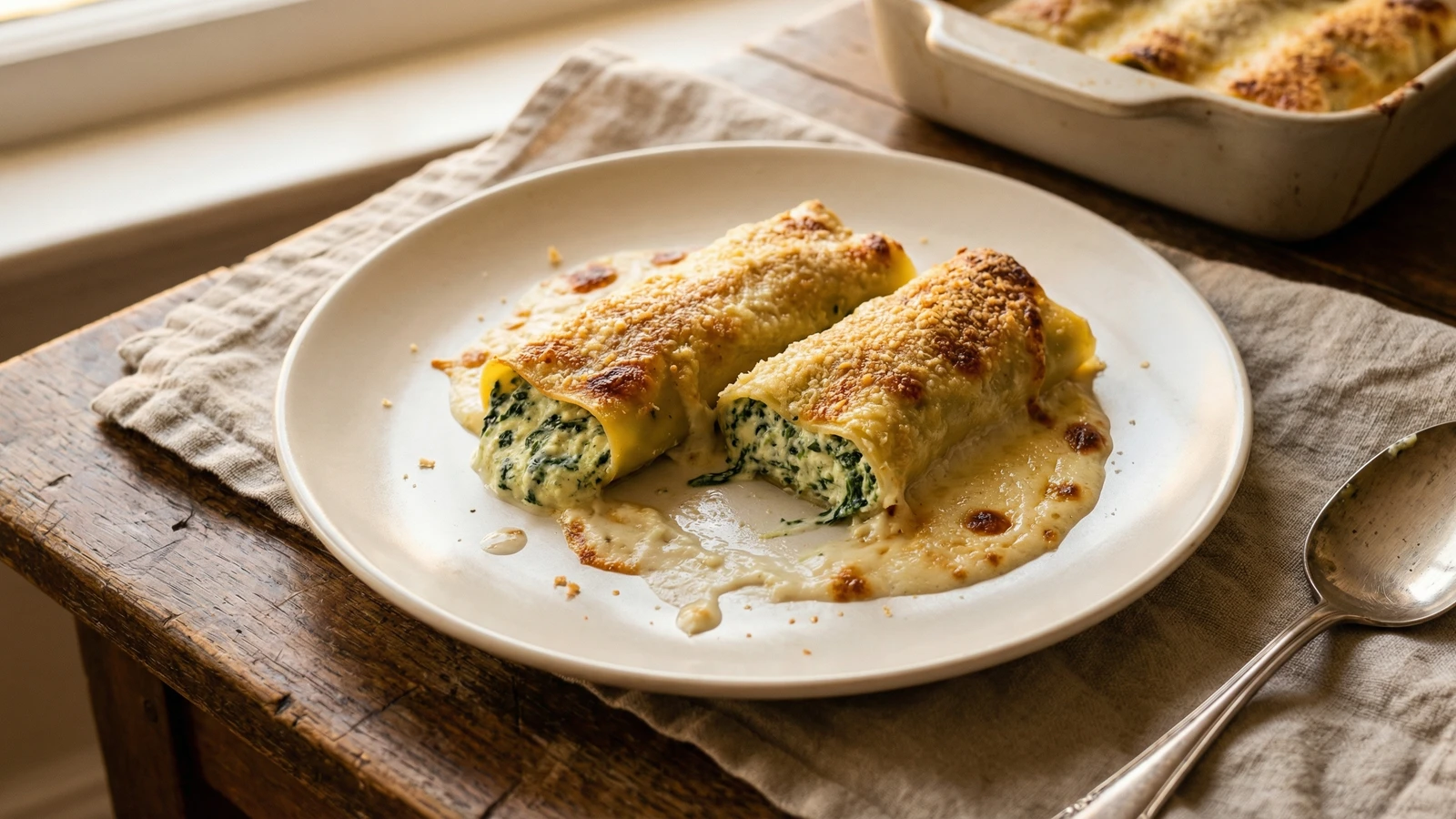
Cannelloni Ricotta e Spinaci
Created by Chef Graziella
Hand-rolled pasta sheets wrapped around a filling of ricotta and spinach, covered in besciamella and baked until golden. This is the Sunday cooking of Emilia-Romagna, made without shortcuts.
The supermarkets sell dried cannelloni tubes, ridged and hollow, waiting to be stuffed. I have never used them. I never will. They cook unevenly, crack when you try to fill them, and taste of nothing at all. Fresh pasta sheets, rolled thin and blanched briefly, yield cannelloni that melt into the filling they embrace. There is no comparison.
This is a dish that rewards attention. The spinach must be squeezed until not a drop of water remains. The besciamella must be cooked until it coats the spoon properly, without lumps, without the raw taste of flour. The pasta must be thin enough to see through. Each component is simple; the combination requires care.
In Emilia-Romagna, where I learned to cook, Sunday dinners meant dishes like this: prepared in the morning, assembled with purpose, baked until the top turned golden and the kitchen filled with the smell of butter and cheese. The family gathered. The conversation stopped when the dish came out. Some things do not require words.
Cannelloni in their modern form emerged in early 20th-century Italy, though filled pasta tubes have existed for centuries. The name derives from canna, meaning reed or tube. Emilia-Romagna claims the definitive version with fresh egg pasta, though Campania contests this with dried pasta and tomato sauce. Both traditions have merit; mine is simply better.
The technique, the tradition, and the story behind every dish.
Discover Culinary AdvisorIngredients
tipo 00 flour
Quantity
300g
large eggs
Quantity
3
extra virgin olive oil
Quantity
1 tablespoon
fine salt
Quantity
pinch
fresh spinach
Quantity
1 pound
stems removed
fresh whole-milk ricotta
Quantity
1 pound
large egg yolk
Quantity
1
Parmigiano-Reggiano
Quantity
3/4 cup plus 1/2 cup
freshly grated
nutmeg
Quantity
1/4 teaspoon total
freshly grated
fine salt
Quantity
to taste
black pepper
Quantity
to taste
freshly ground
unsalted butter
Quantity
4 tablespoons plus 2 tablespoons
all-purpose flour
Quantity
1/4 cup
whole milk
Quantity
3 cups
warmed
| Ingredient | Quantity |
|---|---|
| tipo 00 flour | 300g |
| large eggs | 3 |
| extra virgin olive oil | 1 tablespoon |
| fine salt | pinch |
| fresh spinachstems removed | 1 pound |
| fresh whole-milk ricotta | 1 pound |
| large egg yolk | 1 |
| Parmigiano-Reggianofreshly grated | 3/4 cup plus 1/2 cup |
| nutmegfreshly grated | 1/4 teaspoon total |
| fine salt | to taste |
| black pepperfreshly ground | to taste |
| unsalted butter | 4 tablespoons plus 2 tablespoons |
| all-purpose flour | 1/4 cup |
| whole milkwarmed | 3 cups |
Equipment Needed
- •Pasta machine or long rolling pin
- •9 by 13 inch baking dish
- •Large pot for blanching pasta
- •Heavy saucepan for besciamella
- •Wooden board for rolling pasta
Instructions
- 1
Make the pasta dough
Mound the flour on a wooden board and create a well in the center. Crack the eggs into the well, add the olive oil and salt. Using a fork, beat the eggs while gradually incorporating flour from the inner walls of the well. When the mixture becomes too thick to stir, bring the remaining flour over the dough and begin kneading. Knead until the dough is smooth and elastic, about 8 to 10 minutes. It should feel like your earlobe when pressed. Wrap in plastic and rest for 30 minutes at room temperature.
If the dough feels sticky, dust with flour. If it feels dry and cracked, wet your hands slightly and continue kneading. The humidity in your kitchen affects everything. - 2
Prepare the spinach
Wash the spinach in several changes of cold water. Place the wet leaves in a large pot, cover, and cook over medium heat until completely wilted, about 4 minutes. The water clinging to the leaves provides sufficient moisture. Drain in a colander and run under cold water to stop the cooking. When cool enough to handle, squeeze the spinach with your hands, extracting every possible drop of water. This is critical. Wet spinach will make your filling watery and your cannelloni will weep in the oven. Chop the spinach fine.
I cannot emphasize this enough: the spinach must be dry. Squeeze it, then squeeze it again. Spread it on a clean towel and press. What seems excessive is merely adequate. - 3
Make the filling
In a large bowl, combine the ricotta, chopped spinach, egg yolk, Parmigiano-Reggiano, and nutmeg. Season with salt and pepper. Mix thoroughly with a wooden spoon until completely uniform. Taste and adjust the seasoning. The filling should be flavorful on its own; it will not magically improve in the oven.
- 4
Make the besciamella
In a heavy saucepan, melt the butter over medium heat. When the foam subsides, add the flour all at once and stir vigorously with a wooden spoon. Cook this roux for 2 minutes, stirring constantly. It should not color. Begin adding the warm milk in a thin stream, whisking continuously to prevent lumps. Once all the milk is added, continue cooking and stirring until the sauce thickens enough to coat the back of a spoon, about 8 to 10 minutes. Add the nutmeg and salt to taste. Remove from heat and cover the surface directly with plastic wrap to prevent a skin from forming.
The milk must be warm. Cold milk added to hot roux creates lumps that no amount of whisking will dissolve. This is physics, not opinion. - 5
Roll the pasta
Divide the rested dough into four pieces. Work with one piece at a time, keeping the others covered. Roll the dough through a pasta machine, starting at the widest setting and progressively narrowing until you reach the second-thinnest setting. The pasta should be thin enough to see the shadow of your hand through it. Cut each sheet into rectangles approximately 4 by 5 inches. You should have 12 to 14 rectangles.
- 6
Blanch the pasta
Bring a large pot of salted water to a boil. Have ready a large bowl of ice water and clean kitchen towels. Working in batches of three or four, cook the pasta rectangles for 30 seconds only. They should be pliable but not fully cooked; they will finish in the oven. Transfer immediately to the ice water, then lay flat on the towels. Do not stack them wet or they will stick together permanently.
- 7
Fill and roll the cannelloni
Preheat your oven to 400°F (200°C). Butter a 9 by 13 inch baking dish. Spread a thin layer of besciamella on the bottom, just enough to coat. Place about 3 tablespoons of filling along the shorter edge of each pasta rectangle, leaving a half-inch border. Roll the pasta around the filling to form a cylinder. Place seam-side down in the prepared dish. The cannelloni should fit snugly in a single layer.
- 8
Assemble and bake
Spoon the remaining besciamella over the cannelloni, covering them completely. Some sauce should pool between and around them. Sprinkle the Parmigiano-Reggiano evenly over the top. Bake uncovered until the top is golden and bubbling and the edges are beginning to brown, 30 to 35 minutes. Remove from the oven and let rest for 10 minutes before serving. This rest is not optional. It allows the dish to set and the flavors to settle. Serve two cannelloni per person.
Chef Tips
- •Seek out fresh ricotta from an Italian market or a good cheese shop. The grainy, wet ricotta sold in supermarket tubs will make your filling watery and your cannelloni sad. Proper ricotta is creamy and slightly sweet.
- •The besciamella can be made several hours ahead and refrigerated. Press plastic directly onto the surface and reheat gently, adding a splash of milk if it has thickened too much.
- •If fresh spinach is unavailable, frozen spinach may be used. Thaw it completely and squeeze it with even more determination than you would fresh. Frozen spinach releases more water.
- •You may substitute store-bought fresh pasta sheets if you must. Look for thin ones sold in the refrigerated section. They will not be as good, but they will be acceptable.
Advance Preparation
- •The filling can be made one day ahead and refrigerated. Bring to room temperature before using.
- •The besciamella can be made several hours ahead. Cover the surface with plastic wrap and refrigerate. Rewarm gently before assembling.
- •The cannelloni can be assembled completely, covered with plastic wrap, and refrigerated for up to 24 hours before baking. Add 10 minutes to the baking time if baking from cold.
- •Once baked, leftovers keep refrigerated for 3 days. Reheat in a 350°F oven until warmed through, about 20 minutes.
Frequently Asked Questions
Nutrition Information
1 serving (about 335g)
Where cooking meets culture.
Culinary mentorship, cultural storytelling, and the editorial depth that makes cooking meaningful.
Explore Culinary Advisor