Culinary Advisor
A cooking platform built around craft, culture, and the stories behind what we eat.
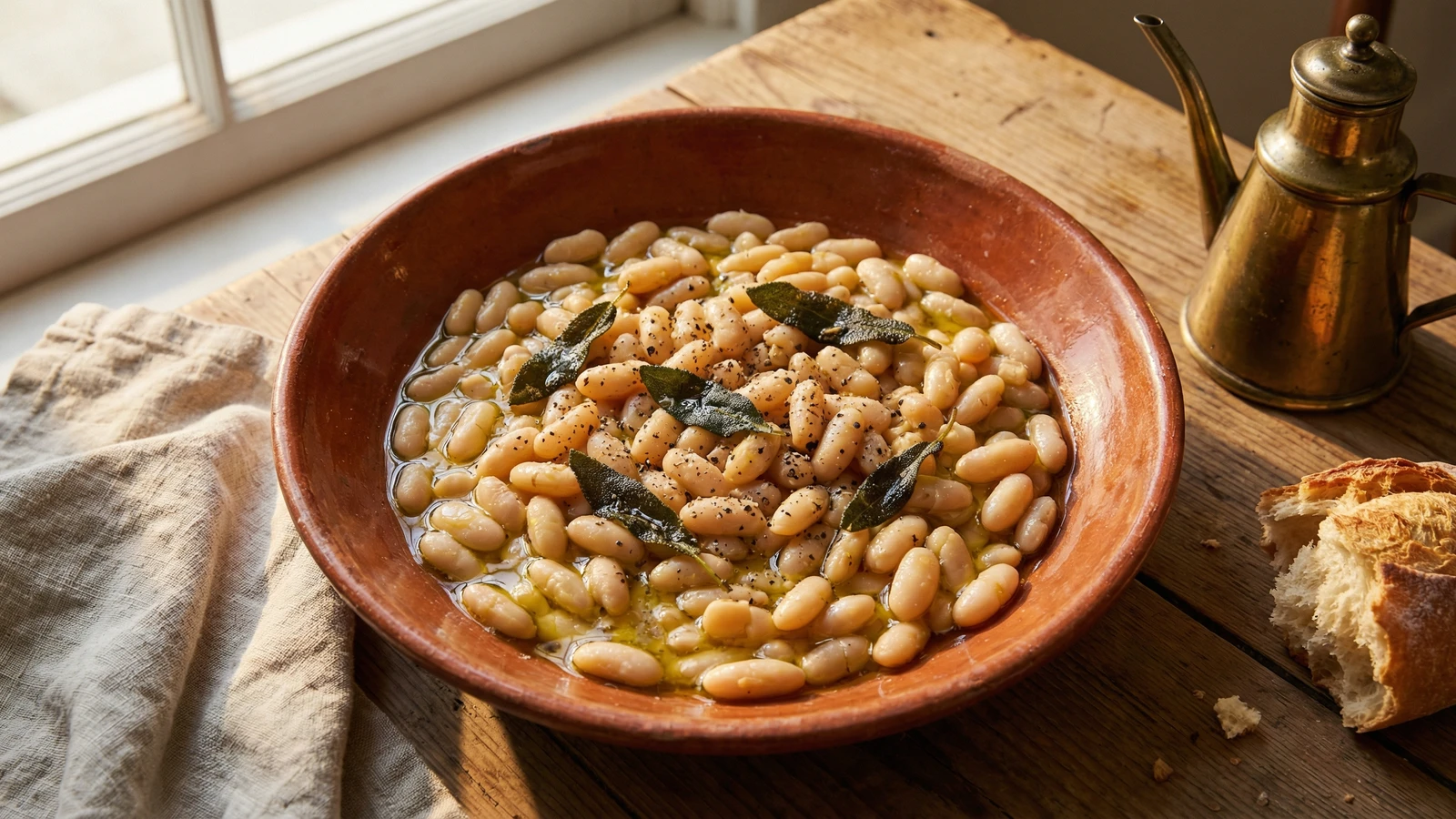
Cannellini con Salvia
Created by Chef Graziella
Tuscan white beans warmed gently with fried sage leaves and a whisper of garlic. This is the contorno that proves restraint is a virtue, not a limitation.
The Tuscans are called mangiafagioli, bean eaters, and they wear this name with pride. While other regions looked down on the humble legume, Tuscan cooks understood that a pot of properly cooked cannellini, dressed with nothing more than sage, garlic, and their finest olive oil, could stand beside any elaborate preparation.
This is not a recipe that tolerates shortcuts. The beans must be dried, soaked overnight, and simmered slowly until they yield to the slightest pressure but hold their shape. Canned beans will not do. They arrive waterlogged and flavorless, having spent months in a tin rather than hours in your kitchen. The difference is the difference between cooking and opening.
The sage leaves are fried until crisp in olive oil, releasing their camphoraceous perfume into the fat. The garlic is whole, bruised, and removed before it can turn bitter. What remains is a dish of profound simplicity: creamy beans, fragrant oil, crackling sage. What you keep out is as significant as what you put in.
Cannellini beans arrived in Tuscany from the Americas in the 16th century and within two generations became so central to the regional diet that Florentines earned the epithet mangiafagioli from their neighbors. The combination with sage, which grows wild on Tuscan hillsides, was inevitable. Peasant cooks discovered that frying the herb in olive oil before warming the beans created something greater than either ingredient alone.
The technique, the tradition, and the story behind every dish.
Discover Culinary AdvisorIngredients
dried cannellini beans
Quantity
1 pound
bay leaf
Quantity
1
fresh rosemary
Quantity
1 sprig
extra virgin olive oil
Quantity
6 tablespoons, plus more for serving
fresh sage leaves
Quantity
12
garlic cloves
Quantity
3
lightly crushed
kosher salt
Quantity
to taste
black pepper
Quantity
to taste
freshly ground
| Ingredient | Quantity |
|---|---|
| dried cannellini beans | 1 pound |
| bay leaf | 1 |
| fresh rosemary | 1 sprig |
| extra virgin olive oil | 6 tablespoons, plus more for serving |
| fresh sage leaves | 12 |
| garlic cloveslightly crushed | 3 |
| kosher salt | to taste |
| black pepperfreshly ground | to taste |
Equipment Needed
- •Heavy 4-quart pot for cooking beans
- •Large skillet
- •Slotted spoon
Instructions
- 1
Soak the beans
Place the dried cannellini beans in a large bowl and cover with cold water by at least three inches. The beans will double in size. Leave them overnight, or for at least eight hours. There is no substitute for this step. Drain and rinse before cooking.
If you forget to soak, you may use the quick-soak method: cover beans with water, bring to a boil for two minutes, remove from heat, cover, and let stand one hour. The texture will be slightly less refined, but acceptable. - 2
Cook the beans
Place the drained beans in a heavy pot and cover with fresh cold water by two inches. Add the bay leaf and rosemary sprig. Bring slowly to a simmer over medium heat. Reduce heat to low and cook at the gentlest simmer, with only occasional bubbles breaking the surface. The beans are done when they yield completely to pressure but hold their shape, about one hour to one hour and fifteen minutes. The time depends on the age of your beans.
Never salt beans while they cook. Salt toughens the skins and prevents the interiors from becoming creamy. Season only after they are tender. - 3
Drain and season
When the beans are tender, drain them, reserving one cup of the cooking liquid. Discard the bay leaf and rosemary. Season the warm beans generously with salt, tasting as you go. They need more than you think. Let them rest while you prepare the sage oil.
- 4
Fry the sage
In a large skillet, warm the olive oil over medium heat. When the oil shimmers, add the sage leaves in a single layer. Fry until the leaves darken slightly and become crisp, about one minute. Watch carefully. Sage burns easily and burned sage is bitter. Remove the leaves to a plate, leaving the oil in the pan.
- 5
Infuse with garlic
Add the crushed garlic cloves to the sage-scented oil. Cook over low heat until the garlic is pale gold and fragrant, about two minutes. The garlic must not brown. Remove and discard the cloves. They have given what they have to give.
- 6
Warm the beans
Add the seasoned beans to the skillet with the infused oil. Toss gently to coat. Add two or three tablespoons of the reserved cooking liquid to loosen the beans slightly. Warm over low heat for three to four minutes, turning occasionally, until the beans are heated through and glistening with oil.
- 7
Serve properly
Transfer the beans to a warm serving bowl. Crumble the fried sage leaves over the top. Grind fresh pepper generously. Drizzle with more olive oil if the spirit moves you. Serve warm or at room temperature. These beans do not need to be hot.
Chef Tips
- •The quality of your olive oil matters enormously here. Use the best you have. You will taste it in every bite, so this is no place for cooking oil.
- •Dried beans from the current harvest cook more quickly and have finer texture than beans that have sat in storage for years. Seek out a source that moves inventory regularly.
- •These beans are traditional alongside roasted pork, grilled sausages, or braised meats. They also make a fine light supper on their own, with crusty bread to soak up the oil.
- •Leftover beans keep well for three days in the refrigerator. Bring to room temperature or warm gently before serving. Add a fresh drizzle of oil.
Advance Preparation
- •Beans can be cooked up to two days ahead and refrigerated in a little of their cooking liquid. Warm gently with the sage oil just before serving.
- •The complete dish holds well at room temperature for up to two hours. Do not refrigerate once dressed, as the oil will congeal unpleasantly.
Frequently Asked Questions
Nutrition Information
1 serving (about 225g)
Where cooking meets culture.
Culinary mentorship, cultural storytelling, and the editorial depth that makes cooking meaningful.
Explore Culinary Advisor