Culinary Advisor
A cooking platform built around craft, culture, and the stories behind what we eat.
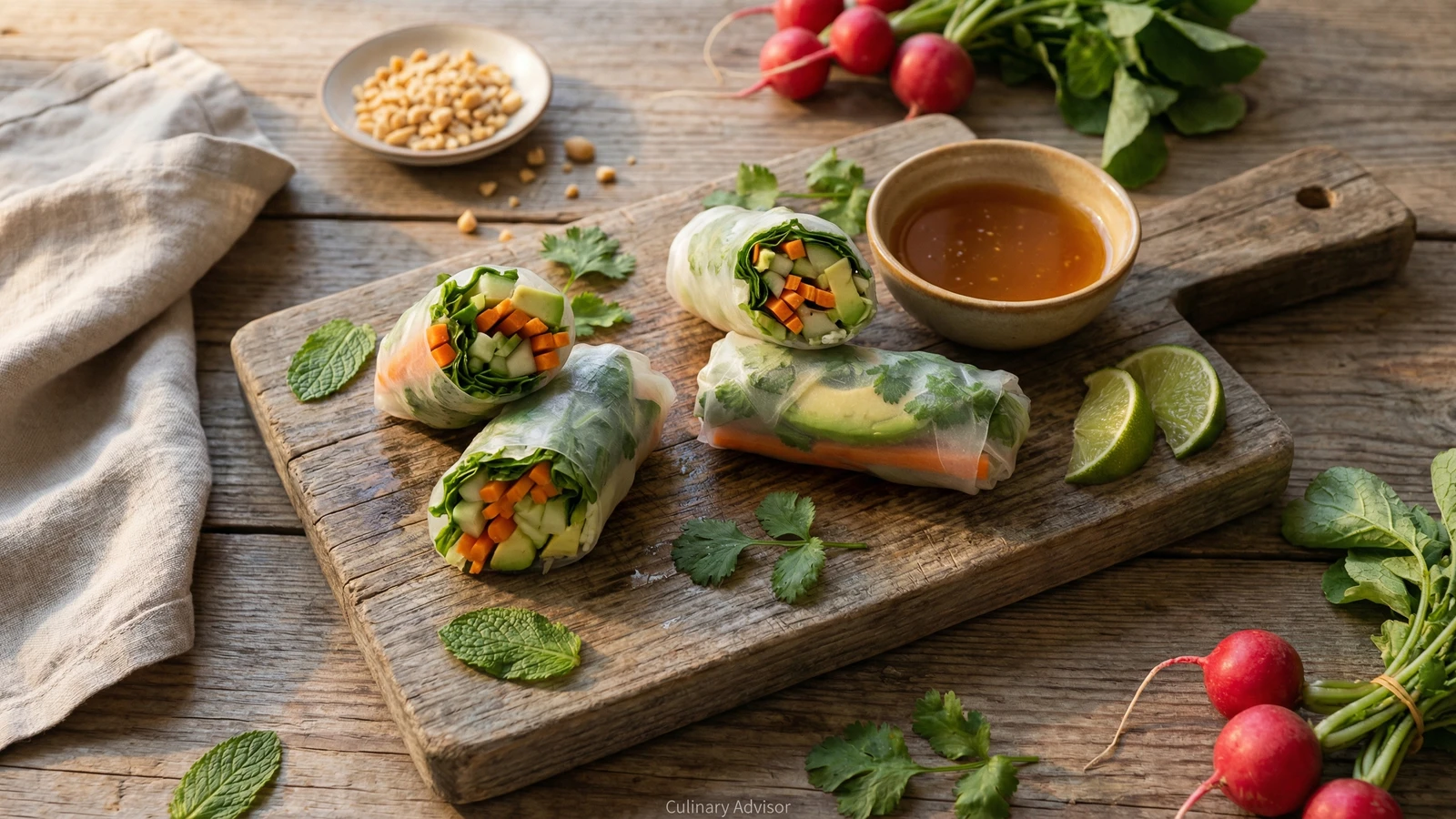
California Summer Rolls with Fresh Herbs
Created by Chef Ally
Translucent rice paper bundles bursting with farmers' market vegetables and fistfuls of fresh herbs, served with a simple dipping sauce that lets every element taste of what it is.
Start at the market. Walk past the tomatoes and stone fruit to the herb table where bundles of mint, cilantro, and Thai basil sit in jars of water, still alive. This is where summer rolls begin.
The rice paper is just a vessel. The real work happens in sourcing: carrots pulled yesterday, cucumbers still cool from morning harvest, avocados that yield to gentle pressure. Perfect ripeness is the whole point here. When your ingredients are right, the rolling becomes almost secondary.
I learned to make these in the early days at the restaurant, when we wanted something light for warm afternoons. The technique came from Vietnamese tradition, but we filled them with whatever the garden offered that week. Butter lettuce from Bob Cannard's farm. Herbs from the beds behind the kitchen. The rolls became a way to honor the season without any heat at all.
Every meal is a meaningful choice. These rolls ask very little of you in the kitchen, but they ask everything of your sourcing. Find farmers you trust. Buy what was picked this morning. Let things taste of what they are.
The technique, the tradition, and the story behind every dish.
Discover Culinary AdvisorIngredients
rice paper wrappers
Quantity
12 (8-inch rounds)
rice vermicelli noodles
Quantity
4 ounces
butter lettuce
Quantity
1 head
leaves separated
carrots
Quantity
2 medium
peeled and cut into thin matchsticks
English cucumber
Quantity
1
seeded and cut into thin matchsticks
avocado
Quantity
1 ripe
sliced thin
radishes
Quantity
4
sliced paper-thin
fresh mint leaves
Quantity
1 cup
fresh cilantro
Quantity
1 cup
tender stems and leaves
fresh Thai basil leaves
Quantity
1/2 cup
fresh chives
Quantity
1/4 cup
cut into 4-inch lengths
roasted peanuts
Quantity
1/4 cup
roughly chopped
fresh lime juice
Quantity
3 tablespoons (about 2 limes)
fish sauce or tamari
Quantity
2 tablespoons
rice vinegar
Quantity
1 tablespoon
honey or maple syrup
Quantity
1 tablespoon
garlic clove
Quantity
1 small
minced fine
fresh chile (optional)
Quantity
1 small
sliced thin
warm water
Quantity
2 tablespoons
| Ingredient | Quantity |
|---|---|
| rice paper wrappers | 12 (8-inch rounds) |
| rice vermicelli noodles | 4 ounces |
| butter lettuceleaves separated | 1 head |
| carrotspeeled and cut into thin matchsticks | 2 medium |
| English cucumberseeded and cut into thin matchsticks | 1 |
| avocadosliced thin | 1 ripe |
| radishessliced paper-thin | 4 |
| fresh mint leaves | 1 cup |
| fresh cilantrotender stems and leaves | 1 cup |
| fresh Thai basil leaves | 1/2 cup |
| fresh chivescut into 4-inch lengths | 1/4 cup |
| roasted peanutsroughly chopped | 1/4 cup |
| fresh lime juice | 3 tablespoons (about 2 limes) |
| fish sauce or tamari | 2 tablespoons |
| rice vinegar | 1 tablespoon |
| honey or maple syrup | 1 tablespoon |
| garlic cloveminced fine | 1 small |
| fresh chile (optional)sliced thin | 1 small |
| warm water | 2 tablespoons |
Equipment Needed
- •Wide shallow dish for soaking rice paper
- •Mandoline or sharp knife for thin slicing
- •Large platter for mise en place
- •Clean kitchen towels
Instructions
- 1
Cook the noodles
Bring a pot of water to boil and remove it from the heat. Submerge the rice vermicelli and let them soften for three to four minutes until pliable but not mushy. Drain, rinse under cold water to stop the cooking, and set aside. The noodles should be tender and separate easily. Toss them with a drop of sesame oil if they seem inclined to clump.
- 2
Prepare your vegetables
Cut the carrots and cucumber into matchsticks about three inches long and as thin as you can manage. Slice the radishes on a mandoline if you have one, thin enough to see light through. Slice the avocado just before rolling to prevent browning. Arrange everything on a large platter or cutting board so you can see your options.
The cutting is the meditation here. Take your time. Uniform pieces roll more neatly and look beautiful through the translucent wrapper. - 3
Prepare the herbs
Wash your herbs gently in cold water and spin them dry. Pick the mint and Thai basil leaves from their stems. Leave the cilantro in sprigs with tender stems attached. Spread everything on a clean kitchen towel. The herbs should be dry but not wilted, alive with that green fragrance that disappears within hours of cutting.
The herbs are not a garnish. They are the heart of the roll. Use them generously, with the same weight as the vegetables. - 4
Make the dipping sauce
Whisk together the lime juice, fish sauce, rice vinegar, honey, garlic, chile if using, and warm water in a small bowl. Taste and adjust. The sauce should be bright and lively, with sweetness balancing the salt and acid. It will taste strong on its own but will temper against the mild vegetables and rice paper.
- 5
Set up your rolling station
Fill a wide, shallow dish with warm water, not hot. Hot water makes the rice paper gummy and difficult to work with. Place a clean, damp kitchen towel on your work surface. Have your vegetables, herbs, noodles, and peanuts within easy reach. Work in an assembly line: dip, fill, roll.
- 6
Soften the rice paper
Dip one rice paper wrapper into the warm water, rotating it for ten to fifteen seconds until it begins to soften but still feels slightly firm. It will continue softening as you work. Lay it flat on your damp towel. Do not wait until the paper is completely soft or it will tear and stick to itself.
The paper should still feel a bit stiff when you remove it from the water. It softens quickly on the towel. Trust the process. - 7
Fill the roll
Place a small butter lettuce leaf on the lower third of the wrapper. Add a small bundle of noodles, then layer carrots, cucumber, radish, and avocado in a tight line. Top with a generous handful of mixed herbs and a pinch of chopped peanuts. The filling should be abundant but not so full that you cannot close the roll. Leave about two inches clear on each side.
- 8
Roll tightly
Fold the bottom edge of the rice paper up and over the filling, tucking it snugly underneath. Fold both sides in toward the center like an envelope. Then roll forward, keeping constant gentle pressure to create a tight cylinder. The rice paper will seal to itself. Set the finished roll seam-side down on a plate.
Your first roll may not be beautiful. The second will be better. By the fourth, your hands will know what to do. This is true of almost everything worth learning. - 9
Serve immediately or store briefly
Cover finished rolls with a damp paper towel as you work to prevent them from drying out. Serve within two hours for the best texture, with the dipping sauce alongside. Cut rolls in half on the diagonal to show off the layers inside, or leave whole for guests to dip and bite.
Chef Tips
- •Buy herbs that are still in their jars of water at the market, not the plastic clamshells. They should look alive because they still are. Herbs lose their aliveness within a day of being cut and packaged.
- •The vegetables listed here are suggestions, not rules. Use what the season offers: shaved summer squash, julienned kohlrabi, thinly sliced snap peas, young beet greens. The method stays the same.
- •If your rice paper tears, do not despair. Simply wrap another sheet around the outside. No one will know, and the roll will hold.
- •For a heartier roll, add poached shrimp, grilled tofu, or shredded chicken. Lay the protein against the wrapper first so it shows through the translucent skin.
- •In cooler months, substitute winter herbs: parsley, chervil, and young arugula make a fine combination when basil and mint are out of season.
Advance Preparation
- •The dipping sauce can be made up to three days ahead and refrigerated. It improves as the flavors marry.
- •Vegetables can be cut and stored in cold water up to four hours ahead. Drain and pat dry before rolling.
- •Assembled rolls can be made up to two hours ahead. Cover with a damp paper towel and plastic wrap, and refrigerate. Beyond two hours, the rice paper becomes tough and chewy.
- •For a gathering, prepare all components and let guests roll their own. It becomes an activity, a conversation, a meal all at once.
Frequently Asked Questions
Nutrition Information
1 serving (about 95g)
Where cooking meets culture.
Culinary mentorship, cultural storytelling, and the editorial depth that makes cooking meaningful.
Explore Culinary Advisor