Culinary Advisor
A cooking platform built around craft, culture, and the stories behind what we eat.
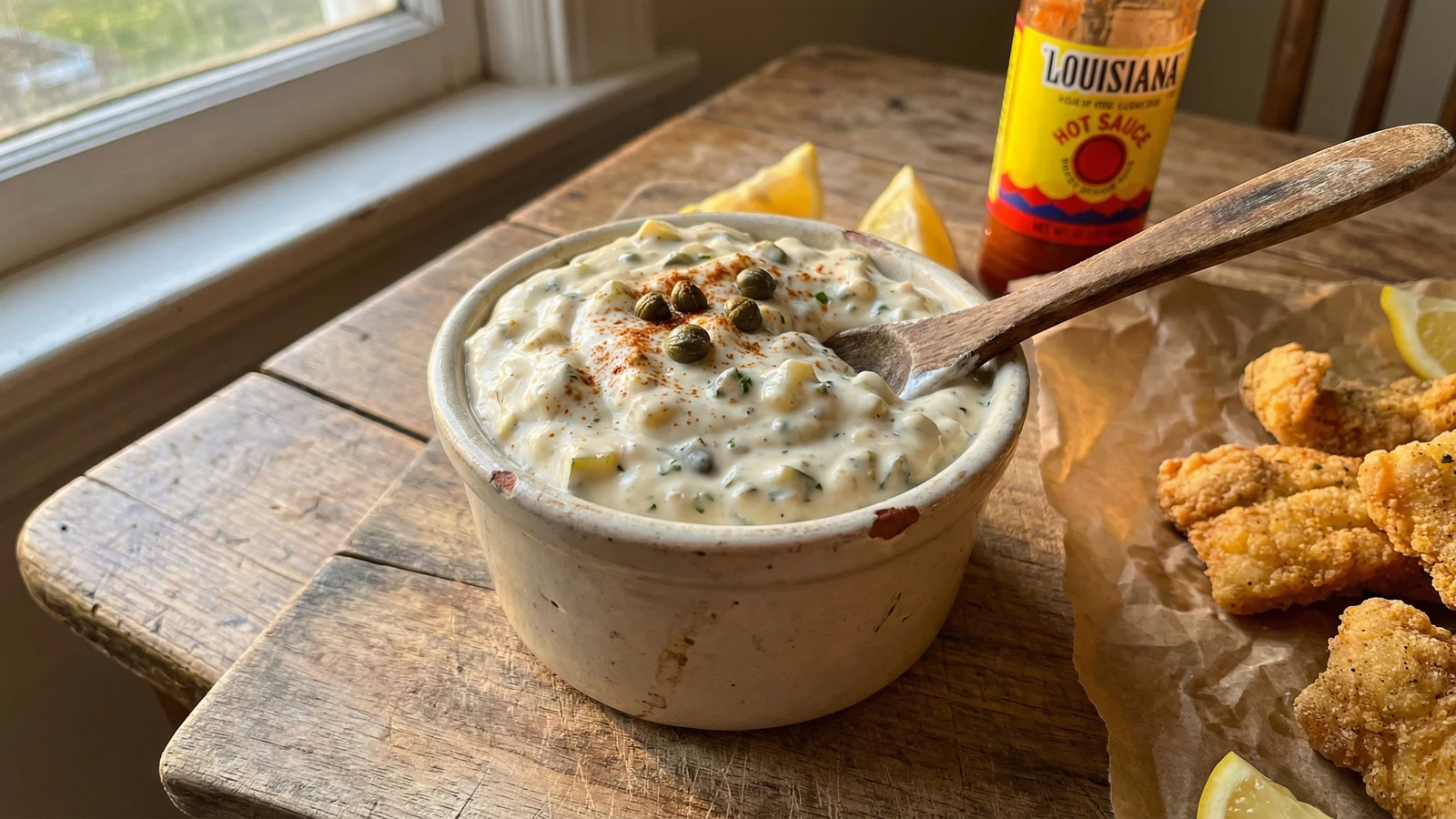
Cajun Tartar Sauce
Created by Chef Remy
A tangy, unapologetic sauce loaded with Creole mustard, briny capers, and enough Louisiana hot sauce to let you know you're eating something real, the only tartar sauce worth serving alongside fried Gulf seafood.
Regular tartar sauce has no business sitting next to a properly fried piece of catfish. That bland, mayo-forward dipping sauce you get at chain restaurants? It's a missed opportunity. Down here, we build flavor into everything, and a condiment is no exception.
This is the tartar sauce we serve at Lagniappe, the one that makes people ask for the recipe before they've finished their po'boy. The secret is layering: Creole mustard brings that coarse-ground heat and vinegar tang, capers add brininess that cuts through the richness of fried food, and Louisiana hot sauce ties it all together with a warmth that builds as you eat.
My grandmother Evangeline used to say that a good sauce should make plain food sing and great food unforgettable. She'd stir hers together in an old ceramic bowl, tasting and adjusting until it was right. No measuring cups. Just instinct and a heavy hand with the hot sauce. That's the bayou way.
Make this a day ahead if you can. The flavors need time to get acquainted, to meld into something greater than the sum of their parts. By the next morning, you won't recognize it as the same sauce you stirred together.
The technique, the tradition, and the story behind every dish.
Discover Culinary AdvisorIngredients
good-quality mayonnaise
Quantity
1 1/2 cups
Creole mustard
Quantity
3 tablespoons
capers
Quantity
2 tablespoons
drained and roughly chopped
dill pickle
Quantity
3 tablespoons
finely minced
green onions
Quantity
2 tablespoons
finely sliced, white and light green parts
fresh flat-leaf parsley
Quantity
1 tablespoon
minced
fresh lemon juice
Quantity
2 teaspoons
Worcestershire sauce
Quantity
1 teaspoon
Louisiana hot sauce
Quantity
1 teaspoon, plus more to taste
garlic clove
Quantity
1 small
minced to a paste
sweet paprika
Quantity
1/2 teaspoon
freshly ground black pepper
Quantity
1/4 teaspoon
kosher salt
Quantity
to taste
| Ingredient | Quantity |
|---|---|
| good-quality mayonnaise | 1 1/2 cups |
| Creole mustard | 3 tablespoons |
| capersdrained and roughly chopped | 2 tablespoons |
| dill picklefinely minced | 3 tablespoons |
| green onionsfinely sliced, white and light green parts | 2 tablespoons |
| fresh flat-leaf parsleyminced | 1 tablespoon |
| fresh lemon juice | 2 teaspoons |
| Worcestershire sauce | 1 teaspoon |
| Louisiana hot sauce | 1 teaspoon, plus more to taste |
| garlic cloveminced to a paste | 1 small |
| sweet paprika | 1/2 teaspoon |
| freshly ground black pepper | 1/4 teaspoon |
| kosher salt | to taste |
Equipment Needed
- •Medium mixing bowl
- •Rubber spatula
- •Sharp knife for mincing
- •Clean jar or airtight container for storage
Instructions
- 1
Build the base
Spoon the mayonnaise into a medium mixing bowl. Add the Creole mustard and stir until completely incorporated. This is your foundation. The mustard should streak through the mayo at first, then disappear into a pale tan base with visible mustard seeds throughout. Take a taste right now. You're learning what the sauce is before you build it into what it will become.
Use real mayonnaise, not the light stuff. Duke's or Hellmann's work beautifully. The fat carries flavor, and we need that richness to balance the acid and heat coming next. - 2
Add the briny elements
Fold in the chopped capers and minced pickle. These two ingredients do the heavy lifting for texture and tang. The capers should be roughly chopped so you get little bursts of brininess in each bite. The pickle adds a different kind of sour, sweeter and more familiar. Stir gently to distribute evenly.
- 3
Layer in the aromatics
Add the green onions, parsley, and garlic paste. The green onions bring a mild onion bite without the harshness of raw white onion. The parsley adds freshness and color. The garlic paste should dissolve into the sauce, adding depth without announcing itself. Stir everything together until the flecks of green are scattered throughout like confetti.
To make garlic paste, sprinkle a pinch of salt over your minced garlic and drag the flat side of your knife across it repeatedly until it becomes a smooth paste. The salt acts as an abrasive. - 4
Season with acid and heat
Add the lemon juice, Worcestershire sauce, hot sauce, paprika, and black pepper. The lemon brightens everything. The Worcestershire adds that savory depth we call umami. The hot sauce brings warmth that builds slowly. Stir well and taste. This is where you make it yours.
- 5
Taste and adjust
Here's where most folks go wrong: they stop too soon. Dip a clean spoon in and taste. Does it need more acid? Add another squeeze of lemon. More heat? A few more shakes of hot sauce. More salt? Probably. The capers and pickles add some, but a pinch of kosher salt often ties everything together. Keep tasting until it makes you want to fry something just to have an excuse to eat more.
The sauce will mellow as it sits. If it tastes perfectly seasoned now, it may taste flat tomorrow. Season it slightly bolder than you think it needs. - 6
Rest and serve
Transfer to a clean jar or covered container and refrigerate for at least one hour before serving. Two hours is better. Overnight is best. The flavors need time to bloom and marry. When you taste it after resting, you'll understand why patience matters. Serve cold alongside fried catfish, shrimp po'boys, crab cakes, or anything else that needs a bold, tangy partner.
Chef Tips
- •At Lagniappe, we make a double batch every morning and let it sit until dinner service. The transformation is remarkable. What starts as a collection of ingredients becomes a unified sauce with depth you can't achieve fresh.
- •Creole mustard is not the same as Dijon. It's coarser, more vinegary, with a different kind of heat. Zatarain's is the gold standard and available in most grocery stores. If you can't find it, mix two parts whole-grain mustard with one part yellow mustard and a splash of cider vinegar.
- •The hot sauce level here is a starting point. I like mine with enough heat that you notice it by the third bite. Some folks want more, some less. Start mild and build up. You can always add heat, but you can't take it away.
- •This sauce is meant for fried seafood, but don't stop there. It's excellent on a roast beef po'boy, spread on a burger, or used as a dip for fried green tomatoes.
Advance Preparation
- •Make the sauce at least one hour ahead for flavors to meld. Overnight is ideal.
- •Keeps refrigerated in an airtight container for up to one week. The flavor actually improves for the first three days.
- •Do not freeze. The mayonnaise base will break when thawed, leaving you with a separated, grainy mess.
Frequently Asked Questions
Nutrition Information
1 serving (about 30g)
Where cooking meets culture.
Culinary mentorship, cultural storytelling, and the editorial depth that makes cooking meaningful.
Explore Culinary Advisor