Culinary Advisor
A cooking platform built around craft, culture, and the stories behind what we eat.
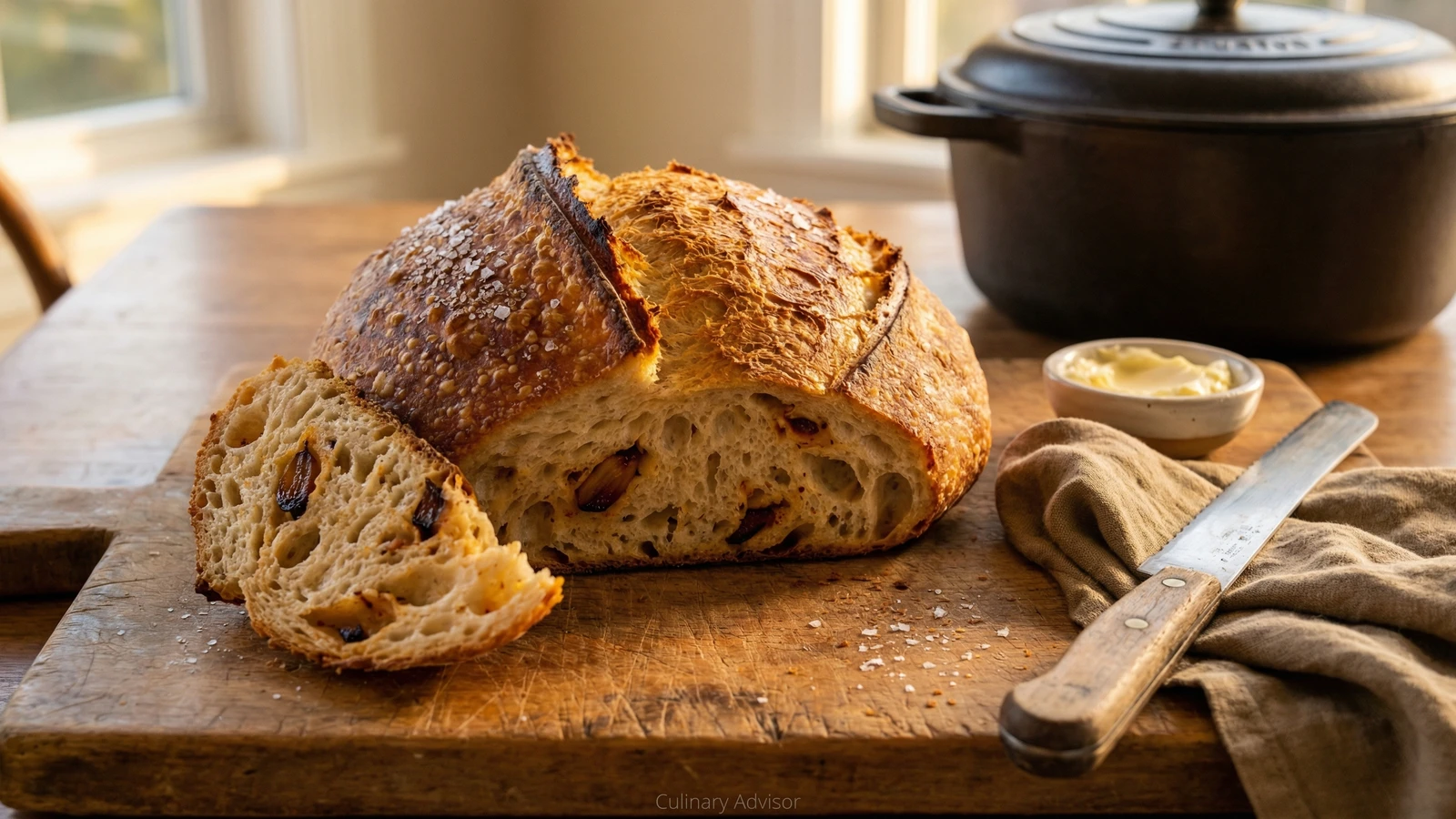
Cajun Roasted Garlic Sourdough
Created by Chef Remy
A crusty, wild-fermented loaf with sweet roasted garlic folded through the crumb and a gentle heat from house-made Cajun spice, the kind of bread that turns a simple meal into a celebration.
Making sourdough is like making a roux. You cannot rush it. You cannot walk away. You watch, you feel, you trust the process. My grandmother Evangeline never made sourdough (she was a cornbread woman through and through), but she understood fermentation. Her pickles, her pepper vinegar, her fig preserves: all of them taught me that time transforms ingredients into something greater than themselves.
I developed this bread at Lagniappe over twenty years of Sunday service. We needed something to set on the table before the gumbo arrived, something that announced Louisiana before a single bite of food hit the plate. Plain sourdough was not enough. So I started folding in roasted garlic from our kitchen and dusting the dough with our house Cajun blend. The regulars noticed immediately. Now they will not let me take it off the menu.
The roasted garlic is everything here. You want it soft as butter, sweet as candy, with that deep caramelized flavor that only comes from slow heat. Fold it through the dough during bulk fermentation and it melts into pockets throughout the crumb. The Cajun spice is subtle, just enough to make people ask what is different about this bread. That is the bayou way: bold enough to notice, balanced enough to keep you reaching for more.
The technique, the tradition, and the story behind every dish.
Discover Culinary AdvisorIngredients
bread flour
Quantity
500g
whole wheat flour
Quantity
50g
water
Quantity
375g
at 80-85°F
active sourdough starter
Quantity
100g
fed and bubbly
fine sea salt
Quantity
11g
whole garlic heads
Quantity
2
extra virgin olive oil
Quantity
2 tablespoons
Cajun spice blend
Quantity
1 tablespoon
flaky sea salt
Quantity
1 teaspoon
for finishing
rice flour
Quantity
for dusting
| Ingredient | Quantity |
|---|---|
| bread flour | 500g |
| whole wheat flour | 50g |
| waterat 80-85°F | 375g |
| active sourdough starterfed and bubbly | 100g |
| fine sea salt | 11g |
| whole garlic heads | 2 |
| extra virgin olive oil | 2 tablespoons |
| Cajun spice blend | 1 tablespoon |
| flaky sea saltfor finishing | 1 teaspoon |
| rice flour | for dusting |
Equipment Needed
- •5-quart Dutch oven with lid
- •Proofing basket or bowl lined with floured cloth
- •Bread lame or very sharp razor blade
- •Instant-read thermometer
- •Wire cooling rack
Instructions
- 1
Roast the garlic
Preheat your oven to 400°F. Slice the top quarter off each garlic head, exposing the cloves. Set them cut-side up on a piece of foil, drizzle with olive oil, and wrap loosely. Roast for 45 minutes to an hour until the cloves are golden and soft as butter when pressed. You will know they are ready when your kitchen smells like a good restaurant. Let them cool enough to handle, then squeeze the cloves into a small bowl and mash gently with a fork. Set aside.
Roast the garlic while you prepare your starter. The timing works out perfectly. - 2
Mix the autolyse
Combine both flours and water in a large bowl. Mix with your hands until no dry flour remains, about two minutes. The dough will be shaggy and rough. That is exactly right. Cover with a damp towel and let rest for one hour. This autolyse hydrates the flour and begins gluten development before you add salt or starter. Patience here pays off in texture later.
- 3
Add starter and salt
Sprinkle the salt over the dough and dollop the active starter on top. Use wet hands to pinch and fold the dough, incorporating everything until the starter and salt are evenly distributed. The dough will feel tighter and more resistant. Work it for three to four minutes until it comes together into a rough ball. Cover and rest thirty minutes.
- 4
Fold in garlic and spice
Spread the mashed roasted garlic over the dough surface. Sprinkle with the Cajun spice blend. Now perform your first stretch and fold: wet your hands, grab one side of the dough, stretch it up and fold it over the center. Rotate the bowl ninety degrees and repeat. Do this four times around the bowl. The garlic will seem unevenly distributed. Do not worry. It will incorporate through subsequent folds.
The Cajun spice should be subtle. Start with one tablespoon and add more to your next loaf if you want more heat. That is the bayou way: build up, never overwhelm. - 5
Bulk fermentation
Over the next four to five hours, perform a set of stretch and folds every forty-five minutes for the first three hours (about four sets total). Then let the dough rest undisturbed. You are looking for the dough to grow by fifty percent, feel airy and jiggly, and show bubbles on the surface and sides. In a warm Louisiana kitchen, this takes about five hours. In a cooler climate, it may take six or seven. Trust the dough, not the clock.
If your kitchen runs cool, place the bowl in your oven with just the light on. The gentle warmth keeps fermentation moving. - 6
Shape the loaf
Turn the dough onto a lightly floured surface. Gently deflate and shape into a round by pulling the edges toward the center, then flipping seam-side down and using your hands to create surface tension, tucking the dough under itself. Work quickly and confidently. The dough should feel alive, slightly tacky but not sticky. Dust a proofing basket generously with rice flour and place the dough seam-side up inside.
- 7
Cold proof overnight
Cover the basket with plastic wrap or a shower cap and refrigerate for twelve to sixteen hours. This cold fermentation develops complex flavors and makes the dough easier to score. The bread actually improves with this slow proof. I have let loaves go eighteen hours when service got busy, and they came out beautiful every time.
- 8
Preheat with Dutch oven
Place your Dutch oven with its lid inside your oven. Preheat to 500°F for at least forty-five minutes. You want that cast iron screaming hot. This initial blast of heat combined with the trapped steam creates the crackling crust that makes sourdough worth the effort. Do not skip this step or try to shorten it.
- 9
Score and bake covered
Remove the dough from the refrigerator. Turn it out onto a piece of parchment paper. Score the top with a sharp blade or razor in whatever pattern pleases you. A single decisive slash down the center is traditional and beautiful. Lower the dough into the screaming hot Dutch oven using the parchment as a sling. Cover immediately. Reduce heat to 475°F and bake covered for twenty minutes. The steam trapped inside creates that glossy, blistered crust.
Score with confidence. A hesitant blade drags and tears. One swift motion, about half an inch deep, is all you need. - 10
Finish uncovered
Remove the lid and continue baking for twenty to twenty-five minutes until the crust is deeply golden with darker spots where the scoring opened. The internal temperature should reach 205-210°F if you want to check. Lift the loaf from the pot and set it on a wire rack. Here is the hardest part: let it cool for at least one hour before cutting. The crumb is still setting. Cut too soon and you will have gummy bread. The crust will crackle and sing as it cools. That sound is your reward for patience.
Chef Tips
- •Your starter must be active and bubbly, doubling in size within four to six hours of feeding. A sluggish starter makes dense bread. Feed it the night before and use it at its peak.
- •If you do not have a Dutch oven, use any heavy pot with a lid that can handle 500°F. At Lagniappe, we use cast iron exclusively. It holds heat like nothing else.
- •Make your own Cajun spice blend: equal parts paprika, garlic powder, and onion powder, half parts each of cayenne, black pepper, white pepper, dried thyme, and dried oregano. Mix a big batch and keep it in a jar.
- •This bread is best eaten within two days. After that, slice and toast it. The roasted garlic flavor intensifies when the bread hits a hot pan with butter.
Advance Preparation
- •The roasted garlic can be made up to five days ahead and refrigerated in olive oil.
- •The shaped dough can cold-proof for up to eighteen hours. Longer develops more sour flavor.
- •Baked bread freezes beautifully for up to two months. Thaw at room temperature and refresh in a 350°F oven for ten minutes.
Frequently Asked Questions
Nutrition Information
1 serving (about 80g)
Where cooking meets culture.
Culinary mentorship, cultural storytelling, and the editorial depth that makes cooking meaningful.
Explore Culinary Advisor