Culinary Advisor
A cooking platform built around craft, culture, and the stories behind what we eat.
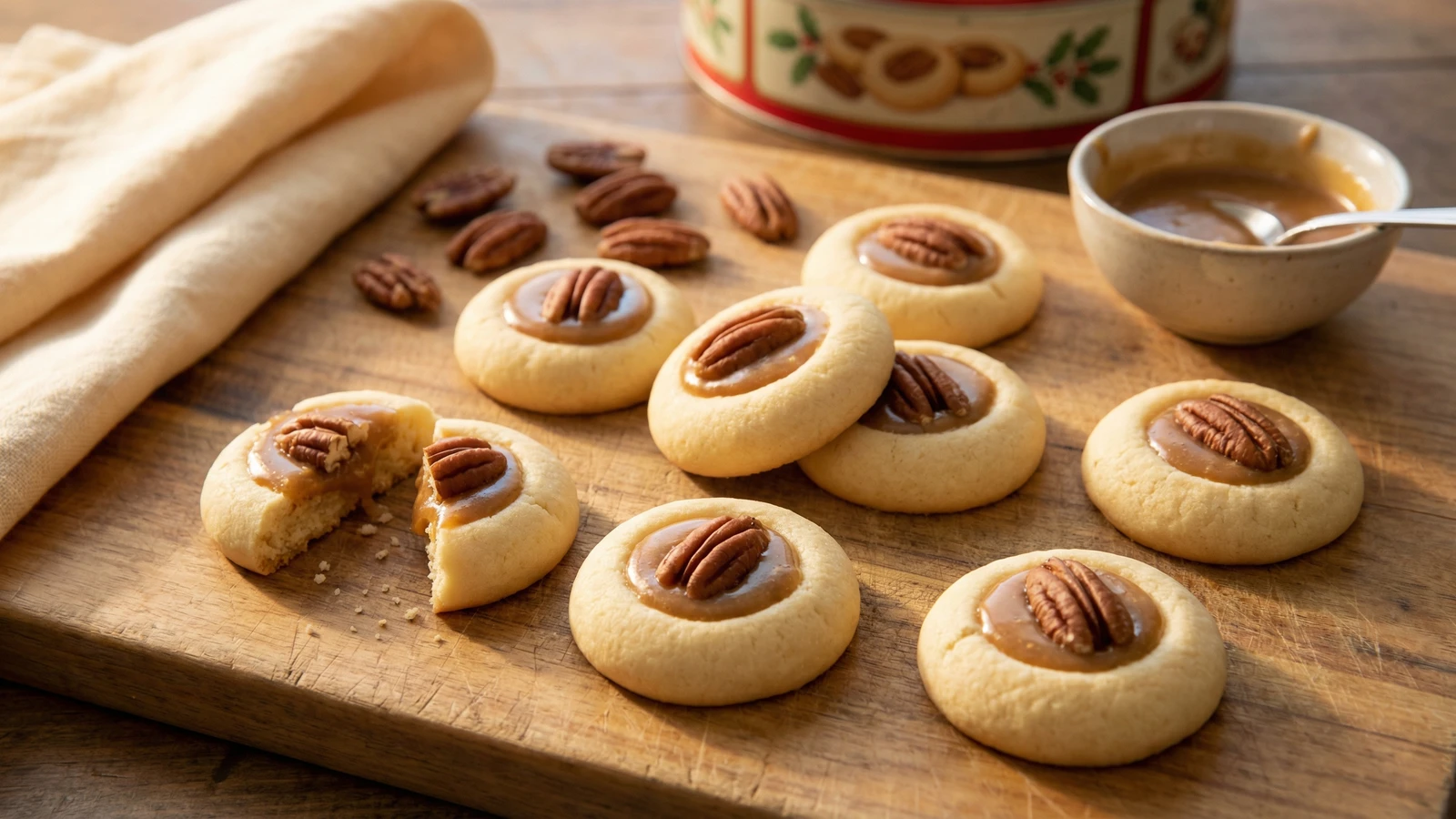
Cajun Praline Thumbprint Cookies
Created by Chef Remy
Tender, buttery shortbread cookies cradling a well of homemade praline, topped with a perfect pecan half. This is what happens when New Orleans candy shop tradition meets Christmas cookie magic.
Pralines are the soul of New Orleans confection. Walk down any French Quarter street in December and the smell hits you before you see the candy shops: butter and brown sugar bubbling together, pecans toasting in that sweet amber pool. My grandmother Evangeline made pralines every Christmas, stirring the pot while she told stories about her own mother doing the same thing in the same kitchen.
These thumbprint cookies capture that magic in a form you can package up and share. The cookie itself is a proper shortbread: tender, rich, barely sweet, the kind that melts on your tongue and leaves you reaching for another. The praline filling brings the Louisiana soul. It's not complicated candy-making. You're just cooking butter and brown sugar together until they become something greater than their parts, then folding in those beautiful pecans.
At Lagniappe, we serve a version of these during the holidays, and they disappear faster than anything else on the dessert tray. Guests ask for the recipe constantly. The secret is patience: chill your dough properly, don't overbake the cookies, and let the praline cool to the right consistency before you fill. Rush any step and you'll know it. Take your time and you'll have cookies worth fighting over.
The technique, the tradition, and the story behind every dish.
Discover Culinary AdvisorIngredients
unsalted butter (for cookies)
Quantity
1 cup (2 sticks/226g)
softened
powdered sugar
Quantity
1/2 cup (60g)
light brown sugar (for cookies)
Quantity
1/4 cup (55g)
packed
large egg yolk
Quantity
1
at room temperature
pure vanilla extract (for cookies)
Quantity
1 teaspoon
fine sea salt (for cookies)
Quantity
1/4 teaspoon
all-purpose flour
Quantity
2 cups (250g)
unsalted butter (for praline)
Quantity
1/2 cup (1 stick/113g)
dark brown sugar (for praline)
Quantity
1 cup (220g)
packed
heavy cream
Quantity
1/4 cup
fine sea salt (for praline)
Quantity
1/8 teaspoon
pecans
Quantity
1 cup (120g)
finely chopped
pure vanilla extract (for praline)
Quantity
1 teaspoon
pecan halves
Quantity
36
for topping
| Ingredient | Quantity |
|---|---|
| unsalted butter (for cookies)softened | 1 cup (2 sticks/226g) |
| powdered sugar | 1/2 cup (60g) |
| light brown sugar (for cookies)packed | 1/4 cup (55g) |
| large egg yolkat room temperature | 1 |
| pure vanilla extract (for cookies) | 1 teaspoon |
| fine sea salt (for cookies) | 1/4 teaspoon |
| all-purpose flour | 2 cups (250g) |
| unsalted butter (for praline) | 1/2 cup (1 stick/113g) |
| dark brown sugar (for praline)packed | 1 cup (220g) |
| heavy cream | 1/4 cup |
| fine sea salt (for praline) | 1/8 teaspoon |
| pecansfinely chopped | 1 cup (120g) |
| pure vanilla extract (for praline) | 1 teaspoon |
| pecan halvesfor topping | 36 |
Equipment Needed
- •Stand mixer or hand mixer
- •Heavy-bottomed saucepan (2-quart)
- •Rimmed baking sheets
- •Wire cooling rack
- •Rounded teaspoon measure (for pressing wells)
Instructions
- 1
Cream butter and sugars
In a large bowl, beat the softened butter with the powdered sugar and light brown sugar using a stand mixer or hand mixer on medium speed. Work it for a full three minutes until the mixture turns pale and fluffy, scraping down the sides twice. This step builds air into your dough, and that air gives you tender cookies. You want butter that yields to gentle pressure but still holds its shape. Too cold and it won't cream. Too soft and your cookies spread flat.
Set your butter out two hours before baking. It should feel like firm clay, not soft like mayonnaise. - 2
Add egg and flavorings
Beat in the egg yolk, vanilla, and salt until everything comes together smooth and creamy, about thirty seconds. We use just the yolk here because it adds richness without extra moisture. The white would make these cookies puff and crack, and we want smooth little pillows with clean thumbprint wells.
- 3
Incorporate flour gently
Add the flour in two additions, mixing on low speed just until the flour disappears after each. Stop the moment you see no more dry streaks. This dough should be soft but not sticky, holding together when you press it. Overwork it now and you'll have tough cookies that fight back when you bite them.
- 4
Chill the dough
Wrap the dough in plastic and refrigerate for at least thirty minutes. Cold dough holds its shape better and the thumbprints stay put during baking. You can chill this overnight if you're working ahead.
If your kitchen runs warm, chill the dough for a full hour. Louisiana summers taught me that lesson the hard way. - 5
Shape the cookies
Preheat your oven to 350°F. Line baking sheets with parchment paper. Roll the dough into one-inch balls, about a tablespoon each, and place them two inches apart on your prepared sheets. Use your thumb or the back of a rounded teaspoon measure to press a deep well into the center of each ball. Press firmly but don't go all the way through. The wells will shallow slightly during baking, so make them deeper than you think necessary.
- 6
Bake until set
Bake for twelve to fourteen minutes, rotating the pan halfway through. The cookies are done when the edges turn the palest gold and the tops look dry and set, but not browned. These are shortbread cookies, and browning means you've gone too far. Remove from the oven and immediately re-press the thumbprints with your spoon if they've puffed up. Let cool on the baking sheet for five minutes, then transfer to a wire rack.
- 7
Make the praline filling
While the cookies cool, melt the butter in a heavy-bottomed saucepan over medium heat. Add the dark brown sugar, cream, and salt. Stir constantly until the sugar dissolves completely, then let the mixture come to a gentle boil. Cook for two minutes without stirring, watching it bubble and deepen in color. The smell should hit you: buttery, caramelized, pure Louisiana candy shop.
Use a heavy pan. Thin pans create hot spots that burn your sugar before the rest of it melts. - 8
Finish the praline
Remove the pan from heat and stir in the chopped pecans and vanilla. The mixture will bubble up when you add the vanilla, so keep your face back. Let the praline cool for about five minutes, stirring occasionally. It should thicken to the consistency of warm honey, thick enough to mound in the thumbprints without running over the edges.
- 9
Fill and top the cookies
Spoon about a teaspoon of the warm praline filling into each thumbprint well, letting it mound slightly in the center. Work quickly before the filling sets. Press a pecan half gently into the top of each filled cookie. Let the cookies sit at room temperature until the praline firms up completely, about thirty minutes. The filling should be tacky but no longer liquid.
Chef Tips
- •Louisiana pecans have the sweetest, most buttery flavor. If you can find them, use them. Texas and Georgia pecans work fine, but there's something special about pecans from the Gulf Coast.
- •The praline filling thickens as it cools. If it gets too thick to spoon, warm it gently over low heat. If it's too thin, let it sit another minute or two.
- •Toast your chopped pecans in a dry skillet for three minutes before adding them to the praline. This extra step deepens the flavor considerably.
- •These cookies stack beautifully in tins for gift-giving. Layer them between sheets of wax paper to prevent sticking.
- •For a touch of Louisiana heat, add a tiny pinch of cayenne to the praline filling. Not enough to taste spicy, just enough to make people wonder what makes these so addictive.
Advance Preparation
- •Cookie dough can be refrigerated for up to three days before shaping and baking.
- •Shaped, unbaked cookies can be frozen on a baking sheet, then transferred to a freezer bag for up to two months. Bake directly from frozen, adding two minutes to baking time.
- •Praline filling can be made up to one week ahead and stored in an airtight container at room temperature. Warm gently before using.
- •Finished cookies keep in an airtight container at room temperature for up to one week, or frozen for up to two months.
Frequently Asked Questions
Nutrition Information
1 serving (about 30g)
Where cooking meets culture.
Culinary mentorship, cultural storytelling, and the editorial depth that makes cooking meaningful.
Explore Culinary Advisor