Culinary Advisor
A cooking platform built around craft, culture, and the stories behind what we eat.
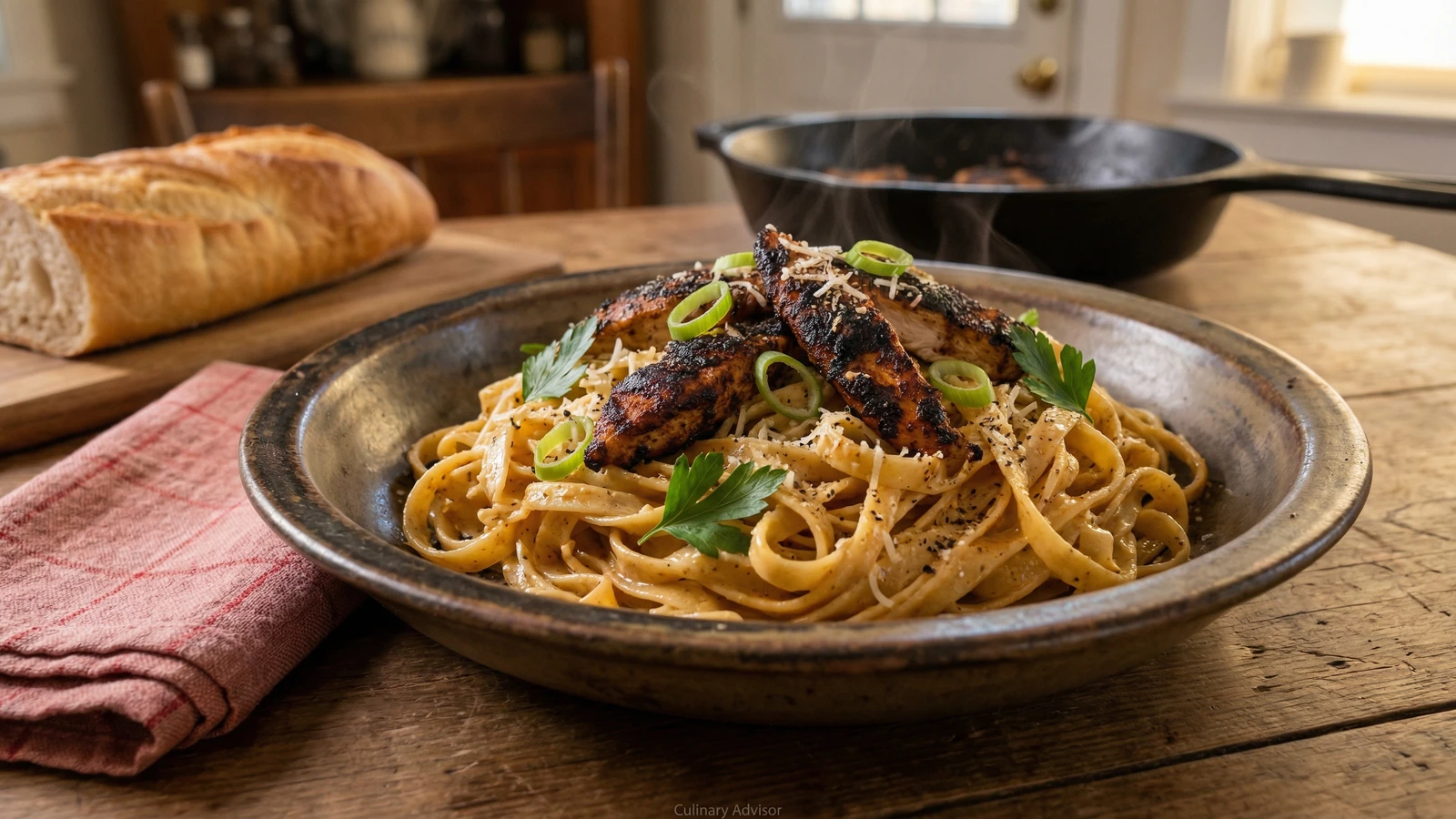
Cajun Chicken Pasta
Created by Chef Remy
Tender blackened chicken with that signature char resting on ribbons of fettuccine dressed in a creamy, spice-kissed sauce with sweet bell peppers and onions, the kind of dish that makes you want to lick the plate clean.
This dish travels. It left Louisiana sometime in the late eighties and never looked back, showing up on chain restaurant menus from coast to coast. Most of those versions are pale imitations. Underseasoned chicken, timid sauce, no soul. At Lagniappe, we do it right.
The secret isn't complicated. Season your chicken like you mean it. Get that cast iron hot enough to make your smoke alarm nervous. Build flavor in layers: the blackened spices on the protein, the fond in the pan, the seasoning in the vegetables, the final adjustment in the cream. Every step adds something.
My grandmother Evangeline never made this exact dish. Pasta wasn't really her thing. But she taught me the principle behind it: respect your ingredients, season with confidence, and taste as you go. That's the bayou way, whether you're making gumbo or fettuccine.
Don't be shy with the Cajun seasoning, but remember that heat should awaken the palate, not punish it. Start with my amounts and adjust to your family's taste. Some folks want fire, some want warmth. Both are valid. The goal is a dish so good that when the last bite is as good as the first, you know you've done it right.
The technique, the tradition, and the story behind every dish.
Discover Culinary AdvisorIngredients
boneless, skinless chicken breasts
Quantity
1 1/2 pounds
Cajun seasoning
Quantity
3 tablespoons
divided
kosher salt
Quantity
1 teaspoon
unsalted butter
Quantity
3 tablespoons
divided
olive oil
Quantity
2 tablespoons
yellow onion
Quantity
1 medium
sliced into half-moons
red bell pepper
Quantity
1
sliced into strips
green bell pepper
Quantity
1
sliced into strips
garlic
Quantity
4 cloves
minced
chicken stock
Quantity
1 cup
heavy cream
Quantity
2 cups
Parmesan cheese
Quantity
1/2 cup
freshly grated, plus more for serving
fettuccine
Quantity
1 pound
green onions
Quantity
2
sliced thin
fresh parsley (optional)
Quantity
for garnish
kosher salt and black pepper
Quantity
to taste
| Ingredient | Quantity |
|---|---|
| boneless, skinless chicken breasts | 1 1/2 pounds |
| Cajun seasoningdivided | 3 tablespoons |
| kosher salt | 1 teaspoon |
| unsalted butterdivided | 3 tablespoons |
| olive oil | 2 tablespoons |
| yellow onionsliced into half-moons | 1 medium |
| red bell peppersliced into strips | 1 |
| green bell peppersliced into strips | 1 |
| garlicminced | 4 cloves |
| chicken stock | 1 cup |
| heavy cream | 2 cups |
| Parmesan cheesefreshly grated, plus more for serving | 1/2 cup |
| fettuccine | 1 pound |
| green onionssliced thin | 2 |
| fresh parsley (optional) | for garnish |
| kosher salt and black pepper | to taste |
Equipment Needed
- •12-inch cast iron skillet
- •Large pot for pasta
- •Tongs
- •Instant-read thermometer
Instructions
- 1
Season the chicken properly
Slice your chicken breasts horizontally into cutlets about half an inch thick. This isn't just about portion size. Thin cutlets cook faster and develop more of that blackened crust we're after. Season both sides generously with two tablespoons of Cajun seasoning and the kosher salt. Press the spices into the meat with your hands. Let it sit at room temperature while you prep everything else, at least fifteen minutes. The seasoning needs time to penetrate.
Cold chicken hitting a hot pan drops the temperature and steams instead of sears. Room temperature meat is essential for proper blackening. - 2
Get the pan screaming hot
Set your largest cast iron skillet over high heat for a full five minutes. You want that pan angry. Add one tablespoon of butter and the olive oil. The butter will foam immediately and start to brown. That's good. The moment the foam subsides, your chicken goes in. Don't crowd the pan. Work in batches if you need to.
Open your windows and turn on the exhaust fan. Real blackening makes smoke. That's the spices blooming and caramelizing. Don't apologize for it. - 3
Blacken until charred and beautiful
Cook the chicken without moving it for three to four minutes per side. You'll hear it sizzle and complain. Good. When you flip it, you should see a dark, almost black crust with bits of char at the edges. The spices have transformed into something complex and slightly bitter in the best way. The inside should reach 165 degrees. Transfer to a cutting board and let it rest while you build the sauce. Slice it into strips when you're ready to serve.
- 4
Start your pasta water
While the chicken rests, bring a large pot of heavily salted water to a boil. I mean salt it like the Gulf of Mexico. This is your only chance to season the pasta itself. Drop in the fettuccine and cook according to package directions, but pull it one minute early. It'll finish in the sauce.
- 5
Build flavor with the vegetables
Reduce heat to medium-high and add another tablespoon of butter to the same skillet. All those blackened bits on the bottom? That's flavor you're going to deglaze. Add the sliced onion and both bell peppers. Season with half the remaining Cajun seasoning. Cook, stirring occasionally, until the onions turn translucent and the peppers soften but still have some bite, about five minutes. The vegetables should pick up some color from the fond in the pan.
- 6
Add garlic and deglaze
Push the vegetables to the edges and add the minced garlic to the center of the pan. Let it sizzle for thirty seconds until fragrant. You'll smell it transform from raw and sharp to sweet and nutty. Pour in the chicken stock, scraping up every bit of flavor stuck to the bottom. Let it bubble and reduce by half, about two minutes.
- 7
Create the cream sauce
Pour in the heavy cream and bring to a gentle simmer. Don't let it boil hard or it'll break. Add the remaining Cajun seasoning and stir well. Let the sauce simmer for five to seven minutes until it coats the back of a spoon. Taste it now. This is where you adjust. Need more heat? Add cayenne. Need more depth? A pinch more salt. Trust your palate.
The sauce will thicken more when the pasta goes in because the starch helps bind everything. Don't reduce it too far or you'll end up with paste instead of sauce. - 8
Bring it all together
Using tongs, transfer the fettuccine directly from the pasta water into the sauce. Bring along some of that starchy cooking water clinging to the noodles. Toss everything together over low heat, letting the pasta drink up the sauce for a minute or two. Remove from heat and stir in the Parmesan and the final tablespoon of butter. The butter stirred in off-heat gives you that restaurant gloss, that silky finish that makes people's eyes close on the first bite.
- 9
Plate with generosity
Divide the pasta among warm bowls, making sure everyone gets plenty of peppers and onions. Arrange the sliced blackened chicken on top. Scatter green onions and fresh parsley over everything. Hit it with more Parmesan if that's your style. Serve immediately while the sauce is still glossy and the chicken still has warmth running through it.
Chef Tips
- •Make your own Cajun seasoning by combining paprika, cayenne, garlic powder, onion powder, dried oregano, dried thyme, black pepper, and white pepper. Store-bought works fine, but fresh-blended has more punch.
- •If your cream sauce breaks or looks grainy, remove it from heat immediately and whisk in a splash of cold cream. It usually comes back together.
- •Reserve a full cup of pasta water before draining. If your sauce gets too thick, a splash of that starchy water loosens it while keeping everything silky.
- •This dish doesn't reheat well because the cream separates. Make only what you'll eat. Leftovers are acceptable but never as good as fresh from the pan.
Advance Preparation
- •Season the chicken up to four hours ahead and refrigerate. Bring to room temperature thirty minutes before cooking.
- •Slice all vegetables and mince garlic ahead of time. Store covered in the refrigerator.
- •The cream sauce can be made two hours ahead and kept warm over very low heat, but add pasta and finish just before serving.
Frequently Asked Questions
Nutrition Information
1 serving (about 560g)
Where cooking meets culture.
Culinary mentorship, cultural storytelling, and the editorial depth that makes cooking meaningful.
Explore Culinary Advisor