Culinary Advisor
A cooking platform built around craft, culture, and the stories behind what we eat.
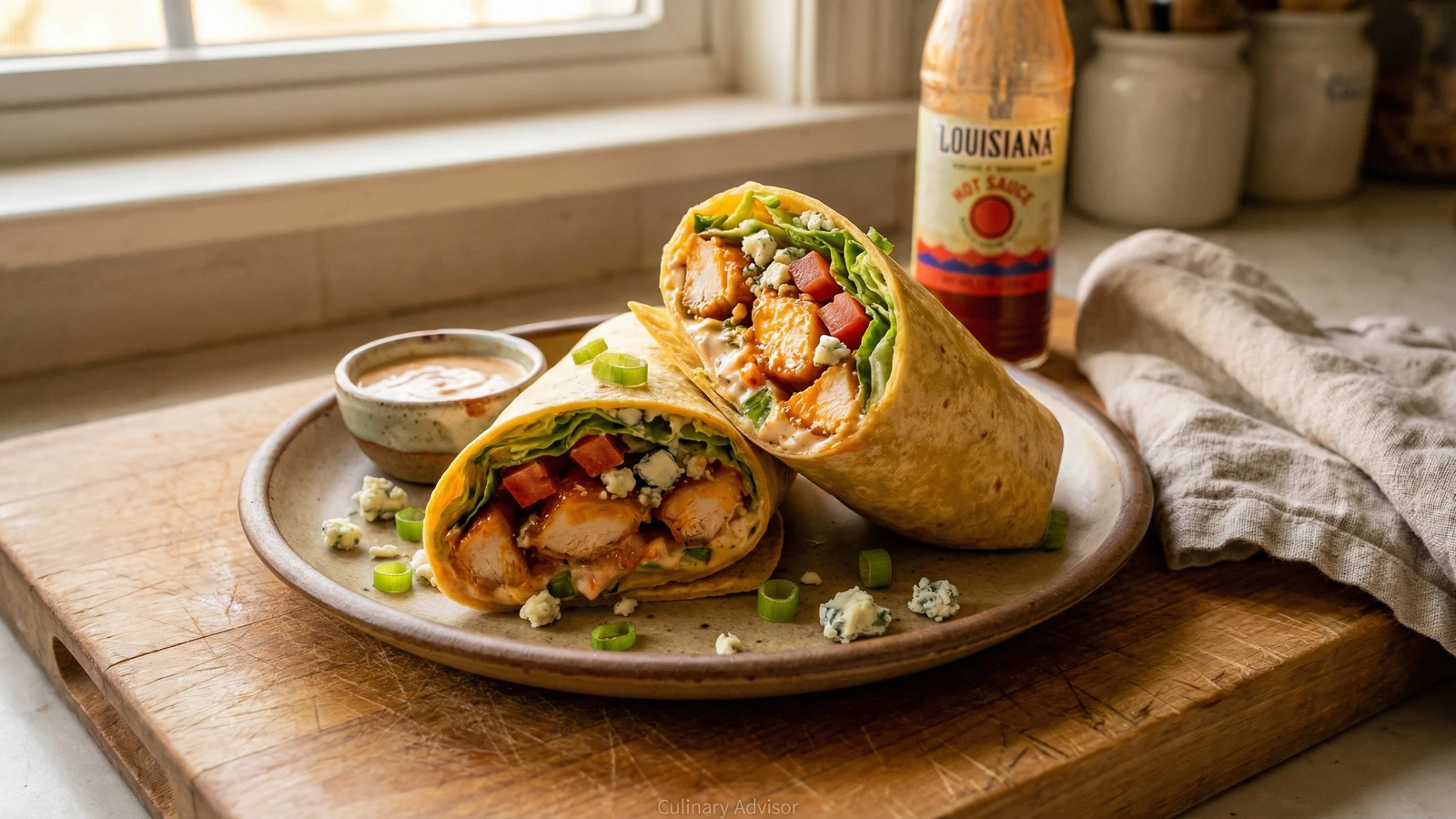
Cajun Buffalo Chicken Wrap
Created by Chef Remy
Crispy, cayenne-kissed chicken slicked with buttery Louisiana hot sauce, cooled by tangy blue cheese and creamy Creole remoulade, all bundled in a soft flour tortilla for the kind of handheld satisfaction that makes you forget about the napkin.
Two great American flavor traditions collide in this wrap, and the result is pure fireworks. You take the bold, layered heat of Cajun seasoning, marry it with that tangy butter-and-vinegar punch of buffalo sauce, and wrap it all up with cooling blue cheese and my grandmother's remoulade. That's how we do things in Louisiana: we borrow what works and make it our own.
The secret here is building flavor at every stage. You season that chicken before it ever sees the pan. You cook it crispy and golden, then toss it in the sauce so every surface gets coated. The remoulade goes on the tortilla first, creating a barrier that keeps everything from getting soggy. The lettuce adds crunch, the blue cheese adds funk, and suddenly you've got a wrap that's greater than the sum of its parts.
At Lagniappe, we serve this during football season when folks want something they can eat with one hand while watching the Saints. But honestly, it's too good to wait for game day. Make it for lunch on a Tuesday. Your taste buds don't care what day it is.
The technique, the tradition, and the story behind every dish.
Discover Culinary AdvisorIngredients
boneless, skinless chicken thighs
Quantity
1 1/2 pounds
Cajun seasoning
Quantity
2 tablespoons, divided
kosher salt
Quantity
1/2 teaspoon
vegetable oil
Quantity
3 tablespoons
unsalted butter
Quantity
4 tablespoons
Louisiana hot sauce
Quantity
1/2 cup
honey
Quantity
1 tablespoon
large flour tortillas
Quantity
4 (10-12 inch)
Creole remoulade
Quantity
1/2 cup
romaine lettuce
Quantity
2 cups
shredded
blue cheese
Quantity
1/2 cup
crumbled
Roma tomatoes
Quantity
1/2 cup
diced
green onions
Quantity
2 tablespoons
sliced thin
mayonnaise
Quantity
1/4 cup
Creole mustard
Quantity
2 tablespoons
prepared horseradish
Quantity
1 tablespoon
hot sauce
Quantity
1 teaspoon
smoked paprika
Quantity
1/2 teaspoon
garlic clove
Quantity
1 small
minced
| Ingredient | Quantity |
|---|---|
| boneless, skinless chicken thighs | 1 1/2 pounds |
| Cajun seasoning | 2 tablespoons, divided |
| kosher salt | 1/2 teaspoon |
| vegetable oil | 3 tablespoons |
| unsalted butter | 4 tablespoons |
| Louisiana hot sauce | 1/2 cup |
| honey | 1 tablespoon |
| large flour tortillas | 4 (10-12 inch) |
| Creole remoulade | 1/2 cup |
| romaine lettuceshredded | 2 cups |
| blue cheesecrumbled | 1/2 cup |
| Roma tomatoesdiced | 1/2 cup |
| green onionssliced thin | 2 tablespoons |
| mayonnaise | 1/4 cup |
| Creole mustard | 2 tablespoons |
| prepared horseradish | 1 tablespoon |
| hot sauce | 1 teaspoon |
| smoked paprika | 1/2 teaspoon |
| garlic cloveminced | 1 small |
Equipment Needed
- •12-inch cast iron skillet
- •Instant-read thermometer
- •Sharp chef's knife
Instructions
- 1
Make the remoulade
Whisk together the mayonnaise, Creole mustard, horseradish, hot sauce, smoked paprika, and minced garlic in a small bowl until smooth. Taste it. The mustard should sing, the horseradish should give you a little tingle in the nose, and there should be a gentle warmth from the hot sauce. Adjust any element that seems shy. Cover and refrigerate while you prepare everything else.
If you have access to Zatarain's Creole mustard, use it. That grainy texture and vinegar bite is exactly what you want here. - 2
Season the chicken
Pat the chicken thighs completely dry with paper towels. Moisture is the enemy of a good crust. Season both sides generously with one and a half tablespoons of the Cajun seasoning and the kosher salt. Press the seasoning into the meat so it adheres. Let the chicken sit at room temperature for ten minutes while the seasonings penetrate.
Chicken thighs stay juicier than breasts and have more flavor. If you must use breasts, pound them to even thickness so they cook uniformly. - 3
Cook the chicken crispy
Heat the vegetable oil in a large cast iron skillet over medium-high heat until it shimmers and a tiny piece of chicken sizzles immediately on contact. Add the chicken thighs in a single layer, leaving space between them. Do not crowd the pan or you'll steam instead of sear. Cook without moving for four to five minutes until the bottom develops a deep golden-brown crust. Flip and cook another four to five minutes until the internal temperature reaches 165°F and both sides are beautifully crispy.
Listen to your pan. When the sizzling quiets down, that's the chicken telling you it's ready to flip. The moisture has cooked out and the crust has formed. - 4
Make the buffalo sauce
While the chicken rests on a cutting board, reduce the heat to medium-low. Add the butter to the same skillet, letting it melt into those flavorful browned bits. Once the butter foams, pour in the Louisiana hot sauce and honey. Stir to combine, scraping up any fond from the bottom. The sauce should be glossy, emulsified, and coat the back of a spoon. Add the remaining half tablespoon of Cajun seasoning and stir. Taste. Adjust heat or sweetness as you like.
- 5
Slice and toss the chicken
Slice the rested chicken against the grain into half-inch strips. Return the sliced chicken to the skillet with the buffalo sauce, tossing to coat every piece thoroughly. The orange, glistening sauce should cling to each strip. Remove from heat immediately so the chicken doesn't overcook.
- 6
Warm the tortillas
Heat a dry skillet or griddle over medium heat. Warm each tortilla for about thirty seconds per side until pliable and showing light char marks. Stack them under a clean kitchen towel to keep warm. A cold tortilla cracks when you fold it, and nobody wants a broken wrap.
You can also warm tortillas directly over a gas flame for a few seconds per side. Hold them with tongs and keep them moving. That's the bayou way. - 7
Assemble the wraps
Lay a warm tortilla on your work surface. Spread two tablespoons of remoulade down the center, leaving two inches bare at the bottom for folding. Layer half a cup of shredded lettuce over the remoulade, then add a quarter of the buffalo chicken strips. Scatter diced tomatoes, blue cheese crumbles, and sliced green onions over the top. The colors should be vibrant: the orange chicken, white cheese, green onions, red tomatoes.
- 8
Roll and serve
Fold the bottom of the tortilla up over the filling about two inches. Then fold in the sides and roll tightly away from you, keeping constant pressure to create a snug cylinder. Slice on the diagonal if you want to show off that beautiful cross-section. Serve immediately with extra remoulade and hot sauce on the side for those who want more heat.
If your wraps are falling apart, you've overstuffed them. Generosity is a virtue, but physics is undefeated. Scale back the filling slightly.
Chef Tips
- •Crystal or Louisiana brand hot sauce is essential here. Frank's works in a pinch, but it doesn't have that same Louisiana character. The vinegar-forward tang is what makes buffalo sauce sing.
- •Make the remoulade a day ahead if you can. Like gumbo, it gets better as the flavors marry overnight in the refrigerator.
- •For extra crunch, dredge the seasoned chicken in a light coating of flour before pan-frying. Shake off the excess. That flour crust grabs onto the buffalo sauce like nothing else.
- •Blue cheese too funky for your crowd? Swap in a good sharp cheddar or pepper jack. It won't be traditional, but it'll still be delicious.
- •If you want to feed a bigger group on game day, slice the buffalo chicken and keep it warm in a low oven while you cook batch after batch. Set out all the fixings and let folks build their own.
Advance Preparation
- •Remoulade can be made up to five days ahead and refrigerated. The flavors improve with time.
- •Chicken can be seasoned up to four hours ahead and refrigerated. Bring to room temperature for twenty minutes before cooking.
- •Cooked buffalo chicken can be held in a 200°F oven for up to thirty minutes before assembling wraps.
Frequently Asked Questions
Nutrition Information
1 serving (about 340g)
Where cooking meets culture.
Culinary mentorship, cultural storytelling, and the editorial depth that makes cooking meaningful.
Explore Culinary Advisor